Octopuses rewrite their own RNA to survive freezing temperatures
A new study dives deeper into the amazing adaptations of the cephalopod brain.
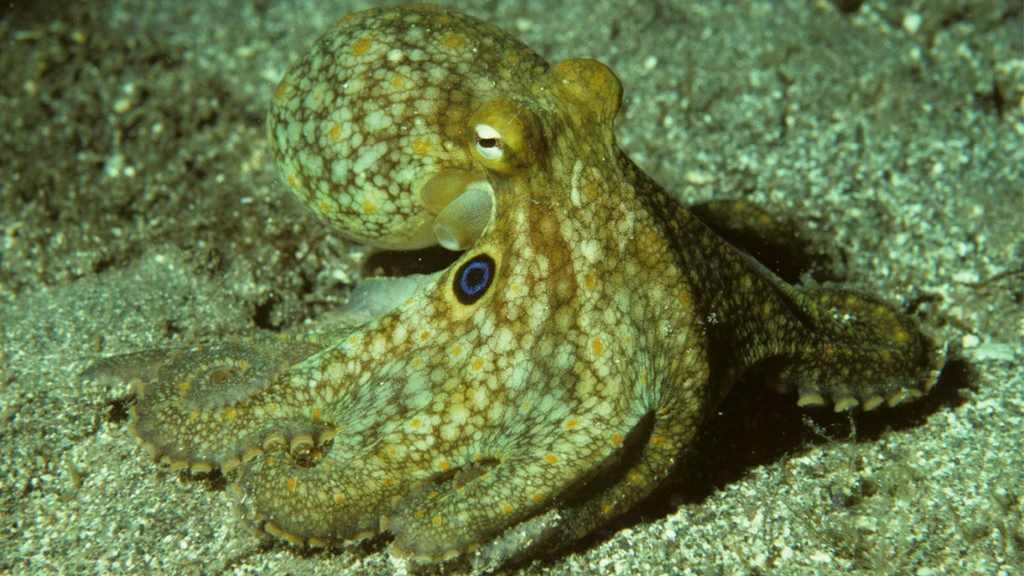
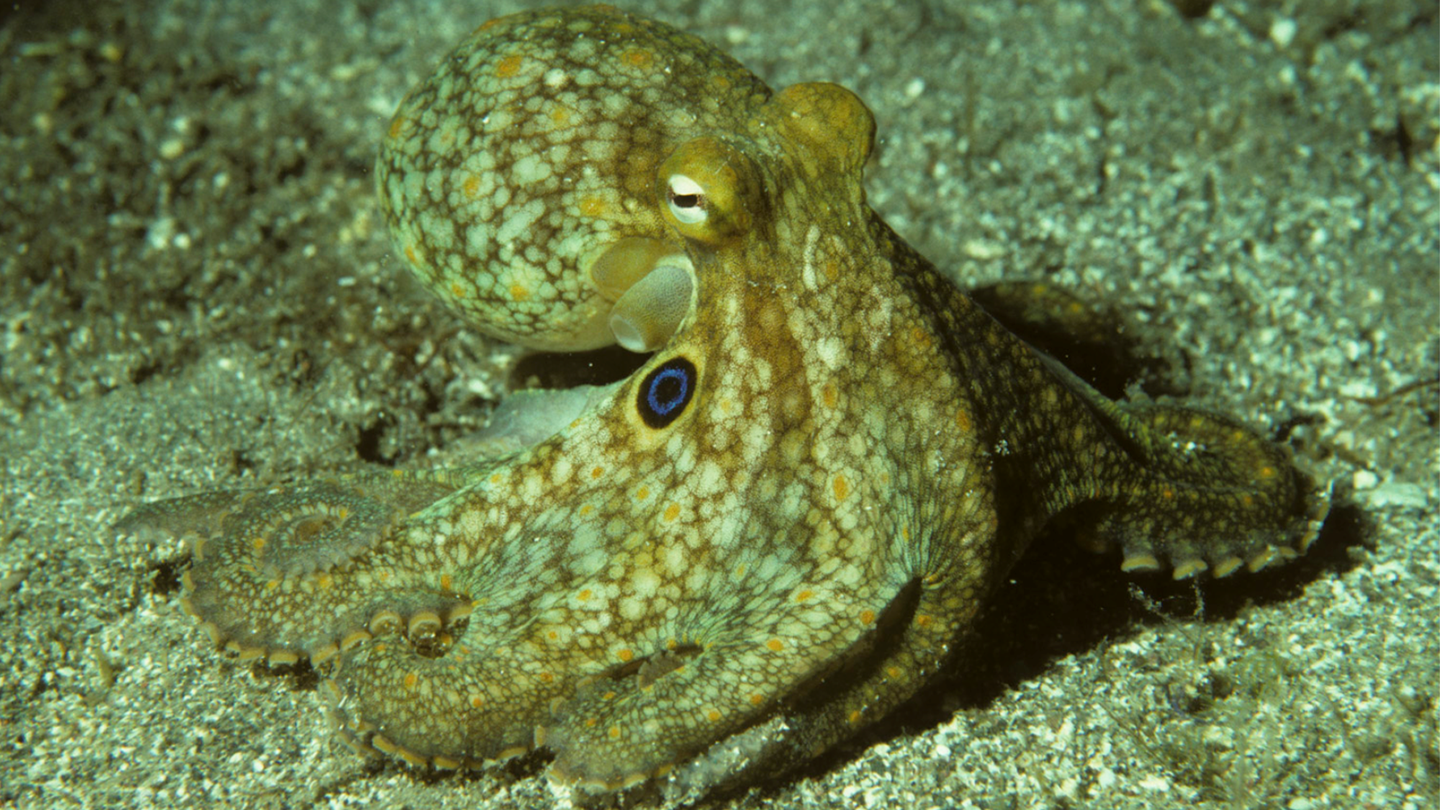 The California two-spot octopus (Bimaculoides) is the first octopus species to have its genome sequenced and is very helpful for studying cephalopods. Roger T. Hanlon
Octopuses can do it all, from their signature camouflage to chucking shells at other octopuses, but one major thing they can’t do is thermoregulate. Changes in water temperature can threaten their powerful brains due to this quirk of evolution, but they still manage to handle it.
A study published June 8 in the journal Cell shows that two-spot octopuses adapt to seasonal shifts in temperature by producing different neural proteins. They accomplish this by editing their RNA—the messenger molecule between proteins and DNA. The team on this study believes that this rewiring protects their brains and this strategy is likely used across other octopuses and squid.
“Ten years ago, there were some hints that something unusual was going on, but there wasn’t [any] systematic mapping and our first goal was to systematically map the editing sites of the squid,” study co-author and a statistical mathematician at Tel Aviv University Eli Eisenberg tells PopSci.
They found that squid have tens of thousands of recording sites that were primarily located in their neural tissues where these RNA edits could be happening. Eisenberg and study co-author Joshua Rosenthal extended their research into octopuses and their neural networks. They wanted to know how these cephalopods with complicated and well-evolved brains handle the wide range of temperatures they are exposed to.
DNA mutations typically allow organisms to adapt over long periods of time and over multiple generations. RNA editing is a common, flexible, and temporary way to adapt to changes in the environment–like seasonal temperature.
“There’s often a contrast between this and CRISPR genome editing,” Rosenthal, a biologist at the University of Chicago-affiliated Marine Biological Laboratory, tells PopSci. “CRISPR genome editing is this artificial process that is designed to make changes in DNA, which would be kind of permanent from the time that changes are made throughout the life of the organism. RNA gives you the chance to do things temporarily.”
When RNA editing changes protein structures, the process is called RNA recoding. It’s pretty rare—except in octopuses and squid. Humans have millions of editing sites that affect less than three percent of our genes, but coleoid or “smart” cephalopods can recode the majority of their neural proteins.
“In the context outside of cephalopods, the main way to change the [protein] sequence and get a new kind of protein is through mutation and evolution,” study co-author and St. Francis University biologist Matthew Birk tells PopSci. “That takes generations and hundreds and thousands of years, while this is days. That was very exciting.”
In this new study, the team worked with California two-spot octopuses in a laboratory setting and in the wild. This species is the first octopus to have their genome sequenced, and they are a reliable proxy for other octopuses. Wild octopuses are exposed to quick changes in temperature like when they dive to colder depths or during upwelling events and slower changes like when the seasons shift.
They acclimated wild-caught adult octopuses to warm (71.6ºF) or cold (55.4ºF) waters in tanks and after several weeks, they compared the RNA transcripts for the acclimated octopuses to the genome to find signs of RNA editing.
“One surprising finding was the fact that so many proteins, so many editing sites had changed upon temperature change, and all of them almost all of them in the same direction,” says Eisenberg.
Editing occurred at around 30 percent or more than 20,000 individual places on the genome. The proteins edited tended to be neural proteins, and almost all edited sites sensitive to temperature swings were more highly edited in the cold, according to Eisenberg.
To see how quickly these changes occurred, they investigated the reaction in tiny thumbnail-sized juvenile octopuses. They gradually heated or cooled the tanks from 57.2°F up to 93.2°F and vice versa in hourly increments over about 20 hours. After measuring RNA editing before the temperature change, immediately after the change, and four days later, the team was surprised by just how rapidly it occurred. Birk says that changes were happening in less than one day, and their new steady levels were present four days after and remained for a month.
The team also started investigating if recoding impacted protein structure function. They focused on two proteins that are critical for nervous system function—kinesin and synaptotagmin. They found evidence that the recoding changed the structures in the proteins that would impact how they function.
“I’m really interested to see if this extends beyond physical environmental factors. If social context can influence the way you encode your nervous system, that’s a pretty interesting concept,” says Rosenthal. “I want to know what underlies this high level recoding of messenger RNAs.”
Understanding more about this RNA editing and recoding could be applied to therapeutics in humans. Rosenthal and Eisenberg are working on a grant project from the National Institutes of Health to see if RNA editing can be used as a non addictive treatment for opioids.
Studies like these are also satisfying the ever growing appetite for knowledge about our eight legged aquatic friends. “I feel like people understand or know octopuses pretty well. There’s all these fascinating things that we can physically see,” says Birk. “Now, we’re starting to understand more and more that they’re fascinating even at a molecular level. They are strange and inspire curiosity.”