The Silence in the Garage
The silence in the Williams garage at the Circuit de Barcelona-Catalunya was deafening. As the engines of their rivals fired up, signaling the dawn of the revolutionary 2026 Formula 1 era, one bay remained conspicuously empty. The Williams FW48, touted as the team’s “most complex and best design ever,” was nowhere to be seen.
For a team that had spent the better part of the last 18 months preaching the gospel of “short-term pain for long-term gain,” this wasn’t just a missed deadline; it was a public humiliation. It marks the third time in just seven seasons that one of the sport’s most historic teams has failed to have a car ready for the start of pre-season testing.
The immediate question on everyone’s lips wasn’t just “where is the car?” but rather, “how has this happened again?” After the debacle of 2019, where a delayed and illegal car cost Paddy Lowe his job, and the compromised start to 2024, one would assume lessons had been learned. Yet, here we are in February 2026, witnessing a recurrence of a nightmare that many thought was banished to the past.
A Gamble That Backfired Spectacularly?
To understand the gravity of this situation, we must rewind to 2025. Under the leadership of Team Principal James Vowles, Williams made a bold strategic decision. They chose to switch off development of their 2025 car earlier than any other team on the grid. The logic was sound: sacrifice competitive edge in the short term to maximize resources for the massive regulation overhaul of 2026.
The team finished fifth in the championship last year, scoring two podiums—a testament to Vowles’ steering of the ship. But that success now casts a long shadow. The entire justification for early development shut-off was to hit the ground running in 2026 with a machine that pushed the boundaries of performance.
Instead, that head start has evaporated. By missing the first test, Williams has effectively handed back the advantage they fought so hard to create. While rivals like Ferrari, Mercedes, and Red Bull have spent three days validating their simulations, ironing out reliability gremlins, and racking up over 2,000 kilometers of precious data, Williams has been stuck in the factory, fighting fires.
The “Complex” Excuse and the Failure to Scale
So, what went wrong? According to James Vowles, the delay is a direct consequence of ambition clashing with reality. The FW48 is not a simple evolution; it is a radical departure from the team’s previous design philosophies. Vowles describes it as a car developed with “triple the workload” of any previous project the team has managed.
The team attempted to level up its car design and production standards to match the top tier. This meant abandoning the conservative approaches of the past in favor of more flexible aerodynamic parts and a completely new mechanical design, including a complex front suspension layout.
However, ambition requires infrastructure, and this is where the plan collapsed. In a moment of startling candor, Vowles admitted to a critical failure in his leadership: he failed to scale the business to match these ambitious targets.
“I failed to scale the business in the right way,” Vowles confessed. The team bumped up against limitations that were far more severe than anticipated. While the chaotic “disorganized chaos” of losing parts that plagued the team a few years ago has reportedly improved, the systemic issues remain. The team is still, in Vowles’ words, relying on “human glue”—people going above and beyond, working unsustainable hours—to hold the operation together because the digital systems and processes are not fit for purpose.
It is a terrifying realization for fans: a Formula 1 team in 2026, competing at the pinnacle of motorsport, is still seemingly bottlenecked by outdated methodologies, perhaps even the infamous Microsoft Excel spreadsheets that Vowles lamented upon his arrival.
Crash Tests and “Demons”
The delay wasn’t just administrative; it was physical. The decision to push the design boundaries meant that passing mandatory crash tests became a significant hurdle. Williams designed parts so aggressively that they struggled to meet safety standards on the first attempt, necessitating redesigns and reinforcements that ate into the production schedule.
Vowles described the situation as “very, very tough.” The team knew they were walking a tightrope. They could have chosen a conservative path—signing off on aerodynamic surfaces and chassis decisions early to guarantee a car for the test. Instead, they held back, keeping the design phase open as long as possible to chase performance, gambling that they could manufacture the car in record time.
They lost that bet.
The team misjudged the time required to turn their complex 2026 concepts into physical carbon fiber. The result is a car that exists in theory and in simulation, but not on the track.
The Cost of Missing Out
The consequences of this delay are far-reaching. In modern Formula 1, testing time is strictly limited. Missing three full days is catastrophic.
First, there is the loss of driver knowledge. The drivers are going into a new era of regulations blind, without the “seat of the pants” feeling that only comes from pounding round a circuit.
Second, and perhaps more critically, is the loss of correlation data. F1 teams live and die by their simulators. The first test is vital for checking if the numbers on the computer screen match reality. Is the downforce where it should be? Is the cooling sufficient? Is the suspension behaving as predicted? Williams is missing this validation loop.
Third is reliability. The new 2026 power units and chassis regulations put immense strain on components. Other teams have used Barcelona to break things and fix them. Williams will likely face these teething issues in Bahrain, or worse, at the first race of the season.
Silver Linings or Delusional Optimism?
Despite the gloom, James Vowles remains defiant. He argues that the delay is a necessary evil of transforming the team. He insists that the FW48 is “the best I have seen us produce here” in terms of raw metrics. He suggests that the Virtual Track Test (VTT) program they ran in place of physical testing helped flush out “demons” in the cooling system and other architectural elements.
He also points to a bizarre silver lining: that watching other teams run the Mercedes engine (which Williams also uses) provided them with some relevant data.
But questions linger. The specter of the 2024 car looms large—a vehicle that arrived late and was significantly overweight. Vowles has notably failed to shut down speculation that the FW48 might also be battling weight issues. If the car has been reinforced to pass crash tests at the last minute, it is almost certainly carrying excess bulk.
In F1, weight is lap time. If the FW48 is heavy, the “performance” Vowles speaks of will be masked, and the team will be forced to spend their development budget on a diet plan rather than aerodynamic upgrades.
Conclusion: A pivotal Moment
As the F1 circus packs up from Barcelona and heads to Bahrain, Williams finds itself in a precarious halfway house. They have a leader with a clear vision, but an organization that seems unable to execute it without stumbling.
The coming weeks will define their season. If the FW48 rolls out in Bahrain and is fast, reliable, and competitive, this delay will be a footnote—a bold gamble that paid off. But if the car is slow, heavy, or unreliable, questions will be asked about whether the “rebuilding” of Williams is truly working, or if the rot runs too deep to be fixed by ambition alone.
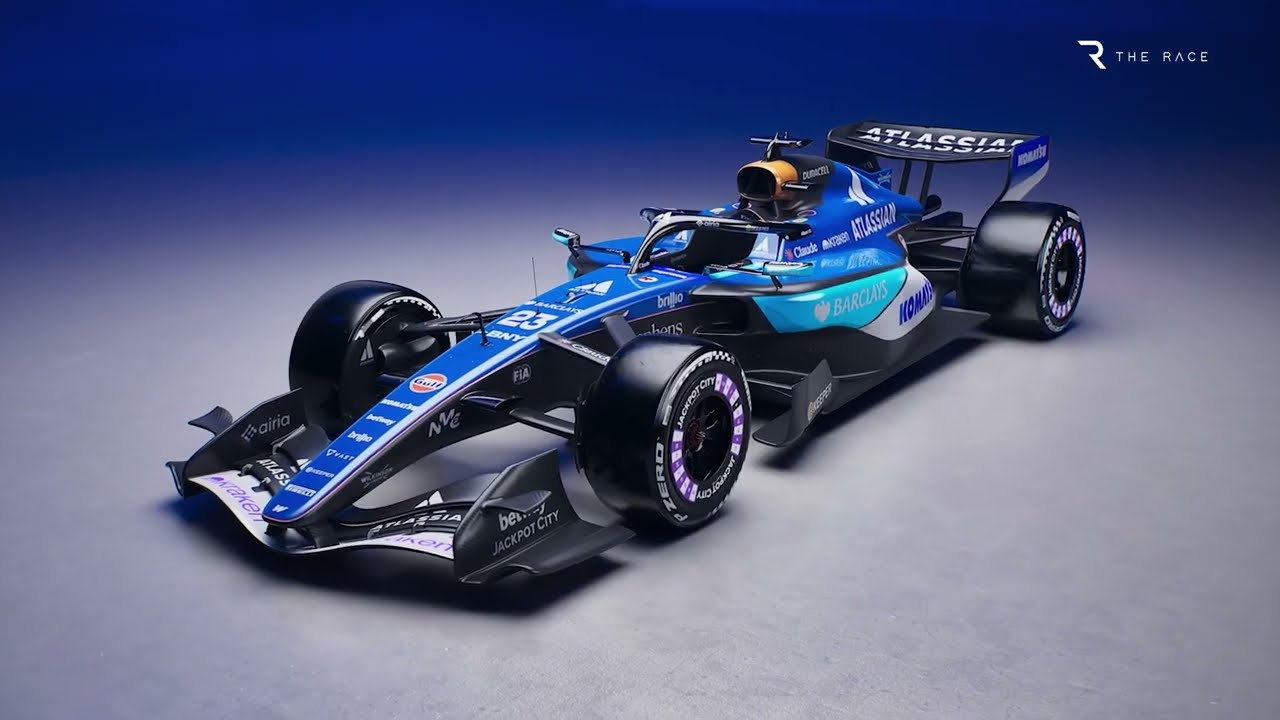
For now, the renders look pretty. But as every racer knows, you can’t race a render.
News

Inside Shane Richie’s love life: Drug – fuelled orgy with six blondes; real reason he split from Coleen Nolan; six-year ‘affair with fan’
Inside Shane Richie’s love life: Orgy with six blondes; real reason he split from Coleen Nolan; six-year ‘affair with fan’ He’s popular with the ladies… Shane Richie…

SH0CKING REVELATI0N:A sh0cking behind-the-scenes secret revealed about Lizzie Rizzini, the woman replacing Carol Kirkwood on the 6pm weather bulletin
BBC viewers still reeling from the departure of Carol Kirkwood got another surprise last night when presenter Lizzie Rizzini appeared to flash her black lace stockings on…

HEARTBREAKING: Peter Andre’s Tearful Message to Son Junior After SHOCKING Revelation About How He Truly Feels Toward Mum Katie Price — Katie Price’s reaction scares fans.
Peter Andre’s emotional message to son Junior after it’s revealed how he really feels about mum Katie Pri… PETER Andre has shared an emotional message to his…

Ben Shephard opens up about the devastating health battle his wife is facing: “She wakes up crying every single morning…”
Inside This Morning Ben Shephard’s Life Including Rarely Seen Wife and Health Battle Ben Shephard is a name synonymous with British television, renowned for his engaging presentation…

🚨 LIVE TV HEARTBREAK: Good Morning Britain Host Announces ‘Devastating’ Dɘath of Guest Minutes Into Show
Viewers of Good Morning Britain were met with heartbreaking news just minutes into Friday’s (January 30) episode, as co-hosts Kate Garraway and Ranvir Singh reported the tragic…

Emmerdale legend Cain Dingle will never be the same again after a shock cancer diagnosis turns his world upside down
FROure Desk. Full Terms and conditions are available on the website http://www.itv.com/presscentre/itvpictures/terms Emmerdale wouldn’t be Emmerdale without the glowering, grunting embodiment of manliness that is Cain Dingle (Jeff Hordley) But…
End of content
No more pages to load






