For four long years, the narrative has been the same: Lewis Hamilton, the seven-time world champion, seemed to have lost his edge. The statistics were brutal—only two wins across the entire ground effect era, while his qualifying head-to-head record against teammate George Russell slipped to a dismal 5-19 by 2024. Critics pointed to his age; others questioned his motivation. But a deeper look into the technical reality of Formula 1 suggests that Hamilton didn’t forget how to drive. Instead, the sport shifted in a direction that mechanically broke his technique.
Now, as the dust settles on the Barcelona pre-season testing in January 2026, the wind has shifted. The 2026 regulations haven’t just changed the cars; they have dismantled the specific obstacles that held Hamilton back. The result? A rejuvenated Hamilton topping the timesheets in his new Ferrari, describing the car with a word we haven’t heard from him in years: “fun.”
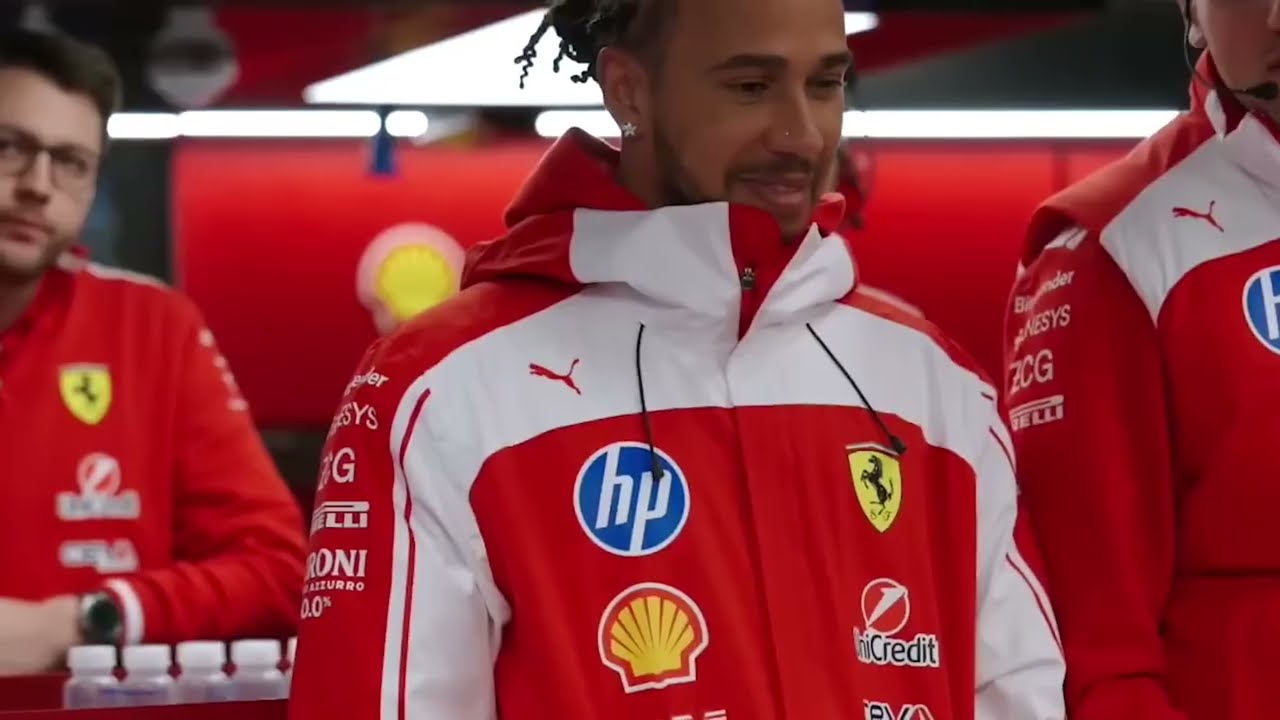
The “Ground Effect” Nightmare
To understand why 2026 is such a turning point, we have to understand what went wrong in 2022. Hamilton’s natural driving style—drilled into him by his father, Anthony Hamilton, on karting tracks decades ago—relies on aggressive, late braking. He attacks the corner entry, pitching the car forward to load the front tires with grip, and then uses that instability to rotate the rear of the car sharply.
This technique, often described as a “V-style” cornering approach, requires a car that can tolerate pitch and dive. The ground effect cars of 2022-2025 hated this. These machines relied on Venturi tunnels underneath the floor to generate downforce. They needed to run low and flat. If a driver like Hamilton pitched the nose down too aggressively, the airflow would stall, downforce would vanish, and the rear would snap unpredictably.
For four seasons, Mercedes tried to build a car that could handle Hamilton’s style without triggering this aerodynamic cliff, but they never fully solved it. The car demanded smooth inputs and rolling speed—the exact opposite of Hamilton’s jagged, aggressive instincts. He was fighting the physics of his own machinery every single lap.
The 2026 Revolution: A Technical Reset
Enter the 2026 regulations. The FIA’s changes are extensive, but they seem almost hand-picked to solve Hamilton’s problems.
First, the cars are significantly lighter. The minimum weight has dropped by 32kg (to 768kg), and the cars are 200mm shorter. Lighter, smaller cars are inherently more responsive. They change direction more willingly and forgive mistakes more readily. For a driver who thrives on manhandling a car and recovering from slides, this reduction in inertia is a massive gift.
But the real game-changer lies underneath. The Venturi tunnels are gone. They have been replaced by a flat central floor, echoing the aerodynamic philosophy of the pre-2022 era. This removes the “ride height sensitivity” that plagued Hamilton. No longer does the car need to be driven flat to work. Drivers can once again pitch the car, attack the brakes late, and use weight transfer to turn—without fear of the floor stalling and sending them into a wall.
The Barcelona Verdict
The theory is sound, but the track action is where it counts. And the early signs from the Barcelona testing are compelling.
Ferrari topped the timesheets, with Hamilton posting a 1:16.348 on the final day, marginally ahead of his former teammate George Russell. But lap times in testing can be deceiving due to unknown fuel loads. What matters more is the driver feedback.
Hamilton described the new Ferrari SF-26 as “oversteery, snappy, and sliding”—adjectives that would have described a nightmare scenario in the ground effect era. But in 2026, he calls it “enjoyable” and “catchable.” This distinction is critical. A ground effect car snapping meant a crash; a 2026 car sliding means the driver can control the rotation with the throttle and steering. It rewards the exact “dance on the limit” style that made Hamilton a legend.
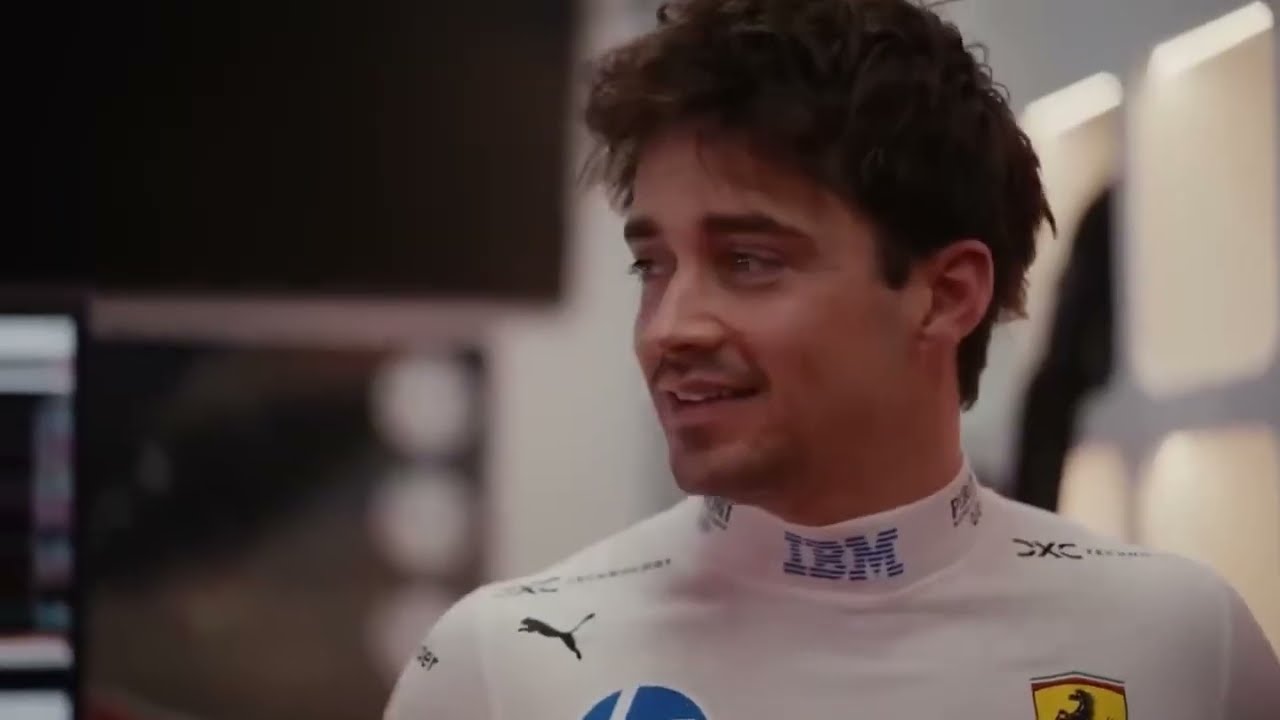
Interestingly, his new teammate Charles Leclerc was less enthusiastic, admitting he wasn’t a fan of the car “for the time being.” When two world-class drivers in the same car have opposite reactions, it usually signals a shift in whose style the machinery favors. Right now, the arrow points squarely at Hamilton.
The Verstappen Contrast
The other side of this coin is Max Verstappen. The Dutchman dominated the ground effect era partly because his driving style adapted perfectly to it. He learned to be incredibly smooth, using gentle inputs that kept the floor platform stable.
The 2026 cars, with their active aerodynamics and lack of ground effect tunnels, move the goalposts back. The specific advantage Verstappen held—his ability to extract speed from a rigid, stable-floor car—is neutralized. While Verstappen is a generational talent capable of adapting to anything, the inherent mechanical advantage he enjoyed has evaporated. He was vocal about his dislike for the ground effect cars, citing physical discomfort, but ironically, they suited his results perfectly. Now, he faces a playing field that tilts back toward the “instinctive” drivers.
A Word of Caution
Of course, championships aren’t won on paper or in winter testing. Hamilton is 41 years old. He is entering a new environment at Ferrari without his longtime race engineer Peter “Bono” Bonnington. He also has to adapt to the specific engine braking characteristics of the Ferrari power unit, which differs from the Mercedes system he used for over a decade.
Furthermore, Ferrari has a history of winning “winter championships” only to fade when the season starts. The reliability of the new active aero systems and the 50/50 split between electric and internal combustion power adds a layer of unpredictability that could derail any driver’s campaign.
Conclusion
The 2026 season represents a clean slate, but for Lewis Hamilton, it feels more like a homecoming. The specific technical shackles that bound him for the last four years have been cut. The cars can dance again. They can be thrown into corners, pitched on their nose, and slid on the exit.
It is too early to hand him the trophy, but the evidence is undeniable: the sport has mechanically pivoted back in his direction. After years of looking like he was fighting with one hand tied behind his back, Lewis Hamilton finally has a weapon that fits his hand. And that should terrify the rest of the grid.
News

Inside Shane Richie’s love life: Drug – fuelled orgy with six blondes; real reason he split from Coleen Nolan; six-year ‘affair with fan’
Inside Shane Richie’s love life: Orgy with six blondes; real reason he split from Coleen Nolan; six-year ‘affair with fan’ He’s popular with the ladies… Shane Richie…

SH0CKING REVELATI0N:A sh0cking behind-the-scenes secret revealed about Lizzie Rizzini, the woman replacing Carol Kirkwood on the 6pm weather bulletin
BBC viewers still reeling from the departure of Carol Kirkwood got another surprise last night when presenter Lizzie Rizzini appeared to flash her black lace stockings on…

HEARTBREAKING: Peter Andre’s Tearful Message to Son Junior After SHOCKING Revelation About How He Truly Feels Toward Mum Katie Price — Katie Price’s reaction scares fans.
Peter Andre’s emotional message to son Junior after it’s revealed how he really feels about mum Katie Pri… PETER Andre has shared an emotional message to his…

Ben Shephard opens up about the devastating health battle his wife is facing: “She wakes up crying every single morning…”
Inside This Morning Ben Shephard’s Life Including Rarely Seen Wife and Health Battle Ben Shephard is a name synonymous with British television, renowned for his engaging presentation…

🚨 LIVE TV HEARTBREAK: Good Morning Britain Host Announces ‘Devastating’ Dɘath of Guest Minutes Into Show
Viewers of Good Morning Britain were met with heartbreaking news just minutes into Friday’s (January 30) episode, as co-hosts Kate Garraway and Ranvir Singh reported the tragic…

Emmerdale legend Cain Dingle will never be the same again after a shock cancer diagnosis turns his world upside down
FROure Desk. Full Terms and conditions are available on the website http://www.itv.com/presscentre/itvpictures/terms Emmerdale wouldn’t be Emmerdale without the glowering, grunting embodiment of manliness that is Cain Dingle (Jeff Hordley) But…
End of content
No more pages to load






