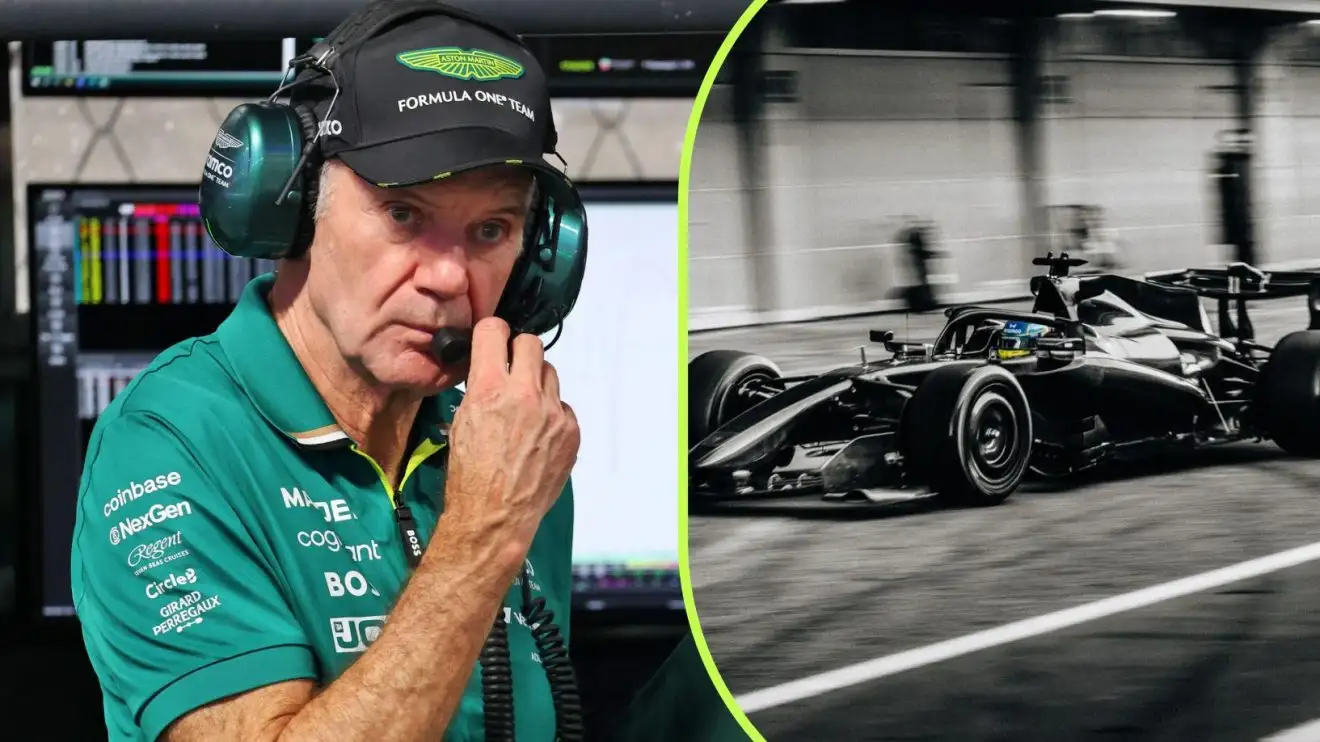
The dust has barely settled in Barcelona, but one topic is dominating every conversation in the Formula 1 paddock: the Aston Martin AMR26. In a sport where incremental gains are usually the name of the game, Adrian Newey and his team have decided to flip the table. The legendary designer, now sitting as Team Principal, has overseen the creation of a machine that is being described with words like “radical,” “aggressive,” and “extreme.” But behind the striking bodywork and the headlines lies a story of a frantic race against time, a daring engineering philosophy, and a development war that is only just beginning.
The “Newey Effect” Takes Shape
When Adrian Newey took the helm at Aston Martin late in 2025, the expectations were immediately stratospheric. He is, after all, the man whose pen has drawn more championship-winning cars than anyone else in history. However, the AMR26 is unique. It is the first car developed under his direct leadership as Team Principal, and it is the first challenger built for the complex new 2026 regulations that integrate a new power unit and chassis simultaneously.
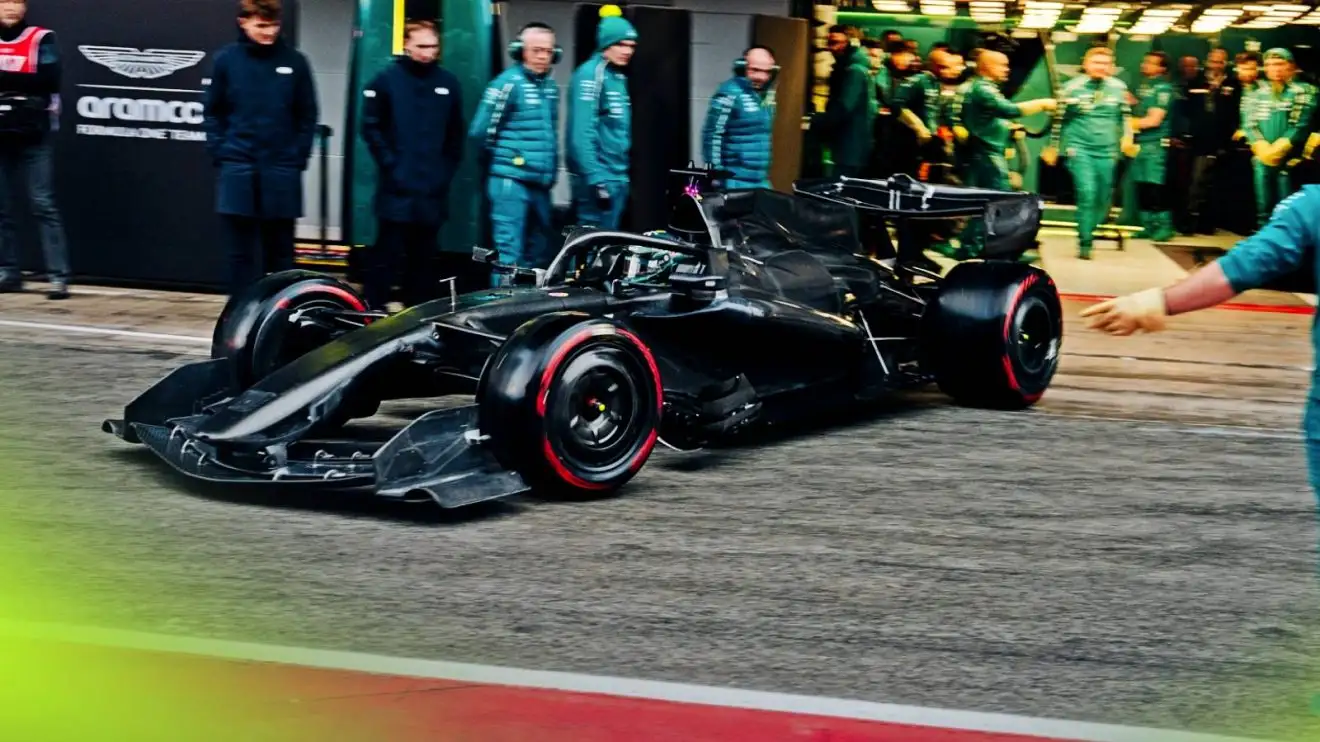
The car that rolled out in Barcelona was not just an evolution; it was a statement. Newey himself has been surprisingly open about the process, revealing that while the design is indeed striking, it is merely a baseline. The veteran engineer grinned when discussing the car’s tight packaging, a hallmark of his most successful designs, but he also cautioned against premature celebrations. The “Newey Effect” is clearly visible, but as he points out, this is a holistic package where every component, from the mechanical platform to the aerodynamic surfaces, must sing in harmony.
A Radical Suspension and the “Impossible” Wishbones
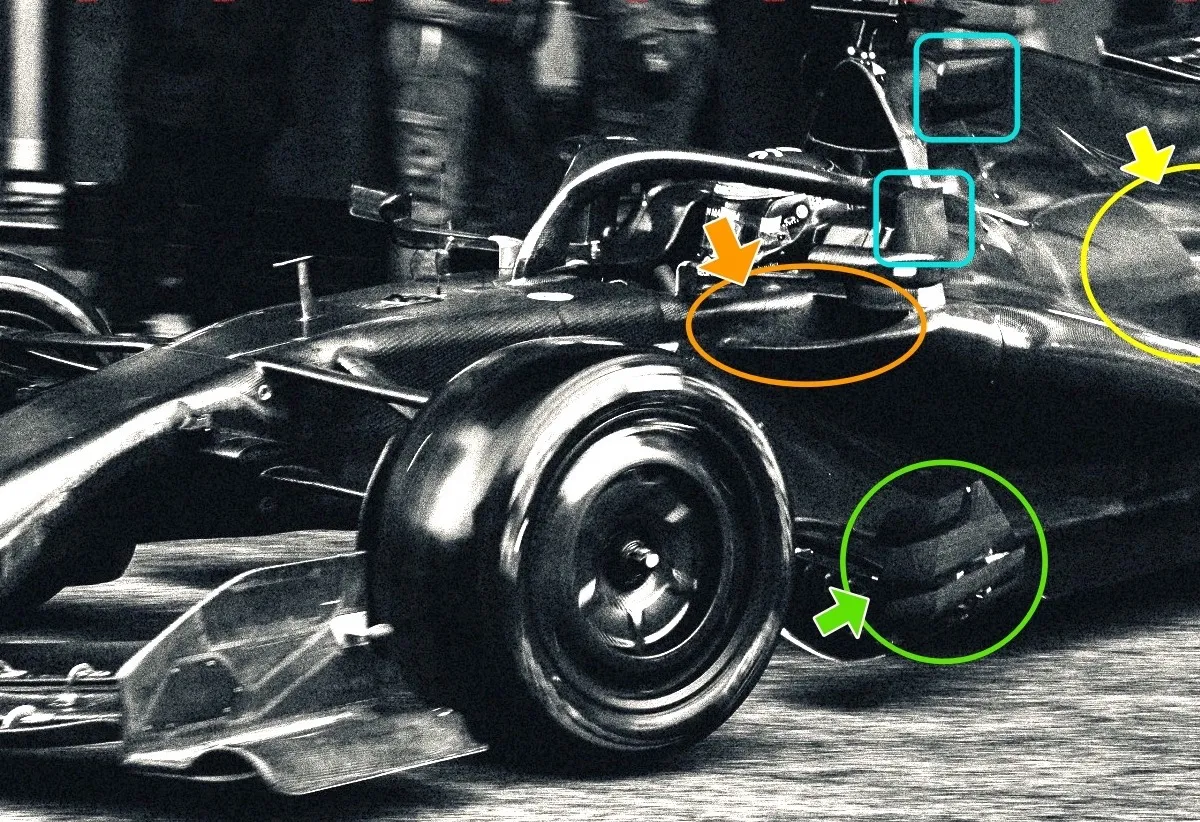
If you want to understand why the paddock is buzzing, you have to look at the suspension. It is an area where Newey has always excelled, often finding mechanical grip where others find only drag. The front suspension of the AMR26 has already drawn gasps from rivals. James Vowles, looking at the competitor’s machine, reportedly remarked that the wishbone setup was something he didn’t even think was possible. That kind of reaction from a rival team boss is rare and speaks volumes about the level of innovation Aston Martin is bringing to the track.
The rear of the car is equally fascinating. The suspension appears to be connected to a central pylon, creating what analysts are calling a “beam wing effect.” In the world of aerodynamics, this is crucial. It suggests that the mechanical components are doing double duty—supporting the car while also conditioning the airflow to drive the diffuser harder. Newey emphasized that these shapes are vital for ensuring the flow from the front to the rear is as clean as possible. It is a high-risk, high-reward strategy that differentiates the AMR26 from every other car on the grid.
The Four-Month Deficit and the Wind Tunnel Turnaround
Perhaps the most shocking revelation to come out of the recent interviews is just how far behind Aston Martin started. While other teams began their 2026 development in January as soon as regulations allowed, Aston Martin was stalled. They faced severe correlation issues in their wind tunnel, a nightmare scenario for any F1 team. It wasn’t until mid-April that the AMR26 truly began its design phase, putting them effectively four months behind their rivals.
For most teams, a four-month deficit would be a death sentence. But this is where the narrative twists. Newey addressed these early struggles head-on, noting that the correlation work they were forced to do has actually turned a weakness into a superpower. He now boldly claims that Aston Martin possesses the best wind tunnel in Formula 1. The delay forced them to commit to a specific philosophy early on without the luxury of exploring endless dead ends. They had to be right the first time. It is a terrifying way to build a race car, but if the correlation is as good as Newey suggests, they might be trusting their data more than any other team on the grid.
The “Basic” Wing and the Electronic Rumors
Observers in Barcelona noted something strange: for a car that looks so radical, the front wing appeared suspiciously basic. It lacked the intricate complexity seen on rivals’ cars, leading to speculation that it was merely a placeholder. This aligns with rumors swirling since December that a constructor—likely Aston Martin—has been developing an electronic solution for front aero control.
The theory is compelling. Traditional hydraulic systems are heavy and complex. An electronic actuator would save crucial weight and offer more precise control over the flap angles. With the AMR26 rumored to be starting the season slightly overweight, shedding pounds in the actuation systems would be a masterstroke. Newey has a history of starting with overweight cars—the dominant Red Bull RB18 was significantly over the weight limit at its debut—and then stripping them down race by race. If the “basic” wing is just a decoy for a revolutionary electronic system arriving in Bahrain or Melbourne, Aston Martin could unlock a chunk of performance that no one else has access to.
The Evolution Plan: Melbourne Will Be Different
Newey has been categorical about one thing: the car we saw in Barcelona is not the car that will race in Australia. The development curve for the 2026 season is expected to be vertical, and Aston Martin is planning a massive upgrade package almost immediately. He hinted that features never before implemented in F1 will debut on the car, possibly as early as the Bahrain test.
This aggressive upgrade plan is likely why the team felt comfortable showing a “shakedown spec” that was missing key aerodynamic devices. They are hiding their hand. The sidepods, the floor edges, and that mysterious front wing are all subject to change. The rumor mill suggests a major package is already scheduled for Miami, race five or six, which would align with the team’s history of rapid in-season development.
Managing Expectations in a Lottery Year
Despite the aggressive design and the hype, Newey remains a pragmatist. He warns that looks aren’t everything. As George Russell rightly pointed out, points aren’t awarded for the “sexiest” car. The 2026 regulations have introduced a massive variable in the form of the new power units. Aston Martin’s partner, Honda, has been quiet—laidback, even. This silence is unsettling for some, but for those who know Honda’s recent history, it could interpret quiet confidence.
Because the engines are new and the fuel formulations are different, the pecking order is genuinely unknown. The “lottery” of the new era means that a radical chassis could be undone by a lackluster engine, or vice versa. Newey’s “keep an open mind” mantra is a shield against this uncertainty. He knows that reliability and engine integration will be just as critical as the suspension geometry he has labored over.
Conclusion: A Season of Secrets
The AMR26 is a fascinating contradiction. It is late, yet advanced. It is overweight, yet features tight packaging. It is radical, yet the team insists they are just getting started. Adrian Newey has managed to turn a potential disaster—the wind tunnel delay—into a narrative of recovery and potential dominance.
As we look toward the Bahrain tests, all eyes will be on the green car. Will the “electronic” wing appear? Will the weight come off? And most importantly, has Adrian Newey’s late-starting gamble paid off? In a season of unknowns, the only certainty is that Aston Martin has built the most talked-about car on the grid, and the real race is only just beginning.
News

Inside Shane Richie’s love life: Drug – fuelled orgy with six blondes; real reason he split from Coleen Nolan; six-year ‘affair with fan’
Inside Shane Richie’s love life: Orgy with six blondes; real reason he split from Coleen Nolan; six-year ‘affair with fan’ He’s popular with the ladies… Shane Richie…

SH0CKING REVELATI0N:A sh0cking behind-the-scenes secret revealed about Lizzie Rizzini, the woman replacing Carol Kirkwood on the 6pm weather bulletin
BBC viewers still reeling from the departure of Carol Kirkwood got another surprise last night when presenter Lizzie Rizzini appeared to flash her black lace stockings on…

HEARTBREAKING: Peter Andre’s Tearful Message to Son Junior After SHOCKING Revelation About How He Truly Feels Toward Mum Katie Price — Katie Price’s reaction scares fans.
Peter Andre’s emotional message to son Junior after it’s revealed how he really feels about mum Katie Pri… PETER Andre has shared an emotional message to his…

Ben Shephard opens up about the devastating health battle his wife is facing: “She wakes up crying every single morning…”
Inside This Morning Ben Shephard’s Life Including Rarely Seen Wife and Health Battle Ben Shephard is a name synonymous with British television, renowned for his engaging presentation…

🚨 LIVE TV HEARTBREAK: Good Morning Britain Host Announces ‘Devastating’ Dɘath of Guest Minutes Into Show
Viewers of Good Morning Britain were met with heartbreaking news just minutes into Friday’s (January 30) episode, as co-hosts Kate Garraway and Ranvir Singh reported the tragic…

Emmerdale legend Cain Dingle will never be the same again after a shock cancer diagnosis turns his world upside down
FROure Desk. Full Terms and conditions are available on the website http://www.itv.com/presscentre/itvpictures/terms Emmerdale wouldn’t be Emmerdale without the glowering, grunting embodiment of manliness that is Cain Dingle (Jeff Hordley) But…
End of content
No more pages to load






