Author: Ms Bich

  • Uffington White Horse: 3,000 Year Old Prehistoric Hill Figure

    Uffington White Horse: 3,000 Year Old Prehistoric Hill Figure

    The internationally-renowned Bronze-Age Uffington White Horse in Oxford can be seen from miles away.

    Uffington White Horse

    It is believed to be the oldest hill figure in Britain, dating back over 3,000 years to the late Bronze Age.

    The figure is created by cutting trenches into the hillside and filling them with crushed white chalk, giving it a striking appearance against the green landscape.

    It measures approximately 110 meters long and depicts a stylised representation of a horse, with its head turned and its legs extended.

    Uffington White Horse

    The origin and purpose of the Uffington White Horse remain uncertain, but it is often associated with various myths and legends.

    Some theories suggest that it could have been created as a tribal symbol, a representation of a Celtic deity, or as a marker for ritual ceremonies.

    Others believe it may have served as a boundary marker or a landmark for traveler’s.

    The shape of the horse has changed over the centuries – the present outline may be only a part of the original: aerial photography shows that a larger, more conventional shape of a horse lies beneath.

    The loss of shape has been caused by slippage of the top soil and by repeated recutting.

    Uffington White Horse

    The Uffington White Horse is managed by the National Trust and is a popular tourist attraction, drawing visitors from around the world who come to marvel at its ancient beauty and mysterious origins.

    During the Second World War the figure, easily recognisable from the air, was covered over with turf and hedge trimmings so that Luftwaff pilots could not use it for navigation during bombing raids.

    It was uncovered after the war by Welsh archaeology professor William Francis Grimes.

    The ancient horse is part of the unique complex of ancient remains that are found at White Horse Hill and beyond, spreading out across the high chalk downland.

    The Manger, a dramatic dry valley has steep rippled sides left from the retreating permafrost during the last Ice Age.

    Uffington White Horse

    These ripples are known as the Giant’s Steps.

    To the east of the Manger lies Dragon Hill, a small roundish hill with a flattened top.

    It is said to be the site where St. George, England’s patron saint, slew the dragon. The blood poisoned the ground and left a white chalk scar for all to see.

    Crowning White Horse Hill is an Iron Age hillfort known as Uffington Castle.

    Uffington Castle occupies the summit of Whitehorse Hill.

    Uffington White Horse

    It consists of a large enclosure, measuring about 220 metres by 160 metres, surrounded by a wide chalk-stone bank or inner rampart about 12 metres wide and 2.5 metres high, and formerly lined with sarsen (sandstone) stones.

    Around this is a grass-covered ditch about 3 metres deep and a further, smaller bank forming an outer rampart.

    A causeway, flanked by the out-turned ends of the inner rampart, provides an entrance to the site from the west. This would have been closed by a gate.

    Postholes and pits revealed during archaeological excavations serve as evidence of structures built within the enclosure during the hillfort’s occupation, while pottery and coins have been found in burial chambers close by.

    The Iron Age buildings are likely to have been large round huts, each housing an extended family group.

    Uffington White Horse

    In the Middle Ages the land within the enclosure was ploughed and earthworks mark the ridge and furrow pattern of cultivation.

    Large Iron Age hillforts are rare. Most are located on the high chalklands of the southern counties of England, and Uffington Castle is regarded as an outstanding example.

    Scouring of the White Horse

    The White Horse has been carefully cleared of vegetation from time to time.

    The figure has remained clear of turf throughout its long existence, except for being covered as a precaution during the Second Word War.

    The cleaning process, known as the Scouring of the White Horse, was formerly made the occasion of a festival.

    Horse

    Sports of all kinds were held, and keen rivalry was maintained, not only between the inhabitants of the local villages, but between local champions and those from distant parts of England.

    The first of such festivals known took place in 1755 and they died out only subsequently to 1857, after 30,000 people turned up for the event.

    The Scouring of the White Horse, by Tom Hughes, was published in 1859 as a semi-fictionalised recounting of his visit to the 1857 event.

    He recounts being told that the local towns had laid claim to a tradition of scouring the White Horse since Saxon times.

    The tradition was revived in 2009 by the National Trust, with local volunteers replacing a layer of freshly quarried chalk on the Spring Bank Holiday weekend.

    horse

    Frequent work is required for the figure to remain visible.

    If regular cleaning is halted, the figure quickly becomes obscured; Periodic scouring continues, on chalking day volunteers with hammers, buckets of chalk, and kneepads kneel and “smash the chalk to a paste, whitening the paths cut in the grass inch by inch.”

    Someone who recently visited the site said: “Fantastic views over Oxfordshire and beyond. White Horse and hill top fort very interesting and give a history fix.

    ”We did the National Trust 4 mile circular route that is well sign posted and takes 2 hours. However we are quite fit and parts of the route are steep both up and down so not for all.

    ”We also took in lunch at the White Horse pub in the village which was excellent both in food available and service.”

    Uffington White Horse

    If you’d like to visit, the address is: Whitehorse Hill, Oxfordshire.

    If you enjoyed this blog post, please follow Exploring GB on Facebook for daily travel content an inspiration.

    Don’t forget to check out our latest blog posts below!

    Thank you for visiting Exploring GB.

  • Will One Direction Ever Reunite? Here’s What Each Member Has Said About the Possibility

    Will One Direction Ever Reunite? Here’s What Each Member Has Said About the Possibility

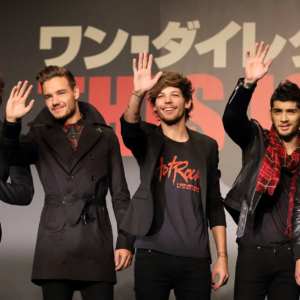
    It’s been years since One Direction went on an indefinite hiatus with Harry Styles, Niall Horan, Liam Payne, Louis Tomlinson and Zayn Malik pursuing solo careers.

    Will One Direction Ever Reunite? Here's What Each Member Has Said About the Possibility

    However, anticipation for a reunion is at an all-time high in 2023.

    We’re not even halfway through the year yet, and almost every member of the group has been asked about the possibility of them getting back together to release new music.

    One Direction – Wikipedia tiếng Việt

    In fact, there was already a major rumor that a reunion was planned, but it wound up being false.

    As questions continue to swirl about the possibility, we went back and rounded up the most recent comments from each member of the group that relate to getting the band back together again.

    There's Only 'One Direction' For This Boy Band: Up : NPR

  • It Looks Bleak: The Beatles Are Still Charting the Future of Pop, where no golden goose need ever stop laying

    It Looks Bleak: The Beatles Are Still Charting the Future of Pop, where no golden goose need ever stop laying

    The Beatles Are Still Charting the Future of Pop. It Looks Bleak.

    Their latest song points toward a future where no golden goose need ever stop laying.

    Earlier this month, alongside the arrival of a new Beatles single called “Now and Then,” there also came a 12 minute and 24 second promotional film — exactly three times as long as the song itself — explaining the project. Why so long a preface? Part of it was the solemnity of the occasion: This was, the film’s title card proclaimed, “the last Beatles song.” But there was another purpose, too, one that was uncomfortably hard to miss.

    “Now and Then” requires not just explanation but also, awkwardly, justification. The song was originally a demo recorded by John Lennon in his New York apartment in the late 1970s, well after the Beatles broke up. In the 1990s, it was among the recordings that Yoko Ono provided to Paul McCartney, George Harrison and Ringo Starr as candidates for being polished up into fully arranged songs. Two of those — “Free as a Bird” and “Real Love” — were released in the mid-1990s, as part of the “Anthology” series of TV documentaries, compilation albums and a book. But “Now and Then” was abandoned, in part because of technical difficulties in separating Lennon’s vocals from the murky piano on the same audio track: This was the audio equivalent of a scribbled note to self, not a usable studio recording. Decades later, though, in the course of making the 2021 documentary “Get Back,” the director Peter Jackson’s production company developed a cutting-edge machine-learning application that could be trained to tease apart components of recordings. Suddenly it was possible to isolate individual Beatles’ voices from garbled footage of them in studios and rehearsal halls as they conceived and recorded the album “Let It Be.” Applied to “Now and Then,” this new technology set Lennon’s singing free.

    The moment when the promotional video evokes this jailbreak — playing Lennon’s isolated voice over footage that juxtaposes his face with an empty studio — is admittedly chills-inducing. The video is full of similar juxtapositions. We see the astonishingly well-preserved Paul McCartney of 2023, marveling at the gifts of technology; then we see him in the ’90s, goofing around with a still-alive George Harrison; then the bearded family man of the late ’60s, then the fresh-faced Liverpudlian lad suddenly catapulted to stardom. Time collapses: Beatles past and present, “now” and “then,” come together, Lennon’s voice from the ’70s layering with Harrison’s contributions from the ’90s “Anthology” sessions, McCartney and Starr’s more recent efforts, even scraps of wordless harmony singing borrowed from ’60s recording sessions and tracks like “Eleanor Rigby” and “Because.”

    It’s so moving that it took me a few rewatches, over a few days, to start asking the obvious questions. Centrally: Does it really make sense to use a song originally written by Lennon alone, with no known intention of ever bringing it to his former bandmates, as the basis for a “Beatles” song? Is Lennon’s vocal, plucked and scrubbed by artificial intelligence and taking on a faintly unnatural air, something he would have embraced or been repulsed by? “Is this something we shouldn’t do?” McCartney asks in a voice-over, but neither he nor anyone else ever articulates exactly what the problem might be. Instead, the film answers unspoken objections by repeatedly swatting them down. McCartney imagines calling his old bandmate up — “Hey, John, would you like us to finish this last song of yours?” — and then supplies Lennon’s answer for him: “I’m telling you, I know the answer would’ve been ‘Yeah!’ He would have loved that!” John “would have loved” the approach, his son Sean concurs — “He was never shy to experiment with recording technology.” In the song’s music video, directed by Peter Jackson, a youthful Lennon is spliced into the “Now and Then” recording sessions: He does, indeed, look thrilled.

    “We’ve all played on it,” McCartney says. “So it is a genuine Beatle recording.” On one hand, who is more qualified than McCartney to issue this edict of authenticity? On the other: Why did he feel the need?

  • Feb. 9 marks the 60th anniversary of The Beatles’ first appearance in the US and pop music was changed forever

    Feb. 9 marks the 60th anniversary of The Beatles’ first appearance in the US and pop music was changed forever

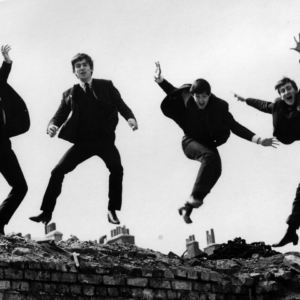
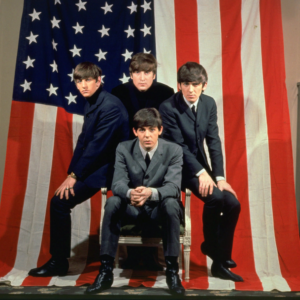
    On Feb. 9, 1964, a band from Liverpool, England, graced American television screens on the popular “Ed Sullivan Show” for the first time, and pop music was changed forever.

    Now, 60 years later, we continue to listen to The Beatles and those timeless songs from John Lennon, Paul McCartney, George Harrison and Ringo Starr. As a reference for the younger generations, The Beatles were bigger than Taylor Swift — by record-sales metrics, anyway.

    Today, McCartney and Starr are the last remaining members. Lennon was fatally shot by stalker Michael David Chapman on Dec. 8, 1980, in New York City. Harrison died Nov. 29, 2001, in California, after a long bout with cancer.

    I was introduced to The Beatles through the radio and their movies. Their films show us their silliness and personalities. Their documentaries showed the toll fame took on their friendships.

    In celebration of their anniversary of coming to the U.S., here are six Beatles films that should be seen. Or, as Starr once sang, “They’re going to put me in the movies/ They’re going to make a big star out of me/ We’ll make a film about a man that’s sad and lonely/ And all I got to do is act naturally.”

    Beatles_with_Ed_Sullivan.jpg

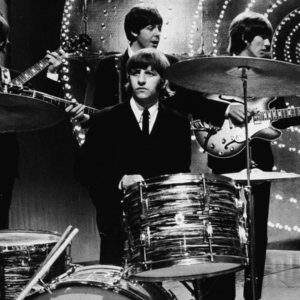
    The Beatles with Ed Sullivan from their first appearance on Sullivan’s variety television program in February 1964. From left, Ringo Starr, George Harrison, Ed Sullivan, John Lennon and Paul McCartney.

    1. “A Hard’s Day Night” (1964)
    This was The Beatles’ first film, and I love that it shows off their quirky sense of humor. If ever a film was striking while the guys’ popularity was hot, it was this one. A soundtrack accompanied the film, including the title track, which was brilliant marketing. Also, this film has a great cameo, although no one knew he would grow up to be a famous musician as well. A 13-year-old Phil Collins appears in a concert scene. This film also is considered to have influenced today’s music videos.

    2. “Help!” (1965)
    These films aren’t exactly known for having Oscar-worthy storylines, but if you were a teenage girl in 1965, did it matter? In this one, The Beatles again play a version of themselves. This time, they’re trying to record their own album, but they’re also trying to protect Starr from a cult.

    3. “Magical Mystery Tour” (1967)
    The idea for this film was primarily McCartney’s in the spring of 1967, but it was put aside. After the death of their longtime manager, Brian Epstein, in August of that same year, the project got back on track. A version of “Magical Mystery Tour” premiered Dec. 26, 1967, on the BBC1. It was meant to be a little psychedelic with vibrant colors, but BBC1 premiered it in black and white. Starr supposedly called the network to complain that the film got panned because it should have been shown in color. It was later shown on BBC2 in color.

    It was more like sketch TV but at times super weird. For instance, The Beatles are seen wearing animal masks while singing songs like “I Am the Walrus.” By this time, The Beatles had really stopped touring, mainly because they couldn’t hear themselves over screaming fans. Lennon was basically quoted that if they couldn’t tour, they wanted to do something that was interesting enough for fans.

    ABBEY ROAD: HISTORIA BEATLE [III]: The Night That Changed America

    4. “Yellow Submarine” (1968)
    The genre for this movie is dubbed “an animated jukebox musical fantasy comedy adventure film,” and that should tell you how all over the place it is. The Beatles basically appear in most of the film as cartoon cutouts. The Fab Four really didn’t have much input on this film, except to contribute four unreleased songs, including “All Together Now.” They actually loathed “Yellow Submarine” so much that they didn’t even do the voices. An interesting note about this film is the tight turnaround for the animation. Director George Dunning had 11 months to complete it. Back then, full animated Disney features took up to four years to create.

    5. “The Beatles Anthology” (1995)
    This three-part television series included a three-volume set of double albums and a book. The remaining members of the group at the time, McCartney, Harrison and Starr, were interviewed for the documentary, which follows the group from its early beginnings in Liverpool to its breakup. Expanded versions were released on VHS and Laserdisc in 1996 and on DVD in 2003. The book was released in 2000. This brought a second wave of Beatlemania, as the accompanied albums included new songs and unreleased tracks.

    6. “The Beatles: Get Back” (2021)
    Directed and written by Oscar-winner Peter Jackson, this documentary follows the making of the “Let It Be” album, including the famous 1969 rooftop concert. The way Jackson spliced the film doesn’t show the long-held beliefs that they argued the whole time. Instead, it shows their creative process. It looked like they were not getting any further on songs and then — boom — they were ready. A few things in this film that should be mentioned. McCartney shows off his Type-A personality and comes across sometimes as a control freak, which, in all fairness, he is.

    Pay attention to Yoko Ono and Harrison’s conversation. Although the two had a contentious relationship, Ono is seen supporting Harrison, who said they should work on solo projects and then come back as The Beatles. Ono has long been the scapegoat for the band’s breakup, but this documentary reveals the cracks that had already formed within the group, long before Lennon met Ono.

    The Beatles performed their last official concert in August 1966 at San Francisco’s Candlestick Park. However, the last time they performed together live was the 1969 rooftop concert — not exactly a public concert, but it could be heard from the surrounding streets of London. The following year, McCartney released a press release saying he was no longer with the band, which, for some diehard fans, marked their official breakup. But it took until 1974 before the band legally dissolved.

    Today, the lone surviving Beatles still get together to perform. McCartney has made several appearances at various Ringo Starr & His All-Starr Band concerts.

    The Beatles are considered the most influential band in history. And maybe 60 years from now, someone else will be discussing their “Long and Winding Road,” too.

  • Paul McCartney’s stolen Beatles bass guitar found after 51 years

    Paul McCartney’s stolen Beatles bass guitar found after 51 years

    Paul McCartney’s stolen Beatles bass guitar found after 51 years

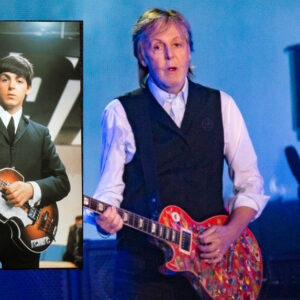
    Paul McCartney performs at Glastonbury Festival in Somerset, England, Saturday, June 25, 2022. (Photo by Joel C Ryan/Invision/AP, File)
    Paul McCartney performs at Glastonbury Festival in Somerset, England, Saturday, June 25, 2022. (Photo by Joel C Ryan/Invision/AP, File)

    LONDON –A stolen Hofner bass guitar belonging to Paul McCartney(opens in a new tab) and used to record The Beatles’ first two albums has been found and returned after 51 years following a global hunt.

    The guitar, dubbed the “most iconic lost musical instrument of all time” by the team behind the search, The Lost Bass Project, was used in Beatles singles including 1963 hits “She Loves You” and “All My Loving.”

    “It’s the bass that started Beatlemania,” Nick Wass, one of the founders of the search team, told Reuters.

    “That’s why it’s important, it’s the one that got it going.”

    A public appeal by the project last year was shared around the world.

    “As a result of the publicity someone living in a terraced house in Hastings on the south coast of England contacted Paul McCartney’s company and then returned the bass to them,” the Lost Bass Project said. The instrument was returned last year, but this was only announced on Thursday.

    The instrument was stolen from a van in the Notting Hill area of London in October 1972, the search team said, citing information received during their investigation.

    “The guitar has been authenticated by Höfner and Paul is incredibly grateful to all those involved,” a spokesperson on McCartney’s website said.

    Wass told Reuters the bass guitar was “somewhat damaged” with a crack in the neck, a damaged bridge that would need replacing and pickups that did not work anymore.

    “But they can be sorted out, the neck can be repaired and we can make it playable again,” Wass said.

    In 2015, a guitar stolen from the late John Lennon in the 1960s sold for US$2.41 million at an auction in Beverly Hills, California. The person in possession of it said he originally bought it without knowing its connection to Lennon.

  • 20 ways The Beatles changed the world: A few things no one had yet conceived of

    20 ways The Beatles changed the world: A few things no one had yet conceived of

    Former SPIN writer Chuck Klosterman once came out with a list of bands that weren’t overrated or underrated but were just properly rated. He succinctly summed up The Beatles: “The Beatles are generally seen as the single most important rock band of all time because they wrote all the best songs. Since both of these facts are true, the Beatles are rated properly.” 

    The de facto ground zero from which contemporary rock and pop culture emerged, The Beatles did a few things better than their peers and even did a few things no one had yet conceived of. Thus, let’s celebrate the 20 ways that The Beatles changed the world.

    1 of 20

    They created the first-ever rock music videos

    They created the first-ever rock music videos
    PA Images via Getty Images

    Back in the day, most music artists could have legendary performances filmed on pre-built sets of late-night and variety shows, but outside of that, the best place to catch them would be in concert or on the radio. The Beatles’ first film, A Hard Day’s Night, had sequences designed to highlight certain songs, but the Fab Four wanted to push the idea of art and marketing even further and filmed their own performance clips for “Day Tripper” and “We Can Work It Out.”

    They would go on to film several more. Still, these standalone, audience-free film experiments centered around new songs predicted the music video era, proving another reason why they were ahead of their time.

    2 of 20

    They led the charge of the British Invasion, giving rise to a new type of British pop culture

    They led the charge of the British Invasion, giving rise to a new type of British pop culture

    1964 Diamond Images via Getty Images

    Before the British Invasion, there was good old-fashioned rock and roll. While many point to the likes of Elvis and Little Richard as acts that helped kickstart the worldwide obsession with the genre, British kids growing up on those records eventually wanted to make their own. In late 1963, the Beatles’ popularity proved so overwhelming that news programs ran stories on them.

    Following their legendary Ed Sullivan Show performance in 1964, America was consumed by “Beatlemania,” which kicked open the floodgates for acts like The Kinks, The Rolling Stones, Dusty Springfield, and The Who to make global pop culture inroads. Even The Fab Four’s home city of Liverpool quickly became a popular tourist destination, generating a global fascination with everything British.

    3 of 20

    They even broke rules on what album covers could look like

    They even broke rules on what album covers could look like
    ullstein bild/ullstein bild via Getty Images

    In the early days of the record industry, album covers would often be a photo of the artist accompanied by some text. Maybe there’d be a landscape if it was a classical record, but by and large, LP artwork was pretty predictable.

    While the bloody butcher cover of the 1966 compilation Yesterday and Today proved too extreme for the times, the line-drawn art for Revolver and pop collage for Sgt. Peppers changed notions of what could be done with the medium. Most infamously, The Beatles’ 1968’s self-titled double-disc effort was given the most radical album cover yet: Nothing but a white, blank surface. This became such a cultural touchstone that people still call this record “The White Album.”

    4 of 20

    They were masters at marketing

    They were masters at marketing

    Vinnie Zuffante/Michael Ochs Archives/Getty Images

    At the peak of Beatlemania, merchandise of John, Paul, Ringo, and George was rampant and remains hugely collectible to this day. Yet, even after their disbandment in 1970, the band’s company, Apple Corps Limited, managed to usher in their legacy into wild new ways. For each new decade, they found unique and innovative ways to bring the group’s sound to a whole new generation of listeners.

    The mid-’90s saw the release of the three-part Anthology series and documentary, showing fans oodles of outtakes and behind-the-scenes footage. The 2000 compilation 1 merely put all their chart-toppers on a single CD, selling over 31 million copies. In 2006, their Cirque du Soleil show Love premiered. Even in 2021, there was something new to say, as Peter Jackson’s Get Back documentary won universal acclaim for showing sides of the band using raw footage. Even if you think you know their catalog and story, there will always be new facets to market and repackage.

    5 of 20

    They used their platform to advance political causes

    They used their platform to advance political causes

    Central Press/Getty Images

    While “rock” music could sometimes be viewed as anti-establishment, The Beatles used their platform to explore political themes — from somewhat tongue-in-cheek (“Back in the U.S.S.R.,” “Taxman”) to genuinely heartfelt (“Blackbird,’ which is often viewed through the lens of the contemporary civil rights movement). While some politicians in the U.K. tried hard to court the group to their side, John Lennon’s solo career and marriage to Yoko Ono turned him into an activist, wielding his celebrity to highlight injustices and causes near to his heart.

    6 of 20

    They changed how records were produced

    They changed how records were produced

    Evening Standard/Hulton Archive/Getty Images

    The Beatles retired from touring fairly early in their careers (1966), which was surprising given how financially lucrative touring tends to be. Instead, with the help of producer and overall sonic scientist George Martin, the band treated the recording studio like an instrument, finding wild new ways to create never-before-heard sounds. They reversed instrument tracks, dampened the drums, had multi-layered vocals at wild tones, and used various instruments not often used on Western pop recordings. Their willingness to experiment sonically further highlighted how good the songs were structurally. Almost every song recording you hear today is indebted to the Beatles’ innovation, whether its makers know it or not.

    7 of 20

    They starred in and soundtracked movies that rewrote the rules of rock cinema

    They starred in and soundtracked movies that rewrote the rules of rock cinema

    Archive Photos/Getty Images

    Rock stars and movieplexes were nothing new when The Fab Four got big. Ricky Nelson turned his screen notoriety into chart-topping success, and Elvis Presley’s movies came out a dime-a-dozen. (They were mostly schlock, but movie-goers still showed up and bought the soundtracks.) Yet, 1963’s A Hard Day’s Night went more meta than Elvis’ filmography, as the band played “The Beatles” but in heightened, fictionalized versions of themselves, showcasing their goofy personalities and comic timing. It didn’t hurt that the resulting soundtrack is considered one of their finest pre-Rubber Soul offerings, and the film has since changed how rock musicians and cinema intertwine. (The 1965 Help! soundtrack, however, was infinitely better than its movie counterpart.)

    8 of 20

    They stuck their necks out for racial justice

    They stuck their necks out for racial justice

    Ira L. Black/Corbis via Getty Images

    In 1964, The Beatles were slated to play the Gator Bowl in Jacksonville, Florida, but initially refused to upon finding out that the crowd was segregated. “We never play to segregated audiences, and we aren’t going to start now. I’d sooner lose our appearance money,” Lennon stated then (h/t NPR). The venue ultimately relented and allowed the crowd to mix, but The Beatles didn’t stop there.

    Often covering Motown hits and citing their love of great soul singers in the press, the band requested the legendary Mary Wells to open for them during their U.K. dates. Later, Esther Phillips joined them for dates following the success of her cover of “And I Love Him.”

    9 of 20

    They rewrote the rules of pop music success

    They rewrote the rules of pop music success

    Fiona Hanson – PA Images/PA Images via Getty Images

    The date is etched in history: April 4, 1964. That’s the day the Beatles pulled off the unprecedented feat of occupying the top-five slots of the Billboard Hot 100. Around this time in Australia, they occupied six slots of their Top 10. One week in Canada, it was nine of those 10 slots. They routinely ended most years of their existence by having the U.K.’s best-selling album, shattered attendance records during the years that they toured, and once held a record for having six consecutive chart-toppers. While many of those records have been exceeded by various artists, The Beatles were the single entity to establish such envelope-pushing in the first place, a testament to their cultural force.

    10 of 20

    They created their own record label, upending the established record industry

    They created their own record label, upending the established record industry

    Lester Cohen/Getty Images for Apple Corps Ltd./Capitol/UMe

    While the Fab Four are famously associated with Capitol Records and EMI, you don’t become a world-conquering force like The Beatles without some glorious caveats. One of them was the creation of Apple Records, a home that allowed them to get as creative as they wanted without having to answer to as many people in suits. While Apple Records (and its avant-garde subsidiary, Zapple) housed Beatles’ projects, it also allowed the group to help prop up what they viewed as deserving talent, giving a major platform to the likes of Mary Hopkin, friend-of-the-band Billy Preston, the amazing Badfinger, and one squirrely young folk artist named James Taylor.

    11 of 20

    They helped push the avant-garde into the mainstream with their experiments and wild collaborators

    They helped push the avant-garde into the mainstream with their experiments and wild collaborators

    Mark and Colleen Hayward/Getty Images

    As much as The Beatles experimented in the recording studio to produce some out-there sounds and textures, they didn’t stop at mere “pop songs.” They went to the furthest reaches of known genre, culminating in the release of 1968’s “Revolution 9.” An eight-minute avant-garde slice of found sounds and musique concrète (housed on “The White Album” where any number of genres were wrangled), “Revolution 9” confounded many and delighted even more.

    It was a hard right turn for a group already bending their creativity into new shapes, but when released on an album for a group as popular as The Beatles, it too etched itself into public consciousness, elevating the status of Lennon’s known muse Yoko Ono and soon introducing the world to genres they may not have even known about.

    12 of 20

    They became somewhat unintentional fashion icons

    They became somewhat unintentional fashion icons

    Roy Illingworth/Mirrorpix/Getty Images

    Many others had worn the Baba boot before John, Paul, George, and Ringo did, but those prior champions weren’t in The Beatles. Once Beatlemania was in full swing, the four Liverpool lads with the mop-top hair started noticing a bunch of fans getting similar haircuts. That high-heeled Baba boot was soon colloquially rekindled as “the Beatle boot” because everyone wanted to wear them. As their “boy band” era slowly phased out, each member began adopting his distinct style and look, setting clothing and fashion trends every decade.

    13 of 20

    Their world-curious ways helped bring new instruments into the cultural conversation

    Their world-curious ways helped bring new instruments into the cultural conversation

    Mark and Colleen Hayward/Redferns

    The Beatles’ trip to India has been widely accepted as a large turning point for their sound, aesthetic, and overall direction. George Harrison, in particular, became fascinated by the sitar. While he signed and produced master of the instrument Ravi Shankar for Apple Records, it was Harrison’s use of sitar on “Norwegian Wood” that proved to be a gateway for Western audiences.

    Similarly, Harrison was one of the first people in the U.K. to get their hands on a powerful new thing called the Moog synthesizer. While its function was archaic (you could only hold down a single note at a time), it was still used prominently on legendary tracks like “Here Comes the Sun” and “I Want You (She’s So Heavy).” Their use of a Mellotron in “Strawberry Fields Forever” also shook up the popular instrument repertoire.

    14 of 20

    They redefined what a “solo career” after departing a band

    They redefined what a "solo career" after departing a band

    Chris Walter/WireImage

    Before The Beatles, solo careers outside of bands weren’t really a thing. You were either a member of a band or a solo star from the get-go. Once The Beatles disbanded, their sheer popularity and cultural goodwill helped propel each of them into solo success (and not for nothing, 1970 was also the year Diana Ross went solo).

    Ringo dropped the first album in March of 1970, and Paul’s McCartney came out a few weeks before the final Beatles record, Let It Be, dropped in May 1970. Harrison’s All Things Must Pass arrived in November of that year, while Lennon’s debut effort with the Plastic Ono Band landed that December.

    Even more remarkable is how all their solo successes were unique. Ringo was the goofy country-pop troubadour, and Harrison paved new ground with his distinct and emotive songwriting. Lennon alternated between trashy joke records and earnest pleas in equal measure, while McCartney was the rock & roll chameleon, changing with the times and netting hits even in the 2010s.

    15 of 20

    They created one of the first true rock and roll concept albums

    They created one of the first true rock and roll concept albums

    Michael Ochs Archives/Getty Images

    For the longest time, rock and pop albums were considered a collection of potential singles. Nothing too fancy, and rarely if ever, thematic. This changed in the 1950s when Frank Sinatra started releasing records like 1955’s In the Wee Small Hours, in which all songs had a consistent, melancholy tone. While The Beach Boys’ Pet Sounds proved to lead the rock era into the land of the concept album with a record that proved to be somewhat autobiographical, Sgt. Pepper’s Lonely Hearts Club Band was a quantum leap ahead of everyone else.

    With the band playing a band that wasn’t themselves, this meta-commentary was far more intricate than the caricatures they portrayed on A Hard Day’s Night. Ringo played the leading vocalist role of Billy Shears, but he was just one part of a strange intertwining narrative that would be hard to digest were it not baked into some of the best songs ever recorded.

    16 of 20

    They changed the way rock music was critically assessed

    They changed the way rock music was critically assessed

    PA Images/Sipa USA

    While Elvis, The Supremes, and The Beatles are now considered the building blocks upon which all popular music is built, this wasn’t always the case. Music critics existed well before “Five O’Clock Rock” hit the airwaves but weren’t reviewing rock & roll before the genre was established. Elvis was popular but easy to dismiss due to his terrible film career. But once The Beatles arrived, it was impossible to ignore their incredible sense of craft. The Beatles scored the first-ever Album of the Year nomination at the Grammys (for Help!) and were the first rock act ever to win that gong (for Sgt. Pepper’s). With the British Invasion came the rise of the rock critic, and it’s those same critics that help keep The Beatles’ legacy well afloat.

    17 of 20

    They helped usher in the counterculture movement

    They helped usher in the counterculture movement

    Keystone Features/Hulton Archive/Getty Images

    In August 1964, the Beatles met Bob Dylan, who then introduced the Beatles to weed. The counterculture movement of the ’60s was starting to spread, and while hippies sought to obtain a higher consciousness, so did these four young men from Liverpool. It started with a boppy jaunt called “The Word” from 1965’s Rubber Soul that expressed their earnest plea for universal love, but that soon expanded out into trippy songs with ornate instrumentation and even a too-strange-for-words animated film called Yellow Submarine. As the use of psychedelics started to become popular, the Fab Four were smack dab in the middle of it, giving fans the best soundtracks for tripping and wild visuals to match. Music critic Jim DeRogatis once cited them as the “Acid Apostles of the New Age.” Daytrippin’.

    18 of 20

    They were unafraid to court controversy and showed the world how to overcome it

    They were unafraid to court controversy and showed the world how to overcome it
    Bettmann/Getty

    When you’re the biggest band on the planet, everything you do and say is held up under a microscope, and John Lennon’s offhanded comment in the spring of 1966 about how The Beatles were becoming “more popular than Jesus” sparked outrage. In his original quote and subsequent press conferences, Lennon never implied that the Beatles were more important than Jesus, but the protests happened nonetheless. While controversy and rock certainly aren’t strangers to each other, Lennon’s remarks proved how big the Beatles were and how much they could withstand.

    19 of 20

    Their ‘Ed Sullivan’ taping caused a cultural shift

    Their 'Ed Sullivan' taping caused a cultural shift

    Jeff Hochberg/Getty Images

    The Ed Sullivan Theater in Studio 50 holds 728 audience members for a live taping. When Elvis Presley performed in 1957, CBS received over 7,000 requests for tickets. When The Beatles were set to appear in 1964, the studio received over 50,000 requests. Demand was huge, but the impact was bigger than anyone could have anticipated: over 73 million people tuned in to the broadcast, and for many, the mania, energy, and charm that burst out of the TV screens flicked a switch in their brain that made them want to become rockstars. Billy Joel, Nancy Wilson, Tom Petty, and so many more have cited that specific broadcast as the reason they wanted to get into music in the first place, and the taping itself has become such a piece of pop culture legacy that everyone from OutKast to BTS has paid homage to it.

    20 of 20

    They upended the established notion that B-sides were “lesser songs”

    They upended the established notion that B-sides were "lesser songs"

    Express/Express/Getty Images

    In the early rock eras, there were albums, there were singles, and there were B-sides. While albums and singles were sometimes separate entities, radio made the single more important, and most albums contained the singles, but maybe not these stray dog recordings not deemed worthy enough for an album release proper.

    The Beatles counteracted that narrative by putting some of their best work on the backs of giant radio smashes, creating a secret discography that ran parallel to their main one. Yes, their double A-sides were also wildly successful, but if we had to pick the best Beatles flips, we’d have to go with 1966’s “Rain” and 1969’s extraordinary “Don’t Let Me Down.”

  • Video of the 16” gun broadside! USS NC (BB55), a battleship of the United States Navy

    Video of the 16” gun broadside! USS NC (BB55), a battleship of the United States Navy

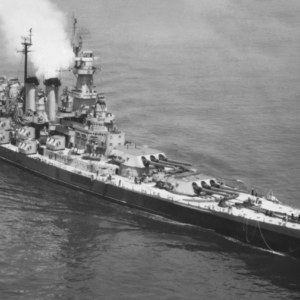
    The USS North Carolina (BB-55), a battleship of the United States Navy, was renowned for its powerful armament and formidable presence during World War II.

    One of the most iconic moments in its history occurred during its gun trials when it unleashed a massive 16-inch gun broadside, leaving a lasting impression on all who witnessed it. Notably, during these trials, a British Pathé film crew was aboard to capture the awe-inspiring spectacle.

    USS North Carolina (BB-55) - Wikipedia

    The USS North Carolina, the lead ship of her class, was commissioned on April 9, 1941, and played a crucial role in the Pacific theater during World War II.

    Equipped with nine 16-inch/45 caliber Mark 6 guns in three triple-gun turrets, along with an array of secondary armaments, the USS North Carolina was a formidable force in naval warfare.

    The 16-inch guns were the largest naval artillery pieces ever mounted on an American battleship at that time, capable of firing high-explosive and armor-piercing shells over vast distances with devastating accuracy. The gun trials were conducted to test the battleship’s firepower and ensure its readiness for combat.

    On the day of the trials, the British Pathé film crew was present to document the USS North Carolina’s firepower in action. As the massive guns roared to life, sending 2,700-pound projectiles hurtling towards their targets, the crew captured the awe-inspiring display on film.

    The footage captured during the gun trials provided a rare glimpse into the raw power and destructive capabilities of naval artillery. The sheer force of the broadside, combined with the thunderous roar of the guns, left a profound impression on both the crew of the USS North Carolina and the British Pathé film crew.

    USS North Carolina (BB 55) of the US Navy - American Battleship of the  North Carolina class - Allied Warships of WWII - uboat.net

    The USS North Carolina’s gun trials showcased not only the technological prowess of American naval engineering but also the courage and skill of the sailors who served aboard her.

    The British Pathé footage immortalized this momentous event, ensuring that future generations would be able to witness the awe-inspiring spectacle of a 16-inch gun broadside from one of the most legendary battleships in history.

  • HMS Eagle: A Farewell to a Maritime Icon

    HMS Eagle: A Farewell to a Maritime Icon

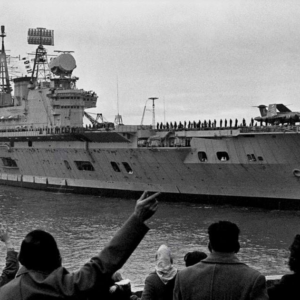
    On January 26, 1972, history witnessed a poignant moment as HMS Eagle, a legendary aircraft carrier of the British Royal Navy, made its final voyage into Portsmouth harbor. This iconic vessel, having served the nation with distinction for decades, bid farewell in a ceremony that marked the end of an era in maritime history.

    The Legacy of HMS Eagle

    Commissioned in 1951, HMS Eagle was a formidable presence on the seas, symbolizing British naval power during the post-World War II era.
    As a member of the Audacious-class aircraft carriers, Eagle boasted a formidable arsenal and played a crucial role in safeguarding British interests across the globe.
    Throughout its illustrious career, Eagle served in various conflicts and operations, including the Suez Crisis and the Falklands War, earning accolades for its contributions to national defense.

    Có thể là hình ảnh về 5 người và văn bản

    The Final Journey

    On that somber January day in 1972, HMS Eagle embarked on its last voyage, sailing into Portsmouth harbor for the final time.
    As the vessel glided gracefully through the waters, crowds gathered along the shoreline, bidding farewell to a beloved symbol of British maritime heritage.
    The atmosphere was tinged with nostalgia and reverence as onlookers paid homage to the ship and the brave men who had served aboard her with valor and dedication.

    HMS Eagle R 05 Audacious class aircraft carrier Royal Navy

    A Symbolic Conclusion

    The arrival of HMS Eagle in Portsmouth marked the end of an illustrious chapter in British naval history.
    With its decommissioning, the Royal Navy bid farewell to one of its most storied vessels, closing a chapter that had spanned over two decades of service.
    Yet, while the ship itself may have reached the end of its journey, its legacy lives on in the annals of maritime lore, a testament to the indomitable spirit and unwavering resolve of those who sailed her.

    HMS Eagle, August 1972. - Battleships - Cruisers .co.uk

    Honoring a Maritime Icon

    In the years since its decommissioning, HMS Eagle has continued to hold a special place in the hearts of naval enthusiasts and veterans alike.
    Memorials and commemorations serve as reminders of the sacrifices made by the men who served aboard her and the pivotal role she played in defending the nation’s interests.
    Today, as we reflect on the final journey of HMS Eagle into Portsmouth harbor, we pay tribute to a true maritime icon—a symbol of British naval power and a testament to the enduring legacy of those who serve at sea.

  • Unveiling the Legacy of the Battle of Senbon Matsubaru: Unearthing Untold Stories of Samurai Warfare

    Unveiling the Legacy of the Battle of Senbon Matsubaru: Unearthing Untold Stories of Samurai Warfare

    Nestled within the annals of Japanese history lies a lesser-known but profoundly significant event: the Battle of Senbon Matsubaru. Fought in 1580 between the Takeda and Hojo clans, this clash transcends mere strategic maneuvers, delving into the depths of war and offering glimpses into the role of women in samurai warfare.

    Setting the Stage

    On September 11, 1580, the serene pine forest of Senbon Matsubaru, near Suruga Bay, became the backdrop for a pivotal confrontation.
    The contenders were the Takeda clan under the leadership of Katsuyori Takeda and the Hojo clan commanded by Ujinao Hojo.
    As blades clashed and battle cries pierced the air, the fate of these feudal powers hung in the balance.

    Rare and Surprising Photographs of the True Last Samurai |

    Photo: Rare and Surprising Photographs of the True Last Samurai

    The Battle Unfolds

    Details surrounding the actual engagement remain shrouded in ambiguity, with historical records presenting conflicting narratives.
    Despite the fog of war obscuring precise accounts, it is widely believed that the Hojo emerged victorious, dealing a decisive blow to the Takeda forces.
    However, it was not the outcome of the battle itself but its aftermath that would stir curiosity and intrigue for centuries to come.

    Revealing Hidden Truths

    In the 1990s, archaeological excavations unearthed a chilling discovery: a mass grave containing the remains of over 100 individuals.
    What set this finding apart was the revelation that among the fallen warriors lay the bones of 35 women—a staggering revelation in the context of samurai warfare.
    The unearthing of these female remains ignited a firestorm of debate, sparking inquiries into the role of women in this historically male-dominated sphere.

    Exploring Enigmatic Realities

    While conclusive evidence remains elusive, the presence of women amidst the fallen warriors of Senbon Matsubaru offers tantalizing possibilities:
    **Onna-bugeisha**: Could these women have been skilled samurai warriors, defying societal norms to join the fray alongside their male counterparts?
    **Supporting Cast**: Alternatively, they might have served vital roles as camp followers, tending to the wounded, providing sustenance, and bolstering morale on the sidelines of battle.
    **Tragic Victims**: Yet, another somber reality suggests that these women were merely civilians caught in the crossfire, casualties of the brutalities of war.
    **Looking Beyond the Battlefield:**

    Onna-Bugeisha: The Female Samurai Warriors of Feudal Japan

    The Battle of Senbon Matsubaru transcends its historical context, serving as a poignant reminder of the nuanced narratives that underpin warfare.
    By challenging traditional perceptions and shedding light on overlooked perspectives, it prompts a reevaluation of the role of women in martial history.
    Today, amidst the tranquil expanse of Senbon Matsubaru’s pine-clad terrain, the echoes of this ancient conflict reverberate—a testament to the enduring legacy of those who fought and fell on its hallowed ground.

  • NASA got Sick of Conspiracies so Released over 10,000 Photos from Moon Landing

    NASA got Sick of Conspiracies so Released over 10,000 Photos from Moon Landing

    NASA got Sick of Conspiracies so Released over 10,000 Photos from Moon Landing

    It was during the presidency of Dwight D. Eisenhower that the United States’ space program was launched. The program was given the codename “Apollo” and was put under the control of the National Aeronautics and Space Administration (NASA).

    It was only after Eisenhower had been succeeded by John F. Kennedy that the American public really learned the significance and purpose of this program: to put a man on the Moon.

    Surface of the moon. Photo by Project Apollo Archive CC BY 2.0

    Surface of the moon. Photo by Project Apollo Archive CC BY 2.0

    At the time, the United States and the Soviet Union were embroiled in the infamous “space race”, with both nations eager to outdo the other and pursue new lengths of human exploration, beyond the very atmosphere of our own home planet.

    The Apollo program subsequently launched no less than 12 missions between 1969 and 1972, with half of them making it all the way to the Moon.

    Neil Armstrong photographs the Moon. Photo by Project Apollo Archive CC BY 2.0

    Neil Armstrong photographs the Moon. Photo by Project Apollo Archive CC BY 2.0

    The first of the launches, Apollo 1, didn’t actually launch at all. It suffered a malfunction and wasn’t able to leave the Earth’s surface. Apollos 7 through 10, the next four launches, were orbiting missions to test various components and take photographs of the lunar surface elements.

    But it was Apollo 11 that would really go down in history. This mission — manned by Neil Armstrong, Michael Collins and Buzz Aldrin — not only made it to the Moon, but actually made a successful landing and allowed both Armstrong and Aldrin to step out onto it’s surface.

    American flag on the Moon. Photo by Project Apollo Archive CC BY 2.0

    American flag on the Moon. Photo by Project Apollo Archive CC BY 2.0

    The pair spent a couple of hours on their moonwalk, taking photos, recording their experiences, collecting rock samples, and planting the American flag, thereby putting a definitive end to the space race and sealing the United States’ status as the victor.

    Astronauts driving on the Moon. Photo by Project Apollo Archive CC BY 2.0

    Astronauts driving on the Moon. Photo by Project Apollo Archive CC BY 2.0

    Crew member, Michael Collins is often overlooked due to the fact that he stayed behind on the Command module, but he was integral to the mission’s success.

    Earth from the Moon. Photo by Project Apollo Archive CC BY 2.0

    Earth from the Moon. Photo by Project Apollo Archive CC BY 2.0

    As previously stated, several other missions made it to the Moon, but none could really generate the same excitement as Apollo 11. That incredible video of Neil Armstrong taking his first steps on the surface of the Moon has been seen and shared by millions, with many photos also being taken and released to the public in the wake of the mission.

    First human footprint on the Moon. Photo by Project Apollo Archive CC BY 2.0

    First human footprint on the Moon. Photo by Project Apollo Archive CC BY 2.0


    First Moon Landing. Photo by Project Apollo Archive CC BY 2.0

    First Moon Landing. Photo by Project Apollo Archive CC BY 2.0

    In spite of all that evidence, however, as well as the proof from other successful space missions, there are many people who argue to this day that the whole thing was fake. In fact, the moon landings are one of the most popular subjects of debate for conspiracy theorists all over the world, with people suggesting various alternate explanations for the footage and photos.

    Some have argued that the whole thing was a hoax, drawn up by the American government to try and outdo Russia and earn popularity points with the public. Some have found alleged errors or inconsistencies in the footage to support their claims, with others suggesting that the whole thing was shot on a Hollywood film set, funded by Walt Disney and directed by Stanley Kubrick.

    Neil Armstrong put his left foot on the rocky Moon. Photo by Project Apollo Archive CC BY 2.0

    Neil Armstrong put his left foot on the rocky Moon. Photo by Project Apollo Archive CC BY 2.0

    These conspiracy theories started many years ago and are still a hot topic in the modern era, especially with the recent emergence of the Flat Earth Movement and growing support for the idea that NASA has been lying to the public for decades. For a long time, NASA simply ignored the conspiracy theorists, but in 2016, the organization decided to make a big statement.

    The first photograph was taken by Neil Armstrong on the surface of the Moon, 1969. Photo by Project Apollo Archive CC BY 2.0

    The first photograph was taken by Neil Armstrong on the surface of the Moon, 1969. Photo by Project Apollo Archive CC BY 2.0

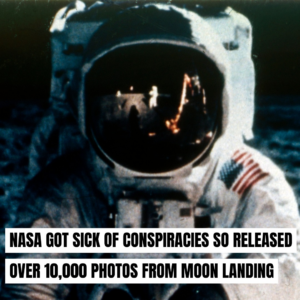
    NASA released over 10,000 photos of the first moon landing, uploading almost every single image ever taken on the Apollo missions on their public Flickr account for all to see and analyze.

    Read another story from us: Apollo 11 Tapes Made Public – NASA Releases 19,000 Hours of Historic Audio

    In doing so, NASA effectively shut down a lot of the conspiracy theorists’ ideas; faking one film or a couple of photos might seem plausible enough, but faking thousands of shots from different angles, times, dates, and more would be a truly impossible undertaking.

    Khadija Bilal

    Khadija Bilal is one of the authors writing for The Vintage News