Blog

  • The Scarlet Nightmare: How a Broken “Invisible Thread” Turned Hamilton’s Ferrari Dream into a 2025 Disaster

    The Scarlet Nightmare: How a Broken “Invisible Thread” Turned Hamilton’s Ferrari Dream into a 2025 Disaster

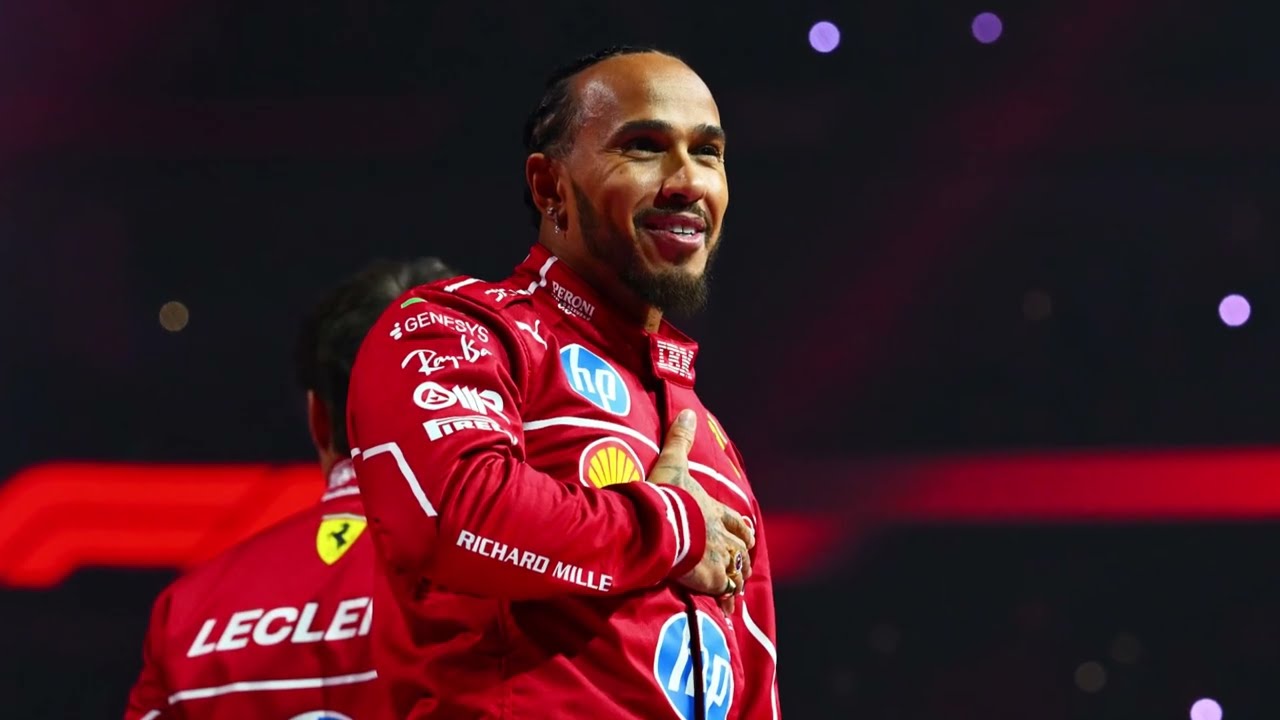
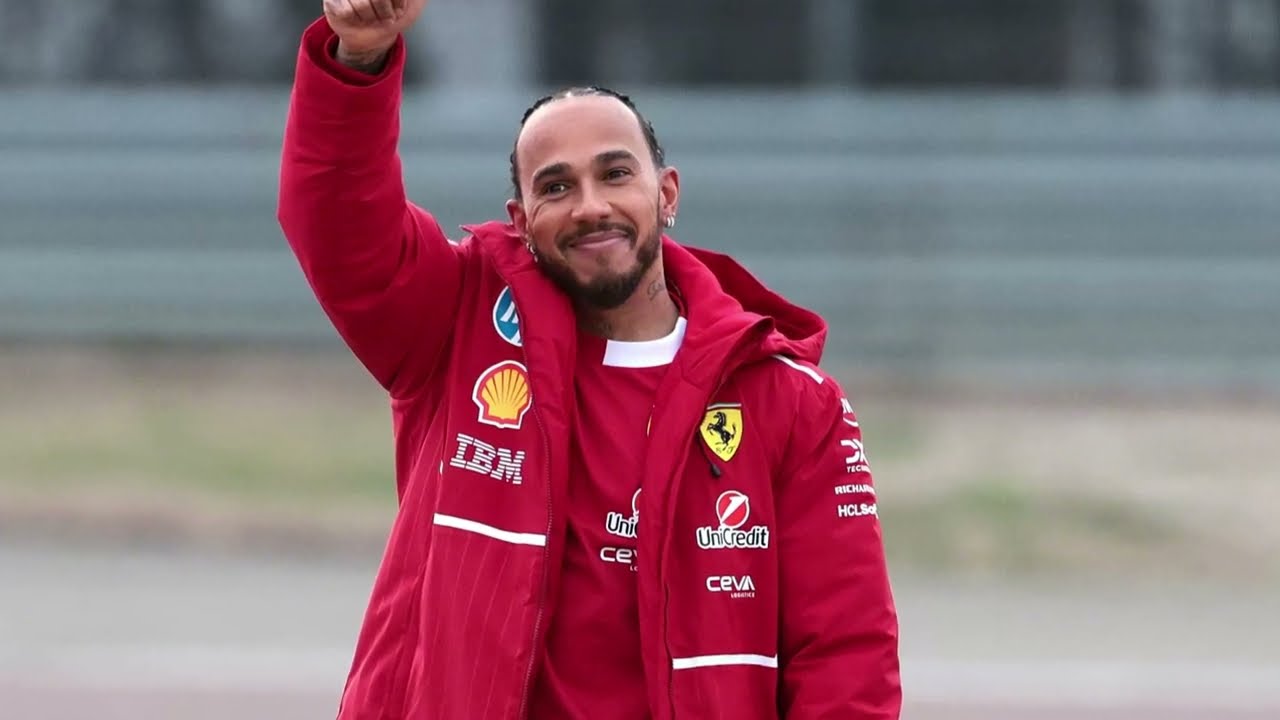
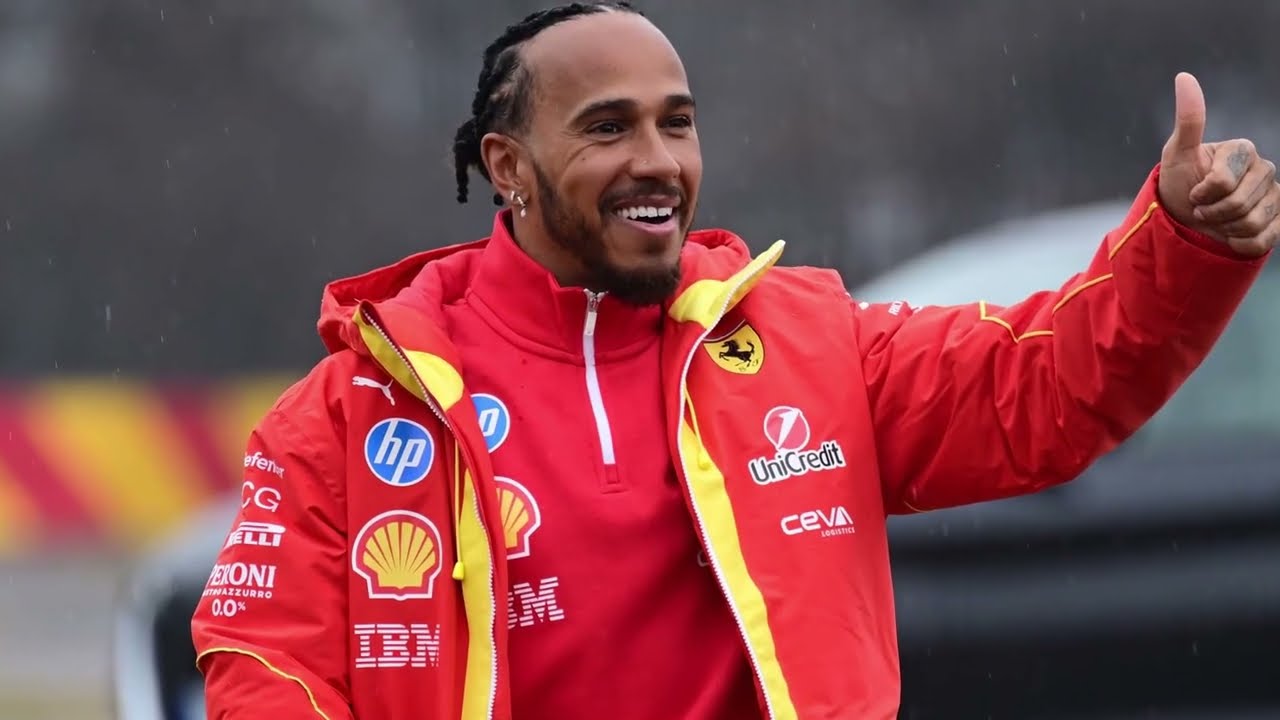
    It was supposed to be the coronation of a king. When the announcement broke in February 2024 that Lewis Hamilton, the seven-time World Champion and the most decorated driver in Formula 1 history, would be donning the legendary scarlet overalls of Ferrari, the sporting world held its collective breath. It was the signing of the century—a romantic, final chapter to a storied career that promised to unite the sport’s greatest driver with its most iconic team.

    But as the dust settles on the 2025 season, the romance has largely evaporated, replaced by a cold, hard reality that few saw coming. The fairy tale didn’t just fail to materialize; for large swathes of the season, it felt like a nightmare dressed in red.

    The statistics will show the points and the podiums missed, but they won’t show the real story. The 2025 season wasn’t lost in the wind tunnel or the engine bay. It was lost in the ether—in the crackling silence of a radio channel where a critical, invisible bond failed to form. As Ferrari Team Principal Fred Vasseur now admits, the team fundamentally underestimated the colossal challenge of integrating a legend who was missing his most vital navigational tool.
    The Ghost in the Machine

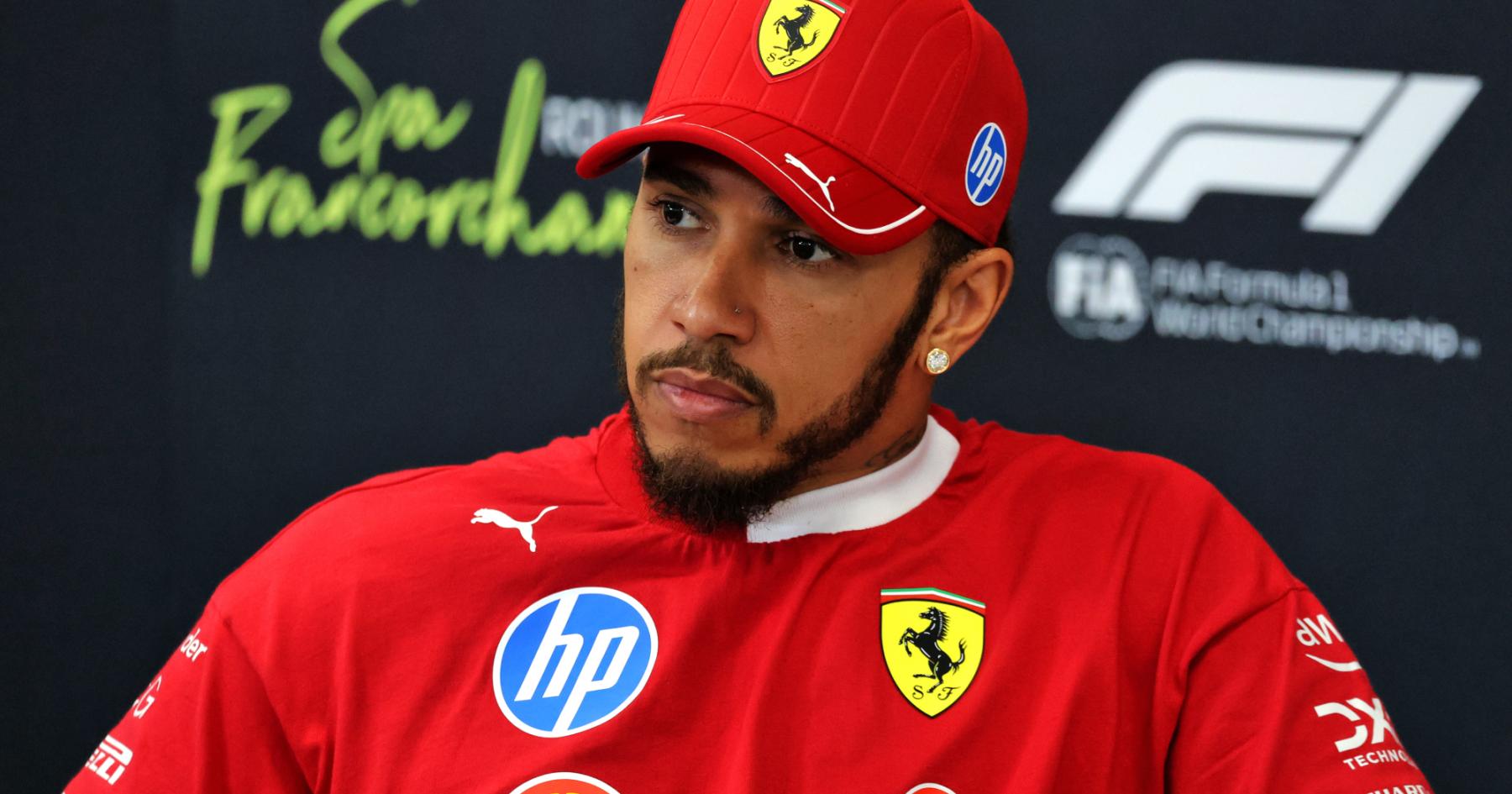
    For over a decade at Mercedes, Lewis Hamilton didn’t just drive a car; he operated as part of a symbiotic organism. His race engineer, Peter “Bono” Bonington, was more than a voice in his ear. He was an extension of Hamilton’s own neural network. Their communication was telepathic, predictive, and instinctive. When Hamilton needed information, Bono had already provided it. When he needed silence to focus, the radio was dead quiet. They moved through the chaos of a Grand Prix as one.

    However, a rigid non-poaching clause in Hamilton’s contract kept Bonington locked behind the walls of Brackley. Hamilton arrived in Maranello alone, stripped of the operational partner who had guided him to six of his seven world titles.

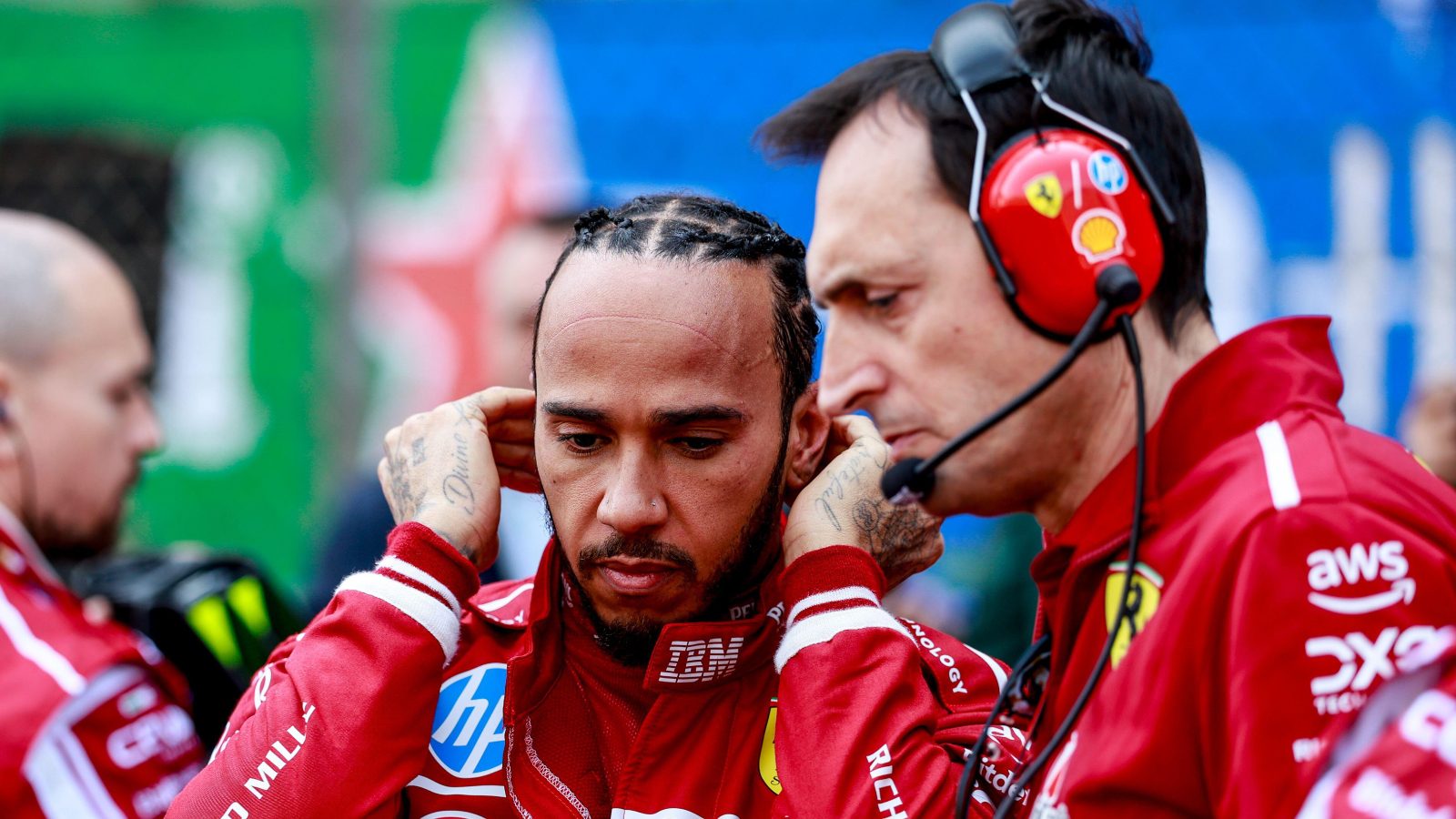
    In his place, Ferrari assigned Ricardo Adami. By all accounts, Adami is a capable, experienced, and professional engineer. He has served Sebastian Vettel and Carlos Sainz with distinction. But 2025 proved that “capable” is not enough when you are trying to rewire the instincts of a veteran champion. The partnership was a mismatch of cognitive processes under the most extreme pressure imaginable.

    Where Bono was predictive, Adami was reactive. Where the Mercedes pit wall offered information before it was requested, the Ferrari wall often waited for a prompt. For a driver like Hamilton, who processes race strategy in milliseconds, these micro-delays were catastrophic.

    The Cost of Silence

    The impact of this disconnect was not theoretical; it was brutally tangible. Take the qualifying session in Budapest, a moment that became a microcosm of the entire season. On the timing screens, the gap between Hamilton and his teammate, Charles Leclerc, was a mere tenth of a second. It sounds negligible—the blink of an eye. But in modern Formula 1, a tenth of a second is an eternity.

    That microscopic gap, born of hesitation and a lack of rhythmic flow between driver and engineer, translated into lower grid positions. Lower grid positions meant compromised strategies. Compromised strategies meant evaporated championship points.

    “My mistake was underestimating that challenge,” Fred Vasseur admitted to Sky Sports in a moment of rare, brutal honesty late in the season. “Especially in a season where a single tenth of a second could cost you several positions on the grid. One tenth—that’s the width of a human hair at 200 mph.”

    It wasn’t that Hamilton had forgotten how to drive, nor had age finally caught up with him. The car was competitive enough for Leclerc to feel at home. The problem was that Leclerc was at home. He knew every engineer by name, understood every quirk of the Ferrari software, and had built his own shorthand with the team over years. Hamilton was a stranger in a strange land, trying to learn a new language in the middle of a war zone.

    A Cultural Shockwave

    The struggles were visible to those who knew where to look. Karun Chandhok, the former F1 driver turned sharp-eyed analyst, spent the season dissecting the radio traffic. He noticed a disturbing pattern.

    “At Mercedes, communication was predictive,” Chandhok observed. “Information arrived before Lewis asked for it. At Ferrari, it became corrective, procedural, and reactive.”

    Chandhok noted that Hamilton was often heard on the radio searching for answers that the Ferrari pit wall couldn’t seem to provide in real-time. He was even seen studying other driver pairings, such as Max Verstappen and Gianpiero Lambiasi, looking for the tightness and clarity that he was desperately missing.

    The revelation that Ferrari has finally accepted is that they weren’t just integrating a new driver; they were attempting to transplant a complex operational system built over 20 years into an environment designed for someone else entirely. They assumed that a driver of Hamilton’s caliber could simply “plug and play.” It was a miscalculation that cost them momentum, credibility, and a year they can never get back.

    The 2026 Ultimatum

    Now, the focus shifts to 2026. The stakes could not be higher. The sport is facing its most disruptive regulation reset in modern history, with active aerodynamics and complex energy deployment systems set to redefine the grid. In this brave new world, the driver-engineer relationship will not be a luxury; it will be a survival mechanism.

    Hesitation in 2026 will equal death on the track. If the communication lines aren’t seamless, the car’s performance won’t matter.

    Vasseur’s recent comments signal a seismic shift in Ferrari’s usually defensive philosophy. By admitting that “all options are being evaluated” regarding Hamilton’s race engineer situation, he has acknowledged that the status quo is untenable. This is revolutionary for a team that historically closes ranks and denies internal friction.

    Ferrari has three paths forward.

    Scenario One: They bring in a new race engineer specifically tailored to Hamilton’s communication style—someone who can emulate the “Bono” dynamic. If the 2026 car is competitive, this could unlock the Hamilton of old, finally giving the Tifosi the champion they were promised.

    Scenario Two: They keep Adami but invest the entire winter in a rigorous restructuring of their communication protocols. They build a new framework from the ground up, training the team to be predictive rather than reactive. It’s a slower, riskier process, but it would prove Ferrari’s ability to evolve.

    Scenario Three: Nothing changes. Ferrari talks about evaluation but defaults to comfort. Hamilton endures another season of misalignment.

    If the third scenario plays out, the conversation by mid-2026 will no longer be about championships. It will be about retirement. It will be about whether the greatest driver of his generation made a mistake that stained the end of his glorious career.

    The Final Lap

    The January 23rd reveal of the 2026 Challenger is looming. The world will be watching the car, obsessing over sidepods and wings. But the real question isn’t about the carbon fiber; it’s about the infrastructure around the man in the cockpit.

    Lewis Hamilton doesn’t need to be reinvented. He needs an environment that enables his instinctive genius to flourish under extreme complexity. Give him that, and the seven-time champion might yet become an eight-time legend. Deny him that, and Ferrari will spend decades wondering what could have been.

    The clock is ticking in Maranello. 2025 was the storm. 2026 must be the glory, or it will be the end.
  • F1 2026: Revolution or Ruin? Lewis Hamilton Issues Blunt Warning as “F2-Like” Fears Spark Massive Controversy

    F1 2026: Revolution or Ruin? Lewis Hamilton Issues Blunt Warning as “F2-Like” Fears Spark Massive Controversy

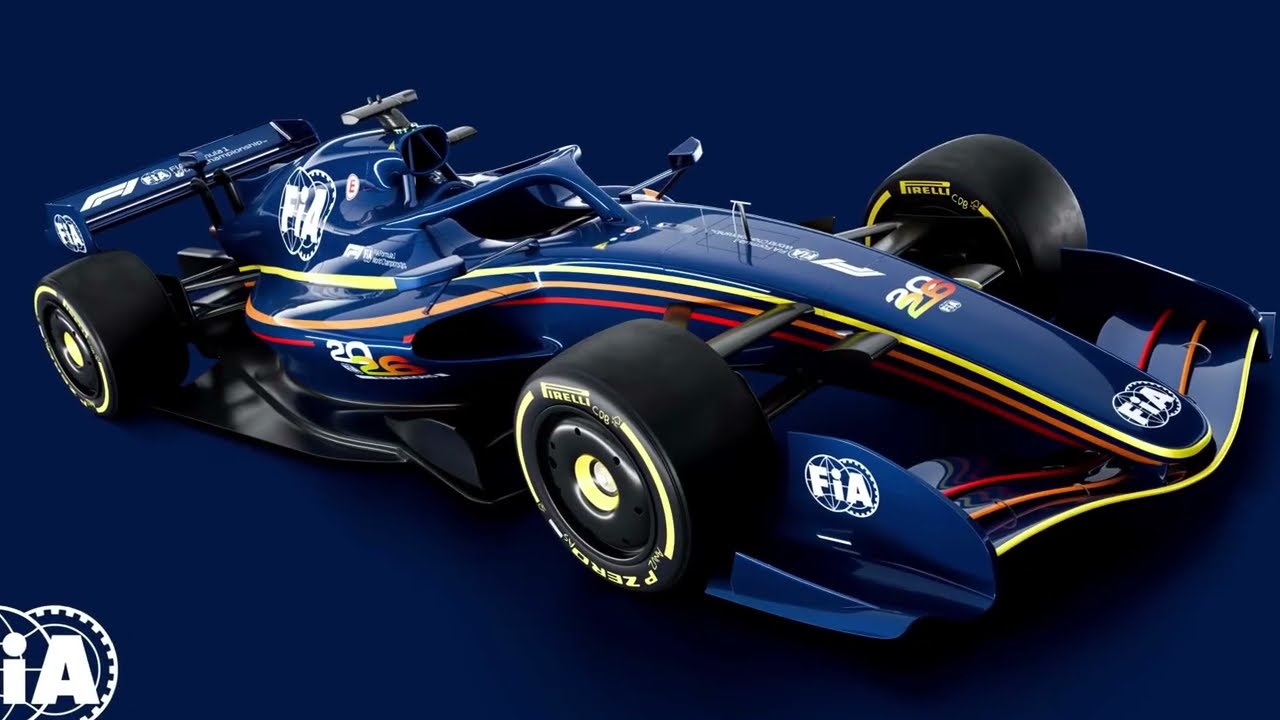
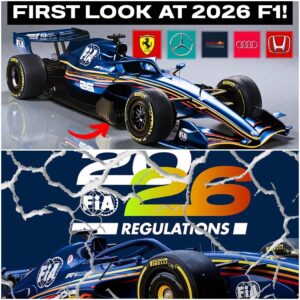
    Formula 1 is standing on the precipice of its most significant transformation in decades. As the dust settles on the 2025 season, the FIA and Formula 1 have finally pulled the covers off the definitive regulations for 2026, revealing a vision of the future that promises to be lighter, faster, and more electrifying. But as the new renders drop and the technical details are dissected, a wave of skepticism is crashing over the paddock. The promise of “better racing” is being met with blunt warnings from the sport’s biggest stars, raising an uncomfortable question: Is F1 about to ruin racing, or save it?

    The Ferrari Simulator Verdict: Hamilton’s Warning

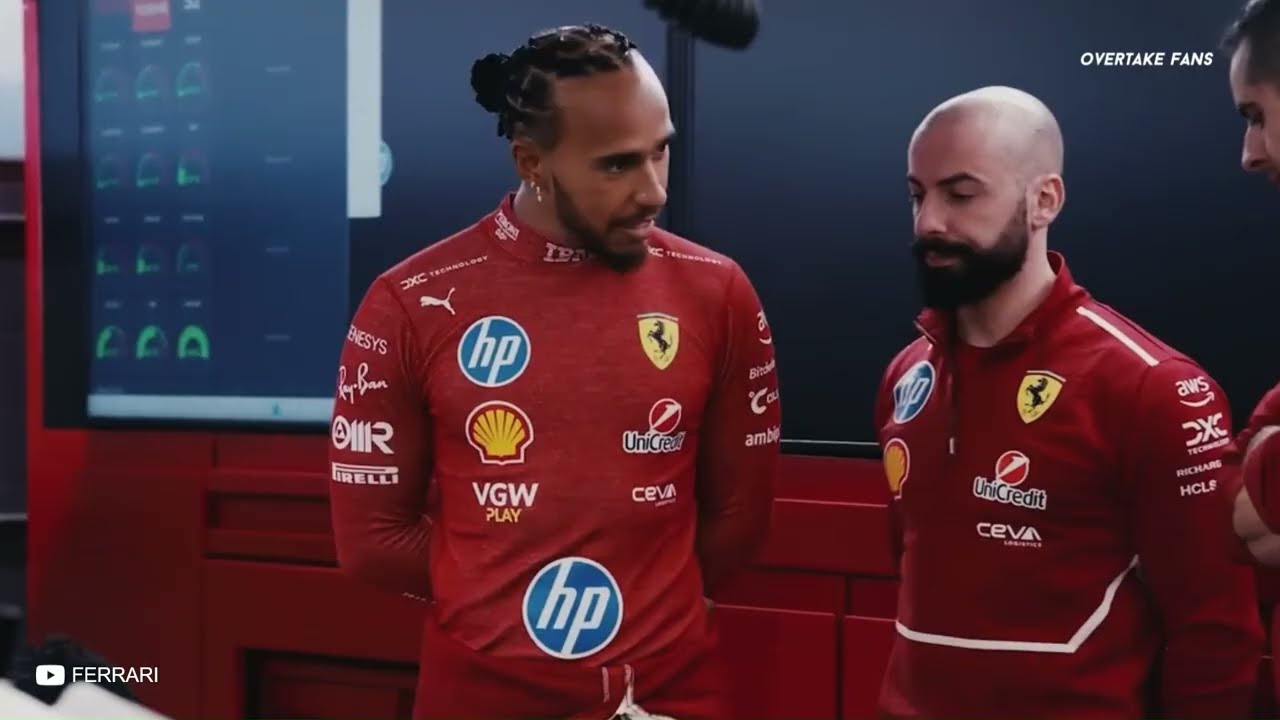
    At the center of the storm is Lewis Hamilton. Now clad in Ferrari red following his historic move, the seven-time world champion has become one of the first to get a virtual taste of the 2026 machinery. His verdict? It is far from a ringing endorsement.

    Hamilton, who has long been a vocal critic of the current “ground effect” era—labeling them the “worst generation” of cars he has ever driven—fears that the 2026 revolution might not deliver the thrill fans are expecting. After extensive sessions in the Ferrari “driver-in-loop” simulator, Hamilton offered a sobering perspective on the handling characteristics of the next-generation cars.

    “It is really hard to predict what it will be like,” Hamilton admitted, choosing his words carefully but clearly. “I don’t want to criticize or say anything too negative… [but] the cars drive in a completely different way, and I’m not sure you will like it.”

    His concerns hinge on the radical shift in the car’s physics. The 2026 regulations strip away a significant amount of downforce—estimates range from a 15% to 30% reduction—while pumping massive amounts of torque through the rear wheels via the upgraded electrical systems. Hamilton predicts this combination will make the cars incredibly difficult to tame, particularly in adverse conditions. “Driving in the rain, I can imagine it’s going to be very, very, very tough. Much harder than it is already,” he warned.

    The “F2” Insult: A Step Backwards?

    Hamilton is not alone in his trepidation. The criticism has been echoed, perhaps even more harshly, by the next generation of talent. Isack Hadjar, a rising star in the Red Bull program, emerged from his simulator sessions with a comparison that likely sent shivers down the spines of F1 executives: The 2026 car feels like a Formula 2 car.

    To be clear, Hadjar wasn’t suggesting the lap times would be identical to the junior series. Instead, he was highlighting the “handling characteristics.” The 2026 machines, with their reduced aero grip and nimble chassis, feel “nimble yet torque-peaky,” a sensation familiar to anyone who has wrestled with an F2 chassis. Aston Martin reserve driver Jack Crawford shared a similar sentiment, painting a picture of a car that is “demanding” and “less planted.”

    For a sport that prides itself on being the pinnacle of automotive engineering, comparisons to a junior feeder series are a PR nightmare. The fear is that by chasing “agility” and “close racing,” F1 may have inadvertently neutered the raw, glued-to-the-track sensation that defines the fastest circuit racing cars on Earth.

    The FIA Strikes Back: “Pure Racing”

    The FIA, however, is having none of it. Nicholas Tombazis, the FIA’s single-seater director, fired back immediately at the “F2” comparisons, calling them “way off the mark.” He insists that the performance deficit to current cars will be minimal—likely just one to two seconds per lap—and argues that the difficulty is a feature, not a bug.

    “Pure racing allows drivers to take center stage,” Tombazis argued. The philosophy behind the 2026 rules is to put the power back in the driver’s hands. With less downforce to rely on, drivers will have to work harder to keep the car on the island. They will be forced to manage wheelspin, feather the throttle, and make critical strategic decisions about energy deployment while screaming down the straight at 320 km/h.

    The Technical Revolution: Goodbye DRS, Hello “Active Aero”

    To understand the controversy, one must understand the sheer scale of the changes. The 2026 regulations introduce a lexicon of new terms that will fundamentally alter how a Grand Prix is watched and driven.

    Gone is the Drag Reduction System (DRS), a tool that has been both loved and loathed for creating “artificial” passing. In its place comes Active Aerodynamics. This is not just a flap opening; it is a transformer-like shift in the car’s geometry. In corners, the wings will stay in their “Default Mode” to provide maximum grip. But on designated straights, every driver—regardless of the gap to the car ahead—can activate “Low Drag Mode,” which flattens the front and rear wing elements, slashing air resistance by up to 40%.

    This sounds exciting, but the complexity deepens with the new Overtake Mode. This is the spiritual successor to DRS but powered by electricity. When a driver is within one second of a rival, they can unlock a massive surge of extra power from the battery. The Kinetic Energy Recovery System (KERS) has been boosted from a modest 120kW to a staggering 350kW. That is nearly a 300% increase in electrical punch.

    We also have Boost Mode (a driver-operated offensive/defensive tool) and Recharge Mode (strategies for harvesting energy). The result is a formula where battery management isn’t just a background task—it is the race itself.

    The Physical Shrink: Agility vs. Instability

    Physically, the cars are going on a diet. The minimum weight is dropping by 30kg to 770kg. The wheelbase is being slashed by 200mm, and the width is narrowing by 100mm. Even the tires are slimming down, with the fronts losing 25mm and the rears 30mm in width.

    The intent is clear: make the cars smaller and more agile, addressing the complaint that modern F1 cars look like “boats” on tight street circuits like Monaco. However, narrower tires and lighter floors mean less mechanical and aerodynamic grip. When you combine “less grip” with “more torque” (thanks to that 350kW electric motor), you get a recipe for sliding, instability, and potentially, a lot of mistakes.

    The Great Reset: A Rolling of the Dice

    Beyond the technical jargon and driver complaints lies the true allure of 2026: The Reset.

    We are seeing a complete reshuffling of the power unit landscape. Mercedes will supply Williams, Alpine, and McLaren. Ferrari will power the newcomer Cadillac and Haas. Aston Martin is teaming up with Honda. Red Bull is finally debuting its in-house Red Bull Ford engine, and Audi is entering the fray with its own power unit.

    This 50/50 split between internal combustion and electric power is a massive engineering gamble. The complex MGU-H (heat energy recovery) is gone, replaced by that monster KERS system.

    As one commentator noted, “Red Bull’s deep 2025 development… may count for nothing next year.” The dominance of today could evaporate overnight. We simply have no idea who will come out on top. Will Audi shock the world? Will Ferrari’s gamble on Hamilton pay off with a championship-capable car? Or will a midfield team ace the new regulations like Brawn GP did in 2009?

    Conclusion: Chaos or Classic?

    With the first private tests scheduled for Barcelona in late January and the public unveiling at pre-season testing in Bahrain shortly after, we won’t have to wait long to see these machines in the flesh.

    The skepticism from Hamilton and the “F2” jibe from Hadjar are serious red flags that cannot be ignored. If the cars are indeed slower and more frustrating to drive, F1 risks alienating the very heroes who make the sport what it is. However, if the FIA’s vision holds true, we could be entering a golden era where driver skill, not just car performance, dictates the winner.

    One thing is certain: F1 2026 is not just a new season; it is a new sport. And as Lewis Hamilton warned, we might need to brace ourselves for a shock. Whether it’s a pleasant surprise or a rude awakening remains to be seen come the first qualifying session in Melbourne.

  • Max Verstappen Stuns Red Bull: The Uncomfortable Truth Behind Liam Lawson’s Brutal Sacking

    Max Verstappen Stuns Red Bull: The Uncomfortable Truth Behind Liam Lawson’s Brutal Sacking

    In the high-octane world of Formula 1, where split-second decisions define legends, silence is often the safest policy for drivers when it comes to internal team politics. However, Max Verstappen, the reigning World Champion, has never been one to shy away from the truth. In a move that has sent shockwaves through the paddock, Verstappen has issued a measured yet scathing critique of Red Bull Racing’s handling of young talent Liam Lawson, exposing deep cracks in the team’s ruthless driver management strategy.

    A Champion’s Defense: “Close to Bullying”

    The controversy centers on the abrupt removal of Liam Lawson from the coveted Red Bull seat after just two race weekends in the 2025 season. Internally, the decision was justified by Lawson’s failure to escape Q1 in three qualifying attempts—a statistic that, on paper, looks damning. However, Verstappen has publicly shattered this narrative.

    The Dutchman’s critique didn’t come in a fit of rage but through a calculated endorsement of a sentiment that many feared to voice. When former F1 driver Giedo van der Garde described Red Bull’s treatment of Lawson as “close to bullying,” Verstappen didn’t just stay silent—he liked the post. When pressed by the media in Japan, he didn’t backtrack. Instead, he doubled down, stating plainly that his social media activity “speaks for itself.”

    For a driver of Verstappen’s stature to align himself with such a harsh criticism of his own employers is unprecedented. It signals a profound disagreement with the ethical and sporting fairness of the decision. Verstappen argues that dismissing a driver after two Grands Prix—especially in a car notoriously difficult to drive—crosses the line from performance management into reputation destruction.

    The “Max-Centric” Car: A Trap for Teammates?

    At the heart of Verstappen’s argument is a technical reality that Red Bull has long tried to downplay: the RB21 is not a neutral machine. It is a highly specialized weapon, evolved over years to suit Verstappen’s unique and extreme driving preferences.

    Verstappen prefers a car with a sharp front end, one that can handle aggressive turn-ins even if the rear becomes unstable. It’s a setup that demands absolute confidence and allows him to extract maximum performance. However, for any other driver, this characteristic can feel like walking a tightrope. As Verstappen himself explained, teammates are often encouraged to “converge” towards his setup, a strategy that rarely works.

    “Copying setups is not optimization; it is compromise,” implies the champion’s logic. By expecting Lawson to jump into a car tailored for Verstappen and perform immediately, Red Bull was setting him up for failure. The car’s operating window is razor-thin. Without the confidence that comes from a setup suited to their own style, drivers like Lawson—and his successor Yuki Tsunoda—are left fighting the car rather than racing the competition.

    The Winter Testing Myth

    Perhaps the most damning aspect of Verstappen’s critique is the highlight of a structural failure: the lack of preparation. Lawson wasn’t just thrown into the deep end; he was thrown in without a life vest. He lost the critical winter development cycle—the only time of year when a driver can meaningfully adapt a car to their style through simulator work and engineering feedback.

    Lawson was effectively asked to learn the fundamentals of a complex machine in the middle of a competitive season, while his rivals were refining marginal gains. “Missing that phase meant Lawson was not developing performance but merely reacting to circumstances,” observers note. By cutting him loose before he could ever find his footing, Red Bull prioritized immediate, unrealistic results over long-term athlete development.

    The Evidence: Lawson’s Redemption and Tsunoda’s Struggles

    Verstappen’s defense of Lawson is further vindicated by what happened after the sacking. Red Bull replaced the New Zealander with Yuki Tsunoda, hoping for an instant fix. The result? Tsunoda finished hundreds of points behind Verstappen, unable to bridge the gap or solve the underlying issues with the second car. The “solution” was no solution at all.

    Meanwhile, Lawson’s trajectory told a different story. Demoted back to Racing Bulls, he didn’t crumble. Instead, he stabilized, rebuilt his confidence, and delivered a career-best fifth-place finish in Azerbaijan—beating Tsunoda on merit. This resurgence serves as undeniable proof of Verstappen’s core point: Lawson wasn’t incapable; he was underprepared and unprotected.

    Verstappen explicitly praised this recovery, noting the immense mental strength required to bounce back from such a public rejection. It wasn’t sympathy; it was “competitive logic.” A driver who can recover like that deserved more than two weekends to prove his worth at the top.

    A Systemic Warning

    This incident is more than just a personnel dispute; it is a stark warning about the fragility of careers in modern Formula 1. Verstappen’s intervention highlights a dangerous trend where teams demand instant conformity over adaptability. “Once a driver is labeled as having failed at a top team, that reputation often follows them regardless of context,” Verstappen warned.

    By speaking out, Verstappen gains nothing personally. He is already the undisputed number one. Yet, his willingness to challenge the narrative exposes a flaw in the system that created him. He is reminding Red Bull—and the world—that even the best machinery needs the human element to be nurtured, not treated as a disposable component.

    The “new evidence” isn’t just data; it’s the realization that Red Bull may have thrown away a future star in pursuit of short-term stability that never arrived. As Lawson rebuilds his career for 2026, the question remains: will Red Bull learn from the lesson their greatest driver just taught them?

  • Ferrari in Crisis Mode: Vasseur Admits “Major Mistake” as Hamilton’s Relationship with Engineer Hits Breaking Point Ahead of 2026

    Ferrari in Crisis Mode: Vasseur Admits “Major Mistake” as Hamilton’s Relationship with Engineer Hits Breaking Point Ahead of 2026

    A Storm Brewing at Maranello

    The honeymoon period appears to be officially over at Ferrari. A heated drama has exploded to the surface of the Formula 1 world, centering on a critical fracture in the relationship between seven-time world champion Lewis Hamilton and his Ferrari race engineer, Ricardo Adami. What began as vague whispers in the paddock has now been acknowledged by the team itself as a significant threat—one with the potential to derail Ferrari’s ambitious project for the 2026 season.

    This isn’t just about radio static or a few missed calls. It is a fundamental clash of cultures that has left Ferrari scrambling for solutions. For the first time, Team Principal Fred Vasseur has publicly admitted that the friction between Hamilton and his engineering team is not a temporary hiccup, but a structural incompatibility that they severely underestimated.

    The “Major Mistake”: Underestimating the Transition

    When Lewis Hamilton announced his shock move to Ferrari, the world expected a period of adjustment. However, Ferrari now admits they made a critical error in judgment. They underestimated the sheer scale of the adaptation required for a driver who spent over a decade integrated into the highly efficient, “predictive” machinery of Mercedes.

    At Mercedes, Hamilton’s relationship with his former engineer, Peter “Bono” Bonington, was the gold standard of driver-engineer trust. It was intuitive, fluid, and often unspoken. In contrast, Ferrari’s system is described as reactive, corrective, and heavily procedural.

    According to recent reports and analysis from experts like Karun Chandhok, this clash of styles has created an “intolerable level of uncertainty” for Hamilton. The British driver operates on instinct and rhythm; however, Ferrari’s layered confirmations and belated information delivery have repeatedly disrupted his flow in the cockpit. Vasseur has implicitly acknowledged that these “communication asymmetries” are causing an accumulation of small losses—tenths of a second that are bleeding away due to a lack of sync between the driver and the pit wall.

    Adami Speaks Out: It’s Not Personal, It’s Structural

    Amidst the intense scrutiny, Ricardo Adami, the man on the other end of Hamilton’s radio, has finally offered an insider’s perspective. Crucially, Adami emphasizes that this is not a personal conflict or a feud. There is no animosity, but rather a painful “alignment process.”

    “Hamilton processes information differently,” Adami noted, explaining that working with the champion requires adhering to incredibly precise communication standards. The issue isn’t the data itself, but the timing and structure of its delivery.

    Adami revealed that much of the stiff, overly procedural chatter that has frustrated Hamilton stems from Ferrari’s long-established operational habits. Hamilton arrived from a streamlined environment where the car and team felt like an extension of his own decision-making process. At Ferrari, he hit a wall of protocol. The team is now realizing that simply plugging a superstar driver into their existing system doesn’t work; the system itself must change.

    The 2026 Ultimatum: No Room for Error

    Why is this panic setting in now? The answer lies in the looming 2026 regulations. The next era of Formula 1 will introduce active aerodynamics, complex energy management systems, and a significantly reduced margin for error.

    In this new world, the radio link between driver and engineer will not just be a tool for updates—it will be a key performance system. Any hesitation, any doubt, or any “communication break” could result in catastrophic strategic errors or tire degradation.

    Ferrari realizes that if they cannot fix this broken link now, their entire technical ambition for 2026 could collapse. Vasseur’s willingness to “evaluate all options” signals a massive shift in philosophy. The team is no longer defending its old ways; they are using input from Hamilton as a diagnostic tool to overhaul their internal culture.

    Restructuring Around the Champion

    The departure of Peter Bonington, who could not follow Hamilton due to a “non-poaching” clause, has highlighted just how immense this loss was for Lewis. He didn’t just lose a colleague; he lost a partner who was an extension of his brain.

    Ferrari now faces a stark choice: wait and hope a similar bond forms naturally with Adami, or take drastic action. This could mean hiring new personnel, completely revising communication protocols, or redistributing responsibilities on the pit wall.

    The fact that Ferrari is considering such major structural changes proves one thing: this is not a short-term project. They are looking to build the team around Hamilton for the long haul. They understand that elite performance hinges on trust and operational cohesion just as much as it does on aerodynamics and horsepower.

    Conclusion

    As the 2025 season progresses, all eyes will be on the Ferrari garage. Will the Prancing Horse be able to adapt its rigid structures to suit the intuitive brilliance of Lewis Hamilton? Or will this communication breakdown prove to be the Achilles’ heel of the sport’s most romantic partnership? One thing is certain: Ferrari knows they have a problem, and the clock is ticking to fix it before the new era begins.

  • The “Illegal” Loophole: How Mercedes’ Secret Engine Trick Could Decide the 2026 F1 Championship Before It Begins

    The “Illegal” Loophole: How Mercedes’ Secret Engine Trick Could Decide the 2026 F1 Championship Before It Begins

    The world of Formula 1 is no stranger to innovation, controversy, and the ceaseless pursuit of speed. But rarely does a technical bombshell drop with such impact before a single wheel has even turned in anger. As the sport gears up for the revolutionary 2026 regulations—a shake-up designed to level the playing field and introduce cleaner, more sustainable technologies—a massive storm is brewing in the paddock.

    Reports have emerged confirming that Mercedes-AMG Petronas Formula One Team has discovered an ingenious, albeit highly controversial, loophole in the upcoming engine regulations. This technical masterstroke, allegedly leaked by an internal source, has sent rival manufacturers into a frenzy and left the FIA scrambling for a solution. With a potential advantage of 15 horsepower and three-tenths of a second per lap on the table, the question on everyone’s lips is simple: Has Mercedes just won the 2026 championship before the lights even go out?

    The “Magic” Cylinder: Engineering Genius or Rule Breaking?

    At the heart of this controversy lies a specific regulation regarding the compression ratio of the internal combustion engine (ICE). For the 2026 season, the FIA mandated a reduction in the compression ratio from the previous 18:1 down to 16:1. The intent was clear: to standardize performance and reduce the reliance on extreme combustion efficiencies, thereby placing more emphasis on the increased electrical power of the new hybrid systems.

    However, Formula 1 engineers are paid millions to read between the lines, and the team at Brixworth seems to have found a gap wide enough to drive a truck through. The regulation, as written, stipulates that the engine must conform to the 16:1 ratio during “static checks”—measurements taken by the FIA when the car is stationary in the garage.

    According to the leak, Mercedes has developed a cylinder composition using advanced materials that have a high coefficient of thermal expansion. In layman’s terms, when the car is sitting in the garage for inspection, the engine is cold (or at a controlled ambient temperature), and the cylinders measure exactly 16:1. They are perfectly legal.

    But once the car hits the track and the engine reaches its ferocious operating temperatures, the material physically expands. This expansion reportedly increases the internal volume of the combustion chamber, effectively returning the compression ratio to the 2025 specification of 18:1. This “variable” geometry allows the engine to generate significantly more power than its rivals, who are strictly adhering to the fixed 16:1 limit.

    The Numbers: A Massive Competitive Advantage

    In a sport where margins are measured in thousandths of a second, the numbers associated with this trick are staggering. The increased compression ratio is estimated to unlock an additional 15 horsepower from the internal combustion engine. While that might not sound like a game-changer to the average road car driver, in Formula 1, it is seismic.

    Analysts estimate that this power hike translates to roughly 0.3 seconds per lap. To put that into perspective, 0.3 seconds is often the difference between pole position and fifth place, or the gap between a comfortable race win and a desperate fight for the podium. Over a 60-lap Grand Prix, that advantage compounds to an 18-second lead—an eternity in modern racing.

    Furthermore, this advantage isn’t just for the factory Mercedes team. Their customer teams—McLaren, Williams, and potentially Alpine (if rumors of their switch hold true)—would also benefit from this power unit. This creates a scenario where half the grid could technically be faster than the other half simply due to the engine in the back of the car, regardless of aerodynamic efficiency.

    The Backlash: Rivals Unite in Protest

    Unsurprisingly, the revelation has triggered a wave of fury among rival manufacturers. Ferrari, Audi, Honda (supplying Aston Martin), and Red Bull Ford have reportedly lodged formal protests with the FIA. Their argument hinges on Article C1.5 of the technical regulations, which states that a car must comply with the rules “at all times.”

    The rivals argue that while Mercedes passes the static test, they are knowingly violating the spirit and the intended reality of the rule while on track. They contend that a regulation defining a physical dimension implies that dimension should remain constant, or at least within standard tolerances, not change deliberately to gain performance.

    However, Mercedes’ defense is reportedly rock solid legally. Their stance is that the rulebook explicitly defines the compliance check as a “static measurement.” If the car passes the test as prescribed by the FIA’s own protocols, it is legal. Any physical changes that happen under load or heat are simply the natural properties of materials, something that has always existed in engineering, merely optimized here to an extreme degree.

    The FIA’s Dilemma: Too Late to Fix?

    Perhaps the most shocking aspect of this saga is the FIA’s response. Sources suggest that the governing body has acknowledged the existence of the loophole and confirmed that Mercedes’ interpretation, while cunning, technically adheres to the letter of the current law.

    More worryingly for the competition, the FIA has admitted that there is simply no time to rewrite the testing procedures or homologation rules before the 2026 season begins. Implementing a new “dynamic” test to measure cylinder volume while an engine is screaming at 12,000 RPM is a logistical and technical nightmare that cannot be solved in a few weeks.

    While the FIA is “studying” changes for later in the season, this implies that for the first several rounds—perhaps even the first half of the championship—Mercedes will likely retain this advantage. By the time a new rule is forced through, the points deficit for Ferrari, Red Bull, and Audi could be insurmountable.

    The “Mole” and the Psychological War

    Adding a layer of espionage intrigue to the technical drama is the source of the information. It is widely believed that this specific detail regarding the cylinder materials came from a whistleblower within Mercedes. Whether this was a disgruntled employee, a defector moving to a rival team (a common occurrence in the “gardening leave” era), or a strategic leak to force a rule change remains unknown.

    However, the leak itself has changed the atmosphere of the pre-season. Instead of focusing on their own car launches, team principals are now engaged in a fierce political battle. If the protests fail, rival teams will be forced to try and replicate the technology—a process that could take months and cost millions—further distracting them from their original development paths.

    A History of Innovation

    This is not the first time Mercedes has caught the paddock off guard with “borderline” genius. Fans will remember the DAS (Dual Axis Steering) system from 2020, which allowed drivers to adjust the toe angle of the front wheels by pushing and pulling the steering wheel. That, too, was protested, deemed legal for the season, and then banned for the following year.

    The “expanding cylinder” trick seems to follow the same lineage of thinking: finding a gray area where the rules are silent or poorly defined and exploiting it to the maximum. It is the very essence of Formula 1 engineering, but it inevitably leads to cries of “unfairness” from those who didn’t think of it first.

    Conclusion: A Defined Season?

    As we look toward the 2026 pre-season testing, the narrative has shifted from the excitement of new cars to the bitterness of a technical row. If Mercedes retains this 0.3-second advantage, we could be staring down the barrel of a season reminiscent of 2014, where the Silver Arrows were simply in a league of their own.

    For the fans, the hope is that the FIA can find a resolution that ensures competitive racing. But for now, it seems Mercedes has once again outsmarted the rulebook, reminding everyone why they are one of the most formidable operations in the history of the sport. The engine war has begun, and Mercedes just fired the first, and possibly decisive, shot.

  • Betrayal, Broken Promises, and Bitter Rivalries: The 5 Figures Who Defined Fernando Alonso’s Darkest Battles

    Betrayal, Broken Promises, and Bitter Rivalries: The 5 Figures Who Defined Fernando Alonso’s Darkest Battles

    In the high-octane world of Formula 1, speed is the currency of success. But for Fernando Alonso, a man who has spent over two decades navigating the most ruthless sport on the planet, speed was never the problem. He is a survivor, a gladiator who has outlasted generations of rivals and crushed young talents with ruthless efficiency. Yet, behind the glittering trophies and the roar of the engines lies a shadowier narrative—a story not of victories, but of broken alliances, internal wars, and relationships that dissolved into bitterness.

    Alonso’s career is a testament to resilience, but it is also a map of conflict. He never played politics well; he refused to bend, refused to be second, and never forgot those who stood in his way. Today, we peel back the layers of PR-friendly statements to reveal the raw truth: the five definitive figures and entities that shaped the darkest conflicts of Fernando Alonso’s life. These aren’t just rivalries; they are the scars of a champion.

    1. Lewis Hamilton: The Enemy Within

    If Alonso’s career is a saga of conflict, the 2007 season at McLaren was its explosive opening act. Alonso arrived at Woking as the reigning double world champion, the undisputed king of the grid. He expected to be the sun around which the team revolved. Instead, he found himself in the gravitational pull of a rookie named Lewis Hamilton.

    Hamilton wasn’t just fast; he was fearless. From the very first race, he matched Alonso’s pace, shattering the Spaniard’s expectation of a clear hierarchy. What started as healthy competition quickly curdled into open hostility. Alonso didn’t just feel challenged; he felt replaced. He believed the team was nurturing its future star at his expense, leading to a collapse in trust that was absolute and devastating.

    The tension reached its zenith at the Hungarian Grand Prix, in an infamous qualifying session where Alonso deliberately delayed Hamilton in the pits. It was a moment that exposed their internal war to the world. The fallout was catastrophic: McLaren lost the Constructor’s Championship amid the “Spygate” scandal, and Kimi Räikkönen snatched the Driver’s title by a single point. Alonso left after just one year, the relationship beyond repair. For Alonso, Hamilton wasn’t just a rival; he was the living proof that talent alone wasn’t enough—politics mattered just as much.

    2. Ron Dennis: The Architect of Betrayal

    Behind the Hamilton conflict stood a looming figure: Ron Dennis. The legendary McLaren team principal was a man of discipline and absolute control, ruling his team with an iron fist. But to Alonso, Dennis represented a profound failure of leadership.

    Alonso believed that as a champion, he deserved protection and clarity. Instead, Dennis insisted on treating both drivers as equals, a philosophy Alonso interpreted as a betrayal. When the internal rivalry spiraled out of control, Alonso felt isolated, convinced that Dennis prioritized his own rigid system over the well-being of his star driver.

    The relationship deteriorated into silence and suspicion. Alonso felt used as a pawn in the Spygate power struggle, his trust in Dennis evaporating completely. While Dennis believed no driver was bigger than the team, Alonso believed a team must stand behind its champion. These incompatible philosophies led to a divorce that shocked the sport. It wasn’t hatred born of emotion, but a cold distrust born of disappointment—a feeling that he had been abandoned by the one man whose job was to support him.

    3. Sebastian Vettel: The Unbeatable Obstacle

    If Hamilton and Dennis represented betrayal from within, Sebastian Vettel was the external force that haunted Alonso’s prime. Between 2010 and 2013, while Alonso was driving at the absolute peak of his powers for Ferrari, Vettel and Red Bull Racing were rewriting the record books.

    This rivalry was unique because it wasn’t personal in the traditional sense. Alonso respected Vettel’s skill, and Vettel admired Alonso as his toughest opponent. Yet, Vettel became the symbol of “opportunity lost.” In 2010 and 2012, Alonso dragged inferior Ferraris into championship contention, performing miracles on track, only to have his heart broken at the final hurdle.

    The 2010 Abu Dhabi Grand Prix, where a strategic error left Alonso stuck in traffic while Vettel claimed the title, remains a painful memory. But 2012 was the deeper wound; Alonso had driven a perfect season, only to lose to Vettel in Brazil by the slimmest of margins. Every time Vettel lifted a trophy, it was a brutal reminder to Alonso that perfection isn’t always rewarded. Vettel wasn’t a villain, but he was the wall Alonso could not break, the embodiment of a destiny that was stolen by superior machinery.

    4. Esteban Ocon: The Clash of Generations

    After years away, Alonso returned to F1 with Alpine, chasing respect rather than titles. What he found was Esteban Ocon, a younger teammate deeply embedded in the team’s future. The dynamic was fraught from the start.

    Alonso, the veteran, valued cooperation to maximize team points. Ocon, fighting to establish himself, raced with aggressive defensiveness. On track, the two often fought each other harder than their rivals, with Ocon defending against Alonso as if the world championship depended on it. To Alonso, it felt like Ocon was racing for himself, not the team.

    The friction came to a head when Alonso realized Alpine viewed Ocon as a long-term investment and himself as a temporary stopgap. When contract negotiations stalled, Alonso ruthlessly engineered a move to Aston Martin. His departure wasn’t just about a better car; it was a rejection of a team that chose “potential” over “proven excellence.” Ocon became the face of that choice—a reminder that in F1, loyalty is often the first casualty of youth.

    5. Ferrari: The Heartbreak of a Broken Dream

    Perhaps the most painful “relationship” in Alonso’s life wasn’t with a person, but with an entity: Ferrari. Joining the Scuderia in 2010 was supposed to be destiny, a marriage of the sport’s greatest driver and its most iconic team.

    Alonso gave Ferrari everything. He drove the wheels off cars that had no business being on the podium, carrying the team on his back for five agonizing years. But Ferrari could not reciprocate. They failed to deliver a car capable of consistently challenging Red Bull. Strategic blunders, technical stagnation, and constant internal restructuring eroded Alonso’s faith.

    The love turned to frustration. Publicly loyal, Alonso privately withered under the weight of near-misses. He realized that staying at Ferrari meant accepting limits he had spent his life fighting against. Leaving Ferrari wasn’t an act of anger; it was an act of profound sorrow. It was the realization that the dream was dead. The failure of this relationship hurt more than any rival because it was the one he wanted to work the most.

    The Legacy of Resistance

    Fernando Alonso’s career is not defined by the trophies he won, but by the battles he fought. These five figures—Hamilton, Dennis, Vettel, Ocon, and Ferrari—were not villains in a simple story. They were the mirrors reflecting Alonso’s refusal to compromise.

    He refused to be second to a rookie. He refused to submit to a system that didn’t value him. He refused to accept that a slower car should define his results. Sometimes, this refusal made him a champion. Other times, it made him an outsider. But it always made him unforgettable. In a sport of corporate sanitization, Fernando Alonso remains the ultimate warrior, bearing the scars of these five rivalries as badges of honor. He never learned to compromise, even when it would have made his life easier—and that is why he is a legend.

  • Verstappen’s Heartbreaking Verdict: “It Hurts to Watch” as Hamilton’s Ferrari Dream Turns into a Nightmare

    Verstappen’s Heartbreaking Verdict: “It Hurts to Watch” as Hamilton’s Ferrari Dream Turns into a Nightmare

    In the high-octane world of Formula 1, silence is usually a sign of failure. Engines roar, crowds cheer, and champagne pops; silence is reserved for the defeated. But in 2025, the silence surrounding Lewis Hamilton was different. It was heavy, confused, and deafening. For the first time in his illustrious career, the seven-time world champion completed a season without a single podium finish.

    Dressed in the scarlet red of Ferrari—a move that was supposed to be the romantic swan song of the greatest career in the sport’s history—Hamilton finished sixth in the championship. There were no anthems, no trophies, and no celebrations. Just the grinding reality of a car that couldn’t match its driver’s ambition. But perhaps the most shocking development wasn’t the lack of pace, but the reaction from the man who was once Hamilton’s fiercest adversary: Max Verstappen.

    A Rivalry Softened by Empathy

    The battles between Verstappen and Hamilton are legendary, defined by wheel-to-wheel aggression and frosty podium interactions. Yet, as the curtain fell on the 2025 season, the four-time champion Verstappen offered a perspective that stunned the paddock. Speaking to the press, the Dutchman dropped the armor of rivalry to reveal a surprisingly human sentiment.

    “It’s not nice to see,” Verstappen admitted, his tone somber. He wasn’t talking about a rival he had beaten; he was talking about a peer he respected. “It hurts to watch Lewis in this situation.”

    Verstappen’s comments cut through the noise of media speculation. He noted that the pain wasn’t just in the results, but in the body language. The terse radio messages, the slumped shoulders in the media pen, and the visible fatigue after races where he fought tooth and nail just to secure a handful of points. For Verstappen, observing Hamilton wrestle with an uncooperative Ferrari wasn’t a victory lap—it was a sobering reminder of the sport’s brutality.

    “When the steering wheel stops responding the way it used to, you feel it,” Verstappen explained. “You see the frustration. He’s fighting something bigger than opponents.”

    The Brutal Reality of Aging in F1

    The narrative of the 2025 season inevitably turned to age. At 40 years old, Lewis Hamilton is the second-oldest driver on the grid, behind only the evergreen Fernando Alonso. While Hamilton has maintained a physical condition that puts men half his age to shame, Formula 1 cars are merciless machines.

    Verstappen, known for his blunt honesty, didn’t shy away from this taboo topic. He highlighted that the toll isn’t merely mental—it is visceral and physical. “Shoulders, back, neck,” Verstappen listed. “These cars aren’t comfortable. They never were. And as age advances, every corner demands more effort, more sacrifice off-track just to perform on it.”

    The Red Bull driver went a step further, turning the mirror on himself. He confessed that he doesn’t know if he would have the stamina—or the desire—to race at 40 or 44. The difference, according to Verstappen, isn’t just about the ability to drive fast; it’s about the motivation to suffer.

    “There is a massive difference between suffering for victories and suffering to fight for 10th place,” Verstappen noted. When you are winning, the adrenaline masks the pain. The champagne soothes the aches. But when you are fighting for minor points in the midfield, every vibration, every G-force impact, and every hour in the gym feels heavier. That is the silent battle Hamilton faced throughout 2025.

    The “Ghost” of Retirement

    Throughout the season, the paddock whispered the “R” word: Retirement. When a driver of Hamilton’s caliber endures a drought this severe, speculation is inevitable. The “ghost” of retirement haunted every interview and every press release.

    However, Verstappen was quick to dismiss the idea that Hamilton would walk away simply because things got tough. “Lewis won’t quit,” he asserted firmly. “Not now. Not like this.”

    Verstappen’s insight into the racer’s psyche is profound. He understands that champions like Hamilton are wired differently. They don’t just switch off the engine because the road gets bumpy. They need a reason to leave that is as compelling as the reason they started. Hamilton himself shut down the rumors late in the season, stating clearly that he still has a “dream” in Formula 1.

    But what is that dream? Is it an eighth title? Is it simply proving that he can tame the Prancing Horse? Or is it, as Verstappen hinted, a battle against time itself?

    Talent Without Machinery

    The 2025 season served as a harsh lesson in a fundamental F1 truth: talent without machinery is just endurance. Verstappen drew parallels to Fernando Alonso’s career—a driver of immense talent who spent years languishing in midfield cars, only to roar back to life the moment he was given a competitive package in 2023.

    “It’s not the number on the passport that defines the end,” Verstappen argued. “It’s the feeling of fighting for 10th after you’ve already conquered the world.”

    This is the crux of Hamilton’s dilemma. He has nothing left to prove. He has the records, the fame, and the fortune. Yet, he stays. The emptiness of the 2025 season—the “silence” that the narrator so poignantly described—was a test of faith. Every race became a silent question: Why am I still doing this?

    Verstappen suggests that the answer lies in the hope of a turnaround. He knows that if Ferrari can give Hamilton a car capable of winning, the “old” Lewis will return instantly. The hunger hasn’t faded; the tools have just dulled.

    A Warning to All Champions

    In defending Hamilton, Max Verstappen was also, perhaps unconsciously, speaking about his own future. His empathy stems from the realization that time comes for everyone. Today it is Lewis; tomorrow it could be Max. The vulnerability he showed in his interview revealed a maturity that goes beyond racing.

    “It brings a warning,” the analysis suggests. “Every reign sooner or later faces the same mirror.”

    The 2025 season exposed a fracture in the Hamilton mythology, but fractures can heal. They can heal stronger than before. As the Formula 1 world looks toward 2026, the question remains: Was this the beginning of the end for Sir Lewis Hamilton, or was it the darkness before the dawn?

    Verstappen seems to believe the fighter is still in there. “Real dreams don’t disappear after failing once,” the sentiment goes. “They just demand more patience.”

    For now, the paddock waits. The silence of 2025 still hangs in the air, but if there is one thing Lewis Hamilton has taught the world over the last two decades, it is that he is never louder than when his back is against the wall. The story isn’t over yet.

  • Explosive Engine Scandal Rocks F1: Red Bull and Mercedes Accused of ‘Genius’ Loophole Threatening 2026 Season Integrity

    Explosive Engine Scandal Rocks F1: Red Bull and Mercedes Accused of ‘Genius’ Loophole Threatening 2026 Season Integrity

    The world of Formula 1, typically a theater of high-speed drama and precision engineering, is currently bracing for a seismic shock that threatens to derail the highly anticipated 2026 season before a single car has even turned a wheel. As the sport prepares for one of the most significant regulatory overhauls in its history, a massive controversy has erupted behind closed doors, pitting the sport’s titans against one another in a technical and political war that could decide the championship hierarchy for years to come. At the heart of the storm are allegations that Red Bull and Mercedes have exploited a “genius” loophole in the new engine regulations, triggering a furious backlash from rivals Ferrari, Honda, and Audi.

    The Promise of a New Era

    The 2026 regulations were drafted with a clear vision: to press the reset button on the competitive order. By introducing brand new cars and significantly revised power units, the FIA aimed to level the playing field, inviting new manufacturers like Audi into the fold and curbing the dominance of established giants. Central to these new engine rules was a specific technical limitation intended to cap performance and ensure parity. The FIA lowered the maximum compression ratio—a critical factor in engine power and efficiency—from the current 18:1 to a stricter 16:1.

    The logic was sound: by reducing the squeeze on the fuel-air mixture, the governing body hoped to slightly rein in the combustion engine’s output, making the transition easier for newcomers like Red Bull Powertrains and Audi. However, in the cutthroat world of Formula 1, every regulation is viewed not as a limit, but as a challenge to be circumvented.

    The “Thermal Expansion” Trick

    According to explosive reports circulating in the paddock, engineers at Mercedes and Red Bull have found a way to have their cake and eat it too. The accusation centers on a clever manipulation of materials science that allows their engines to adhere to the letter of the law while flagrantly bypassing its spirit.

    The loophole lies in the testing procedure. The FIA measures the compression ratio when the engine is “cold”—at ambient temperature in the garage. Under these static conditions, the accused engines reportedly measure a perfect, legal 16:1. However, the controversy arises when those engines are fired up.

    It is believed that these teams have utilized specific high-tech alloys for critical components like pistons and connecting rods. These materials are designed to expand significantly when subjected to the extreme operating temperatures of a racing engine. As the heat rises to hundreds of degrees, the components expand, effectively shrinking the combustion chamber volume. This physical transformation allegedly drives the compression ratio back up to the old 18:1 standard, or perhaps even higher.

    A Game-Changing Advantage

    While a difference in ratio numbers might sound trivial to the layperson, in Formula 1, it is the difference between winning and losing. Estimates suggest this “thermal trick” yields an additional 15 horsepower. On the track, this power surplus translates to roughly three-tenths of a second per lap. Over a 50-lap Grand Prix, that is a lifetime—a gap of 15 seconds that practically guarantees a comfortable victory, independent of driver skill or aerodynamic efficiency.

    The genius of the trick is its invisibility during standard checks. Just as the infamous “flexi-wings” of the past would pass static load tests only to bend under air pressure at high speeds, these engines appear legal until they are pushed to the limit on the track.

    Rivals in Revolt

    The reaction from the rest of the grid has been immediate and incandescent. An unlikely alliance has formed between Ferrari, Honda, and newcomer Audi, who have reportedly joined forces to lodge formal complaints with the FIA. Their argument is clear: this engineering sleight of hand violates the intention of the rules. They contend that a car must be legal at all times during a competition, not just when it is sitting idle in a garage.

    The fear among these rivals is palpable. They draw parallels to the start of the hybrid era in 2014, where Mercedes nailed the engine regulations so perfectly that they locked out the championship for nearly a decade. If Red Bull and Mercedes have indeed found another “silver bullet,” the sport could be facing another long, predictable era of dominance, rendering the 2026 reset a failure before it begins.

    The FIA’s Nightmare Scenario

    For the FIA, this situation represents a catastrophic administrative dilemma. The governing body is currently caught between a rock and a hard place, with no clean exit strategy.

    On one hand, declaring the design illegal now would be devastating for Mercedes and Red Bull. Engine designs for 2026 were locked in months ago. To redesign fundamental components like pistons and rods would require a massive engineering undertaking, necessitating new reliability testing that simply cannot be completed before the season opener. Banning the tech could effectively cripple two of the sport’s biggest teams and their customers (McLaren, Williams, Alpine, and Racing Bulls).

    On the other hand, ruling the trick legal leaves Ferrari, Honda, and Audi in the dust. They cannot simply copy the solution overnight. Higher compression ratios exert vastly more stress on engine internals. To match their rivals, these manufacturers would need to develop stronger parts and redesign their entire power unit architecture—a process that takes months, if not years. They would be starting the new era with a handicap they might never overcome.

    How the Secret Leaked

    The intrigue is deepened by rumors of how this closely guarded secret came to light. In the incestuous “Piranha Club” of Formula 1, staff turnover is common. It is widely suspected that an engineer moving from one of the accused teams to a rival carried this golden nugget of information with them. It serves as a stark reminder that in F1, intellectual property is fluid, and the biggest secrets often walk right out the front door.

    A Looming Legal Battle

    As it stands, the FIA has acknowledged the discussions but maintained that the measurement procedure—checking engines while cold—has not changed. This vague stance suggests a reluctance to intervene heavily at this late stage. However, this inaction is a ticking time bomb.

    If a clear resolution isn’t reached, the opening race in Australia could descend into farce. The losing teams are likely to launch protests against the cars of Mercedes and Red Bull immediately after the checkered flag. The nightmare scenario for Formula 1 is a championship decided not by wheel-to-wheel racing, but by lawyers in a courtroom arguing over thermal expansion coefficients.

    Conclusion

    This unfolding scandal serves as a potent reminder of the true nature of Formula 1. It is not merely a sport of drivers, but a ruthless technological arms race where the battle is won in the design office long before the lights go out. The 2026 season was promised as a fresh start, a chaotic scramble for supremacy. It seems that chaos has arrived early, not in the form of unpredictable racing, but in a complex, high-stakes controversy that questions the very integrity of the competition. As the teams head toward pre-season testing, all eyes are not on the drivers, but on the FIA, waiting to see who will blink first in this high-speed game of chicken.

  • Ferrari’s 2026 Ultimatum: Leaked Engine Fears, a Radical “Spec A” Gamble, and the Threat of Losing Leclerc

    Ferrari’s 2026 Ultimatum: Leaked Engine Fears, a Radical “Spec A” Gamble, and the Threat of Losing Leclerc

    For Scuderia Ferrari, the 2026 Formula 1 season is not merely another chapter in their storied history; it is the ultimate moment of truth. After a disheartening 2025 campaign where development was largely sacrificed to focus on the future, the stakes in Maranello have reached a fever pitch. The pressure from the Tifosi is suffocating, and the patience of the sport’s most iconic team is wearing dangerously thin. As new details emerge regarding their 2026 challenger, it appears Ferrari is taking a high-stakes gamble that could either end their championship drought or condemn them to the wilderness for years to come.

    The “Spec A” Strategy: A Shocking Departure

    In a move that has surprised many insiders, Ferrari has announced they will launch their 2026 challenger on January 23rd, just ahead of pre-season testing. However, fans expecting to see a race-ready beast will be disappointed. Team Principal Fred Vasseur has confirmed a controversial “Spec A” strategy. The car revealed in January will be a basic, reliable version designed solely to accumulate mileage, not to chase lap times.

    “The most important thing is to get mileage… to validate the technical choice of the car in terms of reliability,” Vasseur stated. This pragmatic approach marks a stark departure from the overconfidence of previous years. The scars of 2025 are still fresh; a season where they started on the back foot and suffered a costly disqualification in China due to technical infringements. By prioritizing laps over speed initially, Ferrari hopes to identify fundamental issues with cooling and electronics before unleashing performance upgrades later in the testing window.

    The Engine Nightmare: 50/50 Power Split Panic

    While the chassis strategy appears calculated, the situation under the hood is generating genuine anxiety. The 2026 regulations demand a monumental shift in power unit architecture, requiring a 50/50 split between electrical and combustion power, fueled by 100% sustainable sources. This is a massive leap from the current 20/80 split, and rumors are swirling that Ferrari is facing significant reliability concerns.

    Reports suggest the team is working frantic shifts to address these issues, but the fear is palpable. Rival manufacturer Mercedes, with their unrivaled history in hybrid dominance, is widely expected to debut the strongest power unit. If Ferrari’s engine proves fragile or underpowered, no amount of aerodynamic genius will save them. The specter of 2014—the last major engine regulation change where Ferrari was woefully off the pace—looms large over Maranello. They simply cannot afford a repeat of that disaster.

    A Technical U-Turn: Returning to Push Rod

    To counterbalance the risks associated with the new power unit, Ferrari is reportedly taking a safer, more conventional route with their chassis. The team is reverting to a push-rod front suspension setup, abandoning the pull-rod design used in 2025. The previous design contributed to chronic ride height issues and unpredictable handling that plagued drivers all year.

    By returning to a proven push-rod system, Ferrari aims to provide a stable and predictable platform. This decision suggests a team aware of its vulnerabilities; they need a car that is easy to set up and drive to compensate for the radical unknowns of the new engine.

    The Dream Team and the Ultimatum

    Perhaps the most combustible element of Ferrari’s 2026 package is its driver lineup. Lewis Hamilton, entering the season at 41, remains hungry for his record-breaking eighth world title. His move to Ferrari was seismic, and his technical feedback has been integral to the 2026 car’s development. Hamilton knows what a championship-winning machine feels like, and his experience will be the team’s North Star.

    However, the pressure is most acute regarding Charles Leclerc. The homegrown talent has been loyal to the Scuderia since 2019, but his patience has reportedly run out. In a recent interview, Leclerc described 2026 as a “now or never” situation. Explosive reports indicate he holds a contract clause allowing him to assess his options after just the first few races of the season.

    If the car is not competitive immediately, the unimaginable could happen: Leclerc could look to exit for 2027. Losing their “Predestined” star would be a catastrophic blow to team morale and public image.

    The Verdict

    The first six to seven rounds of the 2026 season will reveal the true pecking order. If Ferrari is fighting for wins, Vasseur’s gamble will be hailed as genius. But if they are languishing in the midfield, battling reliability gremlins while Mercedes or Red Bull disappear into the distance, it could trigger an earthquake in the driver market and another painful rebuild.

    2026 is a referendum on Fred Vasseur’s leadership and the future of Scuderia Ferrari. They have bet the house on this revolution. Now, the world waits to see if the gamble pays off.

  • Martin Compston says ‘kill character off’ in Line of Duty for one hilarious reason nh

    Martin Compston says ‘kill character off’ in Line of Duty for one hilarious reason nh

    Martin Compston says ‘kill character off’ in Line of Duty for one hilarious reason

    “I said, ‘you either need to get me time off or kill me off.’”

    Line of Duty season 7 is finally officially happening, with Martin Compston, Vicky McClure and Adrian Dunbar all coming back to try and root out corruption in the police force and talk in mostly abbreviations.

    But Steve Arnott actor Compston has joked that he’d like his character to be killed off in the newest episodes.

    Chatting to Lorraine Kelly on Lorraine this week, the actor spoke about how excited he was that Scotland had finally made it to the football World Cup for the first time in almost 30 years, and nothing is going to get in the way of him going to see his home country play.

    What to Read Next

    Martin Compston’s Line of Duty return set to ‘mirror real life’ with crime plot

    Tom Hardy’s “unforgettable” debut movie lands new UK streaming home

    Vicky McClure and Martin Compston react to Line of Duty’s long-awaited return: “Back with my besties”

    “We’re doing Line of Duty when it’s on. I said, ‘you either need to get me time off or kill me off, ’cause I’m going to one of [the matches]’.”

    Next year’s World Cup will be taking place across June and July in the USA, Mexico and Canada, which gives us an idea of when at least some of the filming will take place.

    BBC

    Elsewhere in the interview, Compston talked about how production is heading back to Belfast, which he described as “like a second home” for the cast and crew.

    “We always knew we’d do another [season] at some point,” he said of the long gap. “We’ve all been busy, but it got to the point where we said: ‘Let’s all clear our schedules, let’s all get together’.

    “Jed [Mercurio, creator] has just finished his big Netflix show, so yeah, it’s exciting. The storyline’s great.”

    BBC/World Productions/Steffan Hill//BBC

    He added that it’s “quite depressing” nowadays that scripts are increasingly being tailored for people who aren’t really paying attention to what they’re watching because they’re also on their phones, but he insisted that Line of Duty won’t start doing that.

    “We don’t need to legislate for that,” he said.