Roadmap to Glory: The USMNT’s “Dream Scenario” and the Global Shake-up of the 2026 World Cup Draw
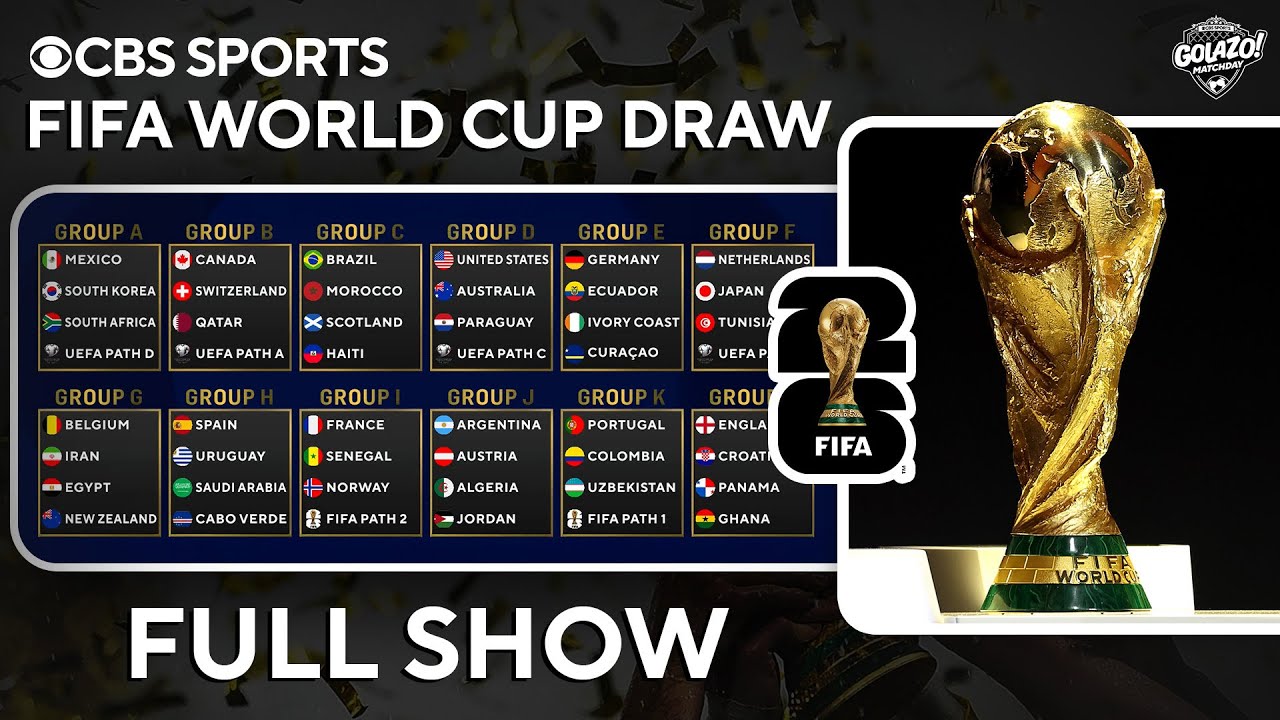
The dust has finally settled on the most anticipated event of the 2026 sports calendar, and the footballing world will never be the same. The draw for the 2026 FIFA World Cup has been unveiled, sketching out a competitive landscape that is as expansive as the 48-team format itself. With matches spread across North America, the tournament promises a unique cocktail of high-stakes drama and cultural celebration. As the groups align, the initial reactions suggest a tournament defined by massive opportunity for the hosts and precarious paths for some of history’s heavy hitters.
For the United States Men’s National Team (USMNT), the consensus is unanimous: they have been handed a “dream scenario.” Grouped with Australia, Paraguay, and a UEFA Path C winner, the pathway to the knockout stages looks not just open, but inviting. However, beneath the celebratory mood lies a subtle warning. In international football, a favorable draw is often a double-edged sword. It removes the immediate threat of an elite opponent early on, but it simultaneously heightens the floor of expectations to a dizzying level. For a USMNT squad lead by the high-profile appointment of Mauricio Pochettino, the question is no longer whether they will advance, but how dominant they will be.
The USMNT: Host Pressure and the Pochettino Factor
The hiring of Mauricio Pochettino was a clear statement of intent by US Soccer. You don’t bring in a manager of that pedigree—someone who has coached the likes of Messi and Mbappe—unless the objective is to move the needle on a global scale. The draw reinforces this goal. If the USMNT finishes top of their group, their projected path could see them avoiding top-tier giants like Spain or Argentina until the very late stages, potentially turning a deep run from a hope into a requirement.
Yet, the experts warn that there are no handouts in a World Cup. The backline remains a focal point of concern, with lingering questions about pace and consistency in the defensive trio. However, the presence of a winner like Pochettino is exactly what analysts believe this “Golden Generation” needs. He is a coach who won’t be swayed by media hype or past reputations; he demands that players earn their spot on the pitch. For stars like Christian Pulisic, the next 18 months represent an opportunity to launch their careers into a new stratosphere under a manager who understands the elite level.
Group C: Vibes, Scotland, and the Brazilian Risk
While the US celebrates, Group C is being hailed as the “fun group” of the tournament. Pairing Brazil with Morocco, Haiti, and Scotland ensures an atmosphere that will be sensational from the opening whistle. Scotland fans, known for bringing the party wherever they go, will collide with a Brazilian side that enters as a fascinating powerhouse under world-class management.
There is, however, a hidden danger for the record-time champions. Brazil opens their campaign against Morocco, a side that proved their giant-killing credentials in the last tournament. Losing that first game would put Brazil in a precarious situation, reminiscent of historical shock losses in tournament history. With young talents being hailed as the new face of Brazilian flair, the eyes of the world will be on whether experience or youth carries them through the serious pressure of tournament football.
A Story of Resilience: The Haitian Carnival
Perhaps the most poignant story of the draw is that of Haiti. Qualifying for the World Cup is a monumental achievement given the devastating political and social turmoil within the country. For players who have dealt with extreme domestic trials, the pressure of facing a Neymar or a Vinicius Jr. pales in comparison to real-life struggles. Analysts suggest that this perspective makes smaller nations like Haiti incredibly dangerous; they have absolutely nothing to lose and a resilience that cannot be quantified on a tactical sheet. They are playing for a nation that desperately needs a reason to celebrate.
England and Argentina: The Mentalities of Power
England enters their group as heavy favorites, but the narrative in London remains ruthless. After years of falling at the final hurdle, the appointment of Thomas Tuchel is about winning at all costs. While the media ponders over which young stars should start, Tuchel’s reputation suggests he will make the tough decisions regardless of public bias or star status.
In sharp contrast to the often scrutinized English press, Argentina enters the draw as a solidified, unified force. The management has built a culture where the team operates like a “pack of wolves”—they defend their teammates at all costs. This togetherness is widely considered the best in the world. As they prepare to defend their crown, the focus will be on managing the fitness of Lionel Messi, arriving at the later stages of the tournament as fresh as possible.
Conclusion: The Dark Horses and the Road Ahead
As with every World Cup, the predictions for “Dark Horses” are flying. Names from Africa and Europe are being thrown into the mix as teams capable of disrupting the status quo. The expanded 48-team format ensures that the competition levels will remain high, and third-place teams having a chance to advance keeps the drama alive until the final matchday of the group stage.
For the host nations—USA, Mexico, and Canada—the countdown is on. While Mexico grapples with consistency and Canada relies on high-pressing speed, the US appears to have the most solidified path forward. Tournament football is about momentum, mindset, and being united under pressure. As the squads unite for their country, the 2026 World Cup promises to be a spectacle that finally answers whether the soccer gods favor legacy or the hunger of the new generation. The road has been drawn; now, it’s time to see who has the heart to walk it.






