The news arrived with a quiet, profound solemnity, sending a genuine ripple of sadness through the hearts of millions across the globe. Pauline Collins, the beloved, BAFTA and Oscar-nominated actress whose name became synonymous with finding joy, freedom, and a new life beyond the kitchen sink, has passed away peacefully at the age of 85.
Surrounded by her loving family, the woman who gifted the world with the unforgettable character of Shirley Valentine bid her farewell, leaving behind a legacy that is not merely measured in awards and box office receipts, but in the countless lives she inspired to ask: “What if I just… went?”
Her family’s statement was a beautiful, tender reflection on the private woman and the public icon. They spoke of a life lived fully, describing her as a “bright, sparky, witty presence on stage and screen.” Yet, the central figure in the tribute was, predictably, the wise Liverpudlian housewife whose journey to a sun-drenched Greek island became a seminal cultural moment: “She will always be remembered as the iconic, strong-willed, vivacious and wise Shirley Valentine – a role that she made all her own.”
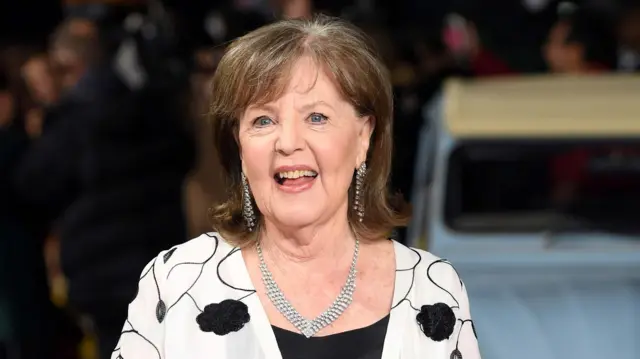
This profound sense of identification with Shirley Valentine—that yearning for escape, that sudden, defiant blossoming of self-worth—is the key to understanding Collins’s immense emotional impact. She didn’t just play a character; she embodied an aspiration. She gave voice to the millions of women who felt unseen, unappreciated, and confined by the roles society had assigned them. When Shirley Bradshaw, a working-class wife and mother, starts talking to her kitchen wall, Pauline Collins gave a performance that was simultaneously heartbreaking and hilariously relatable. And when she finally steps onto that beach, discarding her old life for a newfound independence, it was a moment of feminist cinematic triumph that still resonates decades later.
The journey of Shirley Valentine itself is a testament to Collins’s genius. Willy Russell’s masterpiece started as a one-woman stage show, a demanding, marathon performance requiring the actor to hold the audience captive through monologue alone. Collins didn’t just perform it; she dominated it. Her run on Broadway was nothing short of legendary, culminating in a clean sweep of all seven major awards, an extraordinary feat that showcased her mastery of character and narrative command. When the film adaptation arrived in 1989, she carried that stage magic directly onto the screen, earning her both a BAFTA nomination and a coveted Academy Award nomination for Best Actress. The role was hers, undeniably and permanently. She took the character from the small, intimate space of the theatre and projected her yearning, her humor, and her eventual liberation onto the global stage.
But to remember Pauline Collins solely for the iconic character who ordered a glass of wine by the Mediterranean Sea is to overlook one of the most remarkable and enduring careers in modern British acting—a career forged not just in glamour, but in tireless work, deep talent, and an ability to convey authentic humanity with effortless grace.
Before Shirley, there was Sarah. For an entire generation of television viewers in the 1970s, Pauline Collins was indelibly linked to the character of Sarah Moffat, the sharp-witted, often mischievous maid in the seminal period drama Upstairs, Downstairs. Running from 1971 to 1975, the show was a cultural behemoth, capturing the intricate dance of class, hierarchy, and human emotion in a wealthy London household. As Sarah, Collins was magnificent. She was neither fully ‘downstairs’—too spirited and ambitious for servitude—nor ever truly accepted ‘upstairs.’ Her character was the vibrant, rebellious heart of the show, a performance so compelling that it cemented her status as a household name and, eventually, led to her being voted the “nation’s sweetheart” during that era.
Her husband, the equally revered actor John Alderton, offered a deeply moving tribute that illuminated the professional admiration woven into their personal relationship. Alderton, who was married to Collins for an extraordinary 56 years, described her as a “remarkable star.” Their partnership was legendary in a profession often characterized by instability. They were collaborators, co-stars, and life partners, appearing together in numerous projects, including the Upstairs, Downstairs spin-off Thomas & Sarah.

Alderton’s words painted a picture of a generous, ego-less talent: “I worked with her more than any other actor in TV series, films and West End stage shows, and watched her genius at close quarters. What I saw was not only her brilliant range of diverse characters but her magic of bringing out the best in all of the people she worked with. She wanted everyone to be special and she did this by never saying ‘Look at me’.” This sentiment—her ability to elevate those around her—speaks volumes about the kindness and warmth she brought to every set and stage. He concluded with a beautiful, poignant summation of her life: “But her greatest performance was as my wife and mother to our beautiful children.”
This quiet, powerful devotion to family and craft defines the Collins narrative. Born in Exmouth in 1940 but raised near Liverpool, her initial path lay outside the theatre. She began her working life as a teacher—a detail that adds a lovely resonance to her eventual portrayal of the wise, often philosophizing Shirley Valentine. It was only after taking up acting part-time that she made the leap, landing her first television role as a nurse in Emergency Ward 10. From that small start, she built a career defined by integrity and versatility.
Her filmography, while often overshadowed by the colossal success of Shirley Valentine, is rich and diverse. She shone brightly in ensemble casts, demonstrating a depth that transcended genre. For example, in the 1997 film Paradise Road, she gave an acclaimed performance alongside a powerhouse cast including Glenn Close, Cate Blanchett, and Frances McDormell. The film, which told the harrowing and inspiring true story of a group of women in a Japanese prisoner of war camp who form an orchestra to defy their captors, showcased Collins’s dramatic range and her ability to portray profound, quiet courage under duress.
Beyond the major hits, her career trajectory was a masterclass in longevity and commitment to the arts. She tackled roles both large and small across the decades, maintaining a steady, dignified presence in the British entertainment landscape. From her turn as the unconventional teacher Sarah Jane Smith in the early days of Doctor Who (a role she was asked to reprise but declined) to her later, often regal or authoritative parts, she refused to be typecast, demonstrating a fluid mastery of comedy, drama, and historical storytelling. She played politicians, mothers, and even royalty, showcasing the full spectrum of the human experience. Her ability to step into any role—from the put-upon maid to a monarch—while retaining a core, relatable sincerity was her true superpower.
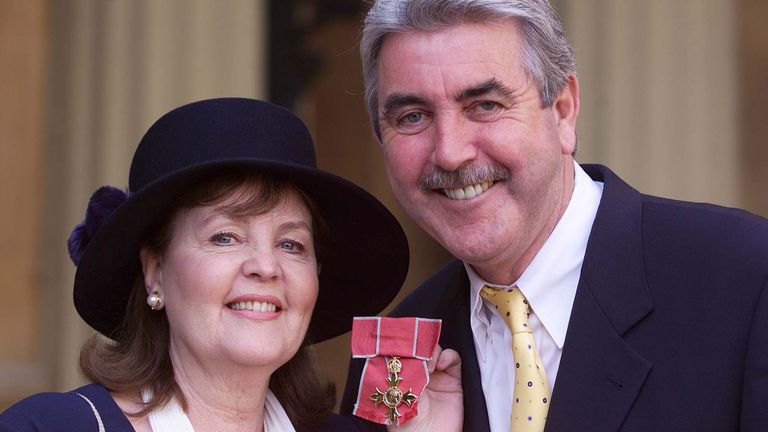
Collins’s immense contribution to drama was officially recognized in 2001 when she was made an Officer of the Order of the British Empire (OBE) for her services to drama. It was a well-deserved recognition of a woman who had, over four decades, profoundly enriched the nation’s cultural life and provided countless hours of meaningful entertainment.
In recent years, Collins battled Parkinson’s disease with the same quiet strength and dignity that characterized her career. The family’s gratitude towards her carers—whom they movingly described as “angels who looked after her with dignity, compassion, and most of all love”—speaks volumes about the gentle, peaceful nature of her final chapter. It is a reminder that even for an icon whose life was spent under the bright, harsh lights of the stage and screen, the final moments were deeply personal, rooted in the love and care of those closest to her.
The profound sense of loss felt by the public is not just for a celebrity, but for a voice. Pauline Collins was a voice for the underdog, for the dreamer, for the quiet revolutionary within us all. She embodied the possibility of transformation, proving that a person’s identity is not fixed by their circumstances, but by their courage to simply ask for more. Her legacy is a lasting invitation to self-reflection and daring. It’s an article of faith for anyone who believes in second chances, reinvention, and the simple, restorative power of a glass of wine enjoyed on a beautiful beach.
Her career was a careful, sustained commitment to truth in performance. She didn’t rely on sensationalism or constant self-promotion; her work spoke for itself, echoing with an authenticity that made characters like Shirley Valentine feel less like fiction and more like an old, wise friend. This depth of connection is why her passing feels so acutely personal to those who grew up watching her or found solace in her most famous role.
The tributes pouring in from colleagues, critics, and fans alike unanimously focus on her unique ability to infuse every performance with warmth and a spark of rebellion. She had that rare, magnetic quality that allowed her to be utterly down-to-earth yet completely luminous. It is the end of an era, a moment to pause and reflect on the immense joy and inspiration she brought to the cultural landscape.
We say goodbye to the actress, but the wisdom, the vivacity, and the strong will of Pauline Collins—the true spirit she poured into every role, especially the iconic one she made entirely her own—will remain etched in our collective memory. As the family rightly urged, we should remember her “at the height of her powers; so joyful and full of energy.” That is the enduring image of Pauline Collins: a woman liberated, laughing, and forever looking towards the horizon. Her story, like Shirley Valentine’s, reminds us that the best role we can ever play is the one we write for ourselves.






