In the adrenaline-fueled world of Formula 1, absence usually signals disaster. When a team misses a shakedown, the paddock whispers of production failures, financial woes, and organizational chaos. So, when Williams quietly skipped the first major running of the 2026 pre-season in Barcelona, the rumors began to swirl. Was the historic British team already on the back foot? Had the ambitious rebuild under James Vowles hit a terminal snag?
As it turns out, the silence from Grove wasn’t the sound of panic. It was the sound of a team quietly rewriting the rulebook on how to prepare for the sport’s most radical era yet.
When the FW48 finally broke cover at Silverstone, James Vowles didn’t offer excuses. Instead, he revealed a development story so intense and a testing methodology so advanced that it has left rivals wondering if they have been playing the wrong game all along.
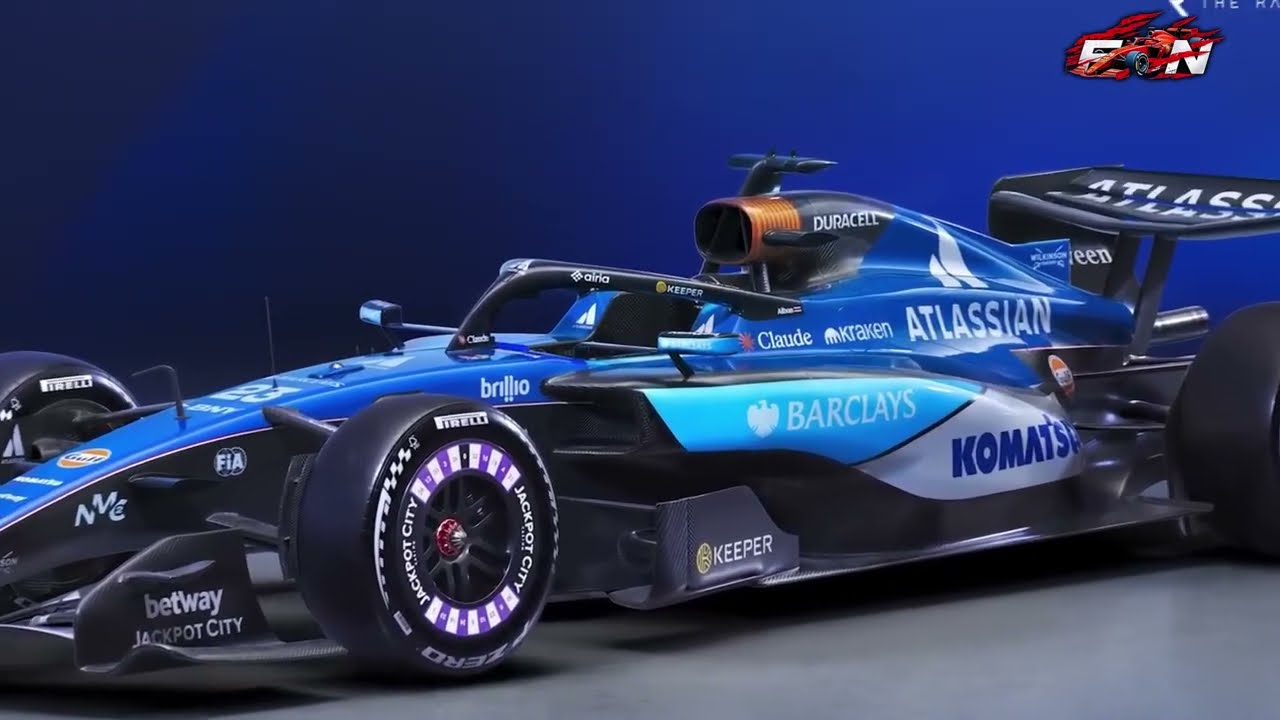
The “Three Times Harder” Gamble
The headline news is not that Williams was late; it is why they were late. Vowles revealed that the loads flowing through the FW48’s systems—structural, aerodynamic, and power unit-related—are “almost three times higher” than in the previous generation of cars.
This staggering statistic highlights the brutality of the 2026 regulations. The new cars are not just evolutions; they are beasts that place unprecedented stress on materials and components. Rather than rushing a fragile prototype to Spain just to log some PR laps, Williams made a bold, calculated decision: they stayed home.
But they weren’t idle. In a revelation that stunned seasoned engineers, the team conducted a “full virtual track test.” This wasn’t a standard simulator session with a driver looking at a screen. This was a “hardware-in-the-loop” torture test where large sections of the actual FW48 were mounted onto physical rigs. These rigs replicated the violent forces of a race track with near-perfect accuracy, twisting the suspension, stressing the power unit, and hammering the electronics.
The result? The team flushed out hidden mechanical gremlins that would have caused embarrassing breakdowns on a real track. They achieved their mileage targets without leaving the factory. When the car finally hit the Silverstone tarmac, Alex Albon and Carlos Sainz reported a “largely smooth day” with only minor issues. In a year of massive technical upheaval, that kind of out-of-the-box reliability is a massive victory.
The Energy Crisis and the “First Gear” Shock
However, the most ground-breaking revelations from the Williams camp aren’t about the chassis, but about the terrifying new reality of driving the 2026 power units.
The new regulations have tripled the electric motor output to a massive 350kW, but—crucially—the battery capacity has barely budged. This creates a severe “energy deficit.” There simply isn’t enough juice to power the car at full tilt for a whole lap.
Williams’ technical director Matt Harman dropped a bombshell about how teams are solving this. He confirmed that drivers might be forced to adopt “strange, counterintuitive techniques” that go against decades of racing instinct.
Imagine a driver approaching a high-speed corner. Instead of carrying momentum in a high gear, they might be forced to downshift aggressively to first gear—engine screaming—just to keep the revs high enough to actively recharge the battery mid-corner.
It sounds insane. It sounds wrong. But in 2026, it might be the only way to survive.
This “burn for turns” strategy creates a nightmare for stability. The engine will be fighting the driver, generating “negative torque” to harvest energy while the driver is trying to balance the car on the limit of adhesion. It threatens to cause “snap oversteer” at the worst possible moments. The drivers won’t just be racing each other; they will be wrestling with a power unit that is constantly hungry for energy.
The “Negative Torque” Battleground
Angelos Tsiaparas, another key technical figure at Williams, added more intrigue. He explained that teams will deliberately burn fuel to drive the electric motor in “negative torque mode.” Essentially, the internal combustion engine becomes a generator on wheels, sacrificing fuel efficiency in specific sectors to build up a battery “war chest” for overtaking or defending.
This transforms every Grand Prix into a complex strategic chess match. It won’t just be about who has the fastest car; it will be about who has the smartest energy deployment strategy. A driver might be slow for three laps, hoarding energy, only to unleash a devastating 350kW boost on the final straight.
The Mercedes Connection
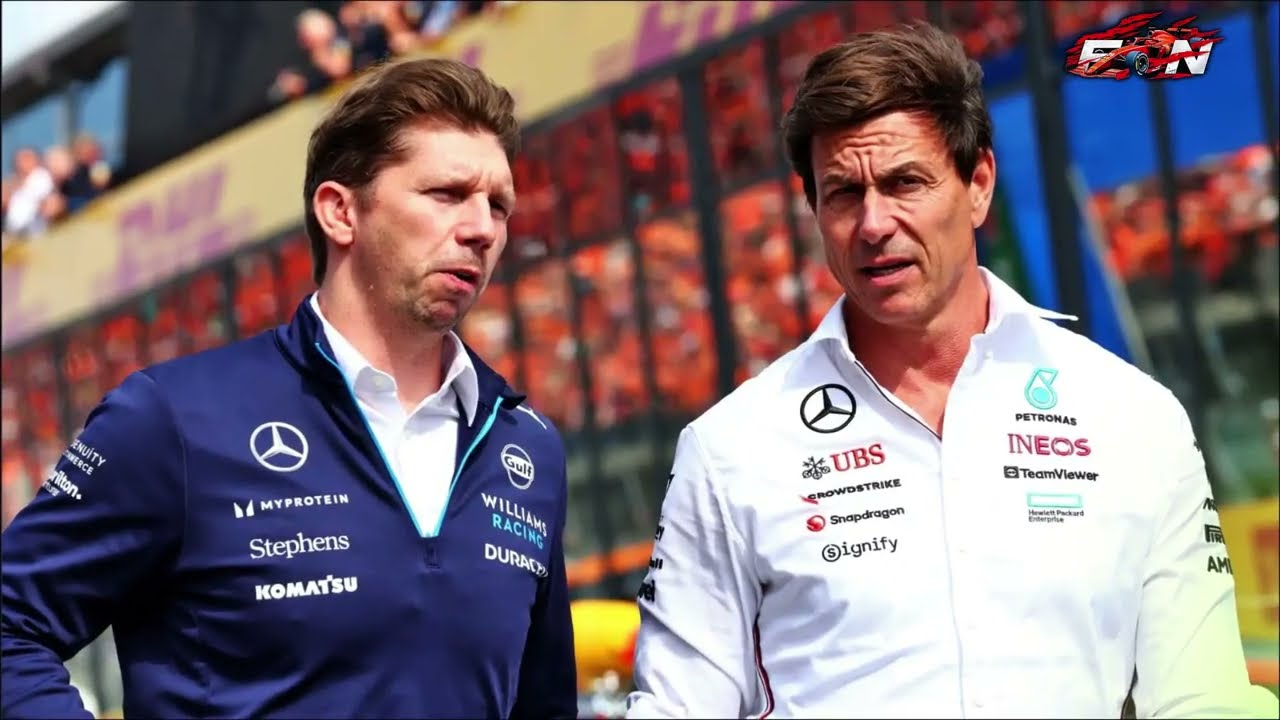
Williams’ confidence is further bolstered by their relationship with Mercedes. While other customer teams are flying blind, Williams has reportedly received valuable early data on the new Mercedes power unit and gearbox.
The Silver Arrows’ strong reliability in their own testing has trickled down to Grove, allowing Williams to refine their virtual models with real-world engine data. This “quiet advantage” means that despite missing the physical laps in Barcelona, Williams might actually arrive at the season opener in Bahrain with a better understanding of their package than rivals who spent days fixing leaks in the pit lane.
From Fifth to Fourth: The Hardest Step
James Vowles is under no illusions. After a stellar 2025 season where the team jumped to fifth in the standings—thanks to podiums from Carlos Sainz and consistency from Albon—the target is now the top four. But as Vowles notes, moving from the midfield to the front is exponentially harder than moving from the back to the middle.
They are now fighting giants with limitless budgets and championship pedigrees. That is why Vowles is pushing the organization to the breaking point. He knows that safe, conservative engineering will only keep them in fifth place. To bridge the gap to Red Bull, Ferrari, and Mercedes, Williams had to take risks.
The FW48 is that risk. It is a car born from a “virtual” baptism of fire, designed to handle forces that would snap an older car in half, and built to master a driving style that hasn’t even been invented yet.
Williams may have missed the first party in Spain, but if their virtual gamble pays off, they might just be the ones celebrating when the checkered flag waves in Bahrain. The “sleeping giant” isn’t just waking up; it’s learning new tricks that could leave the rest of the grid wondering what hit them.
News

Inside Shane Richie’s love life: Drug – fuelled orgy with six blondes; real reason he split from Coleen Nolan; six-year ‘affair with fan’
Inside Shane Richie’s love life: Orgy with six blondes; real reason he split from Coleen Nolan; six-year ‘affair with fan’ He’s popular with the ladies… Shane Richie…

SH0CKING REVELATI0N:A sh0cking behind-the-scenes secret revealed about Lizzie Rizzini, the woman replacing Carol Kirkwood on the 6pm weather bulletin
BBC viewers still reeling from the departure of Carol Kirkwood got another surprise last night when presenter Lizzie Rizzini appeared to flash her black lace stockings on…

HEARTBREAKING: Peter Andre’s Tearful Message to Son Junior After SHOCKING Revelation About How He Truly Feels Toward Mum Katie Price — Katie Price’s reaction scares fans.
Peter Andre’s emotional message to son Junior after it’s revealed how he really feels about mum Katie Pri… PETER Andre has shared an emotional message to his…

Ben Shephard opens up about the devastating health battle his wife is facing: “She wakes up crying every single morning…”
Inside This Morning Ben Shephard’s Life Including Rarely Seen Wife and Health Battle Ben Shephard is a name synonymous with British television, renowned for his engaging presentation…

🚨 LIVE TV HEARTBREAK: Good Morning Britain Host Announces ‘Devastating’ Dɘath of Guest Minutes Into Show
Viewers of Good Morning Britain were met with heartbreaking news just minutes into Friday’s (January 30) episode, as co-hosts Kate Garraway and Ranvir Singh reported the tragic…

Emmerdale legend Cain Dingle will never be the same again after a shock cancer diagnosis turns his world upside down
FROure Desk. Full Terms and conditions are available on the website http://www.itv.com/presscentre/itvpictures/terms Emmerdale wouldn’t be Emmerdale without the glowering, grunting embodiment of manliness that is Cain Dingle (Jeff Hordley) But…
End of content
No more pages to load






