In the high-octane world of Formula 1, silence is often louder than the scream of a V6 hybrid engine. For months, the paddock has been buzzing with speculation, anxiety, and intrigue surrounding Red Bull Racing’s most audacious gamble yet: the transition from a customer team to a full-blown power unit manufacturer in partnership with Ford. It is a journey into the unknown, a technical tightrope walk that will define the next era of the sport. And finally, the man at the center of the storm, Max Verstappen, has broken his silence.
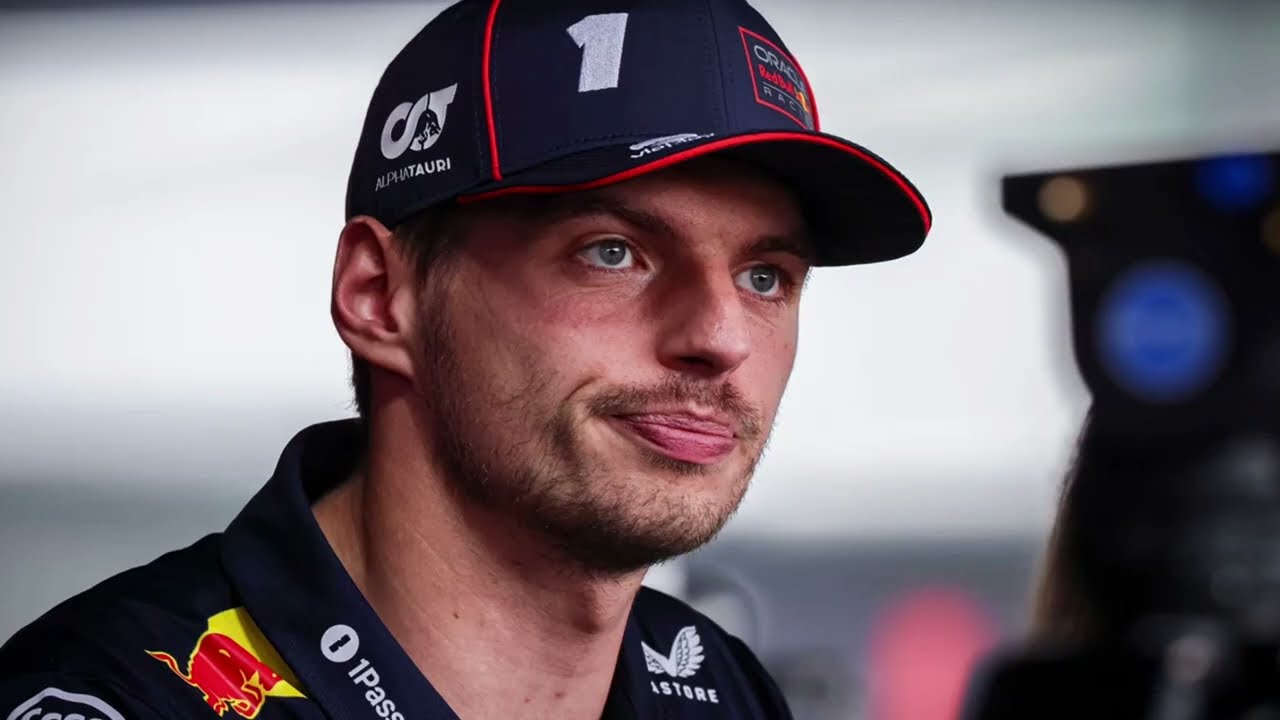
The three-time World Champion recently confirmed a pivotal moment in Red Bull’s history—he has heard the 2026 Red Bull-Ford power unit running on the dyno. His verdict? It sounded “crisp.”
On the surface, “crisp” might seem like a throwaway adjective, a casual remark to deflect the media’s relentless probing. But in the nuanced language of elite motorsport, where every syllable is weighed and measured, that single word carries the weight of a championship. Verstappen’s description wasn’t laden with the hyperbole often found in PR-scripted press releases. There was no feigned excitement, no grandiose promises of domination, and notably, no alarm bells.
To an engineer’s ear, a “crisp” engine implies clean combustion, sharp throttle response, and a mechanical harmony that suggests the foundational numbers are correct. It signals that, at least in this embryonic stage, the combustion engine and the electrical systems are talking to each other without the stuttering hesitation that plagues failed projects. For a driver like Verstappen, whose superhuman car control relies on a seamless connection between his right foot and the rear wheels, this initial auditory test is the first tangible proof that Red Bull Powertrains isn’t just a theoretical concept—it’s a living, breathing reality.
However, the understated nature of his comment also serves as a stark reminder of the colossal mountain Red Bull still has to climb. The team is stepping away from the safety net of Honda—a manufacturer with decades of scars and trophies in engine development—to compete directly against giants like Mercedes and Ferrari. This is no longer about refining a chassis; it is about mastering the complex alchemy of energy recovery, battery efficiency, and internal combustion from scratch.
Verstappen’s restraint reflects a deep understanding of the 2026 regulations. The new rules are a reset button for the sport, mandating a 50/50 split between electrical power and internal combustion. This shift fundamentally changes the DNA of the cars. Raw horsepower will no longer be the sole king; energy management will take the throne. The ability to harvest, deploy, and sustain electrical energy over a lap will separate the contenders from the backmarkers. In this brave new world, a “crisp” sound on a dyno is a positive first step, but it is lightyears away from a race-winning package.
The stakes could not be higher personally for Verstappen. At 27, he is entering the prime of his career, yet he finds himself at a crossroads. His contract with Red Bull may run until 2028, but his loyalty has always been conditional—tied not to a signature on a page, but to the performance on the track. He has been remarkably open about his desire for authenticity and enjoyment in racing. He isn’t chasing Lewis Hamilton’s records or Michael Schumacher’s legacy; he is chasing the pure thrill of driving. If the Red Bull-Ford project fails to deliver a car that is responsive and competitive, the threat of him walking away—either to a rival team or away from F1 entirely—is genuine.
The 2025 season has already shown that the Red Bull armor has chinks. The dominance of previous years has evaporated, replaced by a gritty, defensive campaign where Verstappen’s brilliance often had to compensate for mechanical deficiencies. This vulnerability has reshaped expectations. The “untouchable” aura is gone, and the team knows that one misstep with the 2026 engine could result in a competitive freefall reminiscent of the early hybrid era struggles that plagued other teams.
Interestingly, while rivals like Mercedes and Honda have been releasing audio clips of their new engines—subtle flexes designed to reassure investors and intimidate competitors—Red Bull has remained largely silent. Verstappen’s “crisp” comment is the only real insight the world has had. This silence creates a vacuum filled with pressure. It invites scrutiny. Is the silence a sign of quiet confidence, the “speak softly and carry a big stick” approach? Or is it a mask for the frantic scrambling of a new manufacturer realizing just how steep the learning curve truly is?
Verstappen’s manager, Raymond Vermeulen, recently added a sobering layer to the narrative, admitting that “nobody knows what ‘good’ looks like” for 2026 yet. Without a competitive baseline, optimism is just hope in disguise. The first few races of the new era will be a brutal reveal, instantly separating those who cracked the code from those who got it wrong.
For now, Max Verstappen waits. He has looked the unknown in the face and heard its first cry. It wasn’t a roar of triumph, nor a cough of failure—it was simply “crisp.” And in that one word lies the hope of a team, the future of a driver, and the next great storyline of Formula 1. The engine is running, but the real race has only just begun.
News

Inside Shane Richie’s love life: Drug – fuelled orgy with six blondes; real reason he split from Coleen Nolan; six-year ‘affair with fan’
Inside Shane Richie’s love life: Orgy with six blondes; real reason he split from Coleen Nolan; six-year ‘affair with fan’ He’s popular with the ladies… Shane Richie…

SH0CKING REVELATI0N:A sh0cking behind-the-scenes secret revealed about Lizzie Rizzini, the woman replacing Carol Kirkwood on the 6pm weather bulletin
BBC viewers still reeling from the departure of Carol Kirkwood got another surprise last night when presenter Lizzie Rizzini appeared to flash her black lace stockings on…

HEARTBREAKING: Peter Andre’s Tearful Message to Son Junior After SHOCKING Revelation About How He Truly Feels Toward Mum Katie Price — Katie Price’s reaction scares fans.
Peter Andre’s emotional message to son Junior after it’s revealed how he really feels about mum Katie Pri… PETER Andre has shared an emotional message to his…

Ben Shephard opens up about the devastating health battle his wife is facing: “She wakes up crying every single morning…”
Inside This Morning Ben Shephard’s Life Including Rarely Seen Wife and Health Battle Ben Shephard is a name synonymous with British television, renowned for his engaging presentation…

🚨 LIVE TV HEARTBREAK: Good Morning Britain Host Announces ‘Devastating’ Dɘath of Guest Minutes Into Show
Viewers of Good Morning Britain were met with heartbreaking news just minutes into Friday’s (January 30) episode, as co-hosts Kate Garraway and Ranvir Singh reported the tragic…

Emmerdale legend Cain Dingle will never be the same again after a shock cancer diagnosis turns his world upside down
FROure Desk. Full Terms and conditions are available on the website http://www.itv.com/presscentre/itvpictures/terms Emmerdale wouldn’t be Emmerdale without the glowering, grunting embodiment of manliness that is Cain Dingle (Jeff Hordley) But…
End of content
No more pages to load






