The curtain fell on one of the most unpredictable and emotionally charged Formula 1 seasons in history, culminating in a tense final showdown in Abu Dhabi that saw Lando Norris achieve a dream many thought impossible just months ago. Norris, the 2025 Formula 1 World Champion, secured the title by the narrowest of margins—a mere two points—after a dramatic race that was less about outright speed and more about calculated risk, strategic brilliance, and, for one driver, simmering fury.
While Max Verstappen took a comfortable race victory from pole position, the Dutchman’s supreme, mid-season championship comeback ultimately fell agonizingly short. The narrative of the day was not just who won, but the high-stakes tactical chess game played out on track, which included a surprising lack of aggression from Verstappen and a highly controversial, championship-changing incident that put Norris’s title in jeopardy right up to the final ruling.
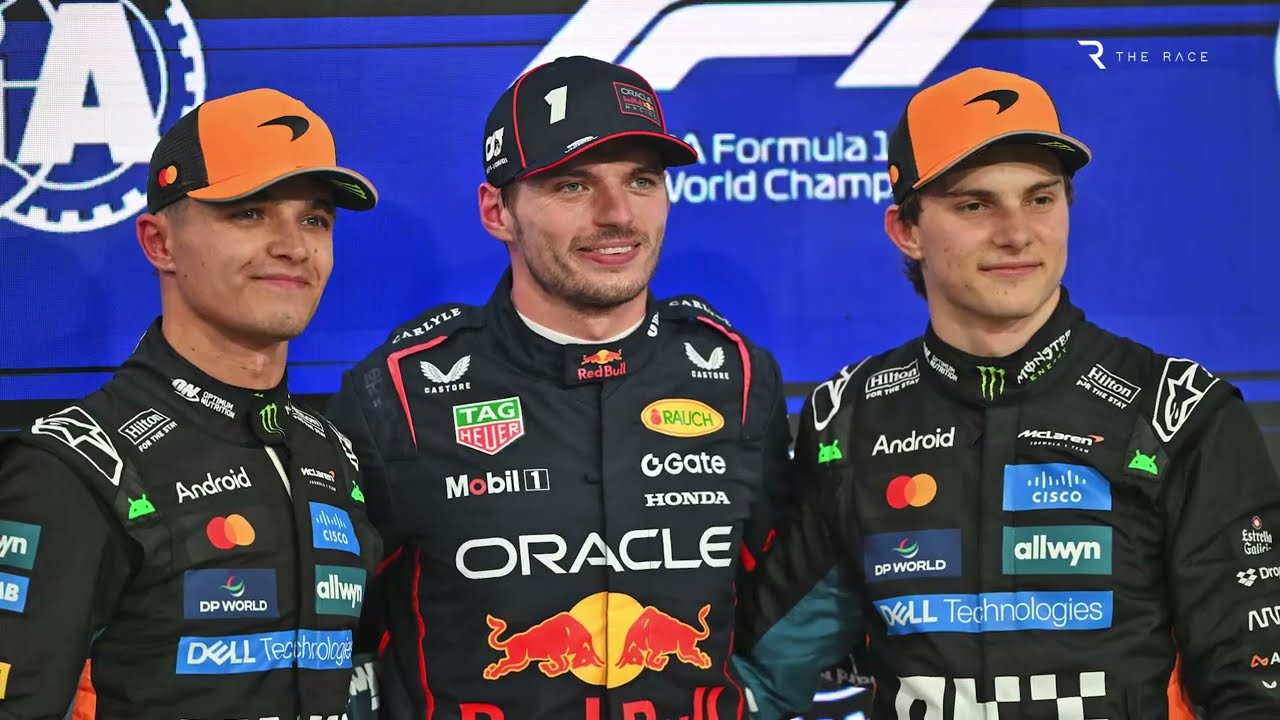
The Game That Wasn’t Played
Going into the finale, expectations were sky-high for a chaotic, disruptive end to the season. With Verstappen on pole, many pundits and rivals expected him to play a disruptive role—to “play some games”—by backing up the field and creating a train to push Lando Norris into the clutches of other competitors, particularly those who could potentially split the two McLarens. It’s a legitimate, albeit deeply polarizing, tactic, famously employed by Lewis Hamilton against Nico Rosberg in 2016.
Yet, Verstappen, despite having the perfect position to complicate McLaren’s life, simply drove away. He won the race comfortably, managing his pace and focusing on ensuring the alternative-strategy car of Oscar Piastri (who jumped Norris at the start) was never close enough to become a threat on fresher, softer tires.
Post-race, even Piastri felt compelled to ask Verstappen about this decision in the cool-down room. Why didn’t the three-time champion try to impact the championship more directly?
Verstappen’s decision was rooted in a calculated skepticism. He had considered “a lot of scenarios” but ultimately felt that playing any games would leave him too vulnerable to being overtaken. The track changes at Yas Marina since 2016 have made such tactics significantly harder, and with Piastri—the McLaren driver with the “least to lose”—right behind him, the risk felt too great. Furthermore, with a condensed field, Red Bull wasn’t confident the tactic would achieve anything other than a massive DRS train that would restrict everyone’s strategic options. The chance of successfully forcing someone to jump ahead of Norris was deemed remote, and the likelihood of Verstappen himself being overtaken was high.
A later opportunity to pit Verstappen a second time and emerge just in front of Piastri, backing up the McLaren in the final stint, also quickly closed. The calculated decision to avoid an aggressive, disruptive strategy ensured a Red Bull victory, but it cemented Lando Norris’s path to the title.
Navigating the Championship Gauntlet
For Norris, the race was a masterclass in composure under unimaginable pressure. After being jumped by his teammate Piastri early on, his focus narrowed: hold third place to the end, knowing that no matter what Verstappen did, the title would be his.
The most fraught part of the race for the new champion came immediately after his relatively early first pit stop. Placed in the path of serious traffic, Norris had to clear a host of mid-field runners without error—a task fraught with peril. It was the most “accomplished part of his drive” as he used his fresh tires to pick off drivers like Kimmy Antonelli and Carlos Sainz, followed by the squabbling Lance Stroll and Liam Lawson with decisive, clean moves. The tension was palpable, especially when Lawson immediately tried to reclaim his position.
Yet, the championship’s most dangerous moment came next, at the hands of Red Bull’s sister team.
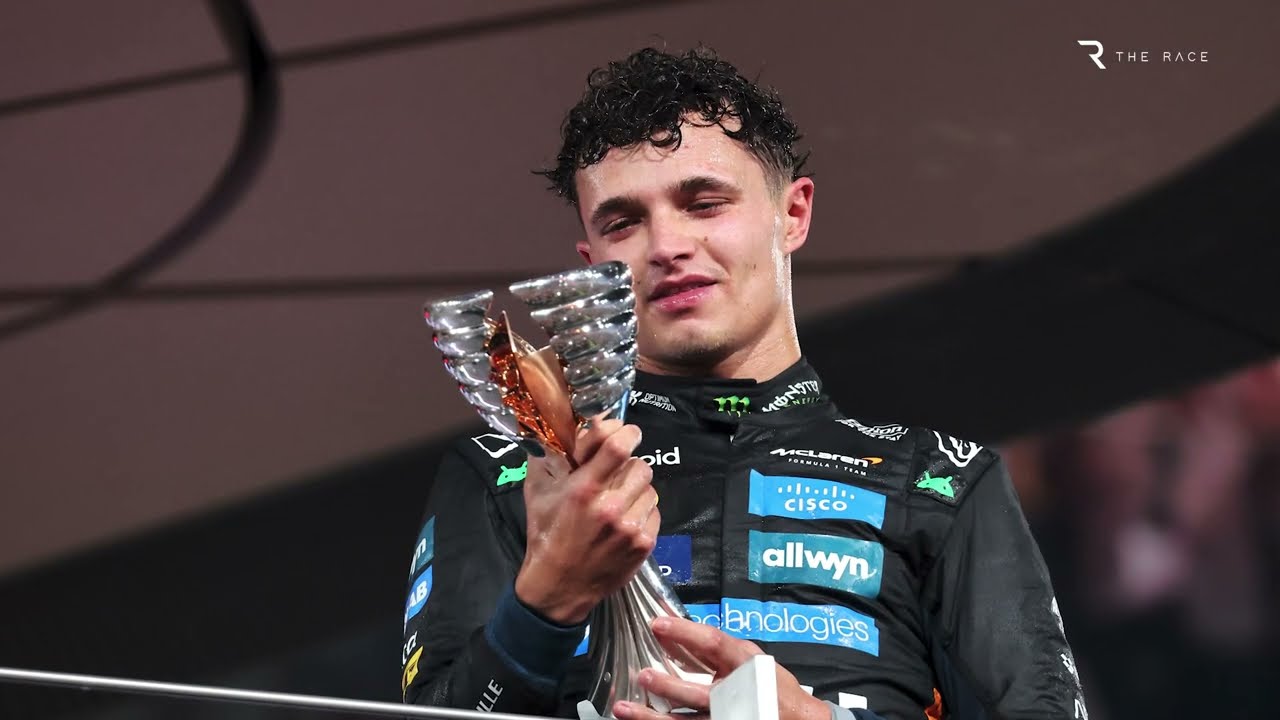
The Near-Miss of Disaster: The Tsunoda Turmoil
As Norris emerged from the traffic, he came up against Yuki Tsunoda, driving for the Red Bull second team. Tsunoda, running a long first stint on hard tires, was clearly instructed to impede Norris and aid Verstappen’s cause as much as possible.
The Japanese driver’s confidence was misplaced. After telling his team over the radio that he “knew what to do and to leave him alone,” Tsunoda went on to give Norris an easy overtake, but not before a desperate, highly controversial defensive maneuver. As Norris approached, Tsunoda began “fairly desperately weaving to break the tow and make it harder.” The final move, a late shift to the left as Norris attempted to pass on the inside, prompted the McLaren driver to move even further to the inside, crossing the white line denoting the edge of the track.
Norris completed the pass outside of the white line, and both drivers were placed under investigation: Tsunoda for forcing another driver off the track, and Norris for leaving the track and gaining an advantage.
This moment held the potential to be truly championship-changing. Had Norris been handed a 10-second penalty, he would have risked finishing off the podium, a result that, combined with a Verstappen win, would have cost him the title. McLaren boss Zak Brown called Tsunoda’s actions a “dangerous and unnecessary maneuver.”
The Stewards ultimately saved the championship result from a procedural farce. They opted to penalize Tsunoda with a 5-second penalty for making more than one change of direction to defend his position. Crucially, Norris was cleared, with officials concluding that he had been forced off the track by Tsunoda. The significance of the investigation faded quickly, but for a few tense minutes, the weight of the entire season rested on the stewards’ judgement.
The Post-Race Firestorm: Max’s Fury Unleashed
While Norris was celebrating, the raw frustration of Max Verstappen was reaching a boiling point. The Dutchman was initially magnanimous in defeat, acknowledging the better performance of McLaren’s car throughout the season. However, one line of questioning in the post-race media scrum proved to be the spark that ignited his season’s accumulated tension.
A reporter fixated on Verstappen’s penalty in Barcelona earlier in the year—the suggestion being that had he not driven into George Russell there, the two points needed for the title would have been his.
The suggestion was immediately and furiously dismissed.
“You forget all the other stuff that happened in my season. The only thing you mentioned is Barcelona,” Verstappen snapped, before pointedly asking the reporter, “Are you giving a stupid grid now?”
The outburst highlighted his simmering annoyance at the relentless focus on individual errors, particularly when he felt he had been given “a lot of early Christmas presents from his rivals” in the second half of the season due to McLaren’s own missteps.
While the Barcelona ‘Red Mist’ was a regret, and moments like Antonelli spearing him in Austria or his half-spin at Silverstone had cost him points, for Verstappen, fixating on one event was a reductive and infuriating take on a complex title loss.
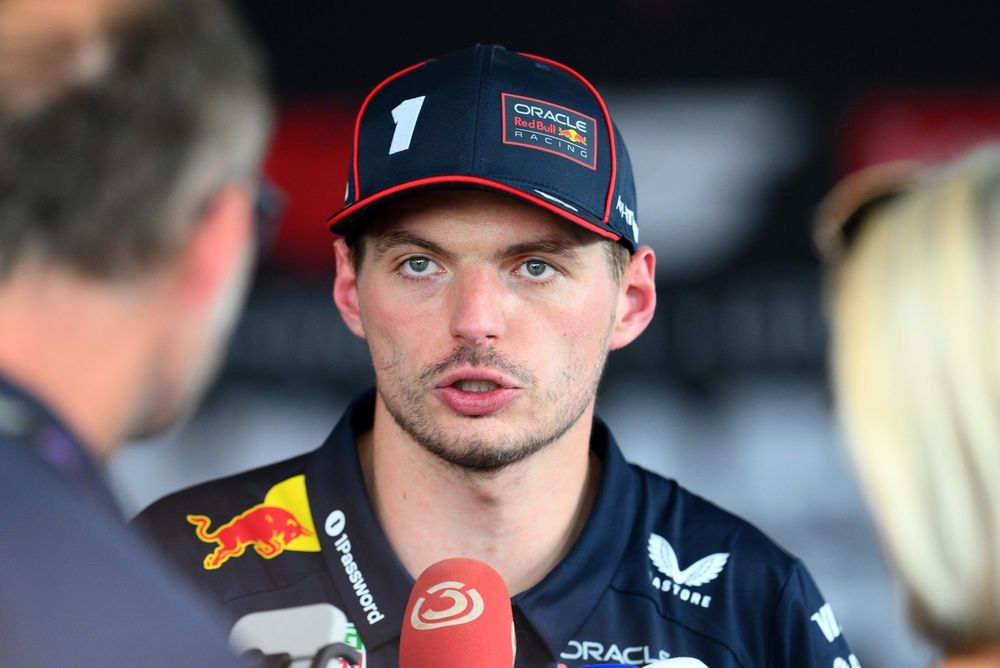
The True Cost: Inconsistency, Not Incidents
The deeper, more sober analysis confirms Verstappen’s frustration was justified, but misdirected at the media rather than the core issue. The title wasn’t lost by one single crash or one controversial penalty; it was lost long before the late-season surge.
The biggest limitation was Red Bull’s inconsistency before the summer break. For the first half of the season, the team very rarely had a car that was faster than or even equal to the McLaren. Instead, the Red Bull often fluctuated between being the second, third, or even fourth-best car on the grid.
Verstappen’s incredible run in the second half, where he drove almost flawlessly, was only a reflection of the team finally finding a performance sweet spot. Had the car’s competitive edge—which materialized from the Italian Grand Prix onwards—been present all year, Verstappen would have had ample opportunity to build a decisive lead.
That pre-summer inconsistency is ultimately what cost him the two points. While Verstappen wasn’t 100% perfect—no driver, no champion, ever is—he came closer than either McLaren driver. His effort to erase a deficit of over 100 points in the final ten races was a heroic feat.
In the end, while the final race in Abu Dhabi delivered heart-stopping drama and post-race fury, the title was decided months earlier. The new World Champion Lando Norris is an undeniably worthy winner, but the incredible tension of the finale served as a poignant reminder of how close Max Verstappen came to pulling off the greatest comeback in Formula 1 history.






