The date is February 8, 2026, and the Formula 1 world is currently holding its collective breath. While the official launch of the Aston Martin AMR26 is scheduled for tomorrow at Silverstone, the real shockwave has already hit the paddock. Forty-eight hours ago, during a private shakedown at the Circuit de Barcelona-Catalunya, the garage doors rolled up, and Adrian Newey’s first true creation for the green team broke cover. The reaction from the few privileged enough to witness it was a mixture of confusion, awe, and palpable fear.
In the high-stakes world of F1 design, convergence is usually the name of the game. Teams copy what works, and cars tend to look similar. But reports from Barcelona suggest that Adrian Newey has done what he always does: he has ignored the trend and rewritten the rulebook. The AMR26 is not just an evolution; it is a revolution, centered around a suspension concept so complex that it has left rival team principals shaking their heads.
“I Wouldn’t Want to Design That”
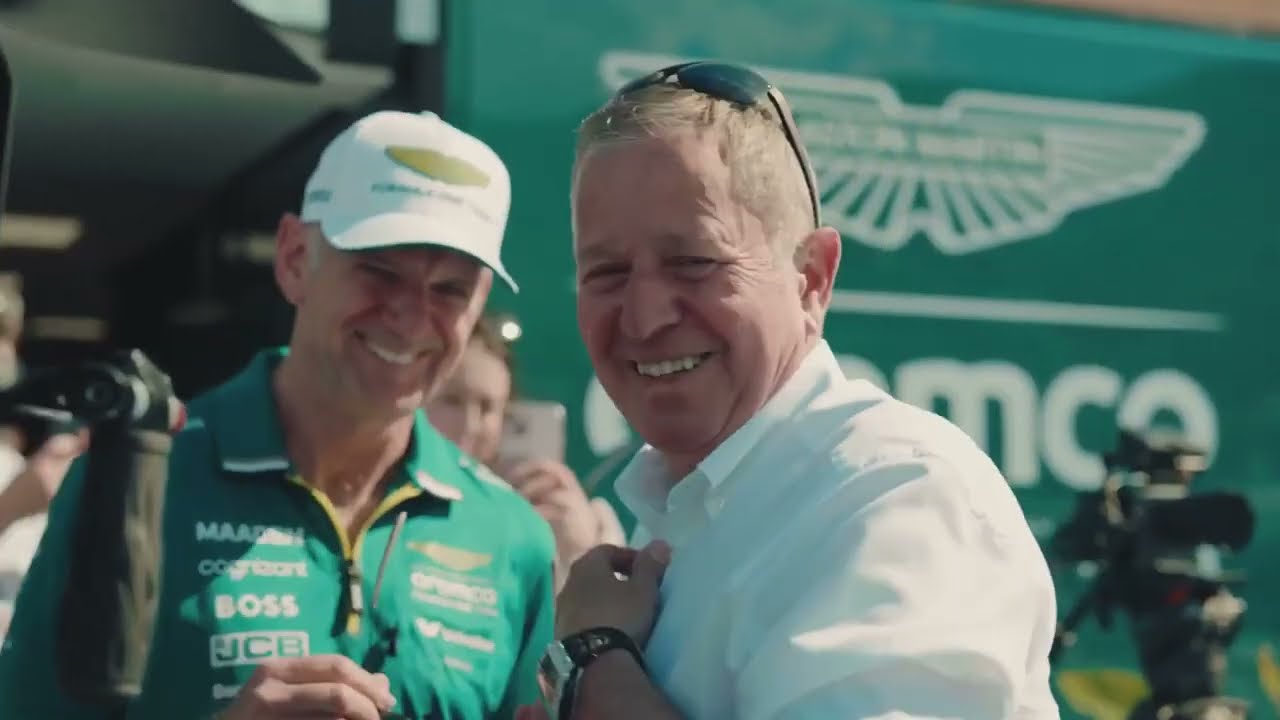
The primary source of this paddock anxiety is James Vowles, the Team Principal of Williams. Vowles is a man of engineering precision, a strategist who deals in cold, hard data, not hyperbole. Yet, after catching a glimpse of the AMR26 in the Barcelona pit lane, his assessment was startling.
“Very impressive, very creative, very extreme,” Vowles told reporters, visibly perplexed by what he had seen. He didn’t stop at general praise; he pinpointed the specific area that has engineers scrambling for their telephoto lenses. “I wouldn’t want to be the designer for that one. Let’s put it that way.”
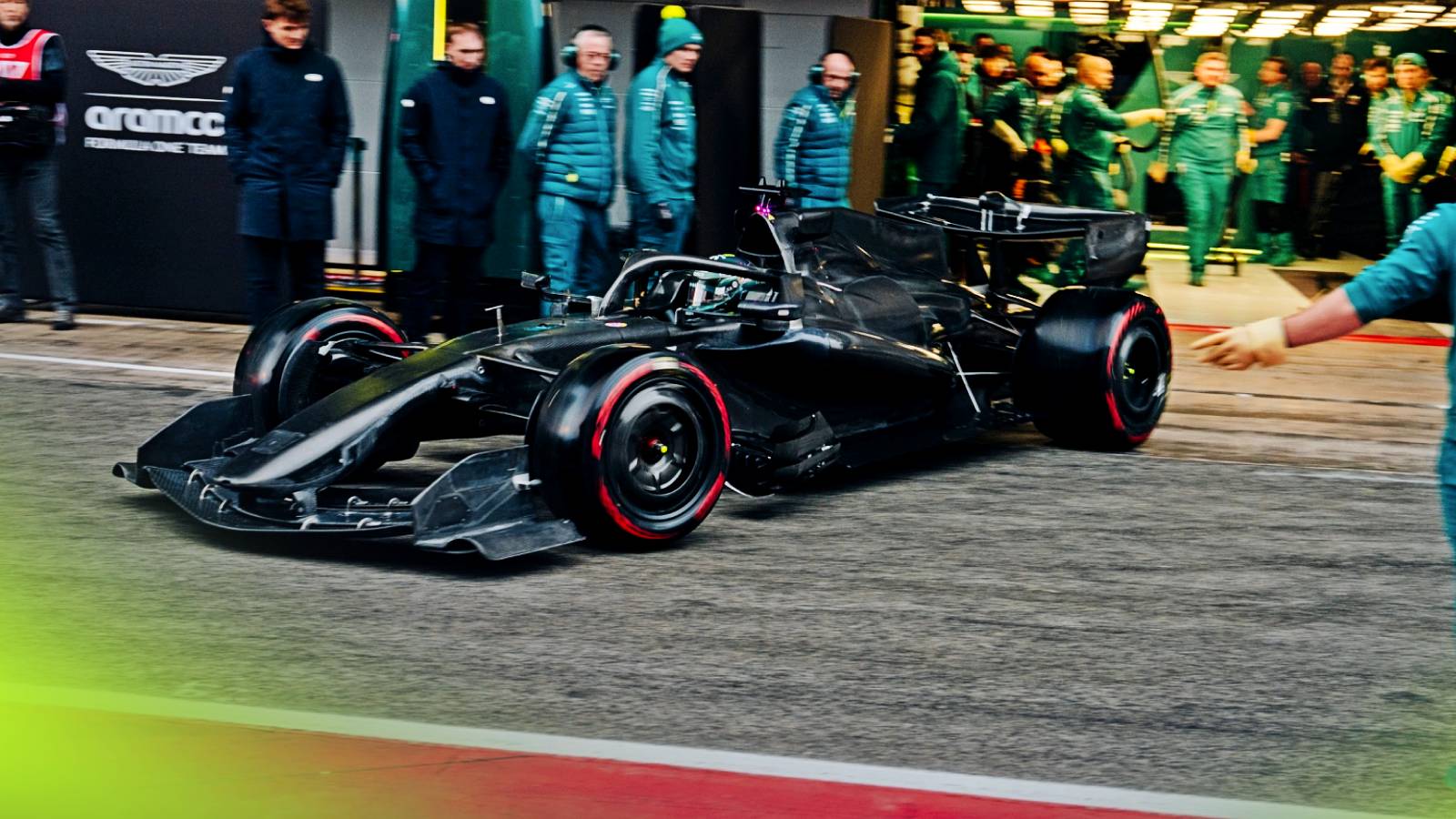
Vowles described seeing “trapezoids on trapezoids” in areas of the car where suspension arms simply shouldn’t exist. This isn’t just a difference in philosophy; it appears to be a complete reimagining of how a Formula 1 car connects to its wheels. The geometry defies convention, with wishbones placed in positions that seem to contradict standard mechanical logic—likely extremely high up on the chassis or deeply integrated into the floor structure.
The Mechanical Computer
So, why build something so complex? The answer lies in the unique demands of the 2026 regulations. This new era features active aerodynamics, where front and rear wings move to reduce drag on straights and increase downforce in corners. For these moving wings to work efficiently, the car’s platform—its ride height and pitch—must remain perfectly stable.
Newey appears to have created a “mechanical computer” made of carbon fiber. By using this multi-link, “trapezoid on trapezoids” arrangement, the suspension seemingly mimics the effects of the banned active suspension systems through pure geometry. It creates massive anti-dive and anti-squat characteristics, decoupling the car’s vertical movement (heave) from its cornering roll.
The proof was in the pudding at Turn 10. In an era where the new floor regulations were expected to force teams to run stiffer, bouncier setups, onlookers noted that the AMR26 didn’t bounce. It glided. It attacked the curbs with a compliance that shouldn’t be possible for a car generating that much ground effect. That visual cue alone—a car staying flat while others are unsettled—is the hallmark of a Newey masterpiece.
The “Late Start” Bluff
For months, the narrative surrounding Aston Martin was one of caution. Newey didn’t officially start at Silverstone until March 2025 due to his “gardening leave” from Red Bull. He spent the week leading up to this shakedown claiming the team was “four months behind” rivals like Ferrari and Mercedes, who began their 2026 projects significantly earlier.
However, looking at the complexity of the AMR26, that narrative feels like a classic bluff. You don’t design “trapezoids on trapezoids” in a rush. You don’t execute a radical evolution of the “zero-pod” sidepod concept—which Mercedes tried and failed to make work years ago—without immense preparation and confidence.
This is a tactic Newey has used before with the dominant Red Bull RB6 and RB19. By lowering expectations, he lulls rivals into a false sense of security, only to unleash a monster when the lights go out. The car that emerged in Barcelona was not a tentative first draft; it was a statement of intent.
The Honda Reunion
Crucial to this radical design is the power unit sitting behind the driver. The 2026 season marks the reunion of Adrian Newey and Honda, the partnership that powered Max Verstappen to his dynasty. Aston Martin is now the de facto Honda works team, receiving the full, undivided attention of the Japanese manufacturer.
The integration between chassis and engine is tighter than ever. Vowles noted that the packaging suggests the new Honda unit is incredibly compact, focusing heavily on energy recovery efficiency. This tight packaging is likely what freed up the volume for Newey’s extreme suspension arms. It is a symbiotic relationship: the engine allows the chassis to be radical, and the chassis provides the stability the engine needs to deploy its electrical power effectively.
A High-Stakes Gamble
However, “extreme” does not always mean “successful.” As Vowles hinted, the complexity of the suspension is a nightmare for mechanics and a potential reliability timebomb. If those intricate arms fail under the colossal loads of high-downforce cornering, the championship dream ends in a gravel trap. Lawrence Stroll has spent hundreds of millions building the Silverstone campus and hiring the best minds in the sport. He has handed the keys entirely to Newey’s vision.
If the AMR26 works, it validates the aggressive recruitment and the massive spending. It creates an advantage that cannot be copied quickly—you can clone a front wing in a week, but you cannot redesign your suspension mounting points mid-season. But if it fails, it will be a high-profile disaster.
The Verdict
As we await the official launch, the hierarchy of the 2026 grid feels less certain than it did a week ago. The big three—Red Bull, Ferrari, Mercedes—expected a fight amongst themselves. They didn’t account for a “green alien” disrupting the party.
James Vowles’ reaction says it all. When a rival boss admits he is glad he didn’t have to engineer your solution because it is too difficult, you have either built a catastrophe or a legend. Given Adrian Newey’s track record, the smart money is on the latter. The AMR26 might be ugly to some, it might be complicated to all, but if it glides while the others bounce, the rest of the grid is in serious trouble.
News

Inside Shane Richie’s love life: Drug – fuelled orgy with six blondes; real reason he split from Coleen Nolan; six-year ‘affair with fan’
Inside Shane Richie’s love life: Orgy with six blondes; real reason he split from Coleen Nolan; six-year ‘affair with fan’ He’s popular with the ladies… Shane Richie…

SH0CKING REVELATI0N:A sh0cking behind-the-scenes secret revealed about Lizzie Rizzini, the woman replacing Carol Kirkwood on the 6pm weather bulletin
BBC viewers still reeling from the departure of Carol Kirkwood got another surprise last night when presenter Lizzie Rizzini appeared to flash her black lace stockings on…

HEARTBREAKING: Peter Andre’s Tearful Message to Son Junior After SHOCKING Revelation About How He Truly Feels Toward Mum Katie Price — Katie Price’s reaction scares fans.
Peter Andre’s emotional message to son Junior after it’s revealed how he really feels about mum Katie Pri… PETER Andre has shared an emotional message to his…

Ben Shephard opens up about the devastating health battle his wife is facing: “She wakes up crying every single morning…”
Inside This Morning Ben Shephard’s Life Including Rarely Seen Wife and Health Battle Ben Shephard is a name synonymous with British television, renowned for his engaging presentation…

🚨 LIVE TV HEARTBREAK: Good Morning Britain Host Announces ‘Devastating’ Dɘath of Guest Minutes Into Show
Viewers of Good Morning Britain were met with heartbreaking news just minutes into Friday’s (January 30) episode, as co-hosts Kate Garraway and Ranvir Singh reported the tragic…

Emmerdale legend Cain Dingle will never be the same again after a shock cancer diagnosis turns his world upside down
FROure Desk. Full Terms and conditions are available on the website http://www.itv.com/presscentre/itvpictures/terms Emmerdale wouldn’t be Emmerdale without the glowering, grunting embodiment of manliness that is Cain Dingle (Jeff Hordley) But…
End of content
No more pages to load






