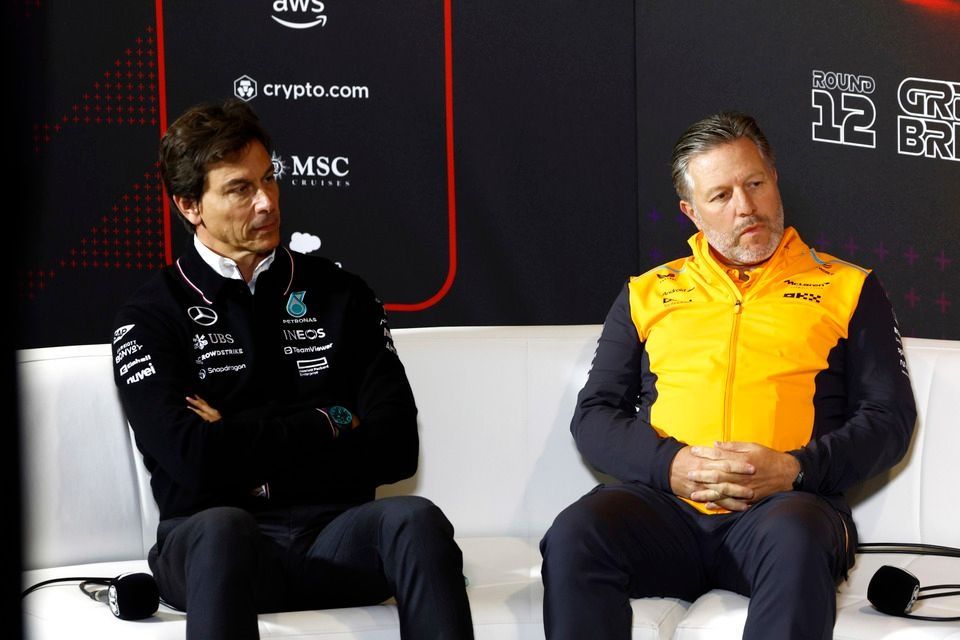
The Formula 1 landscape is currently standing on the precipice of its most significant transformation in years, and the tension in the paddock is reaching a boiling point. As the 2026 regulation changes loom, the relationship between engine manufacturers and their customer teams has moved from cooperative to cutthroat. At the center of this storm is Mercedes Team Principal Toto Wolff, who has recently signaled a potential “divorce” from McLaren—a move that could reshape the grid’s power structure forever.
The Warning Shot: Mercedes vs. McLaren
For years, the partnership between Mercedes and McLaren was seen as the gold standard of the “works and customer” relationship. However, recent seasons have delivered a bitter pill for the Silver Arrows to swallow. Seeing a customer team like McLaren not only compete with but consistently outperform the factory Mercedes squad has moved beyond an embarrassment—it has become a strategic disadvantage.
Toto Wolff’s recent implications suggest that Mercedes is no longer content with providing the tools for their rivals to defeat them. With McLaren having secured the mantle of World Champions, the irony is not lost on anyone at the Brackley headquarters. Wolff has hinted that as the new regulations begin, Mercedes may look to reduce its customer base. Currently supplying four teams, the logistical strain and the sharing of sensitive data are being cited as competitive hurdles. By narrowing their focus to fewer teams, Mercedes hopes to reclaim the “works” advantage they enjoyed during their historic streak of dominance. If McLaren continues to outshine the factory team, they might find themselves searching for a new power unit partner sooner than expected.
The 2026 Machines: A Secret First Look
While the political games intensify, the physical reality of the 2026 era is finally hitting the pavement. In a move that has caught many off guard, Audi is reportedly set to hit the track in Barcelona for a secret “filming day” test. This represents the first real-world trial of the 2026 machinery, providing Audi with invaluable data long before the official start of the season.
The 2026 cars represent a radical departure from the current ground-effect era. Technical insiders reveal that the new regulations will see a massive reduction in downforce generated by the floor, nearly half of what is currently produced. To compensate for this loss, aerodynamicists are shifting their focus back to complex wing designs and the return of “rake”—a car setup where the rear sits significantly higher than the front. This shift marks the end of the Venturi tunnel dominance and could favor teams like Red Bull, who historically mastered high-rake philosophy.

The Paddock Shuffle: Horner, Cadillac, and New Beginnings
The drama isn’t limited to engines and aerodynamics. Rumors continue to swirl around Christian Horner and a potential sensational return to the paddock in a leadership or ownership role at Alpine. While such a move appears delayed for now, the connection between Alpine’s leadership and Horner remains a point of intense speculation. If Alpine struggles with its transition to Mercedes power in the new era, a Horner-led revolution could be the wildcard the team needs to climb back to the top.
Meanwhile, expectations for the grid’s newest entry, Cadillac, remain grounded in harsh reality. Insiders suggest that despite having Ferrari power, the American outfit is widely expected to start at the back of the pack. Unlike Audi, which has inherited the infrastructure of the established Sauber team, Cadillac is building from the ground up, highlighting the immense mountain any new entrant must climb in modern F1.
Why the Secrecy?
Perhaps most telling is the decision to keep the upcoming Barcelona tests behind closed doors. After years of transparency and high-access coverage, the sport seems to be retreating into the shadows. Many believe this is a preemptive strike against negative narratives. If the 2026 cars struggle with reliability or speed early on, F1 leadership wants to manage that message before it reaches the public.
As the countdown to the new era continues, one thing is clear: the 2026 season isn’t just a new set of rules; it’s a total reset of the sport. With Mercedes threatening to pull the plug on its rivals and new manufacturers finally putting rubber to the road, the battle for the next decade of F1 dominance has already begun—and the gloves are officially off.
News

Inside Shane Richie’s love life: Drug – fuelled orgy with six blondes; real reason he split from Coleen Nolan; six-year ‘affair with fan’
Inside Shane Richie’s love life: Orgy with six blondes; real reason he split from Coleen Nolan; six-year ‘affair with fan’ He’s popular with the ladies… Shane Richie…

SH0CKING REVELATI0N:A sh0cking behind-the-scenes secret revealed about Lizzie Rizzini, the woman replacing Carol Kirkwood on the 6pm weather bulletin
BBC viewers still reeling from the departure of Carol Kirkwood got another surprise last night when presenter Lizzie Rizzini appeared to flash her black lace stockings on…

HEARTBREAKING: Peter Andre’s Tearful Message to Son Junior After SHOCKING Revelation About How He Truly Feels Toward Mum Katie Price — Katie Price’s reaction scares fans.
Peter Andre’s emotional message to son Junior after it’s revealed how he really feels about mum Katie Pri… PETER Andre has shared an emotional message to his…

Ben Shephard opens up about the devastating health battle his wife is facing: “She wakes up crying every single morning…”
Inside This Morning Ben Shephard’s Life Including Rarely Seen Wife and Health Battle Ben Shephard is a name synonymous with British television, renowned for his engaging presentation…

🚨 LIVE TV HEARTBREAK: Good Morning Britain Host Announces ‘Devastating’ Dɘath of Guest Minutes Into Show
Viewers of Good Morning Britain were met with heartbreaking news just minutes into Friday’s (January 30) episode, as co-hosts Kate Garraway and Ranvir Singh reported the tragic…

Emmerdale legend Cain Dingle will never be the same again after a shock cancer diagnosis turns his world upside down
FROure Desk. Full Terms and conditions are available on the website http://www.itv.com/presscentre/itvpictures/terms Emmerdale wouldn’t be Emmerdale without the glowering, grunting embodiment of manliness that is Cain Dingle (Jeff Hordley) But…
End of content
No more pages to load






