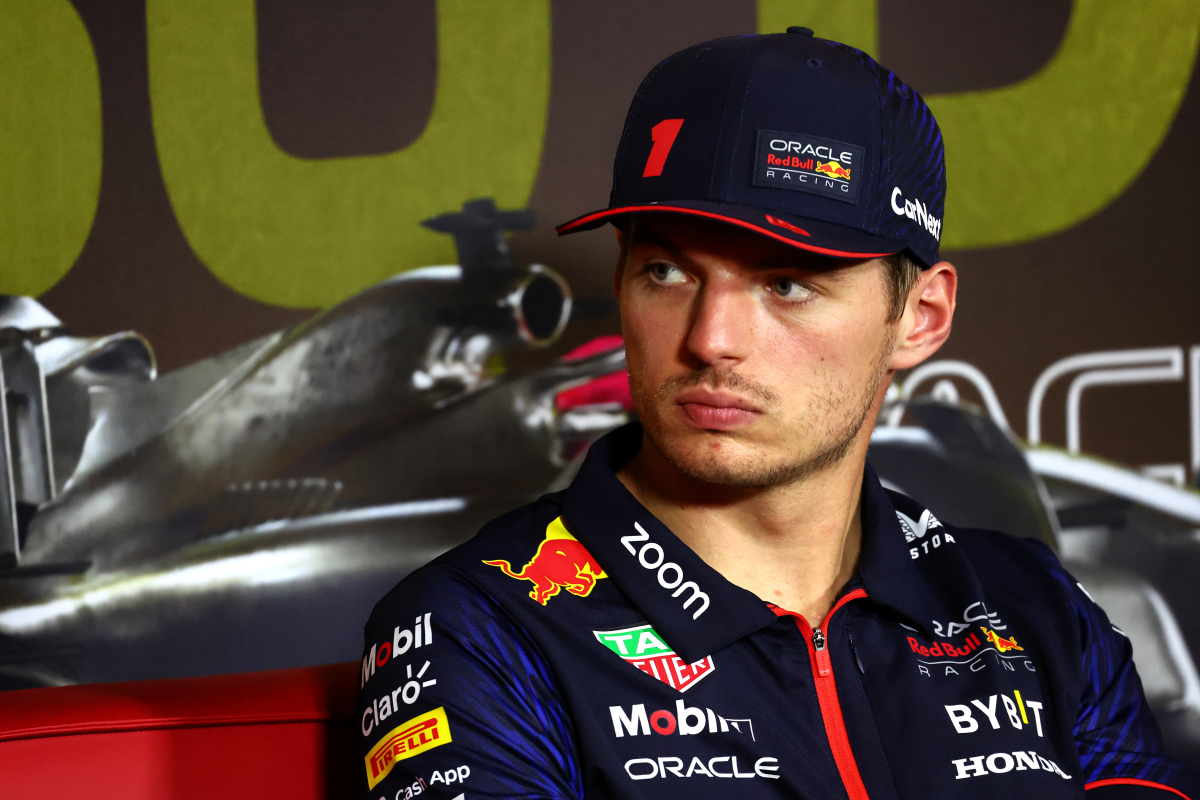
In the high-octane world of Formula 1, where milliseconds define legacies and every corner is a calculated gamble against physics, there exists a driver who doesn’t just participate in the sport—he haunts it. Imagine a competitor so precise, so ruthlessly efficient, that his presence is felt before he even appears in a rearview mirror. That driver is Max Verstappen. While the grandstands often debate whether his dominance is owed to the machinery of Red Bull Racing, a deeper look into the telemetry and the psyche of the paddock reveals a much more shocking truth: the sport has never seen a driver quite like him.
Born into Speed: The DNA of a Champion
To understand the anomaly that is Verstappen, one must look further back than his Formula 1 debut. His journey didn’t begin with a driving license; it began with a bloodline. The son of F1 veteran Jos Verstappen and karting champion Sophie Kumpen, Max treated racing not as a hobby, but as oxygen. By the age of four, when most children are mastering the alphabet, Max was already learning braking points.
This wasn’t just early training; it was the cultivation of a raw, unfiltered instinct. In his karting days, he became infamous for “divebombing” rivals and executing audacious outside passes that left spectators and seasoned pros alike shaking their heads. He wasn’t just fast; he was aggressively creative. The foundation of his style—the ability to spot gaps that didn’t mathematically exist—was built long before he ever sat in a Formula 1 cockpit.
The “Unstable” Secret: Dancing on the Edge of Chaos
When Max graduated to the pinnacle of motorsport, he didn’t adapt to F1; he forced F1 to adapt to him. Analysts, engineers, and former drivers have all noted a peculiar characteristic that sets him apart: his manipulation of the car’s balance.
Traditional wisdom in racing dictates that a driver wants stability—a planted rear end and a predictable front. Max, however, thrives in chaos. He demands a sharp, hyper-aggressive front end, meaning he is completely comfortable with a rear end that feels loose and unstable. While other drivers instinctively back away from oversteer, fearing a spin, Max runs toward it.
This specific preference is why his teammates, from Pierre Gasly to Alex Albon and Sergio Perez, have famously struggled in the same machinery. They often find the car “undrivable” because it is set up for Max’s razor-edge sensitivity. As former driver Jolyon Palmer noted, Verstappen is likely the only driver capable of extracting full performance from the Red Bull because the car is designed to dance on a knife’s edge that only he can balance.

The “U-Shape” Revolution and The Art of Braking
Visually, Verstappen’s genius is most apparent in the corners. The textbook racing line is a “V-shape”—brake, turn in, hit the apex, and accelerate out. Max, however, frequently employs a “U-shaped” trajectory. He keeps the car tight, rotates it incredibly early using that loose rear end, and fires out of the corner with traction that seems to defy the laws of grip.
This technique is paired with a braking ability that is nothing short of nightmarish for his rivals. He brakes absurdly late—past the point of no return for mere mortals—yet retains the composure to rotate the car instantly. For a defending driver, it is a helpless feeling; you hit your limit, and suddenly, a blue and yellow helmet dives past you on the inside, seemingly taking a day off from the laws of physics.
The Mental Fortress: Inevitability Over Aggression
Perhaps the most terrifying aspect of Verstappen’s evolution is his mental game. In his early years, he was a firebrand—fast but volatile. Today, that fire has been refined into a cold, calculated precision. He is no longer just “dangerous”; he is inevitable.
He possesses a “mechanical empathy” that allows him to manage tires better than almost anyone on the grid, despite his aggressive inputs. He understands temperature windows, slip angles, and micro-adjustments in a way that blends the artistry of Ayrton Senna with the robotic efficiency of Michael Schumacher. When conditions change—a sudden downpour or a safety car restart—Max reads the race faster than the strategy computers. He positions his car to force rivals into defensive lines they didn’t want to take, effectively checkmating them before the move is even made.
The New Blueprint
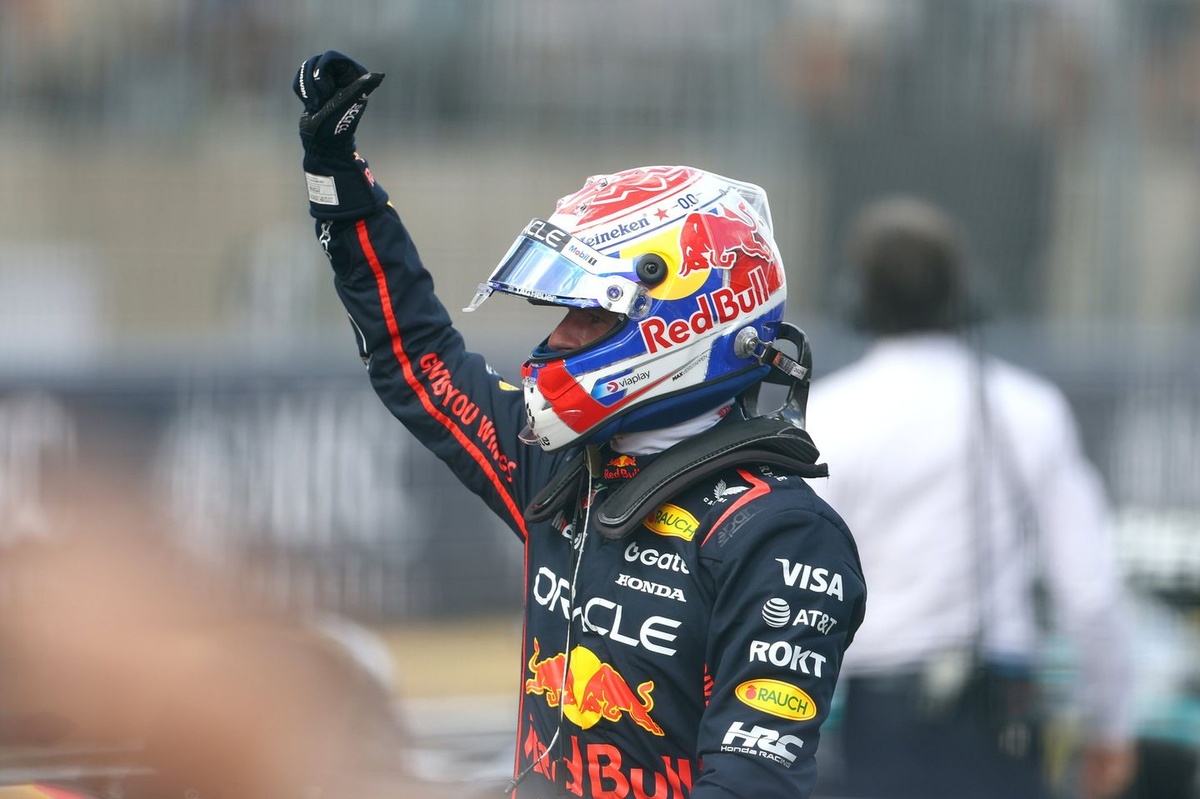
The influence of Max Verstappen is now rippling through the developmental stages of motorsport. Young drivers are being trained to emulate his aggressive rotation techniques. Simulators are being programmed to analyze his throttle modulation. He hasn’t just won championships; he has fundamentally changed how the sport is driven.
As we look toward future regulation changes in 2026, the question remains: can anyone catch him? History suggests that regulation shifts only make him stronger, as his adaptability is his greatest weapon. Unless the basic physics of racing change, Max Verstappen remains the benchmark, the template, and the ghost that the rest of the grid is frantically trying to chase.
For the viewer, watching Max drive is not just about witnessing speed. It is a masterclass in controlled aggression. It is the sight of a generational talent who has turned the act of driving into absolute domination, proving once and for all that while the car matters, the mind behind the wheel is what makes a legend uncatchable.






