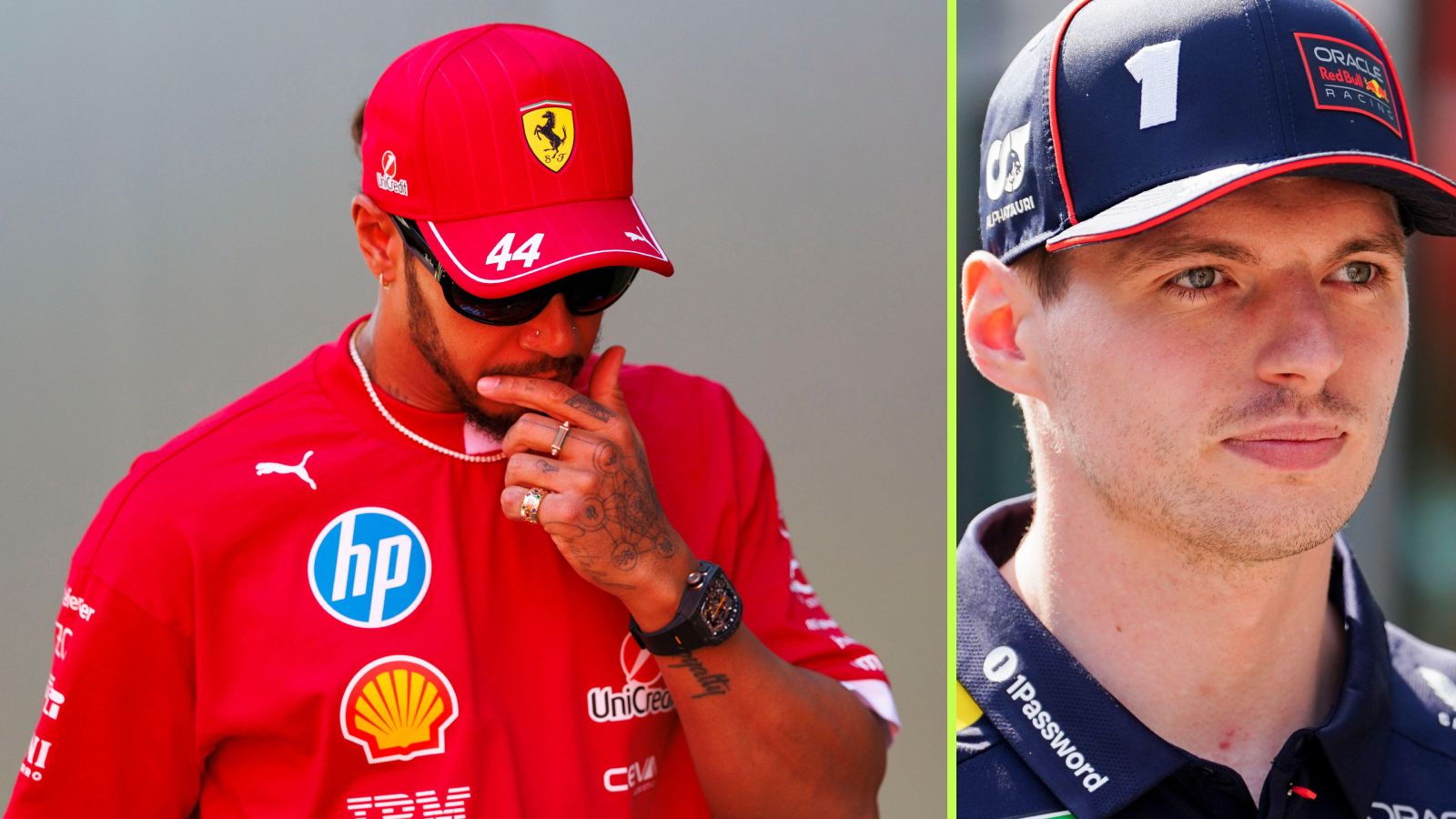
In the high-octane world of Formula 1, narratives often center on bitter rivalries and distinct driving styles. We see Lewis Hamilton as the master of the hybrid era, a driver who combined raw speed with an almost zen-like championship endurance. Conversely, Max Verstappen burst onto the scene as the disruptor—the aggressive, uncompromising force of nature who seemed to care for nothing but the checkered flag. But beneath the surface of this binary rivalry lies a quieter, more uncomfortable truth that explains the current state of the sport: Max Verstappen didn’t just defeat Lewis Hamilton; he learned from him. And he did it without paying the devastating price Lewis had to pay.
The Tuition of Pain
To understand the magnitude of Verstappen’s dominance, we must first look at the crucible that forged Lewis Hamilton. Hamilton’s journey to becoming a seven-time world champion was not a straight line of victories. It was a path paved with public heartbreak, political warfare, and brutal lessons in restraint.
When Lewis entered the sport, he was raw speed wrapped in immense confidence. But Formula 1 has a way of punishing speed that lacks temperance. Lewis learned tire management through races where his rubber disintegrated and strategy collapsed. He learned political savvy by navigating internal team battles and media storms that threatened to derail his focus. Most importantly, he learned the art of “championship thinking”—knowing when to settle for points rather than risking it all for a win—by losing titles by agonizingly slim margins.
Lewis Hamilton paid for his mastery with years of scars. He evolved slowly, season by season, refining his aggression into a potent, calculated weapon.
The Student in the Shadows
Max Verstappen entered Formula 1 watching this very evolution unfold. While Lewis was in the spotlight, absorbing the pressure and the penalties, Max was the observer. This is the critical difference that many fans and pundits miss: Max learned the lessons of patience, restraint, and political intelligence without having to lose a championship first.
In his early years, Verstappen was indeed chaos incarnate. He was labeled “Mad Max” for a reason—dive-bombs, wheel-to-wheel aggression, and moves that terrified the stewards. He faced the same criticisms of recklessness that a young Hamilton once did. But whereas Lewis had to grow up while fighting for titles, Max used his early years in a non-championship car to refine his craft. He compressed a decade of learning into just a few short seasons.
By the time Red Bull provided him with a machine capable of fighting for the title, Max had already shed the skin of the reckless challenger. He had adopted the championship mindset. He understood that you don’t fight every battle. He realized that sometimes, lifting off the throttle is the fastest way to the title.
Mastering Patience by Choice, Not Necessity
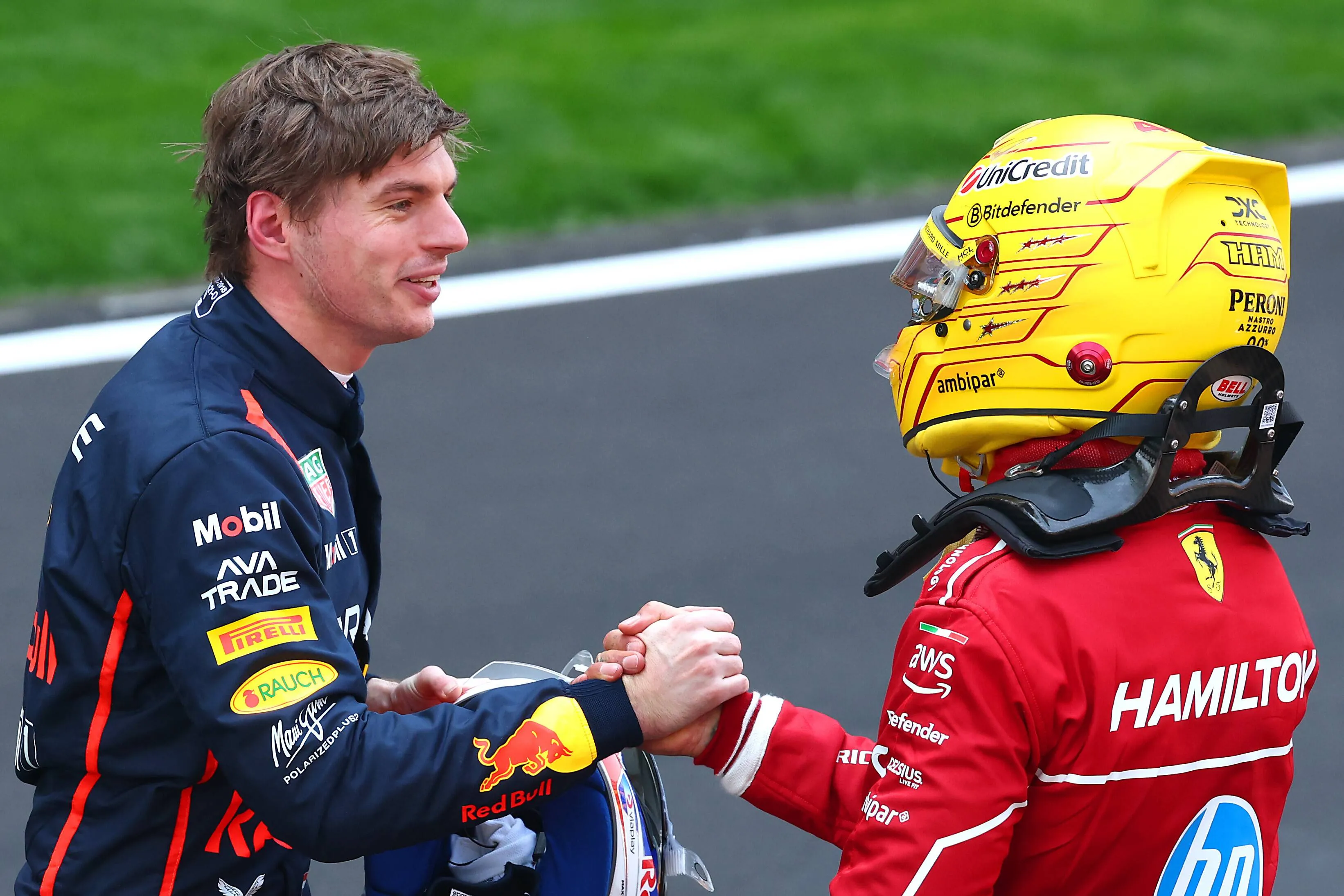
The terrifying aspect of Verstappen’s current form is that his patience is a choice, not a survival mechanism forced upon him. Lewis mastered patience because the sport gave him no other option; to win, he had to adapt. Max, however, mastered patience because he saw it was the most efficient way to kill the competition.
Consider the modern Verstappen. How many times have we seen him back out of a corner at the start of a race, content to sit in second place for a few laps? The “Old Max” would have sent it down the inside, risking a crash. The “New Max”—the one who studied Hamilton—knows that the race is long. He manages his tires with a surgical precision that mirrors Hamilton in his prime. He controls the pace from the front, driving only as fast as necessary, never stressing the machinery.
This is not just maturity; it is learned intelligence. Max combined his own supernatural natural aggression with Hamilton’s discipline. It is a hybrid style that shouldn’t exist: the ferocity of a street fighter with the calculation of a chess grandmaster.
The “Post-Lewis” Era
Max Verstappen is not the “Anti-Lewis”; he is the “Post-Lewis” driver. He represents the next stage of evolution in Formula 1. Lewis Hamilton normalized the idea of dominance through discipline. Max took that concept and perfected it with ruthless efficiency.
Where Lewis’s dominance felt powerful and emotional—a man overcoming odds and carrying the weight of history—Max’s dominance feels inevitable. It feels cold, precise, and detached. This is because Max doesn’t carry the same baggage. He learned mental resilience before the pressure could crush him. He learned to ignore the noise of the media and the politics because he saw how it affected those before him.
In many ways, Lewis Hamilton paid the tuition for Max Verstappen’s education. Lewis struggled so Max could glide. It is a harsh reality for Hamilton fans, but a testament to Verstappen’s intelligence. He didn’t just steal the crown; he inherited the wisdom required to keep it.

The Final Form
As we watch Max Verstappen destroy the field week in and week out, managing gaps and preserving tires while barely breaking a sweat, we are watching the final form of a lesson Formula 1 has been teaching for decades.
Critics often say it looks “too easy” for Max. They claim it’s just the car. But they ignore the years of observation that got him here. It looks easy because it is refined. It looks easy because he knows exactly where the limit is, thanks to the man he spent years chasing.
Max Verstappen is the product of Lewis Hamilton’s legacy, refined for a new era. And perhaps that is the ultimate compliment one rival can pay to another: to learn your lessons so well that you become untouchable.
News

Inside Shane Richie’s love life: Drug – fuelled orgy with six blondes; real reason he split from Coleen Nolan; six-year ‘affair with fan’
Inside Shane Richie’s love life: Orgy with six blondes; real reason he split from Coleen Nolan; six-year ‘affair with fan’ He’s popular with the ladies… Shane Richie…

SH0CKING REVELATI0N:A sh0cking behind-the-scenes secret revealed about Lizzie Rizzini, the woman replacing Carol Kirkwood on the 6pm weather bulletin
BBC viewers still reeling from the departure of Carol Kirkwood got another surprise last night when presenter Lizzie Rizzini appeared to flash her black lace stockings on…

HEARTBREAKING: Peter Andre’s Tearful Message to Son Junior After SHOCKING Revelation About How He Truly Feels Toward Mum Katie Price — Katie Price’s reaction scares fans.
Peter Andre’s emotional message to son Junior after it’s revealed how he really feels about mum Katie Pri… PETER Andre has shared an emotional message to his…

Ben Shephard opens up about the devastating health battle his wife is facing: “She wakes up crying every single morning…”
Inside This Morning Ben Shephard’s Life Including Rarely Seen Wife and Health Battle Ben Shephard is a name synonymous with British television, renowned for his engaging presentation…

🚨 LIVE TV HEARTBREAK: Good Morning Britain Host Announces ‘Devastating’ Dɘath of Guest Minutes Into Show
Viewers of Good Morning Britain were met with heartbreaking news just minutes into Friday’s (January 30) episode, as co-hosts Kate Garraway and Ranvir Singh reported the tragic…

Emmerdale legend Cain Dingle will never be the same again after a shock cancer diagnosis turns his world upside down
FROure Desk. Full Terms and conditions are available on the website http://www.itv.com/presscentre/itvpictures/terms Emmerdale wouldn’t be Emmerdale without the glowering, grunting embodiment of manliness that is Cain Dingle (Jeff Hordley) But…
End of content
No more pages to load






