In the high-octane, multi-billion dollar world of Formula 1, advantages are usually measured in millimeters and milliseconds, born from wind tunnels and supercomputers. But in 2009, the most decisive advantage in the sport’s modern history didn’t come from a carbon fiber lab. It came from a Japanese engineer sitting quietly at a desk, reading a rulebook in his second language.
This is the incredible true story of the “Double Diffuser,” a controversy that tore the paddock apart, humiliated the sport’s giants, and allowed a team that shouldn’t have even existed—Brawn GP—to rise from the ashes and clinch both World Championships. It is a tale of hubris, legal semantics, and the ultimate “I told you so” delivered by one of racing’s greatest minds, Ross Brawn.
The Ghost Team and the Japanese Engineer
To understand the magnitude of this upset, one must rewind to late 2008. Honda, reeling from the global financial crisis, abruptly pulled out of Formula 1. Their factory team was set to be dissolved, leaving hundreds of staff unemployed and two chassis gathering dust. At the eleventh hour, Ross Brawn led a management buyout, saving the team. They were renamed Brawn GP just three weeks before the season opener in Australia. They had no sponsors, a skeleton crew, and an engine hastily fitted into a chassis designed for a different motor. They were expected to be backmarkers.
But buried deep within the DNA of their car, the BGP 001, was a secret weapon born from the ashes of another defunct team, Super Aguri.
The discovery is credited to Masayuki Minagawa, a Japanese aerodynamicist. While working at Honda’s facility in Tochigi, Minagawa was meticulously studying the upcoming 2009 technical regulations. These new rules were designed to slash downforce by 50% to improve overtaking. One specific rule, Article 3.12.7, limited the height of bodywork visible from beneath the car to 175mm.
Most engineers, native English speakers included, read this as a blanket restriction on the height of the rear diffuser. Minagawa, perhaps parsing the language with the precision of a non-native speaker, noticed a crucial omission. The rule restricted bodywork visible from below. It said nothing about bodywork not visible from below.
He realized that if you created a second deck above the main diffuser—fed by vertical slots that were invisible when looking directly up from the ground—you could bypass the height limit entirely. You could effectively build a diffuser twice as large as the rules intended, restoring the massive downforce the FIA had tried to ban.
The Warning Everyone Ignored
Here is where the story shifts from technical ingenuity to staggering competitive arrogance. Ross Brawn, a man with a reputation for ruthlessness, did something surprisingly sporting. He didn’t just hide this discovery; he tried to flag it.
During a Technical Working Group meeting months before the season, Brawn proposed a rule cleanup to close this very loophole. He warned the likes of Ferrari, McLaren, and Red Bull that the regulations as written left the door open for aerodynamic devices that would make the cars significantly faster than intended.
His rivals, perhaps assuming Brawn was simply trying to slow down development or “scaremonger,” dismissed him. They told him the rules were fine and that he should move on. In a moment of poetic justice, Brawn later admitted his internal reaction was, “Thank God for that.”
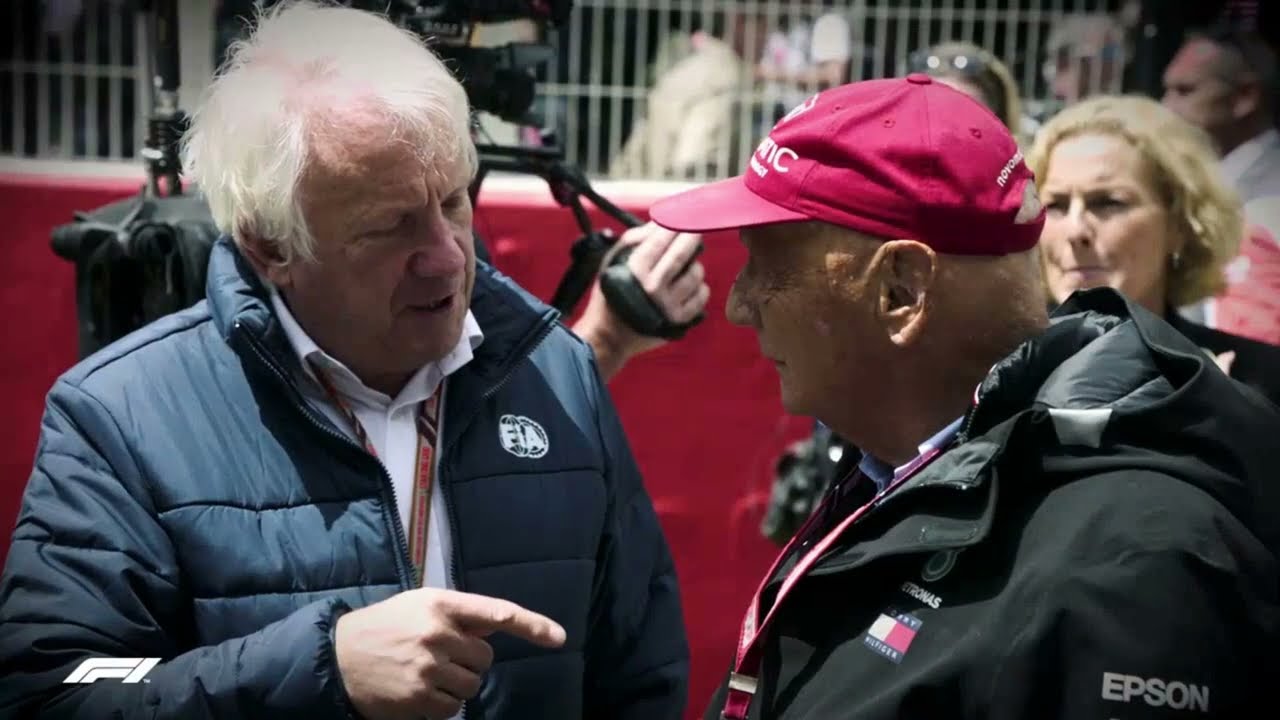
Having fulfilled his moral and sporting obligation to warn them, Brawn went back to his factory and authorized the construction of the most controversial device in F1 history. He even took the extra step of showing sketches to Charlie Whiting, the FIA’s technical delegate, who confirmed he saw no reason why it would be illegal under the specific wording of the text.

The “B-Spec” Panic and the Myth of Speed
When Brawn GP arrived in Melbourne for the first race of 2009, the paddock went into shock. The white, sponsor-less cars weren’t just fast; they were in a different league. Jenson Button and Rubens Barrichello locked out the front row and finished 1-2, a feat no debut team had achieved since Mercedes in 1954.
Rivals immediately cried foul. Ferrari, Red Bull, and Renault filed protests, claiming the “Double Diffuser” violated the spirit of the regulations. But while they were shouting to the press, they were also missing the point of why the car was actually fast.
For years, a common misconception has held that the double diffuser bolted on seconds of lap time purely through rear downforce. However, Brawn’s principal aerodynamicist, John Owen, later revealed a startling truth. The direct advantage of the diffuser was only about 0.3 seconds per lap. In isolation, it wasn’t a magic bullet.
The real revolution was stability. The 2009 regulations made conventional cars prone to aerodynamic stalling; they were twitchy and inconsistent. The double diffuser created such a robust, stable aerodynamic platform at the rear that it allowed the team to be aggressive everywhere else. Because the rear was so planted, they could run more aggressive front wings and complex brake drum deflectors. These secondary developments, enabled by the diffuser’s stability, were where the massive chunks of time were found—up to a second per lap from the front wing alone.
While rivals obsessed over copying the hole at the back, they failed to copy the holistic aerodynamic philosophy that made the Brawn GP car a rocket ship.
The Courtroom Showdown in Paris
The controversy culminated not on a racetrack, but in a courtroom in Paris. On April 14, 2009, the FIA International Court of Appeal convened to hear the case. It was a clash of titans. Ferrari sent Rory Byrne and Nicholas Tombazis; Red Bull sent Christian Horner and Rob Marshall. They were armed with high-priced lawyers and technical diagrams.
Their argument was desperate: they claimed the slots used to feed the upper deck were “holes,” which were banned, and that the design violated the “spirit” of the rules meant to reduce downforce.
The defense was simple and textual. The rules applied to surfaces. If you have two surfaces with a gap between them, that gap is not a hole in a surface; it is a space between parts. Furthermore, the height restriction explicitly only applied to what could be seen from below. Since the upper deck was shielded from view, it was unregulated real estate.
On April 15, the verdict was handed down: Appeals denied. The Double Diffuser was legal.
The Desperate Chase
The ruling effectively ended the championship hopes for many before the season had really begun. While Toyota and Williams had also spotted the loophole and run their own versions, the giants—Ferrari, McLaren, and Red Bull—had not.
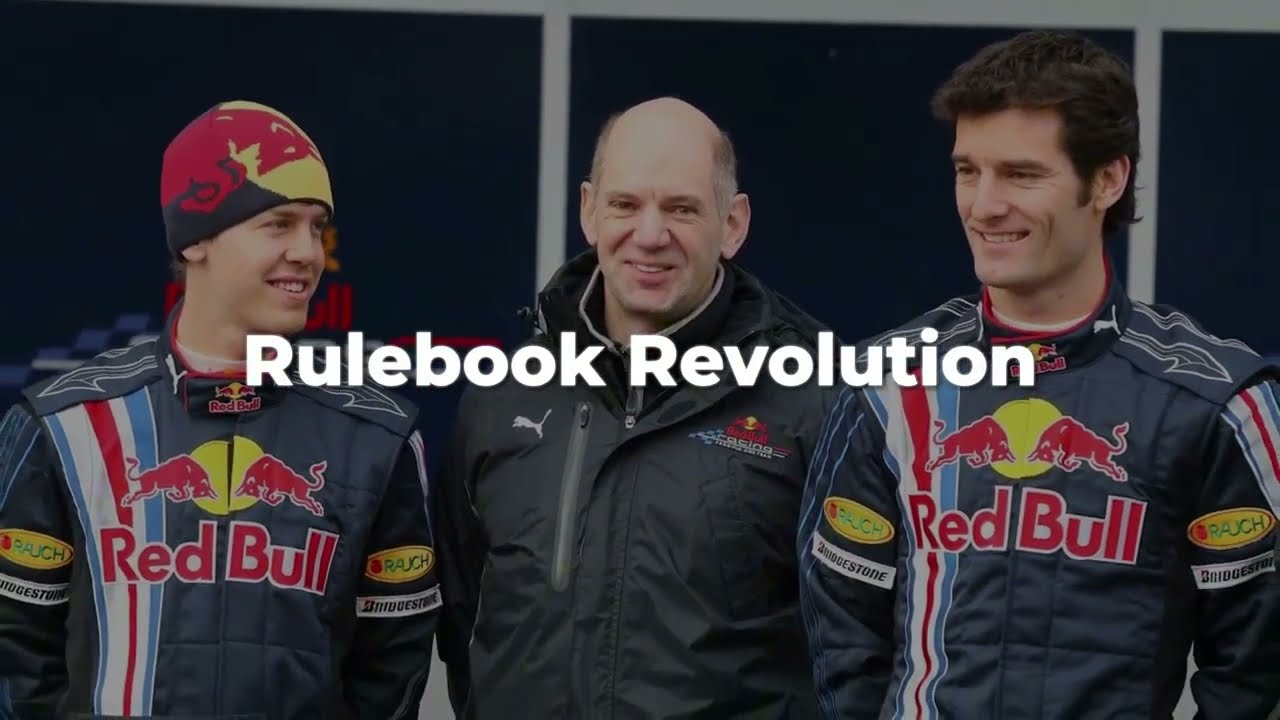
Now, they had to redesign their cars mid-season. For some, this was a nightmare. Red Bull, for instance, had designed a car with “pull-rod” rear suspension. The suspension arms mounted exactly where the double diffuser needed to go. To install the device, they had to redesign the gearbox, the crash structure, and the suspension geometry. Christian Horner called it building an “Almost B-Spec car.” They didn’t get their version on track until the Monaco Grand Prix, nearly a third of the way through the season.
Ferrari faced similar packaging headaches with their hydraulic systems. BMW Sauber admitted the oversight was a “big handicap” that ruined their year.
The Legacy of a Loophole
By the time the powerhouse teams caught up, the damage was done. Jenson Button had won six of the first seven races. Although Brawn GP ran out of money for development and struggled in the second half of the season—where a surging Red Bull actually scored more points—Button’s early lead was insurmountable. He clinched the title in Brazil, and Brawn GP secured the Constructors’ Championship.
The double diffuser was unanimously banned by the Technical Working Group for the 2011 season, with the rules rewritten to close the “visible from beneath” loophole once and for all.
Today, the saga serves as the ultimate lesson in Formula 1 engineering and politics. It changed how teams approach rule meetings. As noted by engineers years later, nobody ignores a “throwaway comment” in a working group anymore. When a rival suggests a rule change, teams now ruthlessly analyze why they want it, fearing another Ross Brawn moment.
In the end, Brawn GP’s fairytale wasn’t magic. It was the product of a Japanese engineer’s sharp eye, a British team principal’s strategic brilliance, and the collective arrogance of a paddock that refused to listen when they were warned. It proved that in F1, the most dangerous component isn’t the engine or the wing—it’s the one sentence in the rulebook you didn’t read carefully enough.
News

Inside Shane Richie’s love life: Drug – fuelled orgy with six blondes; real reason he split from Coleen Nolan; six-year ‘affair with fan’
Inside Shane Richie’s love life: Orgy with six blondes; real reason he split from Coleen Nolan; six-year ‘affair with fan’ He’s popular with the ladies… Shane Richie…

SH0CKING REVELATI0N:A sh0cking behind-the-scenes secret revealed about Lizzie Rizzini, the woman replacing Carol Kirkwood on the 6pm weather bulletin
BBC viewers still reeling from the departure of Carol Kirkwood got another surprise last night when presenter Lizzie Rizzini appeared to flash her black lace stockings on…

HEARTBREAKING: Peter Andre’s Tearful Message to Son Junior After SHOCKING Revelation About How He Truly Feels Toward Mum Katie Price — Katie Price’s reaction scares fans.
Peter Andre’s emotional message to son Junior after it’s revealed how he really feels about mum Katie Pri… PETER Andre has shared an emotional message to his…

Ben Shephard opens up about the devastating health battle his wife is facing: “She wakes up crying every single morning…”
Inside This Morning Ben Shephard’s Life Including Rarely Seen Wife and Health Battle Ben Shephard is a name synonymous with British television, renowned for his engaging presentation…

🚨 LIVE TV HEARTBREAK: Good Morning Britain Host Announces ‘Devastating’ Dɘath of Guest Minutes Into Show
Viewers of Good Morning Britain were met with heartbreaking news just minutes into Friday’s (January 30) episode, as co-hosts Kate Garraway and Ranvir Singh reported the tragic…

Emmerdale legend Cain Dingle will never be the same again after a shock cancer diagnosis turns his world upside down
FROure Desk. Full Terms and conditions are available on the website http://www.itv.com/presscentre/itvpictures/terms Emmerdale wouldn’t be Emmerdale without the glowering, grunting embodiment of manliness that is Cain Dingle (Jeff Hordley) But…
End of content
No more pages to load






