In the high-octane world of Formula 1, talent is supposed to be the golden ticket. We are told that if you are fast enough, brave enough, and dedicated enough, the results will follow. Yet, the career of Charles Leclerc stands as a painful counter-argument to this rule—a case study in how brilliance can be slowly suffocated by instability.
Leclerc is, without a doubt, one of the most naturally gifted drivers of his generation. His junior career was ruthless, securing back-to-back championships in GP3 and Formula 2 as a rookie—a feat reserved for the sport’s elite. When he arrived at Ferrari in 2019, he didn’t just join the team; he put the paddock on notice, outperforming a four-time world champion in Sebastian Vettel and proving he wasn’t just a future star, but a present-tense threat.
So, why does it feel like we are constantly watching him struggle? Why does the narrative often shift to him “cracking under pressure”? The answer lies not in Leclerc’s lack of ability, but in a fundamental mismatch between his specific driving genius and Ferrari’s operational failures.
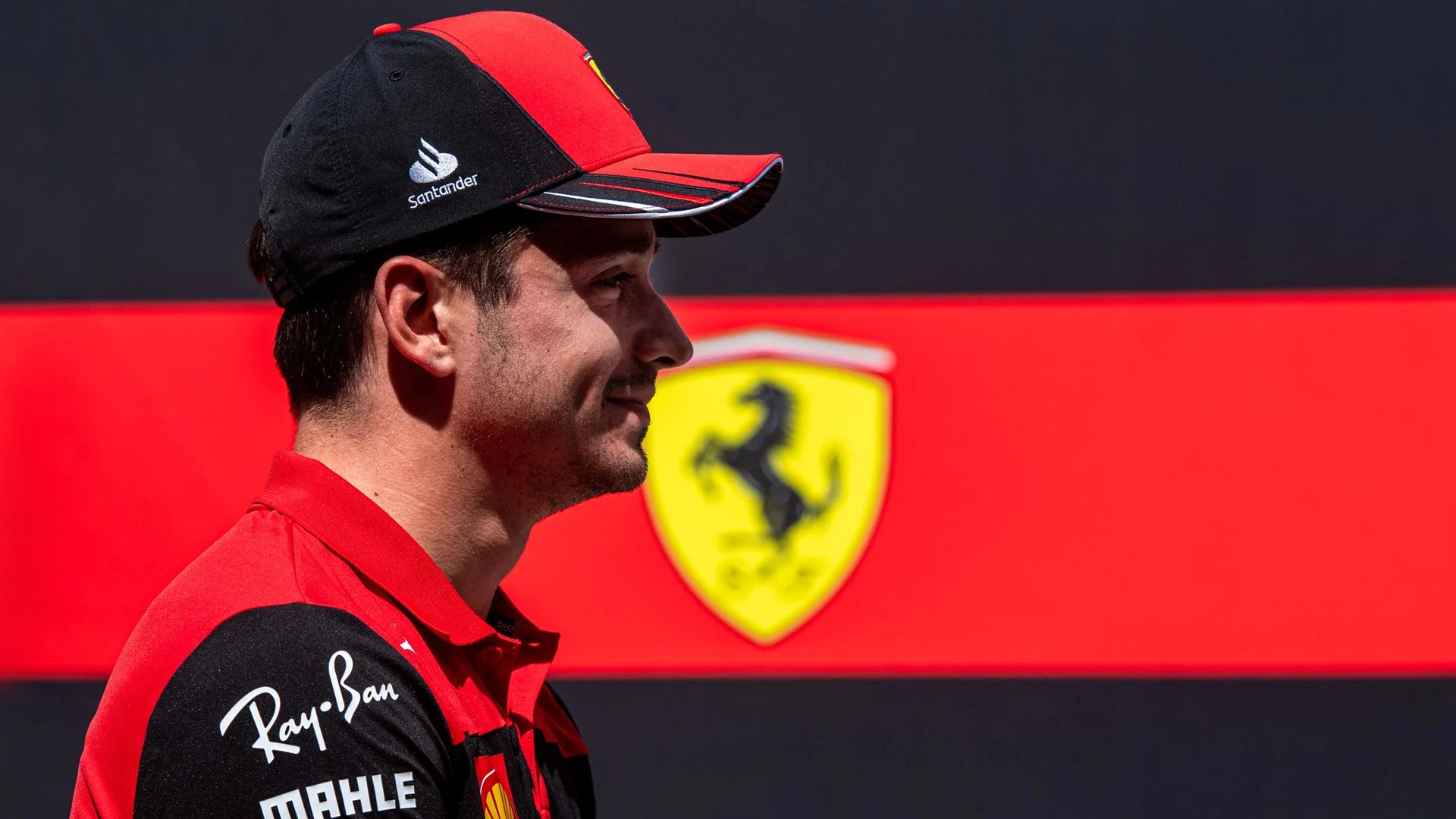
The “Knife-Edge” Surgeon
To understand the tragedy, you first have to understand the magic. Charles Leclerc’s driving style is distinct. He thrives on a sharp front end, demanding immediate response when he turns the wheel. He attacks corners with a unique confidence, rotating the car early and carrying immense speed through the apex.
Engineers describe this as “knife-edge driving.” His inputs are minimal, clean, and incredibly fast. When the car complies, the result is poetry in motion. This is exactly why Leclerc is arguably the best qualifier on the grid today. In 2022 alone, he secured nine pole positions—more than anyone else. On a Saturday, with fresh tires and low fuel, he can drag a Ferrari to grid slots it simply doesn’t deserve.
But this surgical style requires a steady hand and, more importantly, a “stable table.” This is where the Ferrari dream begins to turn into a nightmare.
The Stability Paradox
Ferrari has developed a reputation in recent years for building cars that are fundamentally unstable. They may be fast over a single lap, but over a race distance, they suffer from unpredictable balance shifts and aggressive tire degradation.
Leclerc’s style relies heavily on trust—trust that the rear of the car will stick when he commits to a corner. But when the fuel load is heavy and the tires begin to wear, the Ferrari becomes a volatile beast. The razor-sharp front end that gave him pole position suddenly becomes a liability as the rear becomes unpredictable.
While rivals like Max Verstappen and Lewis Hamilton often appear calmer in the cockpit, it is partly because their machinery (and team philosophy) offers more adaptability. Leclerc is often fighting a car that is actively working against his natural instincts, forcing him into a mental recalculation at 300 km/h.

The Myth of “Overdriving”
This instability leads to the most unfair criticism levied against the Monegasque driver: that he is prone to errors.
When strategy blunders occur—and let’s be honest, Ferrari’s strategy calls have become the stuff of memes—Leclerc is often left in a desperate position. Think back to Monaco or Silverstone, where race wins were snatched away not by speed, but by bad decisions from the pit wall.
When a driver like Leclerc senses a win slipping away due to factors outside his control, he is forced to “overdrive.” He brakes later, pushes harder, and takes risks that his car cannot support. The resulting lock-ups or spins are not signs of a driver who can’t handle pressure; they are the symptoms of a driver trying to compensate for his team’s deficiencies. He is reactive to chaos, whereas a winning team should be providing clarity.
A Broken Promise?
There is an emotional weight to this story that makes it even harder to watch. Charles Leclerc drives for Ferrari not just as an employee, but as a believer. He grew up idolizing the Scuderia. He understands the weight of that red suit.
This passion is a double-edged sword. It drives him to extract the absolute maximum from the car, but it also makes the failures hurt more deeply. When Ferrari fails him, it feels less like a sporting loss and more like a broken promise.
The tragedy is that his peak years are coinciding with Ferrari’s years of operational immaturity. By the time the team learns to be consistent, one has to wonder if Leclerc will have paid too high a price in confidence and patience.
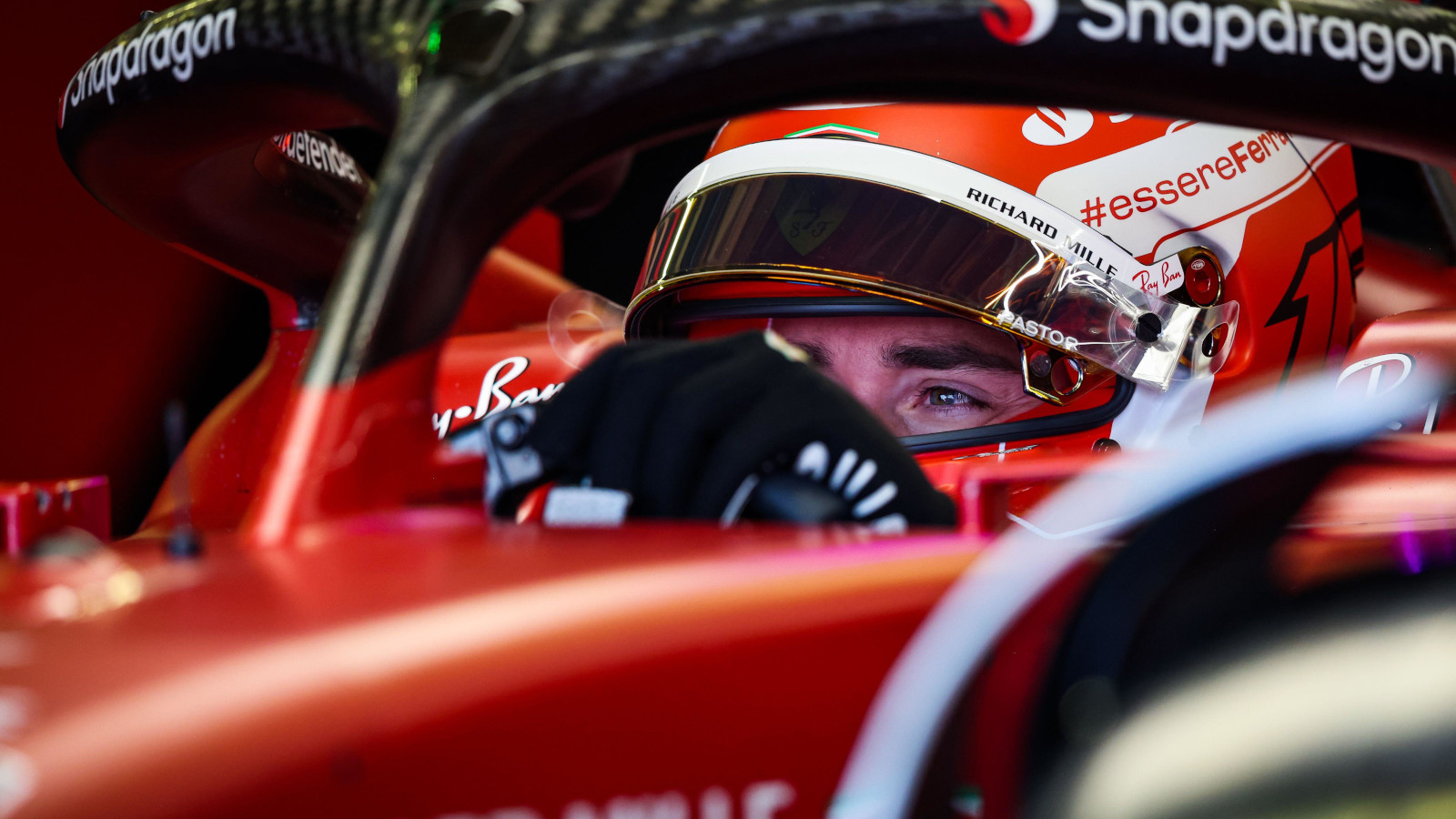
The Final “What If”
However, there is a glimmer of hope that keeps the Tifosi believing. On the rare occasions when Ferrari gets it right—when the car is balanced, the tires are managed, and the strategy is sound—Leclerc is practically untouchable. In those moments, we see no panic, no overdriving, just pure, dominant execution.
This proves that Leclerc doesn’t need chaos to win; he needs a platform that matches his excellence. If Ferrari can ever consistently provide that “stable table,” the rest of the grid should be very worried. Until then, we are left watching a generational talent fight a battle with one hand tied behind his back, waiting for the day his team finally catches up to him.
News

Inside Shane Richie’s love life: Drug – fuelled orgy with six blondes; real reason he split from Coleen Nolan; six-year ‘affair with fan’
Inside Shane Richie’s love life: Orgy with six blondes; real reason he split from Coleen Nolan; six-year ‘affair with fan’ He’s popular with the ladies… Shane Richie…

SH0CKING REVELATI0N:A sh0cking behind-the-scenes secret revealed about Lizzie Rizzini, the woman replacing Carol Kirkwood on the 6pm weather bulletin
BBC viewers still reeling from the departure of Carol Kirkwood got another surprise last night when presenter Lizzie Rizzini appeared to flash her black lace stockings on…

HEARTBREAKING: Peter Andre’s Tearful Message to Son Junior After SHOCKING Revelation About How He Truly Feels Toward Mum Katie Price — Katie Price’s reaction scares fans.
Peter Andre’s emotional message to son Junior after it’s revealed how he really feels about mum Katie Pri… PETER Andre has shared an emotional message to his…

Ben Shephard opens up about the devastating health battle his wife is facing: “She wakes up crying every single morning…”
Inside This Morning Ben Shephard’s Life Including Rarely Seen Wife and Health Battle Ben Shephard is a name synonymous with British television, renowned for his engaging presentation…

🚨 LIVE TV HEARTBREAK: Good Morning Britain Host Announces ‘Devastating’ Dɘath of Guest Minutes Into Show
Viewers of Good Morning Britain were met with heartbreaking news just minutes into Friday’s (January 30) episode, as co-hosts Kate Garraway and Ranvir Singh reported the tragic…

Emmerdale legend Cain Dingle will never be the same again after a shock cancer diagnosis turns his world upside down
FROure Desk. Full Terms and conditions are available on the website http://www.itv.com/presscentre/itvpictures/terms Emmerdale wouldn’t be Emmerdale without the glowering, grunting embodiment of manliness that is Cain Dingle (Jeff Hordley) But…
End of content
No more pages to load






