The garage doors are still down, the tire warmers are unplugged, and the grandstands are empty. Yet, the 2026 Formula 1 season has already witnessed its first explosion—not on the tarmac, but within the fiercely political confines of the paddock. A storm is brewing that threatens to overshadow the dawn of the sport’s new regulation era, centering on a piece of engineering ingenuity so clever—and so controversial—that it has left half the grid crying foul.
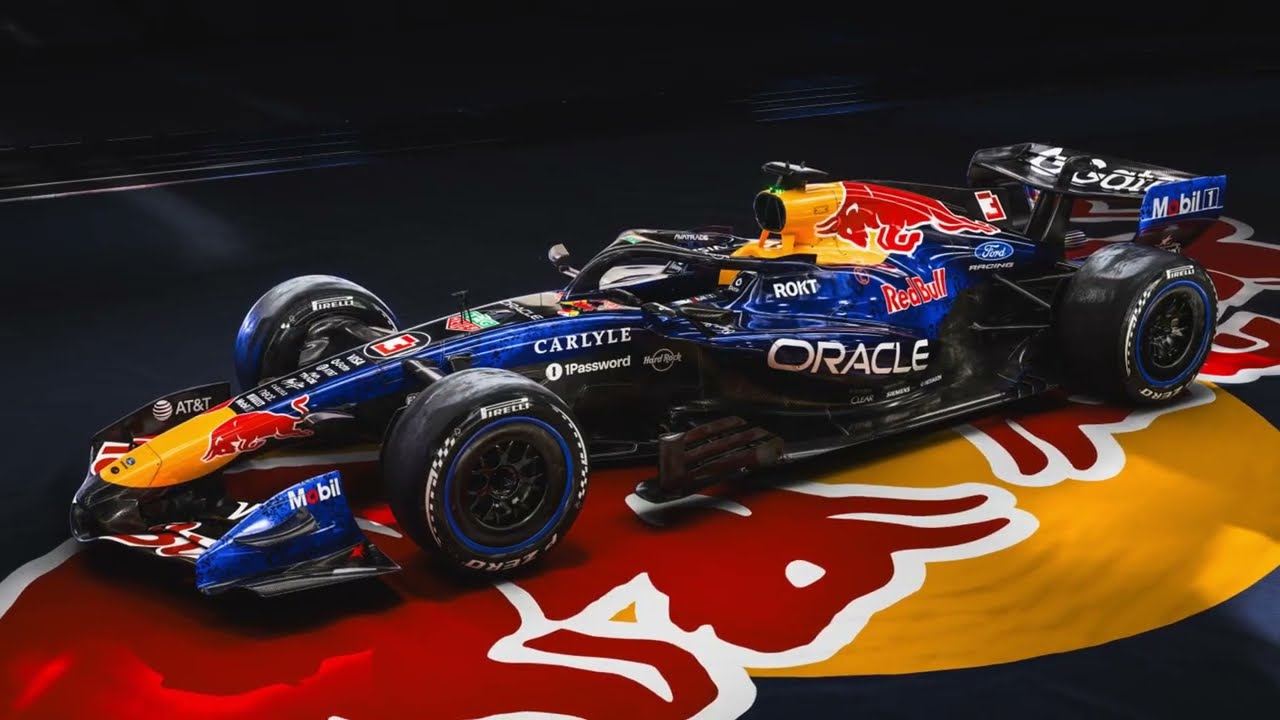
At the heart of the firestorm is an accusation that Mercedes and Red Bull have exploited a significant loophole in the 2026 engine regulations. The controversy has ignited a fierce backlash from rivals Ferrari, Audi, and Honda, who fear the championship battle may have been decided in the design office rather than on the racetrack.
The “Cold” Hard Truth of the Regulations
To understand the fury, one must first understand the rulebook. The 2026 technical regulations were designed to level the playing field, introducing strict parameters for the new power units. Among these was a hard cap on the engine’s compression ratio, set at a limit of 16:1.
The intention was clear: limit the combustion efficiency to keep costs down and performance balanced. However, the methodology for policing this rule contained a fatal flaw. The FIA measures this compression ratio when the engine is in a static state—cold, stationary, and at ambient temperature.
It was in this specific phrasing that the engineers at Mercedes (and reportedly Red Bull) found their window of opportunity.
According to emerging reports, these teams have designed their connecting rods using advanced materials specifically chosen for their thermal expansion properties. In the inspection bay, when the engine is cold, the geometry complies perfectly with the 16:1 limit. However, once the engine fires up and reaches its intense operating temperatures, physics takes over. The connecting rods expand, lengthening slightly.
This microscopic elongation pushes the piston higher into the cylinder chamber than it sits during a static check. The result? The effective compression ratio spikes well above the legal limit during the actual race, unlocking a level of combustion efficiency—and power—that the regulations intended to ban.
The Quarter-Second Advantage
While a few microns of metal expansion might sound negligible to the layperson, in the high-stakes world of Formula 1, it is everything. Estimates suggest this “thermal trick” yields an additional 10 to 15 horsepower.
In a sport where gains are often measured in thousandths of a second, a 15-horsepower boost is a sledgehammer. Data analysts project this translates to roughly 0.25 seconds per lap over a race distance. To put that into perspective, across a 50-lap Grand Prix, a driver with this advantage could pull out a 12.5-second gap on a rival with an identical chassis but a standard engine, purely on power deployment alone.
This advantage becomes even more daunting when considering the “customer team” effect. It is not just the factory Mercedes and Red Bull Racing teams that benefit. Williams, McLaren, and Alpine—who all utilize Mercedes power units—will ostensibly inherit this performance boost. That means eight of the twenty cars on the grid could start the season with a baked-in advantage that their competitors cannot physically match.
Fury in the Boardrooms
The reaction from the “have-nots”—specifically Ferrari, Audi, and Honda—has been apoplectic.
The rival manufacturers have been frantically lobbying the FIA, demanding immediate intervention. Their argument is rooted in the spirit of the sport: if the rule intends to cap compression at 16:1, bypassing that limit via thermal expansion is a violation of the rule’s intent, if not its letter.
James Key, the technical director for Audi, has been particularly vocal regarding the unfairness of the situation. Speaking at the launch of the Audi challenger, Key highlighted the absurdity of a regulatory body potentially allowing a “clever solution” to stand if it fundamentally unbalances the competition.
“If someone came up with a clever solution and the FIA decided it was not the right thing to do, but then allowed that team to keep it for the rest of the year while nobody else could have it… that would make no sense,” Key argued. His frustration is palpable and shared across the paddock. The fear is not just of losing; it is the fear of participating in a fight that is already fixed.
The FIA’s Impossible Dilemma
This brings us to the crux of the crisis: Why doesn’t the FIA simply ban it?
The problem is one of transparency. Reports indicate that Mercedes did not sneak this design past the scrutineers in the dead of night. They were completely transparent. They allegedly submitted their designs to the FIA, requested clarification on the testing methodology, and received approval.
They asked, “Is the ratio measured when cold?” The FIA said “Yes.” They built an engine that passes the test when cold. Technically, they have followed every procedure correctly.
To ban the design now, weeks before the season opener, would set a dangerous precedent. It would punish a team for innovation and for following the proper channels of communication. It would signal to every engineer in the sport that “cleverness” is a punishable offense.
Furthermore, the logistical reality makes a quick fix impossible. The engines for the 2026 season are homologated—meaning their designs are frozen.

The Six-Month Trap
Even if Ferrari, Audi, and Honda wanted to copy the solution immediately, they physically couldn’t. Ben Hodkinson, Technical Director of Red Bull Powertrains, shed light on the brutal timelines involved in power unit manufacturing.
Developing these high-precision internal components is not like 3D printing a new front wing. It takes approximately 12 weeks to manufacture the parts. It takes another 12 weeks to verify them on the dyno to ensure they won’t explode after five laps. Then, it takes time to build them into the race pool.
“That is six months minimum to implement any significant change,” Hodkinson noted.
This means that even if the rival teams started today, their “fixed” engines wouldn’t be ready until after the summer break. By then, half the season would be gone, and the championship likely decided. The “Additional Development Upgrade” (ADU) opportunities written into the 2026 rules offer a theoretical path for catching up, but they cannot compress the laws of manufacturing time.
A Season Defined by a Loophole?
The FIA held emergency meetings with all engine manufacturers on January 22nd, but insiders suggest the outcome was a stalemate. The governing body is likely to tighten measurement methodologies for 2027, perhaps implementing real-time sensors as suggested by Audi’s Mattia Binotto, but that offers no solace for the upcoming 2026 campaign.
We are left with a precarious scenario approaching the Australian Grand Prix in Melbourne. Will Ferrari or Audi lodge a formal protest?
It is a high-stakes gamble. If a protest is launched and lost, it legally cements the Mercedes/Red Bull advantage for the history books. If it is won, the sport descends into chaos, with disqualifications and political fallout that could tarnish the image of the new era.
Max Verstappen, pragmatic as ever, brushed off the controversy, stating he trusts his team to maximize performance and that the politics are for the manufacturers to sort out. But for the fans, the narrative of 2026 has shifted.
Formula 1 has always been a battle of engineering as much as driving. From the “Fan Car” to the “Double Diffuser” to the “DAS” system, the sport is defined by those who read the rules and see what isn’t written. Mercedes and Red Bull may have just pulled off one of the greatest heists in F1 history. Whether you view them as cheaters or geniuses depends entirely on the color of the shirt you wear, but one thing is certain: the war for 2026 has started, and the first shots were fired long before the lights went out.
News

Inside Shane Richie’s love life: Drug – fuelled orgy with six blondes; real reason he split from Coleen Nolan; six-year ‘affair with fan’
Inside Shane Richie’s love life: Orgy with six blondes; real reason he split from Coleen Nolan; six-year ‘affair with fan’ He’s popular with the ladies… Shane Richie…

SH0CKING REVELATI0N:A sh0cking behind-the-scenes secret revealed about Lizzie Rizzini, the woman replacing Carol Kirkwood on the 6pm weather bulletin
BBC viewers still reeling from the departure of Carol Kirkwood got another surprise last night when presenter Lizzie Rizzini appeared to flash her black lace stockings on…

HEARTBREAKING: Peter Andre’s Tearful Message to Son Junior After SHOCKING Revelation About How He Truly Feels Toward Mum Katie Price — Katie Price’s reaction scares fans.
Peter Andre’s emotional message to son Junior after it’s revealed how he really feels about mum Katie Pri… PETER Andre has shared an emotional message to his…

Ben Shephard opens up about the devastating health battle his wife is facing: “She wakes up crying every single morning…”
Inside This Morning Ben Shephard’s Life Including Rarely Seen Wife and Health Battle Ben Shephard is a name synonymous with British television, renowned for his engaging presentation…

🚨 LIVE TV HEARTBREAK: Good Morning Britain Host Announces ‘Devastating’ Dɘath of Guest Minutes Into Show
Viewers of Good Morning Britain were met with heartbreaking news just minutes into Friday’s (January 30) episode, as co-hosts Kate Garraway and Ranvir Singh reported the tragic…

Emmerdale legend Cain Dingle will never be the same again after a shock cancer diagnosis turns his world upside down
FROure Desk. Full Terms and conditions are available on the website http://www.itv.com/presscentre/itvpictures/terms Emmerdale wouldn’t be Emmerdale without the glowering, grunting embodiment of manliness that is Cain Dingle (Jeff Hordley) But…
End of content
No more pages to load






