The dust has barely settled on the current era of Formula 1, and yet, the paddock is already ablaze with the first major technical controversy of the next generation. We are still years away from the first lights out of the 2026 season, but a fierce engineering war has erupted behind closed doors—one that threatens to undermine the FIA’s carefully crafted new regulations before a single car has even hit the tarmac. At the heart of this storm is a ingenious, controversial, and technically legal exploit involving the very heart of the F1 machine: the internal combustion engine.
Reports have surfaced suggesting that engineering powerhouses Mercedes and Red Bull Powertrains have discovered a massive loophole in the 2026 engine regulations. It is a trick so subtle, yet so effective, that it exposes a fundamental naivety in how the new rules were written. While the rest of the grid prepared engines to meet the strict new efficiency caps, these two giants allegedly found a way to bypass the limits by using the laws of physics themselves.

The Rule Change: Squeezing the V6
To understand the genius of the trick, we must first look at what the FIA tried to achieve. The 2026 regulations were designed to keep the sport relevant, sustainable, and competitive. The core architecture of the engine remains a 90-degree V6 with a 1.6-liter capacity—similar to what we have seen since 2014. However, in a bid to control costs and manage the combustion process with new sustainable fuels, the FIA introduced a strict new limit on the “compression ratio.”
For the uninitiated, the compression ratio is a critical factor in an engine’s efficiency and power output. It is the ratio of the maximum volume in the cylinder (when the piston is at the bottom) to the minimum volume (when the piston is at the top). In simple terms, the more you can squeeze the fuel-air mixture before igniting it, the more energy you can extract.
Since 2014, F1 teams have been running compression ratios as high as 18:1—a staggering figure for a petrol engine, bordering on diesel territory. This high compression is a key reason why modern F1 engines are the most thermal-efficient internal combustion engines ever made. However, for 2026, the FIA decided to dial this back, setting a hard limit of 16:1. The goal was to standardize performance and reduce the risk of “knock” or self-ignition with the new fuel types.
On paper, the rule seemed clear: You cannot squeeze the fuel more than a ratio of 16. But in Formula 1, the difference between winning and losing often lies in the words that aren’t written down.
The “Ambient” Loophole
The controversy stems from a specific clause in the regulations—Article C5.4.3. This rule states that the geometrical compression ratio must not exceed 16.0. However, crucially, it specifies that this compliance checks will be performed at “ambient temperature.”
This is where the engineers at Mercedes High Performance Powertrains and Red Bull Powertrains (which, notably, has hired heavily from Mercedes in recent years) spotted their golden opportunity. The rule dictates what the engine must measure when it is sitting cold in the garage, being inspected by an FIA scrutineer. It says nothing about what the compression ratio can be when the engine is actually racing, screaming at 10,000 RPM, and generating immense heat.
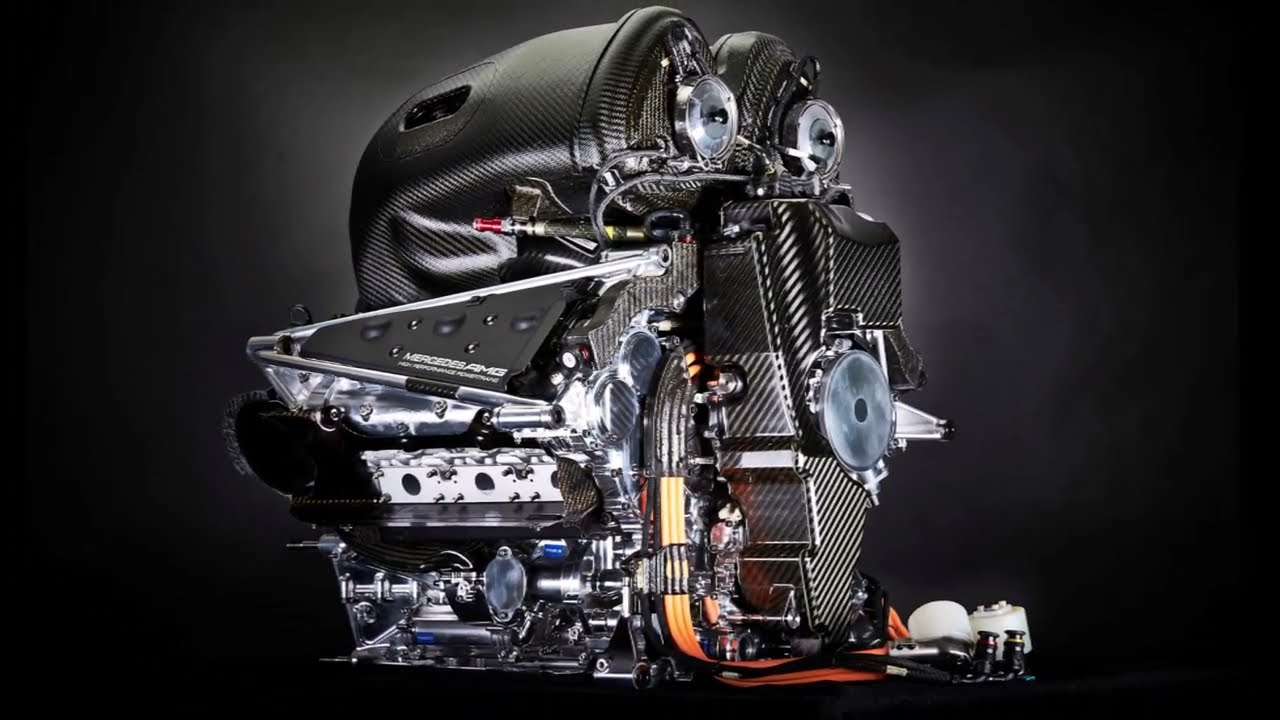
According to emerging technical analysis, these teams have designed engine components—specifically pistons and cylinder heads—using materials with carefully calculated thermal expansion coefficients. The concept is brilliantly devious:
In the Garage (Cold): When the car is stationary and at ambient temperature, the parts remain in their standard state. The clearance volume (the space left at the top of the cylinder) is large enough to ensure the compression ratio is exactly 16:1. The car passes all technical checks and is deemed 100% legal.
On the Track (Hot): As the engine fires up and reaches operating temperature, the materials begin to expand. The pistons grow slightly taller, or the cylinder head expands in a way that shrinks the clearance volume. As this space gets smaller, the compression ratio naturally rises.
By the time the car is fighting for pole position, the “hot” geometry of the engine has transformed. The compression ratio is no longer 16; it has crept back up to 18 or even higher. This allows the engine to operate at peak efficiency and power levels that the regulations intended to ban, all while technically never breaking the rule as it is written for the inspection process.
The Fallout: “That’s Not What We Wanted”
The reaction from rival manufacturers has been immediate and furious. Other engine suppliers, who reportedly took the regulation at face value and designed engines permanently capped at ratio 16, have approached the FIA to complain. Their argument is that this trick violates the “spirit” of the regulations and creates an uneven playing field based on a technicality.
The FIA’s response has reportedly been one of frustration. They have admitted that this outcome is “not what we wanted,” but they find themselves in a legal bind. Mercedes and Red Bull can rightfully argue that they followed the text of the regulations to the letter. They designed an engine that meets the criteria at ambient temperature, just as the rulebook asked. If the regulations failed to specify that the limit must apply “at all times” or “under all operating conditions,” that is a failure of the rule-makers, not the teams.
This highlights a shocking regression in regulatory drafting. The previous 2014 regulations simply stated the maximum ratio was 18, without qualifying it with a specific test condition like “ambient temperature.” This implied a blanket ban. The 2026 drafting, by trying to be more specific about the testing procedure, inadvertently opened a door that sophisticated engineering teams were all too happy to walk through.
A Naive Rulebook vs. Ruthless Engineering
This saga serves as a stark reminder of the intellectual asymmetry in Formula 1. The regulatory bodies are often staffed by well-meaning experts, but they are outnumbered and outgunned by the thousands of brilliant minds working for the teams. When the FIA writes a rule, they think about how to police it. When a team reads a rule, they think about how to exploit it.
The inclusion of “ambient temperature” as a constraint is, in hindsight, incredibly naive. It ignores the fundamental reality that F1 cars are dynamic machines that operate under extreme thermal stress. By defining the legal limit based on a static, cold state, the FIA essentially invited teams to create “morphing” engines.
Furthermore, the timing of this discovery is critical. With engine development freezes and long lead times for manufacturing, asking teams to redesign their combustion chambers now—years into the R&D phase—would be astronomically expensive and logistically impossible. Mercedes and Red Bull have argued that they cannot simply “undo” this design philosophy so late in the game without incurring massive financial damage and delays.

What Happens Next?
The FIA now faces a nightmare scenario. If they attempt to close the loophole now, they risk legal action and protests from the sport’s two biggest players. If they leave it open, they risk a two-tier championship where those who exploited the “thermal trick” have a permanent efficiency advantage over those who didn’t.
This situation also casts a shadow over the upcoming 2026 era. If the regulations contain such a glaring oversight regarding something as fundamental as compression ratio, what other loopholes are lurking in the hundreds of pages of new technical directives?
For now, the “Compression Ratio Trick” stands as a monument to F1 engineering chutzpah. It is a classic case of reading the fine print and realizing that what isn’t forbidden is allowed. As we inch closer to 2026, the battle for supremacy won’t just be fought on the track, but in the meeting rooms where lawyers and engineers argue over the definition of a millimeter of metal expansion. Formula 1 is back, and the cheating—or rather, the “creative interpretation”—is better than ever.
News

Inside Shane Richie’s love life: Drug – fuelled orgy with six blondes; real reason he split from Coleen Nolan; six-year ‘affair with fan’
Inside Shane Richie’s love life: Orgy with six blondes; real reason he split from Coleen Nolan; six-year ‘affair with fan’ He’s popular with the ladies… Shane Richie…

SH0CKING REVELATI0N:A sh0cking behind-the-scenes secret revealed about Lizzie Rizzini, the woman replacing Carol Kirkwood on the 6pm weather bulletin
BBC viewers still reeling from the departure of Carol Kirkwood got another surprise last night when presenter Lizzie Rizzini appeared to flash her black lace stockings on…

HEARTBREAKING: Peter Andre’s Tearful Message to Son Junior After SHOCKING Revelation About How He Truly Feels Toward Mum Katie Price — Katie Price’s reaction scares fans.
Peter Andre’s emotional message to son Junior after it’s revealed how he really feels about mum Katie Pri… PETER Andre has shared an emotional message to his…

Ben Shephard opens up about the devastating health battle his wife is facing: “She wakes up crying every single morning…”
Inside This Morning Ben Shephard’s Life Including Rarely Seen Wife and Health Battle Ben Shephard is a name synonymous with British television, renowned for his engaging presentation…

🚨 LIVE TV HEARTBREAK: Good Morning Britain Host Announces ‘Devastating’ Dɘath of Guest Minutes Into Show
Viewers of Good Morning Britain were met with heartbreaking news just minutes into Friday’s (January 30) episode, as co-hosts Kate Garraway and Ranvir Singh reported the tragic…

Emmerdale legend Cain Dingle will never be the same again after a shock cancer diagnosis turns his world upside down
FROure Desk. Full Terms and conditions are available on the website http://www.itv.com/presscentre/itvpictures/terms Emmerdale wouldn’t be Emmerdale without the glowering, grunting embodiment of manliness that is Cain Dingle (Jeff Hordley) But…
End of content
No more pages to load






