The dust has barely settled on Lando Norris’s championship celebrations and McLaren’s historic 2025 triumph, but the Formula 1 paddock is already embroiled in its first major controversy of the new era. As the sport gears up for the massive regulation overhaul in 2026, a fierce political and technical war has erupted behind closed doors—and once again, the Silver Arrows are the ones holding the smoking gun.
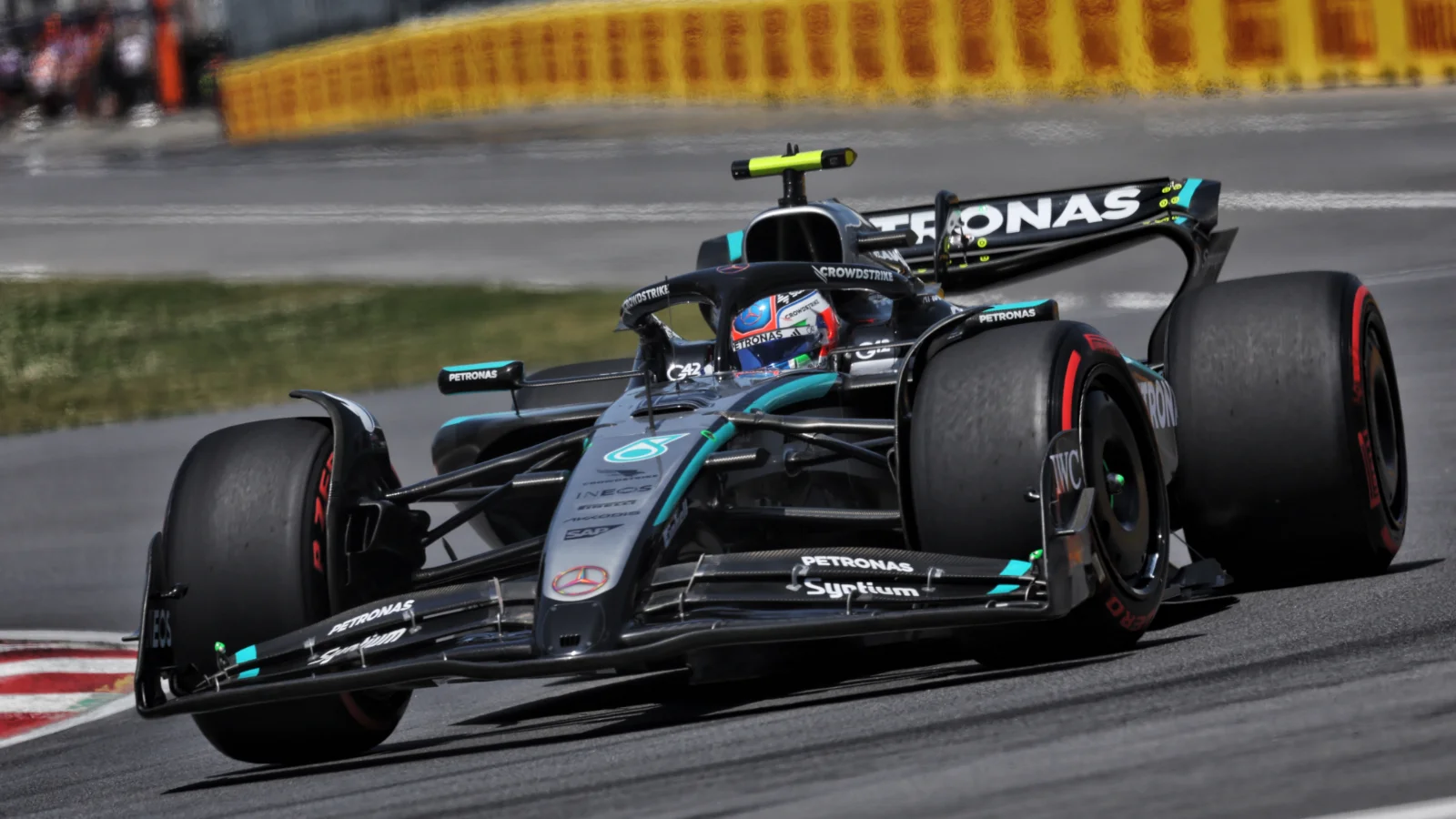
At the heart of the storm is a rumor that has sent shockwaves through Maranello, Hinwil, and Sakura: Mercedes has allegedly found a “genius” loophole in the 2026 engine regulations. This technical gray area, revolving around the concept of thermal expansion, could reportedly gift them a significant horsepower advantage before a single wheel has even turned in anger.

The “Genius” Loophole Explained
The controversy centers on the new 2026 power unit regulations, specifically Article C5.4.3. In an effort to simplify the engines and attract new manufacturers like Audi, the FIA reduced the maximum allowed geometric compression ratio from roughly 18:1 down to 16:1. The rule explicitly states that this ratio is to be measured at “ambient temperature”—in other words, when the car is sitting cold in the garage.
And that is exactly where Mercedes—and reportedly Red Bull Powertrains—have found their opening.
According to insider reports, Mercedes has designed a piston system that complies perfectly with the 16:1 limit when cold. However, as the engine heats up during a race, the materials are engineered to thermally expand in a specific way that tightens the combustion chamber. This effectively restores the compression ratio closer to the old 18:1 standard while the car is running.
The result? An estimated gain of 10 to 13 horsepower (roughly 10kW), which could translate to a massive 0.3 to 0.4 seconds per lap advantage. In a sport where championships are decided by thousandths of a second, that kind of margin is an eternity.
Rivals in Revolt: “A Two-Tier Grid”
The reaction from the competition has been nothing short of panic. Rival manufacturers, including Ferrari, Honda, and newcomer Audi, have reportedly lodged formal protests with the FIA. Their fear is palpable: they are terrified of a “two-tier grid” where Mercedes and Red Bull start the new era with an unassailable advantage, rendering the rest of the field non-competitive before the lights even go out in Australia.
The frustration for teams like Ferrari is compounded by the fact that the FIA has allegedly seemingly greenlit the design. Because the regulations were written to only mandate checks at ambient temperatures, the FIA has reportedly admitted that what Mercedes is doing is technically legal. It’s not cheating; it’s reading the rules better than anyone else.
Critics argue that the 2026 rulebook was written somewhat naively, with too much responsibility placed on too few people, leaving gaps that savvy engineers were bound to exploit. Now, those gaps might have just decided the early hierarchy of the next generation of F1.
The FIA’s Safety Net: Preventing Another 2014
However, all is not lost for the chasing pack. Perhaps learning from the mistakes of 2014—when Mercedes nailed the turbo-hybrid regulations and locked in an advantage that lasted nearly a decade—the FIA has installed a safety net for 2026.
A new “equalization” mechanism is in place to prevent one manufacturer from running away with the title solely due to an engine disparity. The FIA will evaluate the performance of all power units after the first six Grands Prix.
If a manufacturer is found to be more than 2% behind the class leader, they will be granted development concessions, including extra upgrades and the ability to re-homologate parts of their Power Unit.
If the deficit is greater than 4%, the struggling manufacturer will be given additional budget cap allowance and extra dyno time to close the gap.
This rule is a direct response to fears of a boring championship, ensuring that even if Mercedes has struck gold, their rivals will be given a ladder to climb back into the fight.
Customer Teams Optimistic
While the manufacturers argue in boardrooms, Mercedes’ customer teams are quietly rubbing their hands together. Williams, fresh off signing Carlos Sainz, has cited the promising performance of the Mercedes engine as a key factor in their recruitment.
Even Alpine, who suffered a catastrophic 2025 season finishing dead last in the standings, is sounding surprisingly upbeat. Team insiders claim their 2026 chassis is “lightweight” and that they have “done everything right” this time around. If the Mercedes power unit in the back of their car is as strong as the rumors suggest, the French team could be the dark horse of the upcoming season, finally pulling themselves out of the midfield slump.

The Verdict Awaits
Of course, not all rumors favor the Silver Arrows. Counter-reports suggest that Petronas, Mercedes’ fuel partner, might be lagging behind Shell (Ferrari) and Aramco (Aston Martin/Honda) in the development of the new mandatory 100% sustainable fuels. There are whispers that the fuel efficiency deficit could negate the mechanical gains from the piston loophole—though many dismiss these rumors as smoke screens planted by concerned rivals.
As the F1 world heads into the winter break, the tension is higher than ever. We won’t know the truth until the cars hit the track for pre-season testing in January. But one thing is certain: the race for the 2026 championship is already underway, and it’s being fought not on the asphalt, but in the gray areas of the rulebook.
Mercedes has a history of starting new eras with a bang. If these reports are true, the W17 might just be the weapon that returns them to the very top.
News

Inside Shane Richie’s love life: Drug – fuelled orgy with six blondes; real reason he split from Coleen Nolan; six-year ‘affair with fan’
Inside Shane Richie’s love life: Orgy with six blondes; real reason he split from Coleen Nolan; six-year ‘affair with fan’ He’s popular with the ladies… Shane Richie…

SH0CKING REVELATI0N:A sh0cking behind-the-scenes secret revealed about Lizzie Rizzini, the woman replacing Carol Kirkwood on the 6pm weather bulletin
BBC viewers still reeling from the departure of Carol Kirkwood got another surprise last night when presenter Lizzie Rizzini appeared to flash her black lace stockings on…

HEARTBREAKING: Peter Andre’s Tearful Message to Son Junior After SHOCKING Revelation About How He Truly Feels Toward Mum Katie Price — Katie Price’s reaction scares fans.
Peter Andre’s emotional message to son Junior after it’s revealed how he really feels about mum Katie Pri… PETER Andre has shared an emotional message to his…

Ben Shephard opens up about the devastating health battle his wife is facing: “She wakes up crying every single morning…”
Inside This Morning Ben Shephard’s Life Including Rarely Seen Wife and Health Battle Ben Shephard is a name synonymous with British television, renowned for his engaging presentation…

🚨 LIVE TV HEARTBREAK: Good Morning Britain Host Announces ‘Devastating’ Dɘath of Guest Minutes Into Show
Viewers of Good Morning Britain were met with heartbreaking news just minutes into Friday’s (January 30) episode, as co-hosts Kate Garraway and Ranvir Singh reported the tragic…

Emmerdale legend Cain Dingle will never be the same again after a shock cancer diagnosis turns his world upside down
FROure Desk. Full Terms and conditions are available on the website http://www.itv.com/presscentre/itvpictures/terms Emmerdale wouldn’t be Emmerdale without the glowering, grunting embodiment of manliness that is Cain Dingle (Jeff Hordley) But…
End of content
No more pages to load






