In the high-octane world of professional sports, we are often told that records are made to be broken. It is a cliché that fuels the competitive spirit, promising that every benchmark set by a legend is merely a target for the next generation. However, in the annals of Formula 1, there exists a unique anomaly: a set of records held by one man that are not just difficult to beat, but are now legally impossible to replicate. Max Verstappen, the reigning king of the grid, holds the titles for the youngest driver to start a race, the youngest to score points, and the youngest to win a Grand Prix. These are permanent monuments in the history books, frozen in time because the sport itself fundamentally changed its rules the moment he arrived.
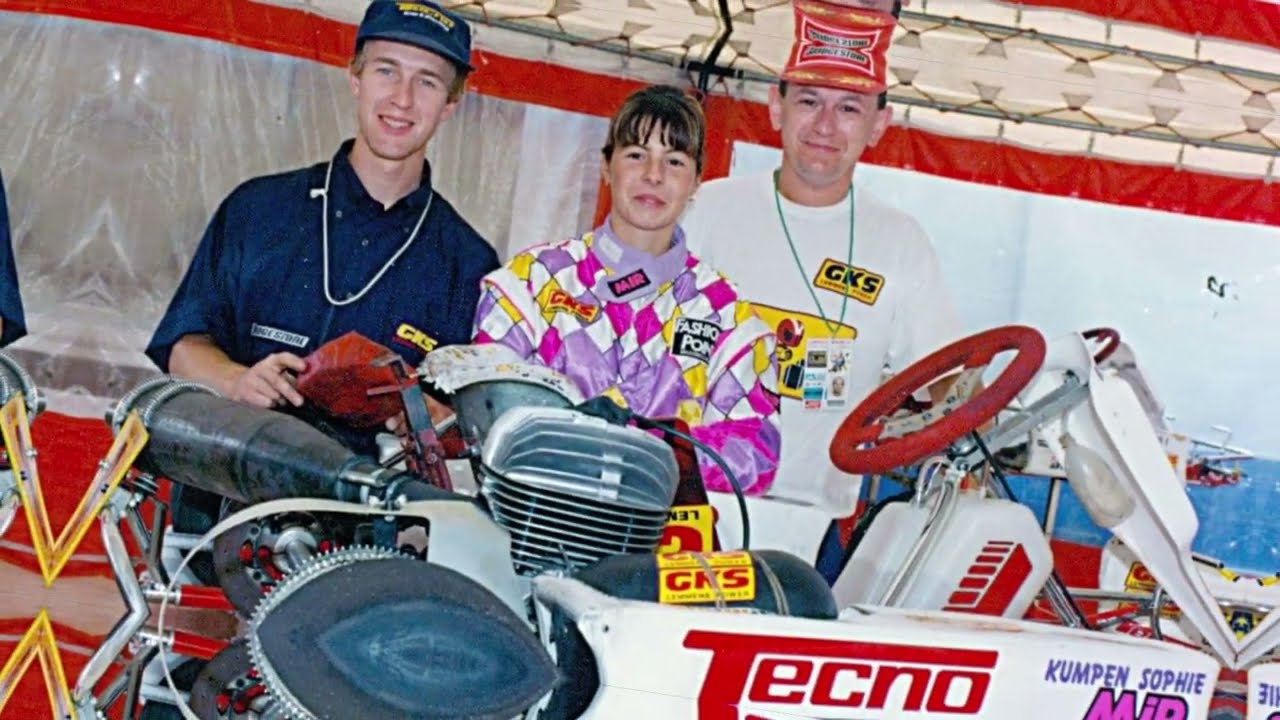
To understand how a seventeen-year-old boy managed to rewrite the rulebook of the world’s most elite motorsport, we have to look back at an origin story that borders on the cinematic. It is a tale of ruthless preparation, unparalleled genetics, and a gamble that left the establishment reeling. The project that became “Max Verstappen” did not begin in a corporate boardroom or a simulator; it began when he was just four years old, strapped into a kart by a father who knew exactly what the summit looked like.
Jos Verstappen, a veteran of 106 Grand Prix starts and a former teammate of Michael Schumacher, understood the brutality of F1. He knew that raw speed was not enough; mental steel was required. Alongside Max’s mother, Sophie Kumpen—a karting prodigy who once beat Jenson Button—Jos crafted a training regimen of immense intensity. While other children were learning to read, Max was learning racing lines. By the time he reached his teenage years, he had accumulated more track time than drivers twice his age. The result was a driver who functioned less like a rookie and more like a seasoned veteran trapped in a teenager’s body.
The year 2013 was the turning point that alerted the world to this coming storm. At fifteen years old, Max did the unthinkable in the karting world. He won three major FIA championships in a single season: the World Championship, the European Championship KZ, and the European Championship KF. It was a level of dominance that had never been seen before and hasn’t been seen since. He was winning titles in machinery he couldn’t legally drive on public roads. Every major Formula 1 team, from Ferrari to McLaren, turned their heads. The boy was special, but nobody realized just how quickly he would ascend.

His transition to single-seaters in 2014 was not a step; it was a leap. Competing in the FIA Formula 3 European Championship with Van Amersfoort Racing, Max bypassed the usual learning curve. Despite having zero experience in cars, he won ten races in his rookie season, more than any other driver on the grid. His six consecutive victories at the Norisring and Spa-Francorchamps showcased a consistency that terrified his rivals. He didn’t win the championship due to mechanical retirements, but the raw data was undeniable. He was ready, not for the next step, but for the final one.
This sparked one of the most intense bidding wars in modern F1 history. On one side stood Mercedes, the titan of the turbo-hybrid era, led by Toto Wolff and Niki Lauda. They offered a sensible, structured path: a fully funded seat in GP2 (now Formula 2), followed by a groomed entry into F1. It was the traditional route, the safe route. On the other side stood Red Bull and their ruthless talent scout, Helmut Marko. Marko knew he couldn’t match Mercedes’ financial might or their current car performance, so he put something else on the table—a golden ticket. He offered Max a race seat in Formula 1 for the 2015 season, immediately bypassing the final rung of the junior ladder.
It was a checkmate move. Christian Horner, Red Bull Racing’s Team Principal, later noted that Mercedes simply couldn’t offer a seat straight away. Red Bull could. On August 18, 2014, the announcement dropped like a bombshell: Max Verstappen, aged 16 years and 10 months, would race for Scuderia Toro Rosso. The motorsport world was sent into a frenzy. Critics, including legends like Mika Häkkinen, warned that it was too much, too soon. They argued that F1 was too dangerous for a boy who was still in school, a boy who didn’t even possess a road driving license.
But the Verstappen camp was unfazed. When Max lined up on the grid for the Australian Grand Prix on March 15, 2015, he was 17 years and 166 days old. He shattered the previous record for the youngest driver by nearly two full years. Two weeks later in Malaysia, he finished seventh, becoming the youngest points scorer in history at 17 years and 180 days. The irony was palpable—here was a young man battling world champions at 200 mph on Sunday, yet he had to be driven to the track by his dad because he wasn’t legally allowed to drive a rental car.
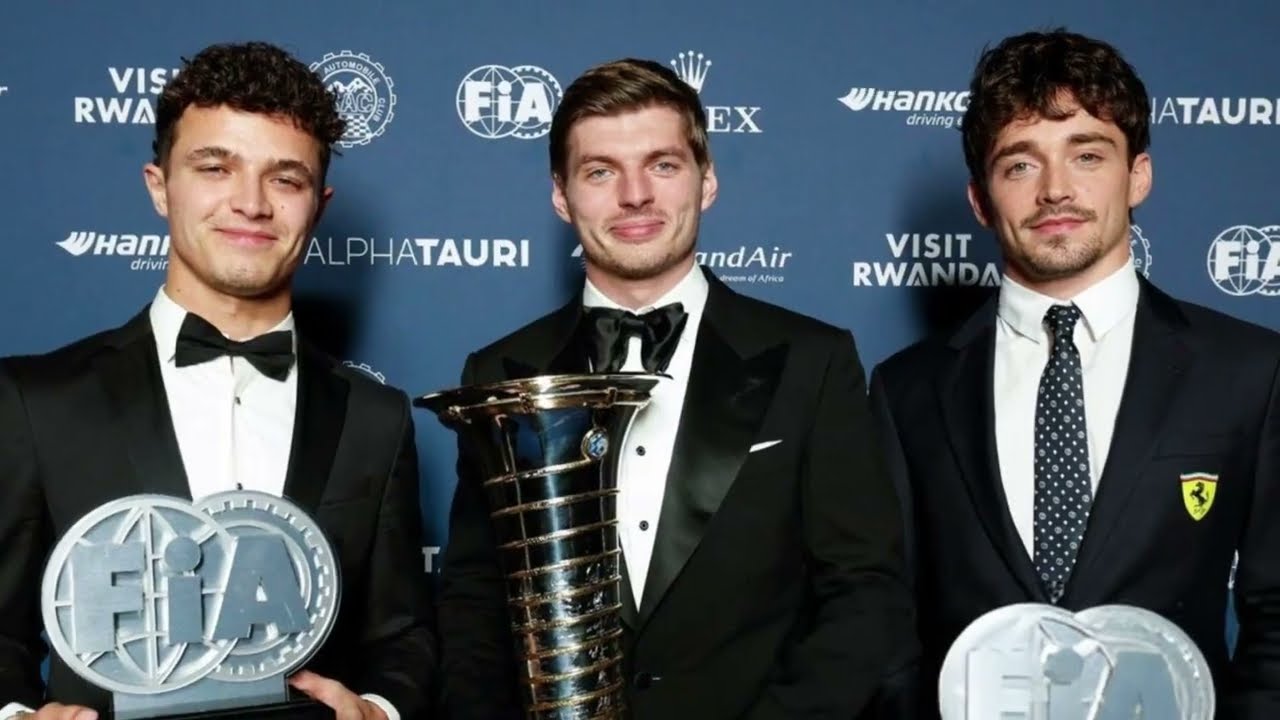
The governing body, the FIA, watched this unfold with a mixture of awe and concern. They realized that while Max was a prodigy, his path set a dangerous precedent. They didn’t want teams rushing 16-year-olds into the pinnacle of motorsport just to secure the next big talent. In December 2014, before Max had even completed his first full season, the FIA approved sweeping changes to the super license system. The new rules, informally dubbed the “Verstappen Rule,” established a strict minimum age of 18 and required drivers to accumulate points over multiple seasons in junior categories.
These regulations ensured that Max Verstappen’s records became immortal. No future driver, no matter how talented, can legally start an F1 race at 17. Max had not only broken the record; he had forced the sport to break the mold and then glue it back together in a shape that excluded everyone else.
The final piece of this historic puzzle fell into place in May 2016. After just four races into his second season, Red Bull promoted Max to the senior team, replacing Daniil Kvyat. Once again, the timing seemed aggressive. Once again, Max silenced the noise. On May 15, 2016, at the Spanish Grand Prix, he capitalized on a collision between the Mercedes drivers to take the lead. He held off a charging Kimi Räikkönen—a man who had been racing in F1 since before Max was born—to take the checkered flag. At 18 years and 228 days old, he became the youngest winner in F1 history. The previous record holder, Sebastian Vettel, was nearly three years older when he won his first race.
Since those chaotic early days, the “experiment” has matured into one of the most devastatingly effective careers the sport has ever witnessed. The 2021 championship battle with Lewis Hamilton was a titan clash that ended in a controversial but historic first title. What followed was an era of hegemony. In 2023, Max produced the most dominant single season in history, winning 19 out of 22 races and scoring 575 points. By the end of 2024, with four world championships and 63 wins to his name, the debate about his readiness had long been extinguished.
Helmut Marko’s comparison of a teenage Max to Ayrton Senna, once seen as hyperbolic, now feels prophetic. The critics who said it was “completely wrong” to put a child in the car have publicly eaten their words. Max Verstappen didn’t just survive the pressure cooker of Formula 1; he thrived in it, accelerating the evolution of the sport itself.
Today, when we look at the record books, we see the name Verstappen etched next to the “Youngest” categories. Those entries are not just statistics; they are reminders of a singular moment in time when preparation met opportunity with such force that it broke the system. The door that Max Verstappen walked through at 17 is now locked and bolted, leaving him standing alone in history—the boy who changed the future of Formula 1 forever.
News

Inside Shane Richie’s love life: Drug – fuelled orgy with six blondes; real reason he split from Coleen Nolan; six-year ‘affair with fan’
Inside Shane Richie’s love life: Orgy with six blondes; real reason he split from Coleen Nolan; six-year ‘affair with fan’ He’s popular with the ladies… Shane Richie…

SH0CKING REVELATI0N:A sh0cking behind-the-scenes secret revealed about Lizzie Rizzini, the woman replacing Carol Kirkwood on the 6pm weather bulletin
BBC viewers still reeling from the departure of Carol Kirkwood got another surprise last night when presenter Lizzie Rizzini appeared to flash her black lace stockings on…

HEARTBREAKING: Peter Andre’s Tearful Message to Son Junior After SHOCKING Revelation About How He Truly Feels Toward Mum Katie Price — Katie Price’s reaction scares fans.
Peter Andre’s emotional message to son Junior after it’s revealed how he really feels about mum Katie Pri… PETER Andre has shared an emotional message to his…

Ben Shephard opens up about the devastating health battle his wife is facing: “She wakes up crying every single morning…”
Inside This Morning Ben Shephard’s Life Including Rarely Seen Wife and Health Battle Ben Shephard is a name synonymous with British television, renowned for his engaging presentation…

🚨 LIVE TV HEARTBREAK: Good Morning Britain Host Announces ‘Devastating’ Dɘath of Guest Minutes Into Show
Viewers of Good Morning Britain were met with heartbreaking news just minutes into Friday’s (January 30) episode, as co-hosts Kate Garraway and Ranvir Singh reported the tragic…

Emmerdale legend Cain Dingle will never be the same again after a shock cancer diagnosis turns his world upside down
FROure Desk. Full Terms and conditions are available on the website http://www.itv.com/presscentre/itvpictures/terms Emmerdale wouldn’t be Emmerdale without the glowering, grunting embodiment of manliness that is Cain Dingle (Jeff Hordley) But…
End of content
No more pages to load






