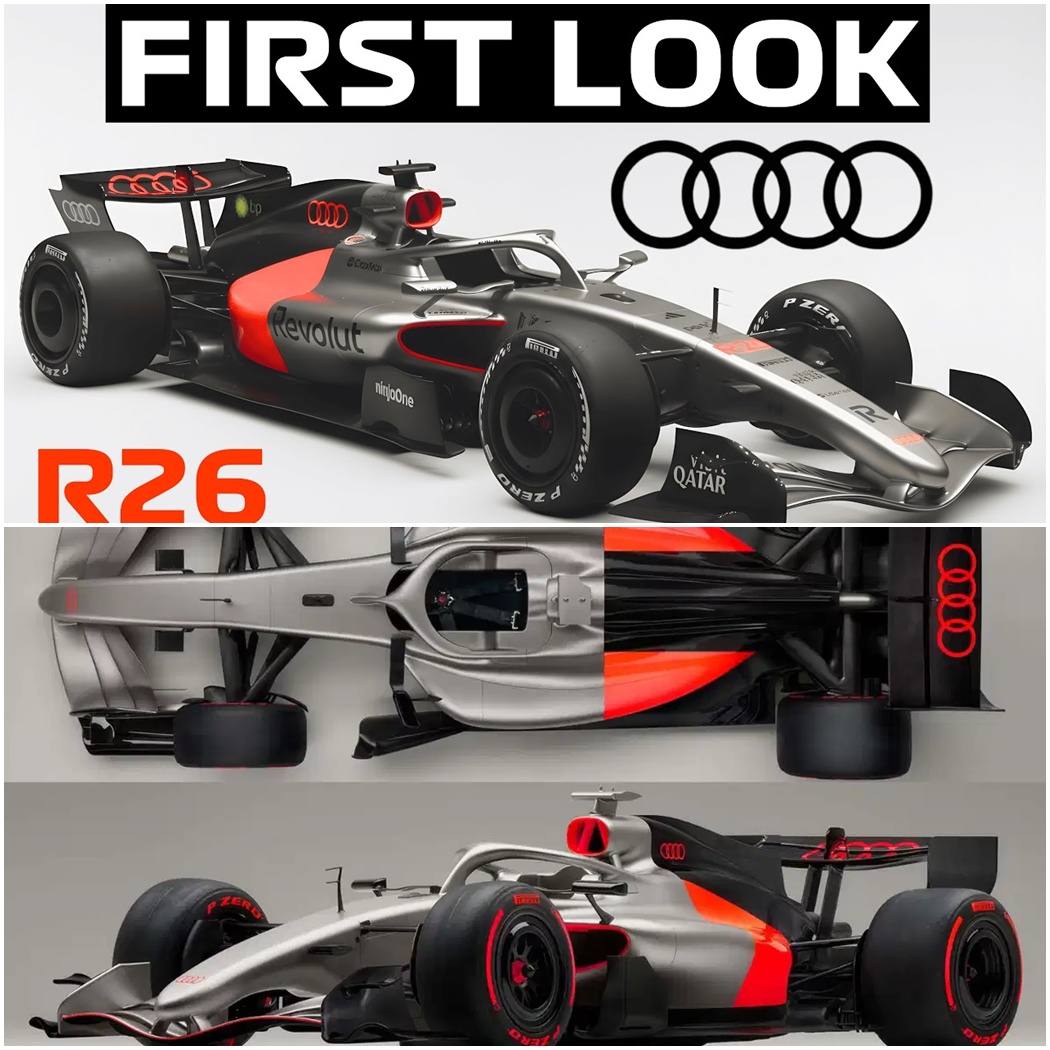
The industrial shadows of the Kraftwerk in Berlin have long been silent witnesses to history, but today, they vibrated with a new, mechanical energy. The wait is finally over. The rumors have coalesced into reality. Audi, the titan of German automotive engineering, has officially stepped into the Formula 1 light, unveiling its 2026 challenger: the Audi R26.
This was not merely a car launch; it was a coronation of intent. While competitors like Cadillac, Red Bull Ford, and Honda have been sparring in the shadows of development, Audi chose to make a statement that echoed through the streets of Germany and straight to the factories in Maranello and Brackley. The R26, dubbed the “Silver Beast,” is the physical manifestation of a century-old racing dream, finally hitting the pinnacle of motorsport with a machine that is as clinically precise as it is aggressively beautiful.
A Masterclass in Visual Balance
As the cover was pulled back, the first thing to strike the global audience was the R26’s visual identity. It is a masterclass in balance, a seamless blend of technical coldness and raw, unbridled racing passion. The front and middle sections of the chassis are dominated by a striking titanium silver—a direct, unapologetic nod to Audi’s legendary “Silver Arrows” heritage. It is a color that commands respect, reminding the world that while they are new to the modern F1 grid, they are royalty in the world of motorsport.
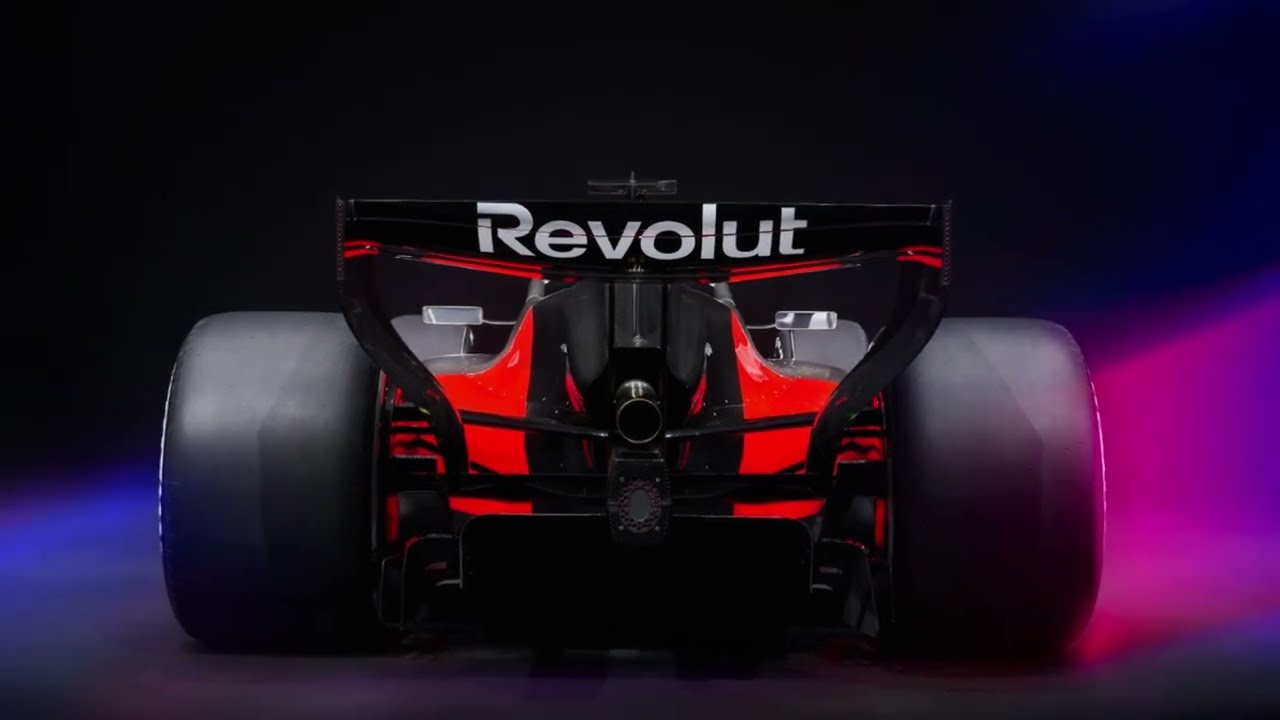
However, Audi is not looking backward. As the eye travels along the airflow toward the rear of the car, the design shifts dramatically into a high-contrast palette signaling a new era. Fluorescent red and black tones erupt from the center of the engine cover, flowing all the way to the rear wing. This creates a kinetic energy, a sense of forward motion even when the R26 is sitting perfectly still on the stage.
These red accents are not just aesthetic flourishes; they are strategic markers. Placed around the airbox and sidepod inlets, they highlight the aggressive cooling requirements of the new 2026 power units. Meanwhile, black dominates the complex flow deflectors and wings, framing the branding of the team’s new title sponsor, Revolut. This livery proves that before turning a single wheel in anger, Audi has already established itself as a commercial powerhouse.
The Roar Returns: Bringing Soul Back to the Engine
Perhaps the most visceral talking point of the Berlin reveal was the sound. For over a decade, Formula 1 has been defined—and often criticized—by the muted tones of the turbo-hybrid era. The complexity of the heat recovery systems (MGU-H) often acted as a muffler, stifling the raw emotion of the internal combustion engine.
The 2026 regulations have changed the game, and Audi is embracing the noise. With the mandatory removal of the MGU-H, the R26 produces a raw, mechanical roar that has been absent from the sport for too long. Team boss Jonathan Wheatley described the new engine note as “really good and aggressive,” noting it feels significantly “more Hertz-y” than the previous generation.
This isn’t just marketing hyperbole. The exhaust gases are no longer being filtered through a heavy recovery unit, allowing the V6 to scream. Rookie sensation Gabriel Bortoleto admitted to becoming emotional during the car’s initial shakedown on January 9th. “When I first fired up the car and left the garage, I felt like I was driving through a piece of history,” he confessed. It is a sound that signals a 50/50 power split between the combustion engine and the massive 350 kW electrical component—a heartbeat of a revolution intended to be heard from miles away.
Technical Precision: The Fortress of Neuburg
Underneath the shimmering titanium skin, the R26 is a laboratory of modern suspension geometry. Technical Director James Key confirmed a critical strategic choice: the car utilizes a push-rod solution for both the front and rear suspension.
In the complex world of 2026 aerodynamics, where active aero will cause violent transitions in downforce and balance, mechanical stability is king. The push-rod layout provides the necessary platform to handle these loads, a choice that has become nearly universal across the grid. But for Audi, it represents something more—a commitment to a stable, predictable platform that allows their drivers to extract the maximum from the data.
This car is a “gathering laboratory on wheels.” Every kilometer clocked is worth a thousand hours on the dyno in Neuburg. The team needs to understand how that massive electrical deployment interacts with real-world racing loads, and they have already begun that journey with their shakedown earlier this month.
Leadership and the Long Game
Leading this charge is Mattia Binotto, a man who knows the pressure of a manufacturer team better than almost anyone. Having spent decades in the cauldron of Ferrari, Binotto has overseen the complete metamorphosis of the Sauber team—which languished in ninth place in 2025—into a high-functioning Audi works operation.
Binotto’s message in Berlin was one of calm, calculated confidence. He is not promising a championship in 2026. Instead, he is building a fortress designed for longevity. The “Mission 2030” plan is about establishing a dominant era, not a flash in the pan. With the recent minority stake sale to Qatar’s sovereign wealth fund, Audi has secured the financial firepower to fight a war of attrition. They are here to stay, and they are here to conquer.
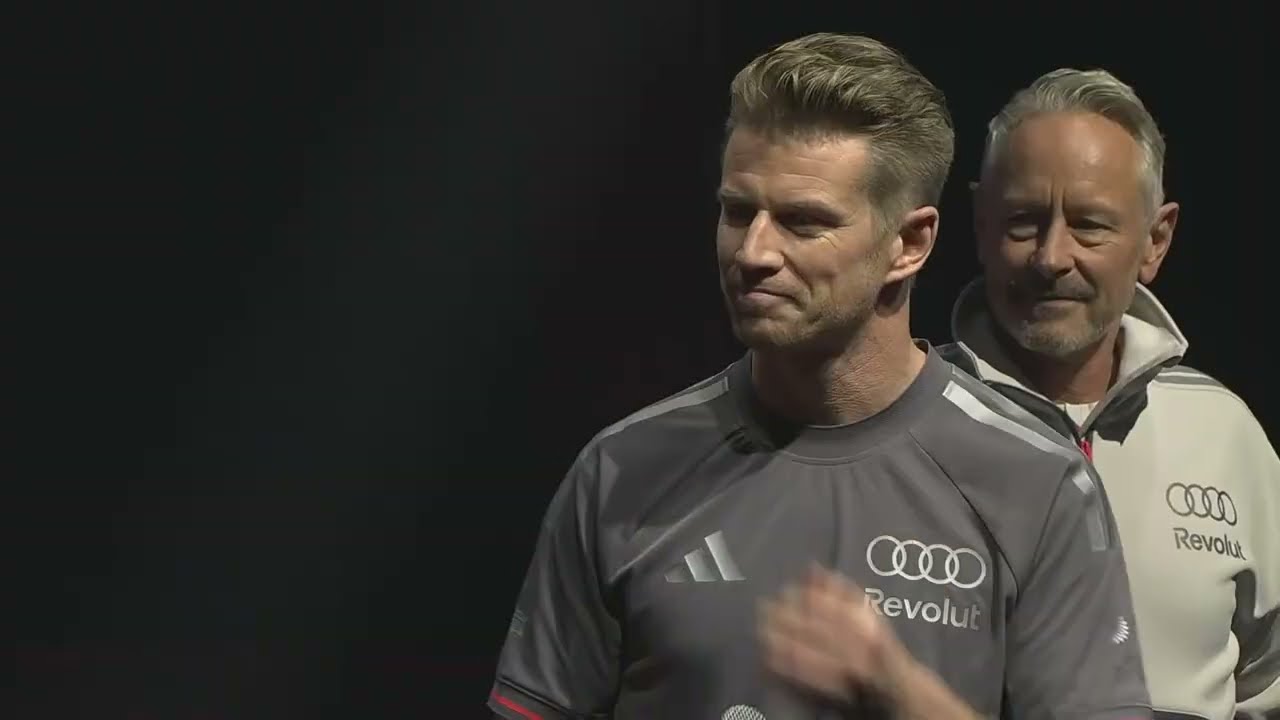
The driver lineup reflects this strategic duality. Nico Hulkenberg anchors the team, bringing legendary German discipline and peerless technical feedback. He is the bridge between the engineers and the asphalt, the stabilizer in the chaos of a new regulation set. Beside him sits Gabriel Bortoleto, the rising star entering his first full season. He carries the weight of massive expectations but brings the fearless hunger and reflexes of a new generation. Together, they are a strategic masterstroke: one to build the car, one to push it to the ragged edge.
The Political Storm: War on Loophole
However, the launch was not all champagne and smiles. Beneath the celebration, a massive political storm is brewing, and Audi used the spotlight to fire a warning shot across the bow of the FIA.
Audi has officially joined the chorus of manufacturers demanding immediate action regarding a potential 2026 engine loophole. Rumors have been swirling that rivals, specifically Mercedes and the Red Bull-Ford powertrain division, have found a way to exploit specific wording regarding compression ratios. This “hack” of the thermodynamics could provide a significant, unintended advantage.
Audi’s stance is firm: they have built an honest engine that follows the spirit of the rules. They will not accept starting on the back foot because rivals found a way to bypass the intentions of the regulation. They are pressing the governing body for a decisive ruling at the high-stakes summit on January 22nd. This technical war is just as critical as the one on the track. If the FIA fails to close this loophole, the R26 might face its biggest challenge in the boardroom before the lights even go out in Melbourne.
A New Reality
Ultimately, the reveal of the Audi Revolute R26 signals the end of the speculative era and the beginning of a cold, calculated reality. The “Silver Beast” is no longer a concept; it is a contender.
By combining German discipline with world-class technical leadership under Binotto and Wheatley, Audi has built a foundation designed to withstand the chaos of the 2026 technical reset. As the F1 circus turns its eyes toward the official preseason tests in Barcelona on January 26th, the question is no longer if Audi is serious. The question is: who is ready to stop them?
The old guard in Maranello and Brackley are right to feel nervous. The German era is finally here, and it sounds absolutely terrifying.
News

Inside Shane Richie’s love life: Drug – fuelled orgy with six blondes; real reason he split from Coleen Nolan; six-year ‘affair with fan’
Inside Shane Richie’s love life: Orgy with six blondes; real reason he split from Coleen Nolan; six-year ‘affair with fan’ He’s popular with the ladies… Shane Richie…

SH0CKING REVELATI0N:A sh0cking behind-the-scenes secret revealed about Lizzie Rizzini, the woman replacing Carol Kirkwood on the 6pm weather bulletin
BBC viewers still reeling from the departure of Carol Kirkwood got another surprise last night when presenter Lizzie Rizzini appeared to flash her black lace stockings on…

HEARTBREAKING: Peter Andre’s Tearful Message to Son Junior After SHOCKING Revelation About How He Truly Feels Toward Mum Katie Price — Katie Price’s reaction scares fans.
Peter Andre’s emotional message to son Junior after it’s revealed how he really feels about mum Katie Pri… PETER Andre has shared an emotional message to his…

Ben Shephard opens up about the devastating health battle his wife is facing: “She wakes up crying every single morning…”
Inside This Morning Ben Shephard’s Life Including Rarely Seen Wife and Health Battle Ben Shephard is a name synonymous with British television, renowned for his engaging presentation…

🚨 LIVE TV HEARTBREAK: Good Morning Britain Host Announces ‘Devastating’ Dɘath of Guest Minutes Into Show
Viewers of Good Morning Britain were met with heartbreaking news just minutes into Friday’s (January 30) episode, as co-hosts Kate Garraway and Ranvir Singh reported the tragic…

Emmerdale legend Cain Dingle will never be the same again after a shock cancer diagnosis turns his world upside down
FROure Desk. Full Terms and conditions are available on the website http://www.itv.com/presscentre/itvpictures/terms Emmerdale wouldn’t be Emmerdale without the glowering, grunting embodiment of manliness that is Cain Dingle (Jeff Hordley) But…
End of content
No more pages to load






