Maranello’s High-Stakes Bet: A Weapon Built in the Shadows
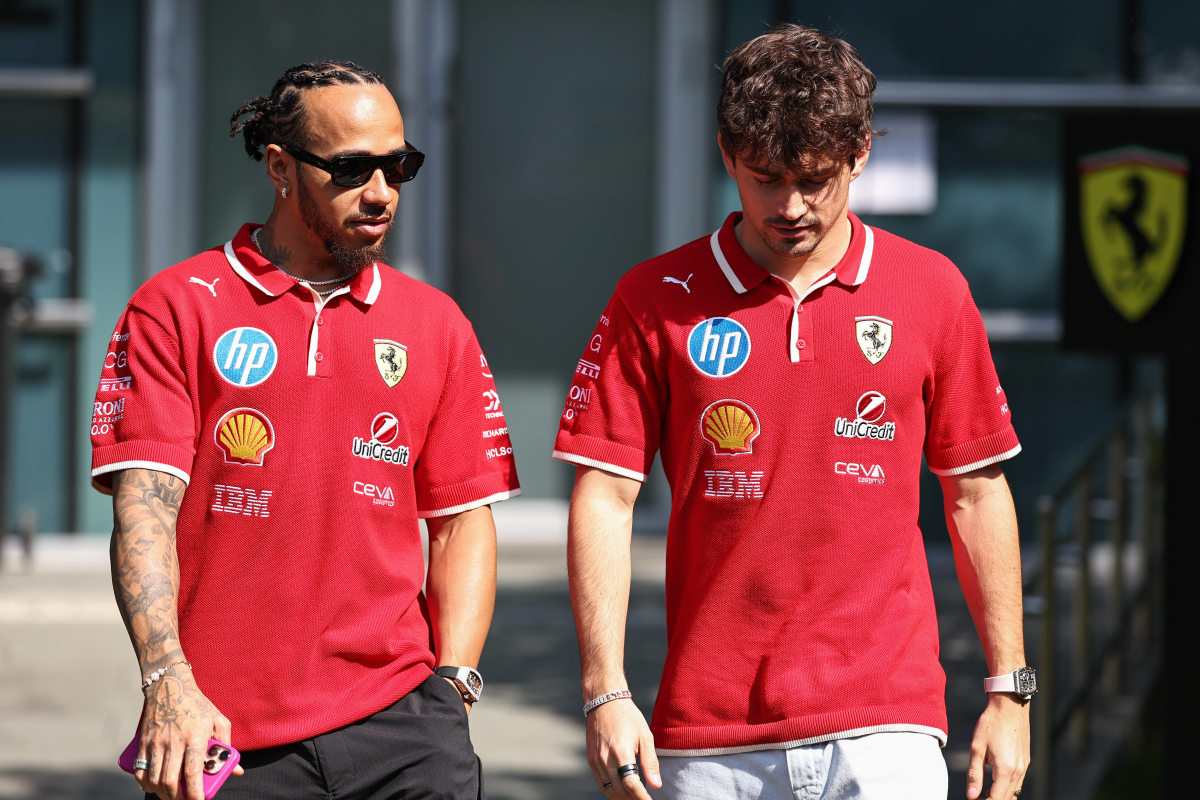
The 2025 Formula 1 season will be remembered for many things, but for the Tifosi and Lewis Hamilton fans, it is a memory etched in bitterness. It was a year of historic humiliation—a season where the seven-time world champion disappeared into the midfield, logging zero wins, zero podiums, and a dismal sixth-place finish in the drivers’ championship. To the outside observer, Ferrari looked lost, a giant stumbling in the dark while rivals surged ahead. But new revelations suggest that the silence from Maranello wasn’t incompetence; it was a calculated, terrifying investment. While the world watched Hamilton struggle with a lackluster machine, Ferrari was already fighting a different war, one that could redefine the sport in 2026 or end in catastrophic failure.
The Sacrifice: Freezing Time for the Future
The narrative of Ferrari’s failure in 2025 overlooks a crucial, strategic pivot made by Team Principal Fred Vasseur. In April 2025, with the championship still theoretically alive, Vasseur made the call to freeze development on the SF25 completely. It was a decision that broke every conventional rule of engagement in modern Formula 1. While other teams scrambled to bring upgrades to the track, Ferrari turned off the lights on the current season.
Every resource—wind tunnel hours, simulation data, and engineering manpower—was aggressively redirected to “Project 678.” This wasn’t just a head-start; it was an abandonment of the present to secure the future. The result is the SF26, a car that reportedly passed FIA crash tests before the 2025 season had even concluded. This unprecedented timeline suggests that Ferrari isn’t just prepared for the new regulatory era; they have been living in it for months while their rivals were distracted by the battles of yesterday.
The Engine Anomaly: A Heavy Gamble
At the heart of the SF26 lies a technical decision that has baffled and intrigued paddock insiders. In a sport where weight is the enemy, Ferrari has opted to manufacture the cylinder heads of their new power unit from steel rather than the industry-standard aluminum. Developed in partnership with AVL, an Austrian firm renowned for high-performance powertrains, this choice seems counterintuitive. Steel is significantly heavier than aluminum, and in F1, excess weight is usually a death sentence for lap times.
However, the 2026 regulations introduce a mandatory increase in power unit weight, closing the gap between materials. Ferrari’s engineers have turned this restriction into a potential strategic advantage. The theory is that the thermal properties of steel will allow the engine to withstand higher combustion pressures and temperatures, unlocking performance gains that outweigh the gravitational penalty. It is a classic Ferrari roll of the dice: trading the certainty of conventional design for the theoretical ceiling of an unproven concept. If the thermal efficiency pays off, the SF26 will have a heart of iron that outlasts and outpowers the grid. If the weight penalty destroys the car’s balance, it will be viewed as an arrogant engineering blunder.
Suspension and Aero: The “Precision Weapon”
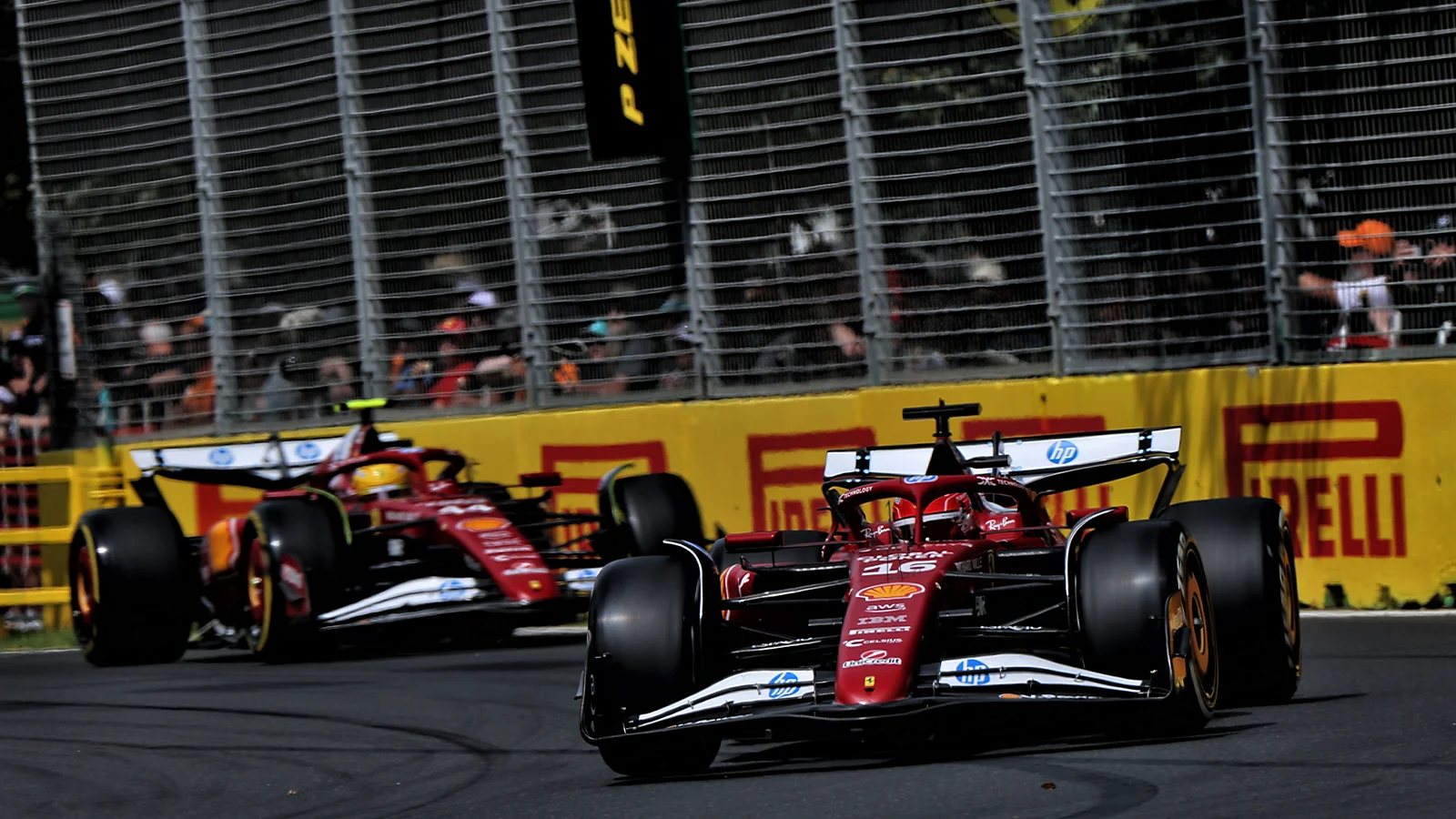
If the engine is a gamble, the chassis philosophy is a revolution. For two decades, Ferrari has generally favored conservative, mechanically stable designs that offer drivers a predictable platform. The SF26 dynamites this tradition. The new car features a front suspension system fully integrated with the floor, a design choice driven purely by aerodynamics rather than mechanical grip or driver comfort.
The goal is to lock the car into a precise aerodynamic platform, maintaining a specific ride height to maximize the efficiency of the underfloor tunnels. At the rear, the suspension is incredibly compact to improve diffuser sealing. This creates a vehicle that is less of a car and more of a “precision weapon.”
But weapons can backfire. By designing a car that requires such a specific operating window, Ferrari has built a machine that is likely hypersensitive to external variables. Temperature shifts, wind gusts, and tire degradation could knock the SF26 out of its narrow performance window, turning a fast car into an undrivable monster. This philosophy places an immense burden on the drivers. The car is not designed to be forgiving; it is designed to be fast, provided the human behind the wheel can walk the tightrope without falling.
The Human Cost: Hamilton and Leclerc
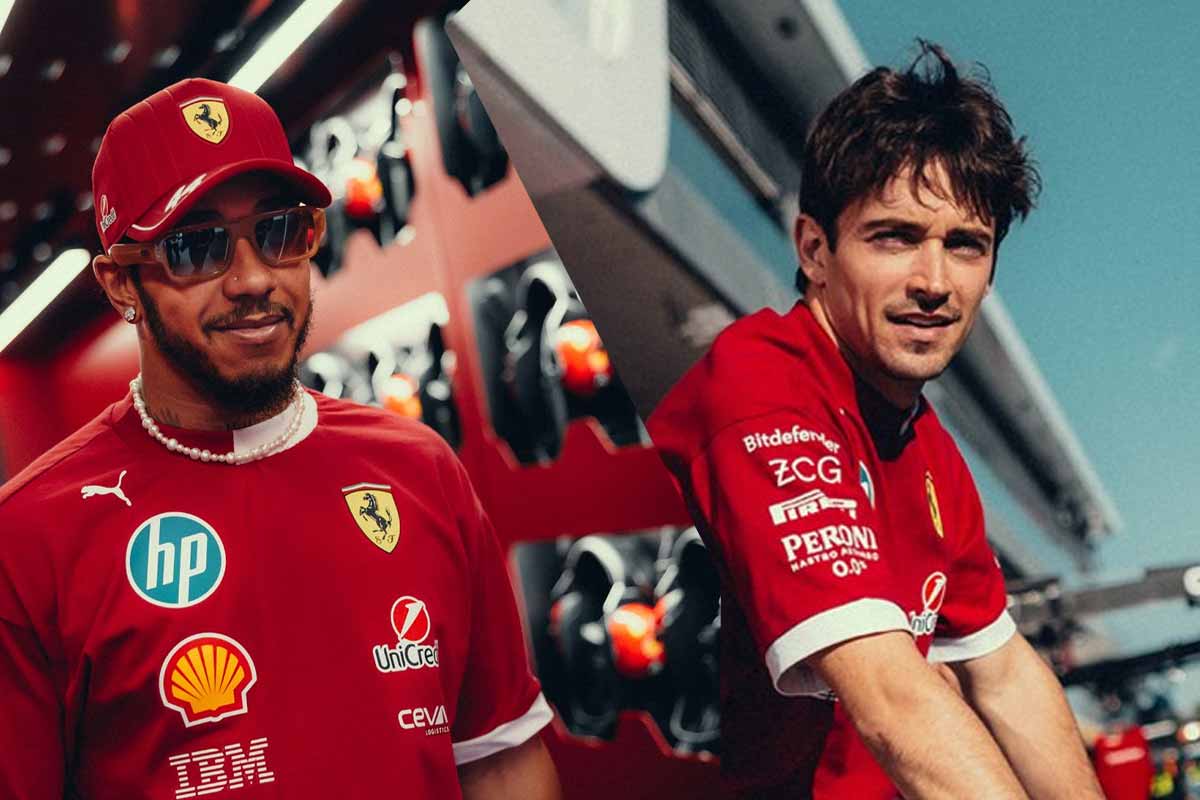
This technical radicalism brings us to the human element of this unfolding drama. Lewis Hamilton did not join Ferrari to develop a midfield car; he joined to cement his legacy with an eighth world title. The 2025 “nightmare” was a warning shot. At this stage in his career, Hamilton does not have the luxury of time. He needs a car that works immediately.
Ferrari knows this. They are aware that if the SF26 requires a year of troubleshooting, the Hamilton experiment will be deemed a failure. To mitigate this, the team has reportedly developed two distinct specifications for the suspension and chassis—one for high-load circuits and one for mixed conditions. While this offers flexibility, it also introduces a layer of operational complexity that could lead to correlation failures between the simulator and the track.
Then there is Charles Leclerc. The Monegasque driver has been the patient prince of Maranello for too long. His frustration in 2025 was palpable, his radio messages echoing the sentiment that the team was failing him. “It’s now or never” is not just a slogan for Leclerc; it is an ultimatum. If the SF26 fails to deliver, the internal fracture between the drivers and team management could be irreparable.
The Three Futures
As we approach the dawn of the 2026 season, three scenarios loom over Maranello.
In the first, the gamble pays off. The steel engine proves robust, the aerodynamic platform holds steady, and Hamilton finds the rhythm that eluded him in 2025. Ferrari dominates, Vasseur is hailed as a visionary, and the painful sacrifice of the previous season is justified by the return of the championship trophy to Italy.
In the second scenario, the car is fast but fragile—a “glass cannon.” Brilliant on smooth tracks but undrivable on bumpy circuits, leading to a season of inconsistency where Hamilton battles the machine rather than his rivals. This would be a slow, agonizing death for title hopes, marked by flashes of brilliance drowned out by operational headaches.
The third scenario is the one that keeps the Tifosi awake at night: correlation failure. The simulation tools, which have been running 24/7 on Project 678, might not match the reality of the asphalt. If the car is fundamentally flawed—too heavy, too sensitive, or impossible to set up—there is no Plan B. There is no time to redesign a chassis that was locked in a year in advance. In this timeline, Hamilton’s legacy ends in frustration, and the Ferrari mythos takes another battering.
Conclusion: The Point of No Return
Fred Vasseur has openly stated that 2026 is a “point of no return.” The pressure is not just sporting; it is national. Ferrari is more than a team; it is an identity for millions. The SF26 represents the most aggressive engineering shift the team has arguably ever made. They have abandoned safety for speed and consistency for extreme performance.
When the lights go out at the first Grand Prix of 2026, we won’t just be watching a race. We will be witnessing the resolution of a massive, high-stakes wager. Ferrari has pushed all their chips to the center of the table. Whether they leave as legends or cautionary tales depends entirely on whether their “shadow car” can survive the harsh light of day.
News

Inside Shane Richie’s love life: Drug – fuelled orgy with six blondes; real reason he split from Coleen Nolan; six-year ‘affair with fan’
Inside Shane Richie’s love life: Orgy with six blondes; real reason he split from Coleen Nolan; six-year ‘affair with fan’ He’s popular with the ladies… Shane Richie…

SH0CKING REVELATI0N:A sh0cking behind-the-scenes secret revealed about Lizzie Rizzini, the woman replacing Carol Kirkwood on the 6pm weather bulletin
BBC viewers still reeling from the departure of Carol Kirkwood got another surprise last night when presenter Lizzie Rizzini appeared to flash her black lace stockings on…

HEARTBREAKING: Peter Andre’s Tearful Message to Son Junior After SHOCKING Revelation About How He Truly Feels Toward Mum Katie Price — Katie Price’s reaction scares fans.
Peter Andre’s emotional message to son Junior after it’s revealed how he really feels about mum Katie Pri… PETER Andre has shared an emotional message to his…

Ben Shephard opens up about the devastating health battle his wife is facing: “She wakes up crying every single morning…”
Inside This Morning Ben Shephard’s Life Including Rarely Seen Wife and Health Battle Ben Shephard is a name synonymous with British television, renowned for his engaging presentation…

🚨 LIVE TV HEARTBREAK: Good Morning Britain Host Announces ‘Devastating’ Dɘath of Guest Minutes Into Show
Viewers of Good Morning Britain were met with heartbreaking news just minutes into Friday’s (January 30) episode, as co-hosts Kate Garraway and Ranvir Singh reported the tragic…

Emmerdale legend Cain Dingle will never be the same again after a shock cancer diagnosis turns his world upside down
FROure Desk. Full Terms and conditions are available on the website http://www.itv.com/presscentre/itvpictures/terms Emmerdale wouldn’t be Emmerdale without the glowering, grunting embodiment of manliness that is Cain Dingle (Jeff Hordley) But…
End of content
No more pages to load






