As the countdown to the 2026 Formula 1 season ticks below the one-month mark, the paddock is rife with a familiar sense of dread for some and quiet confidence for others. The revolutionary new regulations, designed to reset the competitive order with sustainable fuels and increased electrical power, were supposed to level the playing field. However, emerging reports and accusations from rival team bosses suggest that one manufacturer may have already outsmarted the system—and is now trying to hide just how good their advantage really is.
Mattia Binotto, the former Ferrari boss now spearheading Audi’s entry into the sport, has publicly voiced concerns that Mercedes is engaging in “extreme sandbagging.” The accusation is simple but strategic: Mercedes has built a rocket ship of an engine but is deliberately running it at reduced power to prevent rivals from triggering performance-balancing clauses in the regulations.
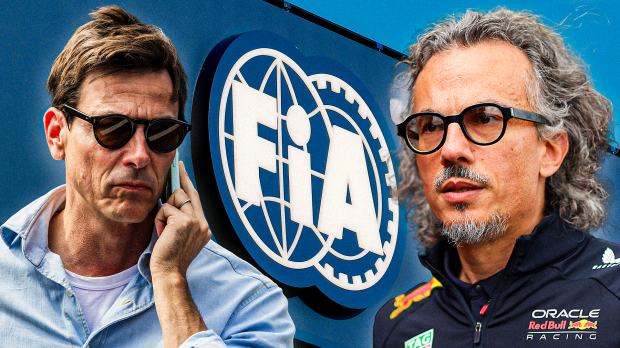
The “2% Rule” and the Art of Deception
At the heart of this controversy is a specific clause in the 2026 power unit regulations known as the “Additional Development and Upgrade” (ADU) opportunity. To prevent one manufacturer from locking in a dominant advantage for years (as Mercedes did in 2014), the FIA has introduced a catch-up mechanism. Every six races, the governing body will analyze engine performance. If a manufacturer is found to be more than 2% down on power compared to the class leader, they are granted extra development resources and testing time to close the gap. If the deficit is greater than 4%, the allowance increases further.
This rule, well-intentioned as it is, has created a perverse incentive. As Binotto points out, if a team like Mercedes possesses a massive advantage—say, 5% or more—it is in their best strategic interest to hide it. By detuning their engine and running just 1.5% clear of the field, they can win races comfortably while denying their rivals the “catch-up” benefits of the ADU clause.
“Sandbagging is officially back,” Binotto warned. He draws parallels to 2014, where Mercedes reportedly ran their engines well below maximum capacity for almost two seasons to avoid alerting the FIA to the true extent of their dominance. If history is repeating itself, the 2026 season could be a masterclass in management rather than a flat-out fight.
Toto Wolff: “No Negatives”
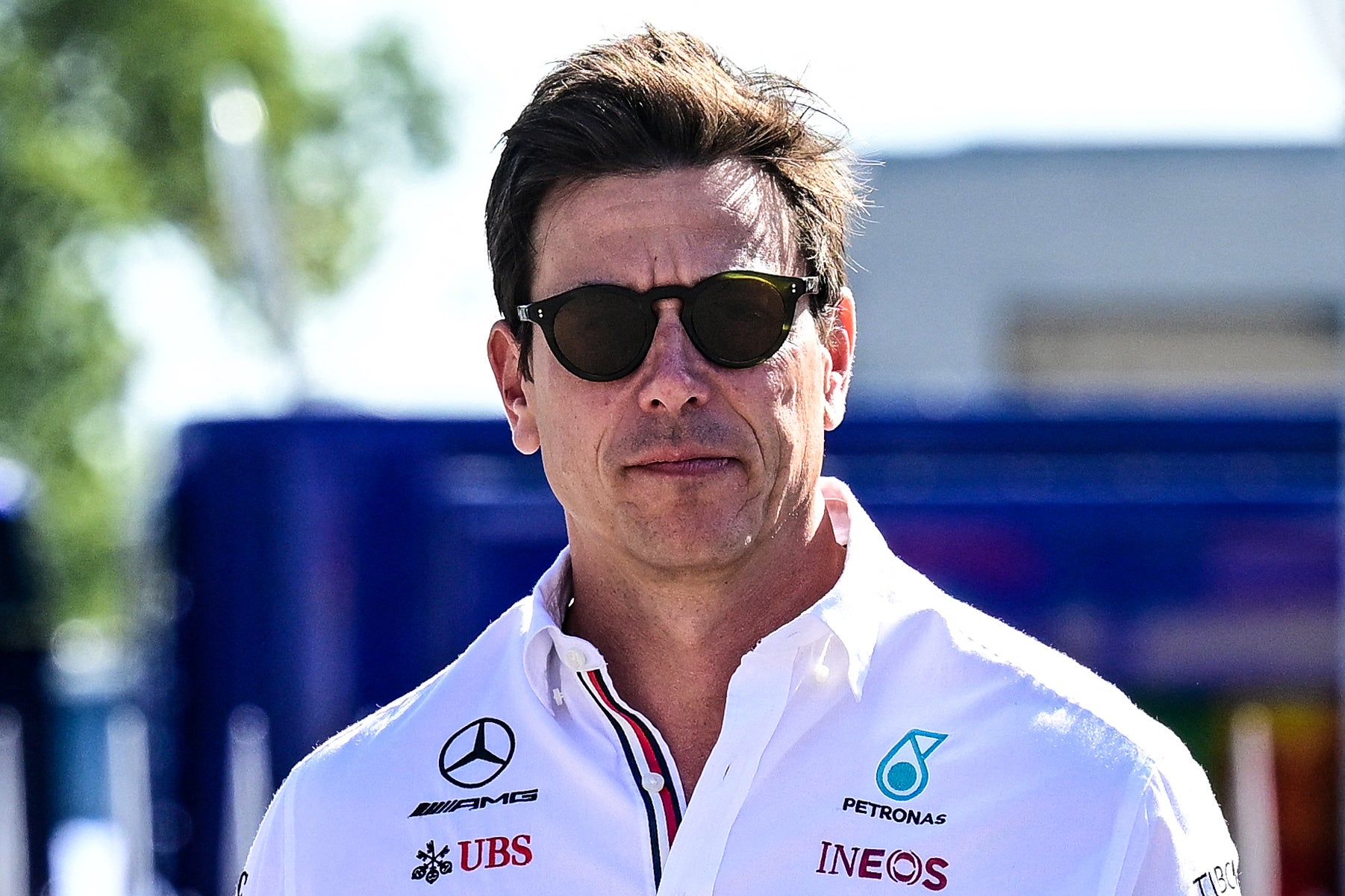
Fueling the fire of these accusations is the demeanor of Mercedes Team Principal Toto Wolff. While other teams have grumbled about the complexity of the new “active aero” rules or the weight of the cars, Wolff has been overwhelmingly positive.
“I see no negatives to these regulations,” Wolff declared recently. His confidence is backed by on-track data from the recent Barcelona tests. Wolff recounted a moment where George Russell, engaged in a race simulation, breezed past Franco Colapinto’s Williams with a speed differential of nearly 60 km/h. “The drivers get a serious engine boost when they want it,” Wolff noted with a smile. “We will see overtaking where we don’t expect it.”
This optimism is terrifying for rivals. When a team boss as politically savvy as Wolff stops complaining and starts praising the rules, it usually means one thing: his engineers have nailed them.
The “Compression Ratio” War
The engine drama extends beyond just sandbagging. As reported earlier in the week, a coalition of manufacturers—including Honda, Audi, Ferrari, and Red Bull—has formally approached the FIA regarding a potential loophole Mercedes is exploiting. The issue revolves around the geometric compression ratio of the engine, capped at 16:1. Rivals believe Mercedes has found a way to vary this ratio effectively while the engine is running hot, gaining a significant performance boost while staying legal during static checks.
Honda, in particular, is reportedly furious. As a manufacturer supplying only one team (Aston Martin), they lack the data points of Mercedes (supplying themselves, McLaren, Williams, and Alpine) or Ferrari. They are demanding immediate clarification or a change in the testing procedures to close the loophole before Melbourne. However, with the first race looming, any regulatory change now would require unanimous agreement or a safety justification—both of which are unlikely hurdles to clear.
Damon Hill’s Prediction: The Field Spread Returns
The consequence of these engine disparities could be a fractured grid. For the past few seasons, F1 has enjoyed a golden era of closeness, with the entire field often separated by less than a second in qualifying. But 1996 World Champion Damon Hill believes those days are over, at least temporarily.
Hill predicts that the field spread in Melbourne could blow out to as much as 1.8 seconds in Q1. “We are going to have a ‘haves and have-nots’ situation,” he argues. With the engines now playing such a critical role in lap time, the difference between the best and worst power unit could be measured in tenths, not hundredths.

Conclusion: A Game of Poker
As the teams prepare for the final pre-season tests and the season opener in Australia, the sport is locked in a high-stakes game of poker. Mercedes holds a strong hand, but they are trying hard not to show their aces. Audi and Honda are calling their bluff, hoping the FIA will intervene. And the fans are left wondering: is the 2026 revolution about to deliver a thrilling new era, or just a new shade of domination?
One thing is certain: when the lights go out in Melbourne, the sandbags will have to come off—at least a little bit. And that is when the real panic might set in for everyone not wearing Silver.
News

Inside Shane Richie’s love life: Drug – fuelled orgy with six blondes; real reason he split from Coleen Nolan; six-year ‘affair with fan’
Inside Shane Richie’s love life: Orgy with six blondes; real reason he split from Coleen Nolan; six-year ‘affair with fan’ He’s popular with the ladies… Shane Richie…

SH0CKING REVELATI0N:A sh0cking behind-the-scenes secret revealed about Lizzie Rizzini, the woman replacing Carol Kirkwood on the 6pm weather bulletin
BBC viewers still reeling from the departure of Carol Kirkwood got another surprise last night when presenter Lizzie Rizzini appeared to flash her black lace stockings on…

HEARTBREAKING: Peter Andre’s Tearful Message to Son Junior After SHOCKING Revelation About How He Truly Feels Toward Mum Katie Price — Katie Price’s reaction scares fans.
Peter Andre’s emotional message to son Junior after it’s revealed how he really feels about mum Katie Pri… PETER Andre has shared an emotional message to his…

Ben Shephard opens up about the devastating health battle his wife is facing: “She wakes up crying every single morning…”
Inside This Morning Ben Shephard’s Life Including Rarely Seen Wife and Health Battle Ben Shephard is a name synonymous with British television, renowned for his engaging presentation…

🚨 LIVE TV HEARTBREAK: Good Morning Britain Host Announces ‘Devastating’ Dɘath of Guest Minutes Into Show
Viewers of Good Morning Britain were met with heartbreaking news just minutes into Friday’s (January 30) episode, as co-hosts Kate Garraway and Ranvir Singh reported the tragic…

Emmerdale legend Cain Dingle will never be the same again after a shock cancer diagnosis turns his world upside down
FROure Desk. Full Terms and conditions are available on the website http://www.itv.com/presscentre/itvpictures/terms Emmerdale wouldn’t be Emmerdale without the glowering, grunting embodiment of manliness that is Cain Dingle (Jeff Hordley) But…
End of content
No more pages to load






