In the world of Formula 1, the driver’s championship table is a compelling narrative, but it only tells part of the story. It accounts for points, wins, and losses, but it fundamentally fails to answer the most crucial question in motorsport: Which driver performed the best relative to the machinery they were given?
Every season, a champion is crowned, but sometimes the driver who truly mastered their car, who extracted performance far beyond what the engineers designed, is lost in the midfield noise. The ultimate ranking isn’t about raw talent or future potential; it’s a sober, objective measure of execution across the entire season, from the first free practice session to the final checkered flag in Abu Dhabi.
The 2025 season delivered an array of phenomenal highs, heartbreaking lows, and stunning surprises—none more shocking than the decline of a seven-time world champion and the quiet, almost flawless mastery demonstrated by a driver who didn’t even win the title. By looking past the championship standings, we reveal the true hierarchy of performance, a list that features an unstoppable force at the top and a legend wrestling with his worst-ever campaign.
The Unanimous Master: Max Verstappen’s Undisputed Claim to the Throne
Despite the fact that Lando Norris sealed the World Championship, the ranking for the best-performing driver of 2025 is an uncontested one: Max Verstappen sits in the number one spot. In a season where his Red Bull proved to be tricky and erratic, Verstappen’s ability to combine razor-sharp pace with relentless execution was unmatched. His consistency ensured he remained in the title hunt until the very final race in Abu Dhabi, a feat that, given the car’s temperament, can only be described as overachieving.
The single point of criticism against his near-perfect year was his loss of control in the Spanish Grand Prix, where a collision with George Russell earned him a penalty and relegated him to 10th place. However, such blemishes were rare. When he claimed in Qatar that he would have long since wrapped up the title had he been in a McLaren, it was a statement difficult to argue with. No other driver extracted the potential of their machinery anything like as consistently as the Dutchman.
The Flawless Challenger: George Russell’s Defining Season
Just missing the top spot is George Russell in second place, who, despite only managing the third-highest points tally, put together his most impressive F1 season to date. Russell was the only driver who made fewer significant errors than Verstappen, ensuring a body of work that established him in a class of his own as the heaviest point-scorer outside of the title-winning McLaren team and Verstappen himself.
His victories in Canada and Singapore were obvious highlights, showcasing his peak capability. But what truly defined his year was his consistency. Even his “worst weekends,” such as Monaco or a gamble on slicks at Silverstone, were still perfectly respectable. He held a clear advantage over his rookie teammate, Kimmy Antonelli, and showed emphatically that he is ready to fight for a championship—he just needs the car to match his talent.

The New Champion and the Price of Pressure
The 2025 World Champion, Lando Norris, is ranked fourth, a fascinating example of how knee-jerk reactions to individual races can distort the full picture. Judged purely on the final third of the season, Norris would have a stronger case for the top rank, but his overall campaign was a season of progress, peaks, and underlying weaknesses that still need addressing.
Early in the year, there were too many self-described “embarrassments” where Norris was his own worst enemy, leading to the assessment that his season was far from perfect. Yet, it was good enough to be a World Champion. His impressiveness stemmed from how he learned from his struggles, adapted both his driving and his approach off-track, and minimized mistakes when it counted most—a characteristic of a true champion.
In stark contrast is Oscar Piastri in fifth, whose season was a tale of two halves. Judged on the first two-thirds of the year, he was solidly on course for the World Championship. He amassed an impressive tally of seven Grand Prix wins, though he was penalized or disadvantaged by team strategy for others. However, the Baku weekend, where he crashed in both qualifying and the race, proved a catastrophic turning point.
Subsequent struggles at low-grip tracks and shunts in consecutive sprint races meant he lost the points lead and could not claw it back. The alarming final third of his season prevented his good season from being truly great and ultimately cost him a higher ranking.
Lewis Hamilton: The Nightmare Debut at Ferrari
The most emotionally charged and shocking placement belongs to Lewis Hamilton, ranked 14th—unquestionably his worst season in Formula 1. This was not merely a poor performance; it was a deeply challenging year, even accounting for the difficulties of adapting to a new team and Ferrari’s struggles. His output fell well below the standards expected of a seven-time World Champion.
While there were highlights, notably his famous sprint race win in China on his second start for Ferrari, the year ended on a crushing low. A run of dismal weekends culminated in him being eliminated in the first segment of qualifying for the fourth time in succession in Abu Dhabi. His demeanor, as captured trackside, made it clear he had lost all hope.
Hamilton admitted to feeling “a lot of anger” at the situation. Objectively, the numbers painted a grim picture: he was on average 3.6 places behind his teammate Charles Leclerc in qualifying across the season. Although he produced enough clean and consistent race drives to amass a reasonable points tally, it was barely two-thirds of what Leclerc achieved. For a driver of his stature, being a “solid backup driver” simply isn’t what he’s at Ferrari for, and the challenge to improve next season is immense.

The Heroic Midfield and Ascendant Rookies
While the top and the shocking decline captured the headlines, the middle section of the ranking is populated by those who defied their car’s limitations.
Charles Leclerc, ranked third, performed heroically throughout the season. He battled tirelessly to give Ferrari a measure of respectability, bagging seven podium finishes and consistently scoring well. His performances were outstanding, and he was rarely threatened by his new teammate Hamilton. The most eye-catching feat was his ability to haul the Ferrari onto the front row of the grid five times—far more often than the machinery deserved. His class was far more than Ferrari deserved in 2025.
Fernando Alonso, at 44, proved Aston Martin’s foundation, taking until the ninth weekend to score points due to early misfortune. Once the car received upgrades in May, Alonso proved adept at maximizing its potential, demonstrating that if age has dulled his edge, it hasn’t been by much.
Pierre Gasly, ranked 10th, toiled heroically with the recalcitrant Alpine, making the most of what was widely considered the worst car of 2025. His ability to drag the car into Q3 eleven times highlights the immense job he did, especially compared to his teammates who failed to score a single point.
Among the rookies, Isack Hadjar (7th) emerged as the top performer, sealing a promotion to Red Bull Racing for 2026. His impressive consistency in qualifying, only being eliminated twice in Q1, was the most eye-catching aspect of his season, comfortably outperforming his teammate Liam Lawson.
The Long Road Back
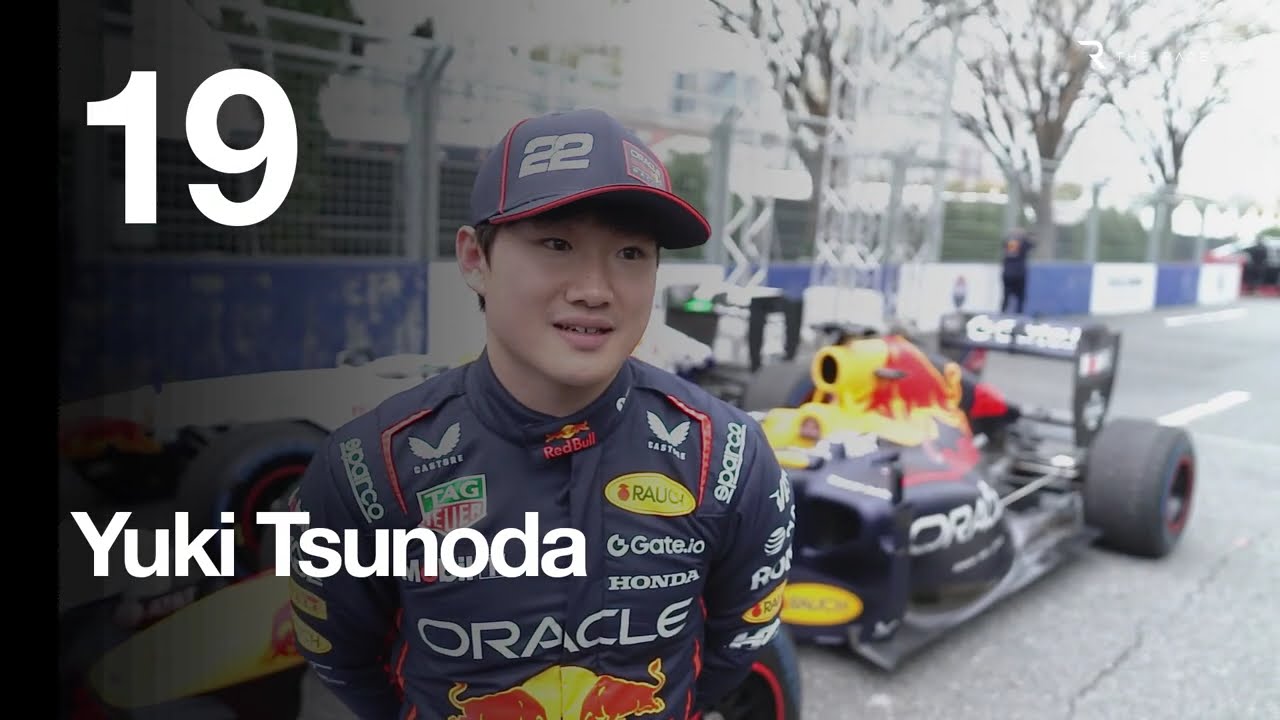
At the bottom of the list are the drivers who simply failed to make a lasting impression or were hampered by circumstances and errors. Yuki Tsunoda (19th), whose season arguably hinged on his failed promotion to Red Bull, struggled badly alongside Verstappen, producing a feeble return of just 30 points compared to his teammate’s 385. The Imola Q1 crash was a key turning point that set him back for a long time.
In the final two spots are the two Alpine drivers, Franco Colapinto (20th) and Jack Doohan (21st), whose seasons were marred by late entries, uncompetitive machinery, and too many mishaps, underscoring the team’s disastrous campaign.
The 2025 season rankings remind us that Formula 1 is a sport where external variables—the car, team strategy, and luck—are as crucial as raw talent. It is a testament to those who rise above their circumstances, like Verstappen and Russell, and a stark warning to those who struggle to adapt, like Lewis Hamilton, that the competition for supremacy is truly measured not by the points you score, but by how much you leave on the table.






