To understand the sheer magnitude of Ferrari’s fall from grace, one must only look at the faces of the Tifosi leaving Monza this past year. It wasn’t anger; it was resignation.
Eighteen years. That is how long it has been since Kimi Räikkönen secured the last Drivers’ Championship for the Scuderia. Since then, babies born during that victory celebration have reached adulthood, voting age, and perhaps even obtained their own driving licenses, all without ever witnessing a Ferrari driver lift the world title trophy. The 2008 Constructors’ title stands as a dusty relic, the last testament to a bygone era of dominance.
As we look back on the recently concluded 2025 season—a year that promised the fairy-tale union of Lewis Hamilton and the Prancing Horse but delivered a nightmare of mediocrity—the question is no longer “When will Ferrari win?” but rather “How did they break themselves so completely?”
The decline of the most iconic team in motorsport isn’t a simple case of bad luck. It is a systemic, multi-layered tragedy built on seven fatal mistakes that have turned the paddock’s gold standard into its most expensive punchline.
The Strategy of Self-Destruction
If Formula 1 were a game of chess, Ferrari’s strategy department has spent the last decade playing checkers while blindfolded. The list of tactical blunders is not just long; it is legendary.
It began, perhaps most famously, in Abu Dhabi in 2010. Fernando Alonso, on the brink of a title, was called into the pits early to cover Mark Webber, a decision that trapped the Spaniard behind the Renault of Vitaly Petrov for the remainder of the race. The championship slipped away by four points, lost in the dirty air of a midfield car.
But rather than learning from this trauma, the team internalized the panic. In 2018, as rain fell on the Hockenheimring, Sebastian Vettel was left to navigate treacherous conditions on slick tires while the pit wall issued calm reassurances that “everything was under control.” Moments later, he was in the barriers, pounding his steering wheel in anguish.
The 2022 season raised the bar for incompetence. From the double-stack disaster in Monaco to putting Charles Leclerc on hard tires in the freezing cold of Hungary, the pit wall seemed to be operating on a delay.
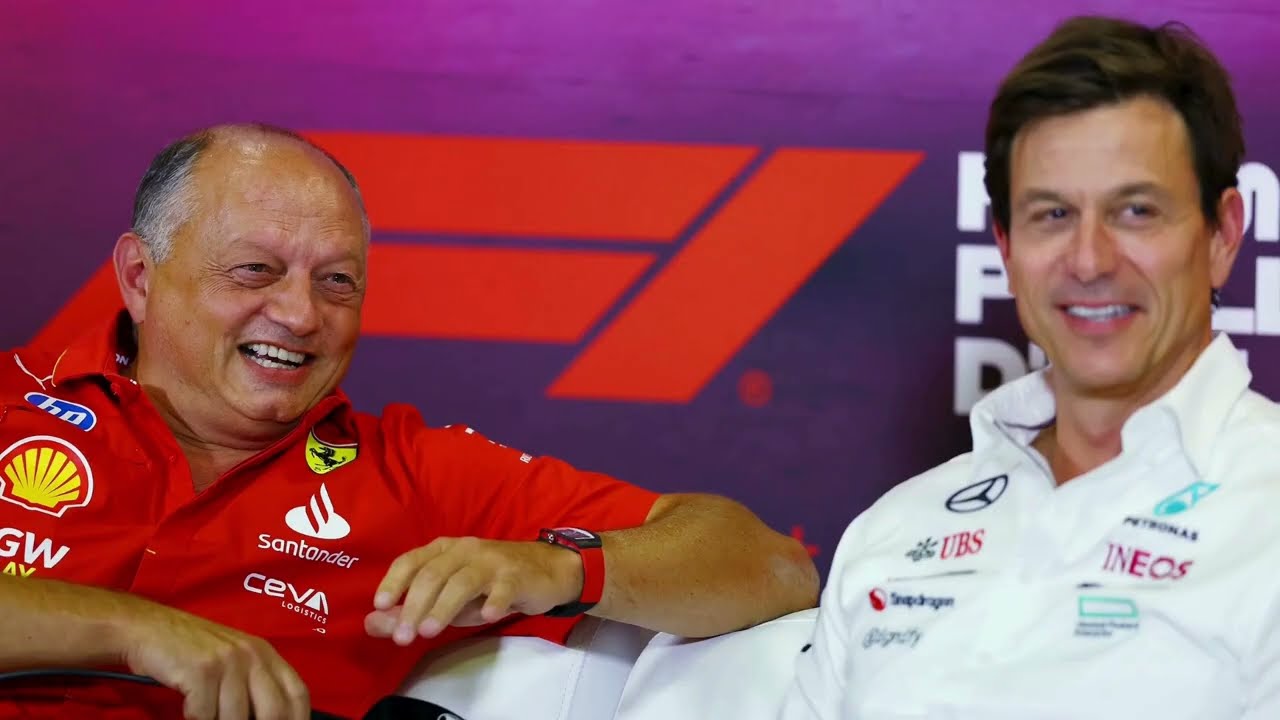
And then came 2025. With Fred Vasseur at the helm, the hope was for a calm, clinical approach. Instead, we saw a regression. Late calls during intermittent rain showers, leaving drivers on slicks for “one more lap” only to lose buckets of time, and baffling tire execution became the norm. The result? A team that should have been fighting for wins often found itself scrambling for minor points, outmaneuvered by sharper operations like McLaren and Red Bull.
The Graveyard of Champions
Ferrari has a unique talent for seducing the world’s greatest drivers and then systematically dismantling their confidence.
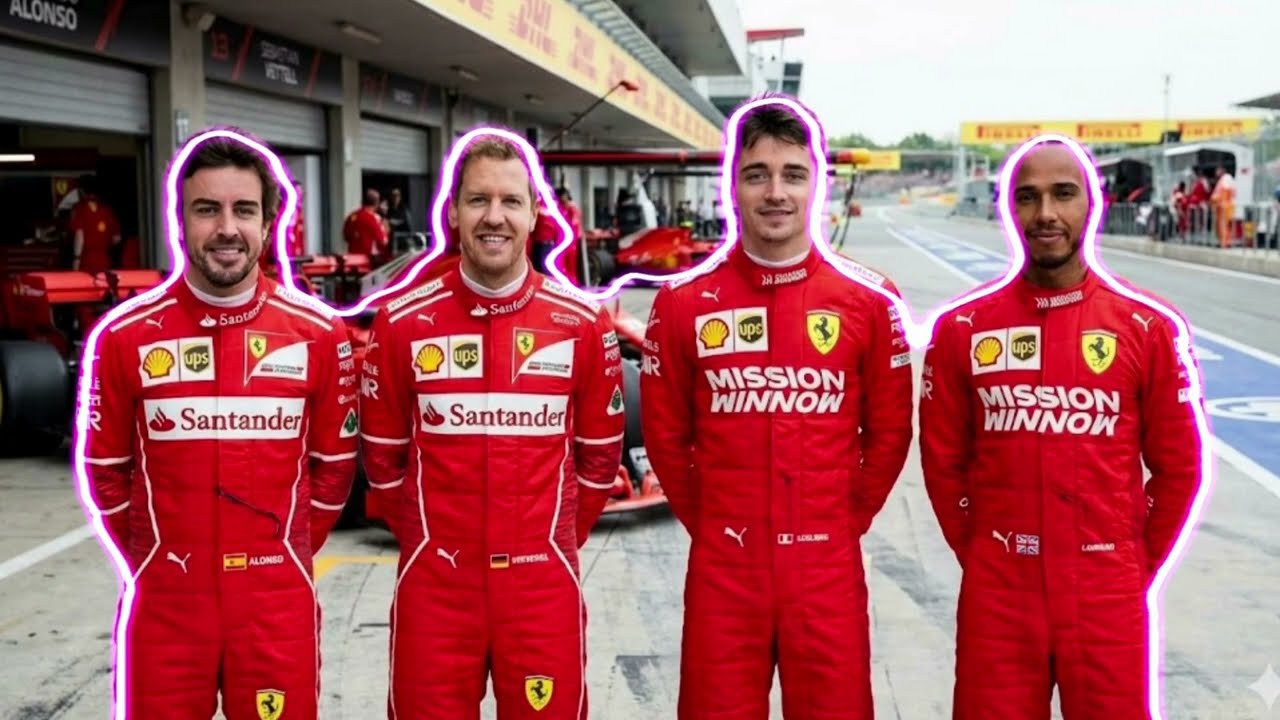
Fernando Alonso gave the team his absolute best years, driving sub-par machinery beyond its limits, only to leave twice, empty-handed and disillusioned. Sebastian Vettel arrived as a four-time world champion, grinning with childhood nostalgia, and left six years later, mentally exhausted and publicly humiliated after being dumped before the delayed 2020 season even began.
The pattern repeated with devastating precision in 2025. The arrival of Lewis Hamilton was heralded as the “signing of the century.” The seven-time champion was supposed to bring the winning mentality the team desperately lacked. Instead, he found himself wrestling with a car that simply didn’t work. Finishing sixth in the Drivers’ Championship, Hamilton spent much of the year seemingly perplexed by the machinery, often outperformed by Leclerc, who has spent his entire career adapting to Ferrari’s flaws.
The dynamic between Hamilton and Leclerc was meant to be a “super team.” By the end of 2025, it felt more like two drowning men fighting over a life raft. The unbalanced team dynamics, fueled by immense media scrutiny, left both drivers frustrated. As Italian commentator Vanzini poignantly noted, Ferrari somehow always manages to “pick the wrong horse” or, more accurately, break the horse they have.
The Engine Saga: Smoke and Mirrors
No discussion of Ferrari’s modern era is complete without addressing the elephant in the room: the power unit.
In 2019, Ferrari suddenly possessed an engine that defied physics. Their straight-line speed was monstrous, leaving rivals to cry foul. The subsequent FIA investigation resulted in a “secret settlement,” the details of which remain sealed. There was no public explanation, only a sudden and dramatic loss of performance.
By 2020, the engine that had terrified Mercedes had turned into a “tractor.” Estimates suggested a loss of 80 to 100 horsepower. The team went from straight-line monsters to midfield misery overnight.
While the scandal faded, the scars remained. Reliability imploded in the ground-effect era, with Leclerc and Carlos Sainz collecting engine DNFs like unwanted souvenirs. Even in 2025, while there were no major cheating scandals, the power unit simply lacked the punch of the Honda or Mercedes units. Ongoing reliability “niggles” prevented the team from building any sustained momentum, contributing heavily to their winless slump.
Managing a Nation, Not a Team
Perhaps the most unique challenge Ferrari faces is its location. Based in Maranello, the team is not just a constructor; it is a national religion.
“At Ferrari, you don’t manage a racing team; you manage Italy’s emotions,” an insider recently noted. This is the core flaw the team refuses to admit. The pressure from the Tifosi does not demand hope; it demands immediate victory. When that victory doesn’t come, the reaction is not analysis—it is panic.
This environment creates a revolving door of leadership. Team principals like Maurizio Arrivabene and Mattia Binotto were ousted not solely because of technical failures, but because the media pressure became unbearable. In 2025, Fred Vasseur, known for his stoicism, showed cracks in his armor, facing intense fire after the team slumped to fourth in the Constructors’ standings.
When the President of Italy is calling the team principal after a bad race—a reality at Ferrari—the ability to make calm, long-term engineering decisions becomes impossible. The “culture of fear” returns, innovation stifles, and the team defaults to conservative, safe, and ultimately losing strategies.
The Aero Dead End
Technically, Ferrari has spent years trapped in a “narrow operating window.” It is the phrase repeated every pre-season testing. Translated, it means the aerodynamics are flawed.
The cars are frequently fast over one lap (hence the pole positions) but catastrophic in race trim. They chew through tires, suffering from degradation rates that make long stints impossible.
The 2025 car was a prime example. A change in rear suspension design, implemented without sufficient prior data, resulted in a car with an unstable rear end. Leclerc described it as a machine that was either “in the wall or through Q1.” Onboard comparisons with Red Bull showed the disparity clearly: the Red Bull glided, while the Ferrari fought the driver in every corner, blending its tires into oblivion.
Is There Hope for 2026?
As we stand in January 2026, looking ahead to the new regulations, the cycle seems poised to repeat or finally break.
The team has halted development on the disastrous 2025 car early to focus entirely on the 2026 challenger. Historically, this “next year is our year” mentality has backfired, as seen when the early shift to the 2022 regulations eventually led to a development dead end.
However, rumors of a major technical hire—whispered to be of “Newey-level” caliber—and the continued partnership of Hamilton and Leclerc offer a glimmer of hope. The 2026 regulations provide a hard reset for the grid. If Ferrari has finally learned that races are won on Sunday, not in the Saturday headlines, they might have a chance.
But for now, the trophy cabinet remains locked, and the echoes of 2007 grow fainter. Ferrari is a team fighting its own ghosts, a prisoner of its own glorious past. Until they stop managing emotions and start managing tires, strategy, and drivers with cold, calculated logic, the Prancing Horse will continue to be F1’s greatest tragedy.






