In the high-octane, multi-billion dollar world of Formula 1, innovation is usually the name of the game. Teams spend hundreds of millions employing the brightest aerodynamicists and engineers to shave mere thousandths of a second off their lap times. But in 2020, one team decided to throw the rulebook of “innovation” out the window and try something infinitely more audacious: imitation.
This is the story of the “Pink Mercedes,” a car that sparked one of the most heated controversies in modern motorsport history. It’s a tale of desperate gambles, technical loopholes, massive financial penalties, and one of the most emotional redemption arcs the sport has ever seen.
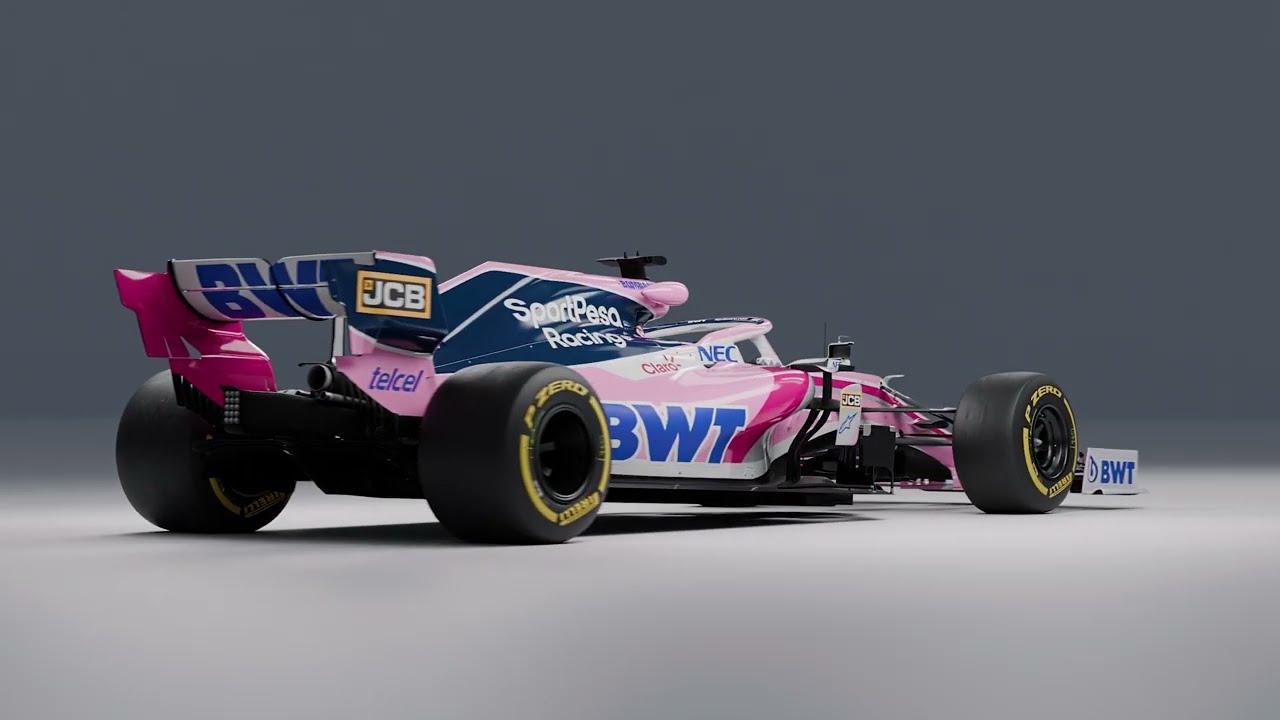
The Desperate Gamble
To understand the scandal, we have to rewind to 2018. The team known as Force India was a plucky, beloved midfield contender. They were the “garagistas” of the modern era—punching well above their weight with a budget that was a fraction of giants like Ferrari or Mercedes. But financial ruin was knocking at the door until Canadian billionaire Lawrence Stroll swooped in with his checkbook, rebranding the outfit as Racing Point.
Suddenly, the team had what they had always craved: money. But in F1, money takes time to translate into speed. The takeover happened too late to influence the 2019 car, and with a massive overhaul of technical regulations looming for 2021, the team found themselves in a strategic bind. They had one year—the 2020 season—to make a splash before everything reset.
Technical Director Andrew Green and his team faced a brutal reality. Their traditional car design philosophy was hitting a dead end. For years, they, like Red Bull, had pursued a “high rake” concept (where the rear of the car is significantly higher than the front). Mercedes, the team that had been crushing everyone for years, used a “low rake” philosophy.
The engineers at Racing Point made a decision that was equal parts genius and terrifying. They looked at the Mercedes W10, the car that dominated the 2019 season, and asked, “What if we just built that?”
The Reveal That Shocked the Paddock
When the covers came off the Racing Point RP20 at pre-season testing in Barcelona in February 2020, jaws hit the floor. The car wasn’t just pink; it was a near-perfect clone of the silver Mercedes from the year before. The nose shape, the complex front wing aerodynamics, the sidepods—it was all there.
The paddock immediately erupted. Gunther Steiner, the fiery team principal of Haas, was furious. Rivals mockingly dubbed the team “Tracing Point.” The accusation was clear: you can’t build a car that complex just by looking at photos. Rivals suspected that data had been shared, that blueprints had been passed under the table—a strict violation of Article 22.3 of the sporting regulations, which prohibits using another team’s intellectual property.
But Racing Point held firm. Their defense? They had simply been very, very good at looking at pictures. They claimed they used spy shots and public photography to reverse-engineer the Mercedes philosophy. It sounded impossible, but without proof of a data transfer, the FIA (Formula 1’s governing body) initially had no grounds to stop them.
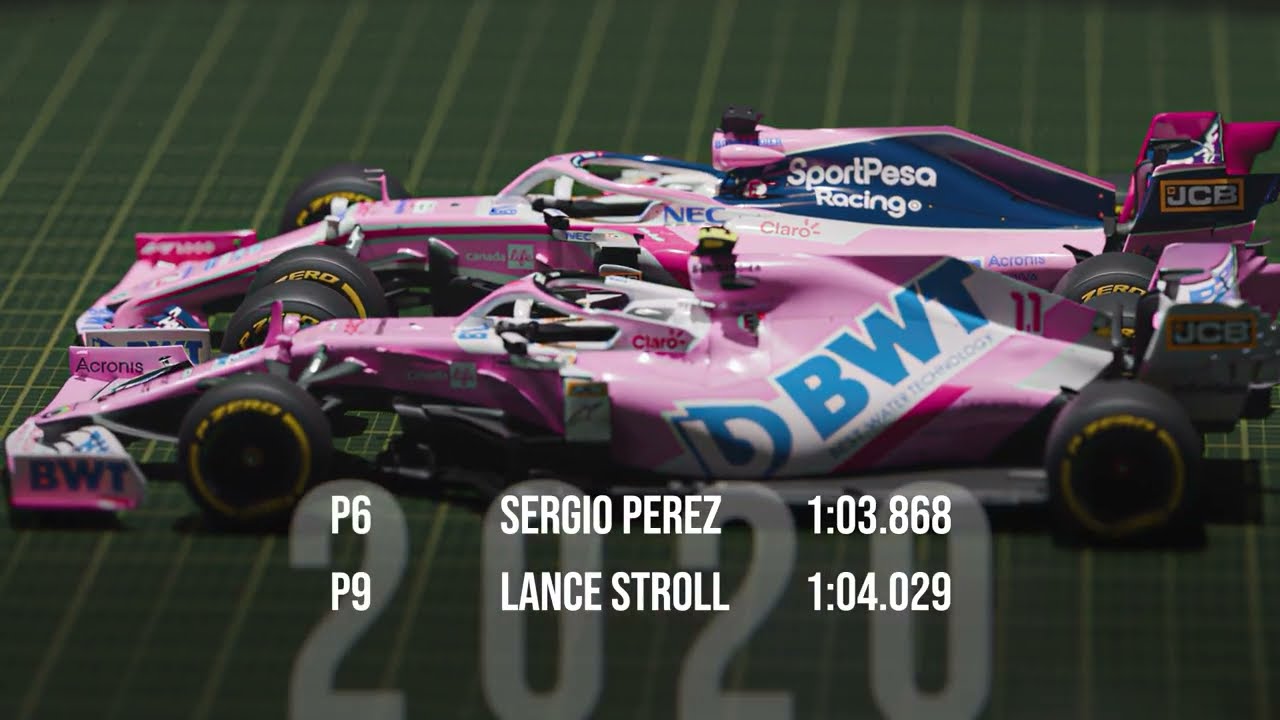
The Technical Miracle
What often gets lost in the “cheating” accusations is the sheer engineering brilliance required to pull this off. You cannot simply bolt Mercedes parts onto a Force India car. The two concepts were fundamentally incompatible.
Imagine trying to put the engine and suspension of a Ferrari into a Ford truck; the pieces just don’t fit. Racing Point had to abandon years of their own knowledge and relearn aerodynamics from scratch. They bought the gearbox and suspension from Mercedes (which was legal), but they had to design the rest of the chassis to make those parts work. If they had miscalculated the “low rake” airflow even slightly, the car would have been a disaster—slow, unstable, and a waste of Stroll’s millions.
Instead, it was a rocket ship.
On the first day of testing, Sergio Perez clocked a time just barely slower than the actual 2020 Mercedes. The midfield teams—McLaren, Renault, and Ferrari (who were having a nightmare season)—suddenly realized their worst fear: the “cloned” car was faster than their original designs.
The Legal War
The 2020 season was delayed by the global pandemic, which only let the tension simmer longer. When racing finally resumed in Austria in July, the Pink Mercedes was flying. But Renault had seen enough. They launched a formal protest, not against the whole car, but against a specific component: the brake ducts.
This was where the “heist” hit a snag. Brake ducts are complex aerodynamic devices. In 2019, teams were allowed to buy them from other teams. Racing Point had legally bought Mercedes brake ducts that year. But for 2020, the rules changed; brake ducts became “listed parts,” meaning teams had to design them themselves.
Racing Point argued that since they bought the design legally in 2019, the knowledge was already in their heads. They couldn’t “unlearn” the design. The FIA didn’t fully agree. In a landmark ruling, they declared that while the rest of the car was legal (you are allowed to copy what you can see), the brake ducts infringed on the sporting regulations regarding design ownership.
The hammer dropped: a €400,000 fine and, more crucially, a 15-point deduction in the Constructor’s Championship. It was a slap on the wrist to some, but a death blow to their championship aspirations.
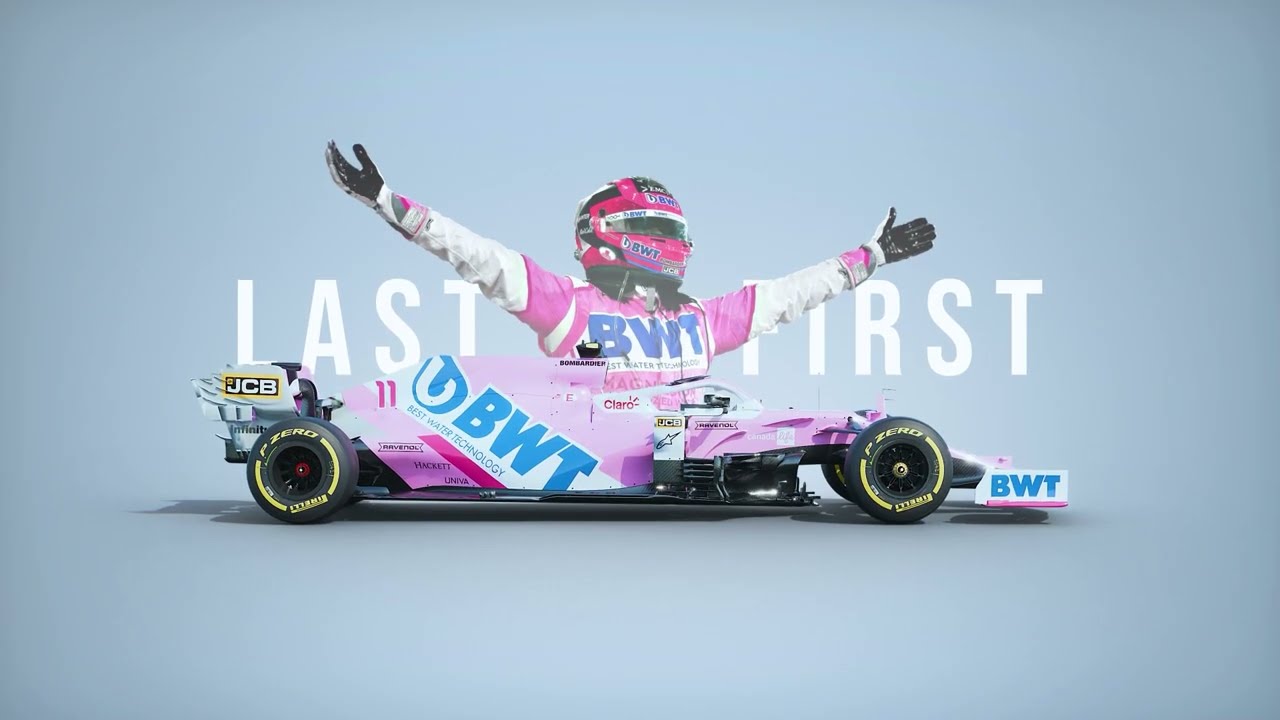
Redemption in the Desert
The drama culminated at the Sakhir Grand Prix. It was a race that belonged in a movie script. Sergio Perez, the team’s loyal driver, had already been told he was being fired at the end of the season to make way for Sebastian Vettel. He was driving for his life, with no seat confirmed for 2021.
On the opening lap, disaster struck. Perez was hit by Charles Leclerc and spun out. He dropped to last place—P18. His race seemed over. But the Pink Mercedes, the car born from controversy, had pace. Incredible pace.
What followed was a masterclass. Perez sliced through the field, overtaking car after car. When a late safety car and a Mercedes pit-stop meltdown (where they accidentally put the wrong tires on George Russell’s car) threw the race into chaos, Perez found himself in the lead.
He held on to take the checkered flag—his first win in 190 starts. It was the first win for the Silverstone-based team since 1998. Watching Perez on the podium, tears streaming down his face as the Mexican national anthem played, even the harshest critics of the “Pink Mercedes” had to pause. It was a moment of pure sporting magic, achieved in a car that everyone said shouldn’t exist.
The Legacy of the Clone
So, was the gamble worth it?
Financially, it was a painful “almost.” Racing Point finished 4th in the championship, just 7 points behind McLaren. Remember that 15-point penalty? Without it, they would have been 3rd, netting them millions more in prize money. The fine and the lost prize money arguably cost Lawrence Stroll more than if they had just developed a modest car themselves.
However, the “Pink Mercedes” did something else. It secured the team’s future. It proved to the world that this team was a serious threat. It saved Sergio Perez’s career, earning him a seat at Red Bull Racing where he would go on to help Max Verstappen win world titles.
The FIA acted swiftly, introducing stricter rules for 2021 to prevent “3D scanning” and extensive reverse engineering, ensuring we will likely never see a “Pink Mercedes” again. It was a one-time loophole, a singular moment in history where a team dared to ask: “Why beat them when we can just be them?”
The 2020 Racing Point car will always be remembered with an asterisk by the record books, but for the fans who watched that pink car charge from last to first under the desert lights, it will be remembered as the beautiful, controversial machine that shook the world of Formula 1.
News

Inside Shane Richie’s love life: Drug – fuelled orgy with six blondes; real reason he split from Coleen Nolan; six-year ‘affair with fan’
Inside Shane Richie’s love life: Orgy with six blondes; real reason he split from Coleen Nolan; six-year ‘affair with fan’ He’s popular with the ladies… Shane Richie…

SH0CKING REVELATI0N:A sh0cking behind-the-scenes secret revealed about Lizzie Rizzini, the woman replacing Carol Kirkwood on the 6pm weather bulletin
BBC viewers still reeling from the departure of Carol Kirkwood got another surprise last night when presenter Lizzie Rizzini appeared to flash her black lace stockings on…

HEARTBREAKING: Peter Andre’s Tearful Message to Son Junior After SHOCKING Revelation About How He Truly Feels Toward Mum Katie Price — Katie Price’s reaction scares fans.
Peter Andre’s emotional message to son Junior after it’s revealed how he really feels about mum Katie Pri… PETER Andre has shared an emotional message to his…

Ben Shephard opens up about the devastating health battle his wife is facing: “She wakes up crying every single morning…”
Inside This Morning Ben Shephard’s Life Including Rarely Seen Wife and Health Battle Ben Shephard is a name synonymous with British television, renowned for his engaging presentation…

🚨 LIVE TV HEARTBREAK: Good Morning Britain Host Announces ‘Devastating’ Dɘath of Guest Minutes Into Show
Viewers of Good Morning Britain were met with heartbreaking news just minutes into Friday’s (January 30) episode, as co-hosts Kate Garraway and Ranvir Singh reported the tragic…

Emmerdale legend Cain Dingle will never be the same again after a shock cancer diagnosis turns his world upside down
FROure Desk. Full Terms and conditions are available on the website http://www.itv.com/presscentre/itvpictures/terms Emmerdale wouldn’t be Emmerdale without the glowering, grunting embodiment of manliness that is Cain Dingle (Jeff Hordley) But…
End of content
No more pages to load






