The wait is finally over, and the silence in the pit lane has been shattered by the roar of ambition. After months of speculation, whispers, and mounting pressure, the Aston Martin AMR26 has broken cover. This isn’t just another car launch; it is a watershed moment in Formula 1 history. It marks the first tangible fruit of the sport’s most aggressive partnership: the unlimited resources of Lawrence Stroll combined with the unbridled genius of Adrian Newey.
For fans and technical analysts alike, the AMR26 represents the “Holy Grail” of the 2026 regulation reset. We have all been waiting to see what the mastermind behind Red Bull’s dominance would create when given a blank check and a clean sheet of paper. But true to form, the reveal was anything but straightforward. In classic Newey fashion, the car arrived fashionably late, missing valuable testing mileage and sparking immediate debate. Is it a masterclass in aerodynamic packaging, or a rush job that’s already on the back foot? Let’s dive deep into the machine that hopes to redefine the grid.
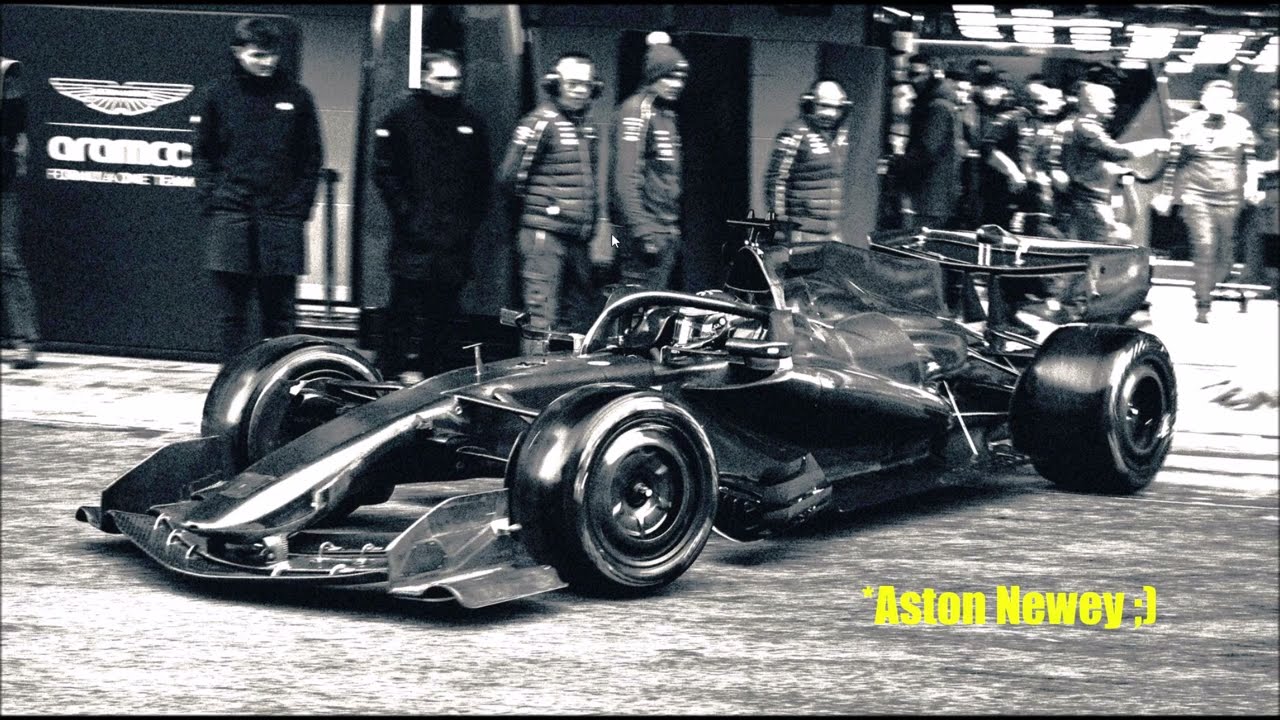
The Stroll-Newey “Paradise”: A Team of Two Titans
To understand the car, you must first understand the unique environment that birthed it. The AMR26 is not the product of a committee. It is not the result of corporate board meetings or shareholder votes. As detailed in recent technical analyses, Aston Martin has become a rarity in modern sport: a dictatorship of performance.
Lawrence Stroll owns the team. He calls the shots. There are no investors in the background demanding safe returns or conservative designs. This structure has created a “paradise” for Adrian Newey. For the first time in arguably his entire career, Newey isn’t just a technical director answering to a team principal; he is a shareholder and a partner. He has no ceiling. If Newey wants to pursue a radical concept, Stroll signs the check. This singular chain of command allows for rapid, aggressive decision-making that other teams, bogged down by bureaucracy, simply cannot match. The AMR26 reflects this freedom—it is bold, uncompromising, and clearly designed without fear.
Fashionably Late: The Gamble of Time
However, freedom comes with risks. The AMR26 was late. While competitors like Mercedes were already racking up kilometers and gathering data, Aston Martin’s garage doors remained closed longer than ideal. This delay is a hallmark of Newey’s philosophy: push the design phase to the absolute limit to find every ounce of downforce, even if it sacrifices track time.
We saw this strategy repeatedly during his tenure at Red Bull. The car would arrive at the last second, often plagued by initial reliability gremlins, only to dominate once the data was sorted. The AMR26 seems to be following this stressful script. Reports indicate the car may have even stopped on track during its shakedown—a potential early warning sign or perhaps just a calculated “system check” right at the session’s end. Regardless, the team is now in a race against time. Every kilometer lost is data missed, particularly regarding the new 2026 power units. Honda needs mileage, and Newey needs aerodynamic validation. They are playing catch-up, but if the car is as fast as they hope, the delay will be a mere footnote in history.
The “Beam Wing” Suspension: A Stroke of Genius?
Visually, the car is a treasure trove of technical intrigue, but one feature stands out immediately: the rear suspension. It is a design that demands you look twice.
The team has positioned the rear wishbones incredibly high, almost horizontal to the rear wing. This isn’t just about holding the wheels on; it’s an aerodynamic device disguised as a mechanical part. By placing these elements so high, Newey has effectively created a secondary “beam wing.” These suspension legs are shaped with wing profiles, meaning they can generate their own downforce and help condition the airflow hitting the rear wing.
But here is where it gets truly fascinating. Because these are suspension parts, they move. As the car squats under acceleration or dives under braking, the angle of these “wings” changes. It is, in essence, a passive form of active aerodynamics—a clever loophole exploitation that allows the car to dynamically adjust its downforce levels based on where it is on the track. It is the kind of detail that makes rival engineers wake up in a cold sweat.
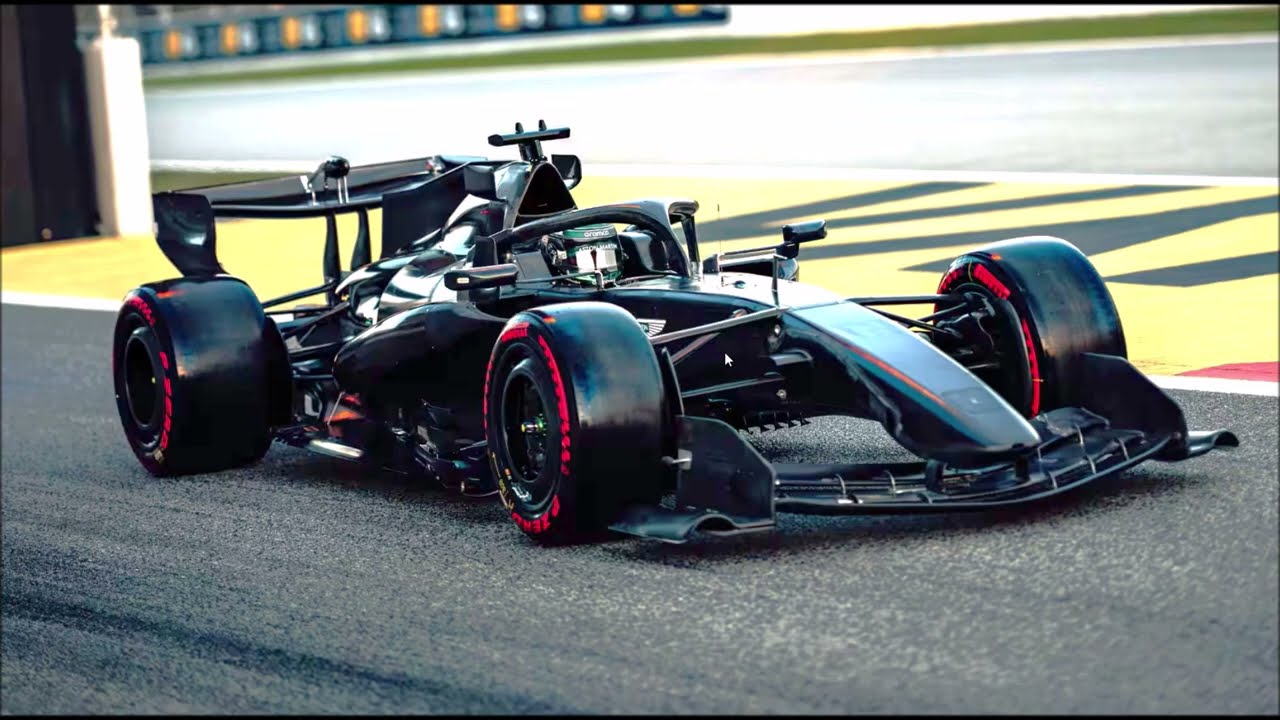
The “Underbite” and the Double-Decker Sidepods
Moving to the center of the car, the design philosophy shifts from mechanical trickery to pure airflow management. The sidepod inlets feature a distinct “underbite”—where the lower lip of the intake protrudes further out than the top.
In the previous generation of ground-effect cars, the priority was often “downwashing”—forcing air from the top of the sidepods down towards the floor edges. The AMR26 flips this script. The underbite suggests a prioritization of the “undercut”—the area carved out underneath the sidepod inlet. By maximizing this space, Newey is channeling a massive volume of clean, high-energy air directly to the rear of the car and the top of the diffuser.
This has resulted in a “double-decker” look, where the sidepod bodywork seems to float above the floor. It’s a complex geometry that requires a robust floor structure to support, but the payoff is potentially huge. A cleaner diffuser means more rear downforce, which stabilizes the car and allows for faster cornering speeds. It’s an aggressive evolution of concepts we’ve seen hinted at before, but taken to an extreme that only a clean-sheet design could allow.
The Anti-Dive Gamble: Killing the Feel for Speed?
Perhaps the most controversial aspect of the AMR26 is its front suspension geometry. The car features an extreme “anti-dive” setup. In simple terms, this arrangement prevents the nose of the car from dipping down when the driver hits the brakes.
While this sounds beneficial for keeping the car’s aerodynamic platform stable (keeping the floor at a consistent height), it comes at a cost: driver feel. Anti-dive geometry can make the front wheels feel numb, robbing the driver of the feedback they need to sense grip levels under braking. It was a necessary evil in the ground-effect era, but many expected teams to back off this design for 2026 to help drivers.
Newey, however, has gone the other way. The AMR26’s anti-dive is even more extreme than before. This suggests the team has found so much aerodynamic performance in a stable platform that they are willing to sacrifice driver comfort to keep it. It will be a massive test for the drivers, who will need to trust the machine implicitly without feeling the usual cues through the steering wheel.
The “Fake” Front Wing: What Are They Hiding?
If you looked at the front wing of the AMR26 and felt underwhelmed, you weren’t alone. The nose is thick, the wing elements are simplistic, and the endplates lack the intricate detailing seen on rivals. But do not be fooled.
In Formula 1 launch season, deception is part of the game. The “vanilla” front wing seen in the reveal is almost certainly a placeholder—a “launch spec” component designed to let the car run without giving away the team’s true aerodynamic secrets. The nose features a mysterious air inlet that has experts puzzled, and there appears to be tape covering cabling near the suspension mounts, hinting at sensors or active mechanisms that aren’t ready for public eyes.
The rear wing also looks like a work in progress, with linkage systems that appear temporary or experimental. Newey knows that the front wing and nose are the easiest parts to change later. The “real” magic is in the chassis packaging and the floor—things that cannot be copied overnight. By showing us a basic front wing, Aston Martin is saying, “Look here, but don’t look too closely.”
Conclusion: A Season of High Stakes
The Aston Martin AMR26 is a car of contradictions. It is late, yet rushed. It is visually simple in some areas, yet radically complex in others. It is a machine built by a team with infinite resources but limited time.
As the F1 circus heads toward the first race, all eyes will be on that green garage. If the “beam wing” suspension works, and if the extreme anti-dive geometry doesn’t alienate the drivers, Adrian Newey may have just delivered the masterpiece Lawrence Stroll paid for. But if the reliability gremlins from the delayed launch persist, it could be a long, difficult year of playing catch-up. One thing is certain: the AMR26 is the most interesting car on the grid, and its story is only just beginning.
News

Inside Shane Richie’s love life: Drug – fuelled orgy with six blondes; real reason he split from Coleen Nolan; six-year ‘affair with fan’
Inside Shane Richie’s love life: Orgy with six blondes; real reason he split from Coleen Nolan; six-year ‘affair with fan’ He’s popular with the ladies… Shane Richie…

SH0CKING REVELATI0N:A sh0cking behind-the-scenes secret revealed about Lizzie Rizzini, the woman replacing Carol Kirkwood on the 6pm weather bulletin
BBC viewers still reeling from the departure of Carol Kirkwood got another surprise last night when presenter Lizzie Rizzini appeared to flash her black lace stockings on…

HEARTBREAKING: Peter Andre’s Tearful Message to Son Junior After SHOCKING Revelation About How He Truly Feels Toward Mum Katie Price — Katie Price’s reaction scares fans.
Peter Andre’s emotional message to son Junior after it’s revealed how he really feels about mum Katie Pri… PETER Andre has shared an emotional message to his…

Ben Shephard opens up about the devastating health battle his wife is facing: “She wakes up crying every single morning…”
Inside This Morning Ben Shephard’s Life Including Rarely Seen Wife and Health Battle Ben Shephard is a name synonymous with British television, renowned for his engaging presentation…

🚨 LIVE TV HEARTBREAK: Good Morning Britain Host Announces ‘Devastating’ Dɘath of Guest Minutes Into Show
Viewers of Good Morning Britain were met with heartbreaking news just minutes into Friday’s (January 30) episode, as co-hosts Kate Garraway and Ranvir Singh reported the tragic…

Emmerdale legend Cain Dingle will never be the same again after a shock cancer diagnosis turns his world upside down
FROure Desk. Full Terms and conditions are available on the website http://www.itv.com/presscentre/itvpictures/terms Emmerdale wouldn’t be Emmerdale without the glowering, grunting embodiment of manliness that is Cain Dingle (Jeff Hordley) But…
End of content
No more pages to load






