In the smoke and mirrors world of Formula 1 pre-season testing, the stopwatch is often a liar. Teams sandbag, run heavy fuel loads, and hide their true pace to lull their rivals into a false sense of security. But sometimes, the deception goes much deeper than just turning down the engine mode. As the paddock shifts its focus from the Barcelona shakedown to the brutal heat of Bahrain, a startling picture of the 2026 Ferrari SF-26 is emerging—one that paints a portrait of a car that is simultaneously an engineering masterpiece and a potential strategic disaster.
The narrative emerging from Maranello is a complex tapestry of technical brilliance, regulatory loopholes, and a brewing political storm that threatens to engulf the championship before the first light goes out in Melbourne. Ferrari has built a weapon, but they might be struggling to find the right ammunition to fire it.
The Weight Watchers Champion
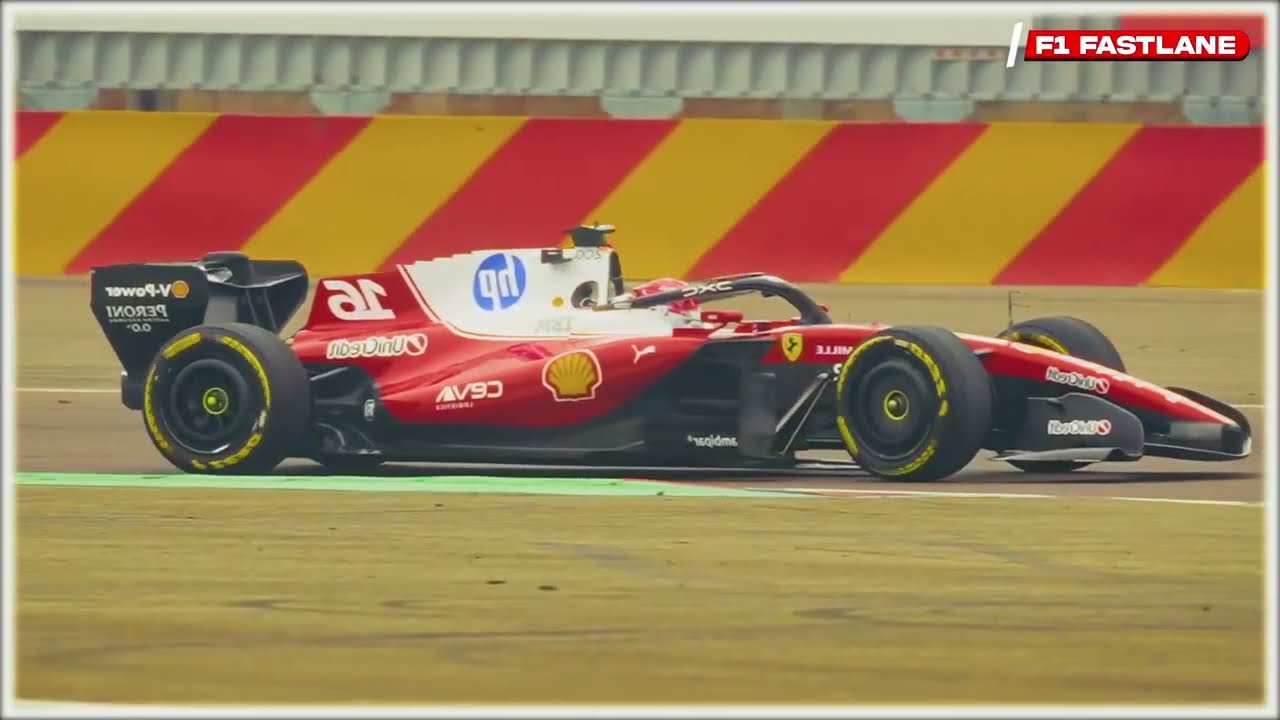
Let’s start with the good news—and it is very good news for the Tifosi. The Ferrari SF-26 is a featherweight in a heavyweight division. Confirmed reports indicate that the new challenger weighs in at a mere 770 kilograms. To put that into perspective, the minimum legal weight limit for the 2026 regulations is 768 kilograms. Ferrari has missed the absolute floor by just two kilos.
In isolation, two kilograms sounds like a rounding error. You might lose that much water weight in a sauna. But in Formula 1, where engineers would sell their grandmothers for a tenth of a second, this is a monumental achievement. Compare this to the Mercedes W17, which is reportedly tipping the scales at 772 kilograms, or the Williams FW48 at 772.4 kilograms. Ferrari has arrived at the starting line with a fundamental physical advantage.
Being this close to the weight limit doesn’t just mean the car accelerates slightly faster. It hands the engineering team the “Holy Grail” of vehicle dynamics: the freedom to use ballast. Because the car is naturally light, Ferrari can take dense tungsten weights and place them strategically around the chassis to optimize the center of gravity. At a front-limited track like Silverstone, they can shift the weight forward to pin the nose. At a traction-heavy circuit like Monaco, they can move it rearward. Their rivals, whose cars are naturally heavier, do not have this luxury; they are stuck with the weight distribution they built into the chassis.
This weight savings wasn’t an accident. It was born from a ruthless aggression in packaging. Technical Director Loic Serra has overseen a design that shrinks the wheelbase from 3,600mm to 3,400mm and narrows the car significantly. By switching to a push-rod suspension layout, they have cleaned up the aerodynamics and shaved off precious grams. On paper, the SF-26 is the most agile car on the grid.
The Shell Fuel Crisis: A Ticking Time Bomb
However, a race car is useless without fuel, and this is where the Ferrari story takes a dark and concerning turn. It has emerged that the blistering lap times set by the SF-26 in Barcelona may have been a mirage powered by “illegal” fuel.
During the shakedown, the FIA granted teams a temporary exemption to test with non-compliant fuel blends because supply chains for the new 2026 sustainable fuels were still being finalized. Ferrari took full advantage of this. Every promising lap data point we have seen from the red car was likely powered by a fuel mixture that will be banned the moment the cars hit the track for the first Grand Prix.
The core of the problem lies with Ferrari’s long-time partner, Shell. While rivals like Petronas (Mercedes), ExxonMobil (Red Bull), and Aramco (Aston Martin) have pursued “e-fuels”—synthetic fuels created by capturing carbon from the atmosphere and chemically combining it with hydrogen—Shell has taken a different path. They have opted for advanced bio-fuels generated from organic waste.
According to whispers in the paddock, this was the wrong bet. Shell’s bio-fuel blend is rumored to be the least advanced and least energy-dense option on the grid. E-fuels offer a more consistent, potent burn, mimicking the characteristics of traditional petrol more closely. By contrast, bio-fuels can suffer from batch inconsistencies and lower energy output.
The contrast is starkest with Aston Martin. Their partner, Aramco, has already run a full season supplying 100% sustainable fuel to the entire Formula 2 and Formula 3 grids. they have millions of kilometers of real-world combustion data. Shell is effectively playing catch-up. If the mandatory legal fuel Ferrari uses in Bahrain produces significantly less power than the “juice” they used in Barcelona, the SF-26’s weight advantage could evaporate instantly. You can have the lightest car in the world, but if the engine is coughing on inferior fuel, you will be a sitting duck on the straights.
The “Handbrake” Effect: A Driver’s Nightmare
The concerns don’t stop at the fuel tank. They extend into the very way the car must be driven, and this revelation is setting off alarm bells for Charles Leclerc.
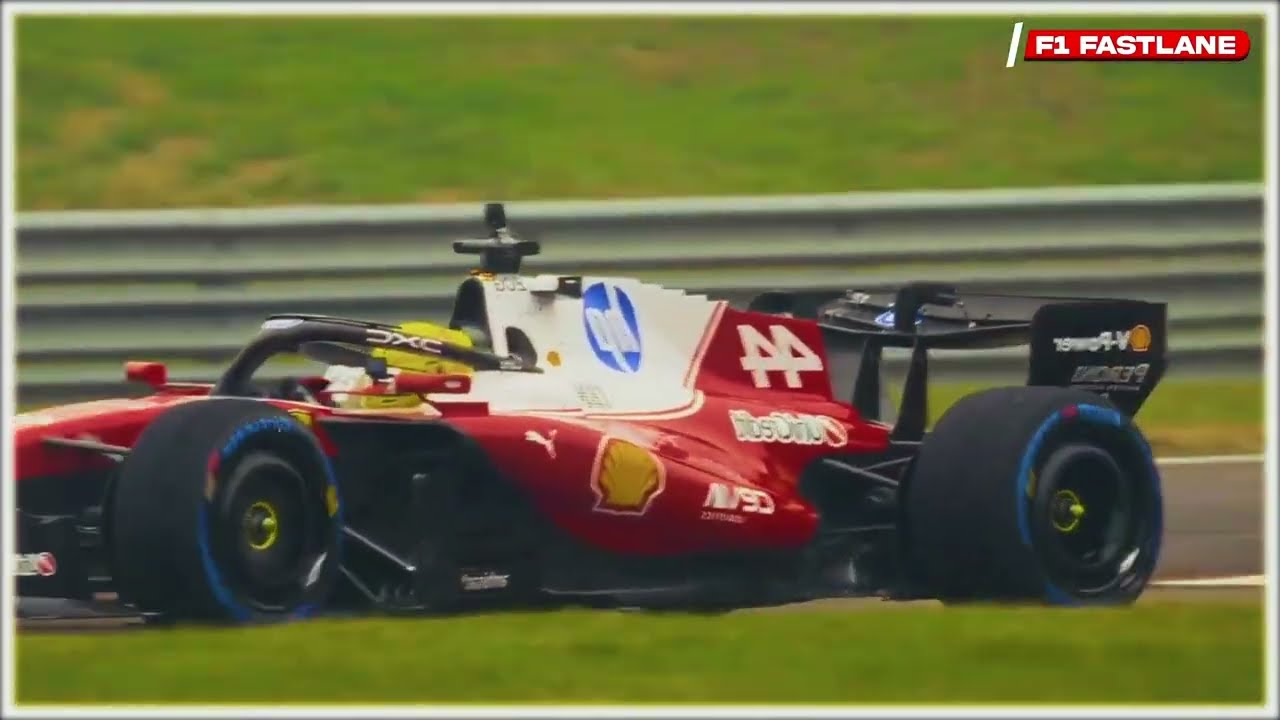
Haas, Ferrari’s customer team, logged an impressive number of laps in Barcelona, providing crucial data on the Ferrari power unit. But Haas driver Esteban Ocon revealed a terrifying characteristic of the new engine package. He admitted that during qualifying simulations—the one time a driver should be pushing flat out—he was forced to “lift and coast.”
Ocon described the sensation as hitting a “handbrake” at the end of the straights. The issue is energy deployment. The 2026 regulations rely heavily on a 50/50 split between combustion power and electrical power. It appears the Ferrari power unit drains its battery so rapidly that it simply runs out of juice before the braking zone arrives. To prevent the car from effectively stalling its acceleration, the driver must lift off the throttle early to save energy.
For a driver like Max Verstappen or Fernando Alonso, who are masters of adaptation, this is a hurdle. For Charles Leclerc, it is a wall. Leclerc has a well-documented history of struggling with lift-and-coast instructions, often finding it disrupts his rhythm and tire preparation. In Singapore 2025, he was radioed to lift and coast 16 times, leading to visible frustration. If the Ferrari requires this unnatural driving style even on a qualifying lap, it neutralizes Leclerc’s greatest strength: his raw, on-the-limit aggression over a single lap.
The Civil War: Engineering or Cheating?
While Ferrari battles its own technical gremlins, it is also launching an offensive against its rivals. A quiet but brutal war has broken out in the technical offices. Ferrari, joined by Audi and Honda, has sent a formal letter to the FIA accusing Mercedes and Red Bull of exploiting a loophole regarding compression ratios.
The rule states a maximum compression ratio of 16:1. However, the accusation is that Mercedes and Red Bull have designed engine components that thermally expand under the intense heat of race conditions. While they measure legal 16:1 in the cold inspection bay, on the track, the metal expands to create a compression ratio closer to 18:1.
This “thermal expansion trick” is estimated to be worth between 10 and 15 brake horsepower. In the tight margins of F1, that is worth two to four-tenths of a second per lap. That is the difference between pole position and the third row. Ferrari and its allies are demanding a clampdown, but proving the violation is a nightmare of physics and measurement. Expect this to result in protests as early as the Australian Grand Prix, potentially deciding race results in the steward’s room rather than on the track.
Red Bull’s Quiet Confidence
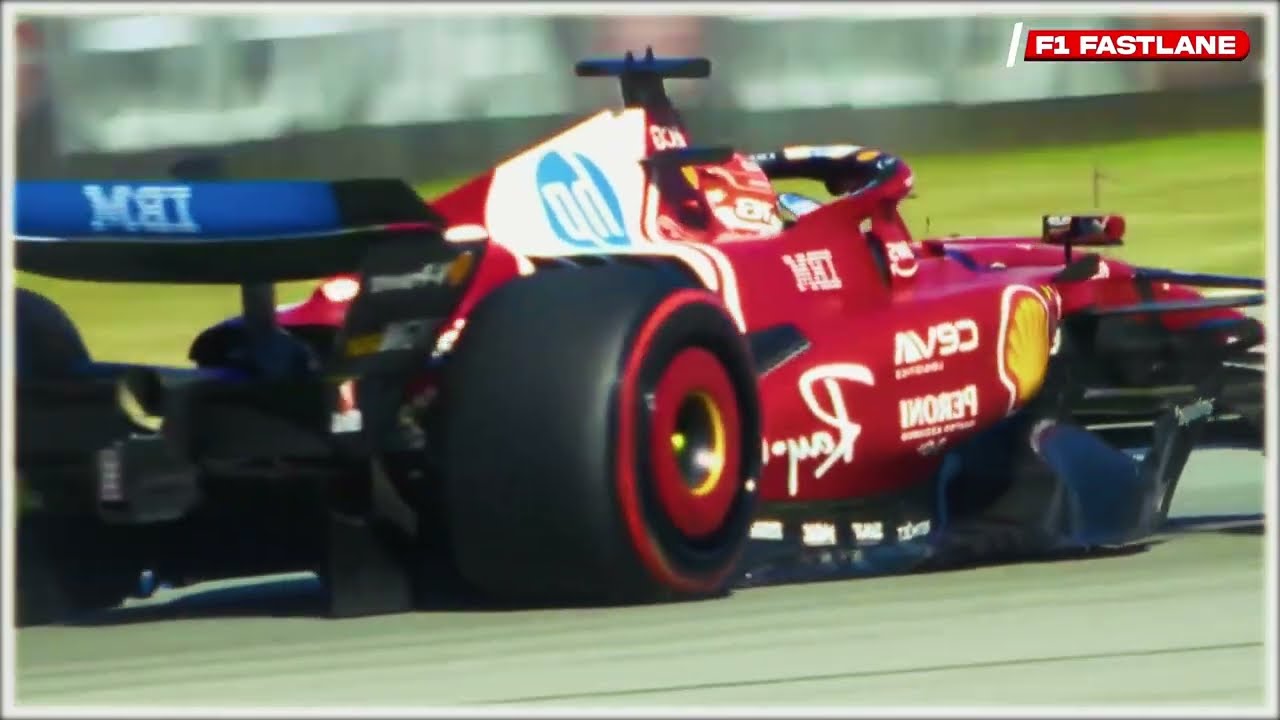
Amidst Ferrari’s drama, Red Bull has been terrifyingly quiet. The new Red Bull-Ford partnership, specifically the DM01 power unit (a tribute to Dietrich Mateschitz), ran almost flawlessly. Between the main team and the Racing Bulls, the Red Bull powertrain accumulated 622 laps in Barcelona—more than any other new manufacturer.
They aren’t chasing headlines. They are building a database. While Ferrari worries about fuel chemistry and battery depletion, Red Bull is refining a package that looks bulletproof.
The Moment of Truth
As the teams set up in Bahrain, the reality is stark. Ferrari has built a chassis that is a work of art—light, agile, and aerodynamically efficient. But a Formula 1 car is a complex organism, not just a sculpture. The SF-26 is currently held back by a fuel supply that might be second-rate and an energy deployment strategy that forces drivers to drive slowly to go fast.
Bahrain will strip away the exemptions and the excuses. When the SF-26 is forced to run on legal Shell fuel in 36-degree heat, we will see if the “prancing horse” is a thoroughbred stallion or a fragile show pony. The weight advantage is real, but in the brutal math of 2026, it might not be enough to save them.
News

Inside Shane Richie’s love life: Drug – fuelled orgy with six blondes; real reason he split from Coleen Nolan; six-year ‘affair with fan’
Inside Shane Richie’s love life: Orgy with six blondes; real reason he split from Coleen Nolan; six-year ‘affair with fan’ He’s popular with the ladies… Shane Richie…

SH0CKING REVELATI0N:A sh0cking behind-the-scenes secret revealed about Lizzie Rizzini, the woman replacing Carol Kirkwood on the 6pm weather bulletin
BBC viewers still reeling from the departure of Carol Kirkwood got another surprise last night when presenter Lizzie Rizzini appeared to flash her black lace stockings on…

HEARTBREAKING: Peter Andre’s Tearful Message to Son Junior After SHOCKING Revelation About How He Truly Feels Toward Mum Katie Price — Katie Price’s reaction scares fans.
Peter Andre’s emotional message to son Junior after it’s revealed how he really feels about mum Katie Pri… PETER Andre has shared an emotional message to his…

Ben Shephard opens up about the devastating health battle his wife is facing: “She wakes up crying every single morning…”
Inside This Morning Ben Shephard’s Life Including Rarely Seen Wife and Health Battle Ben Shephard is a name synonymous with British television, renowned for his engaging presentation…

🚨 LIVE TV HEARTBREAK: Good Morning Britain Host Announces ‘Devastating’ Dɘath of Guest Minutes Into Show
Viewers of Good Morning Britain were met with heartbreaking news just minutes into Friday’s (January 30) episode, as co-hosts Kate Garraway and Ranvir Singh reported the tragic…

Emmerdale legend Cain Dingle will never be the same again after a shock cancer diagnosis turns his world upside down
FROure Desk. Full Terms and conditions are available on the website http://www.itv.com/presscentre/itvpictures/terms Emmerdale wouldn’t be Emmerdale without the glowering, grunting embodiment of manliness that is Cain Dingle (Jeff Hordley) But…
End of content
No more pages to load






