A new and invisible war has broken out in the high-stakes world of Formula 1. It is not being fought on the asphalt of Silverstone or the tight corners of Monaco, nor is it a battle for the most powerful engine or the sleekest aerodynamics. This is a secret, desperate struggle taking place within the sterile walls of design offices and carbon fiber factories across the globe. It is a battle against the scales, and right now, the teams are losing.
As the sport prepares for the most significant technical revolution in a generation with the upcoming 2026 regulations, reports are emerging of a widespread crisis that could define the competitive order for years to come. The problem is simple yet devastating: the new cars are drastically overweight. In a sport where performance is measured in thousandths of a second, this “battle of the bulge” threatens to humiliate top teams and reshape the championship hierarchy before a single wheel turns in anger.
The Era of the “Bloated” F1 Car
To understand the magnitude of this panic, one must look at the trajectory of Formula 1 design over the last two decades. For years, both drivers and fans have lamented the increasing size and weight of Grand Prix machinery. These incredible feats of engineering have slowly transformed from nimble racers into sluggish giants.
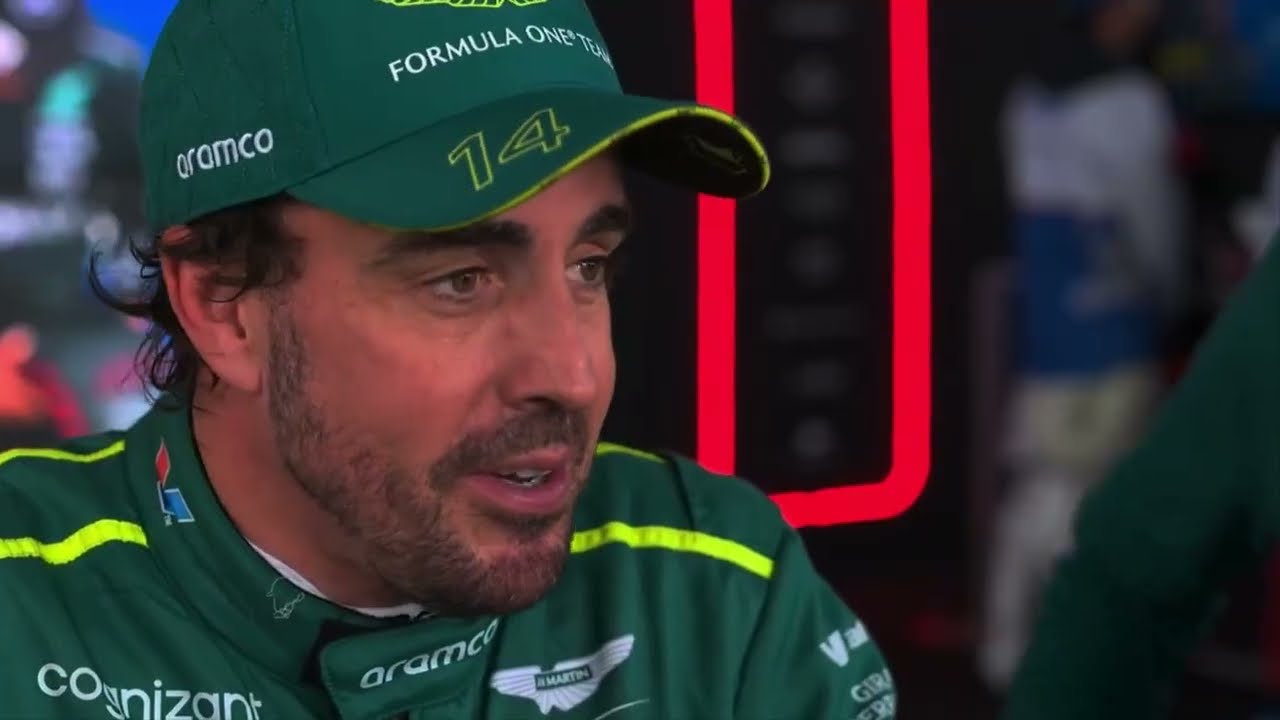
Perspective is key here. When veteran champion Fernando Alonso made his Formula 1 debut in 2001, the cars weighed less than 600 kilograms. They were agile, twitchy, and visibly fast. Fast forward to the 2025 season, and the cars tipped the scales at a massive 800 kilograms. That is an increase of over 200 kilos—roughly the equivalent of strapping two large adult passengers into the cockpit alongside the driver.
The FIA (Fédération Internationale de l’Automobile), the sport’s governing body, finally decided to intervene for 2026. In an attempt to improve racing and responsiveness, they introduced regulations demanding a significant weight reduction. The new target minimum weight is set at 768 kilograms, a drop of roughly 30 kilograms. Furthermore, the physical footprint of the cars is shrinking: the wheelbase is being reduced by 200 millimeters, and the width is being cut by 100 millimeters. On paper, this sounds like the perfect solution—a return to the lighter, more agile cars of the past. However, in reality, it has birthed an engineering nightmare.
The Great Technical Paradox
The core of the crisis lies in a fundamental contradiction within the 2026 rulebook. While the regulations demand a lighter, smaller chassis, the requirements for the power unit have shifted in the opposite direction. The new engine regulations mandate a near 50/50 split between the internal combustion engine and electric power.
This shift represents a massive leap in hybrid performance, but it comes with a heavy price tag—literally. The battery systems required to store, manage, and deploy this immense amount of electrical energy are significantly larger and heavier than the current units. This has left engineers facing an impossible puzzle: they must build a car that is physically lighter than its predecessor while accommodating a powertrain that is substantially heavier.
It is a contradiction that has left technical directors sleepless. This isn’t a matter of shaving a few grams off a wing mirror or using lighter screws. This challenge requires a complete, ground-up rethink of the car’s architecture. The pieces of the puzzle simply do not fit together, and the pressure to solve this riddle is immense.

The Brutal Cost of Excess Weight
Why does weight matter so much? In Formula 1, weight is the enemy of speed. The physics are unforgiving. Current estimates suggest that every 10 kilograms of excess weight costs a car approximately three-tenths (0.3) of a second per lap.
To the casual observer, three-tenths of a second might seem negligible—a blink of an eye. In Formula 1, it is an eternity. It is the difference between starting on pole position and languishing in the midfield. It is the gap between a podium finish and fighting for scraps outside the points.
We have already seen a preview of how destructive weight issues can be. In the 2024 season, the Alpine team arrived at the first race with a car reportedly 10 kilograms overweight. The result was catastrophic. They were nowhere near the pace, effectively racing at the back of the grid. It took them until the Miami Grand Prix in May to shed the weight and reach the minimum limit. By then, their season was effectively a write-off.
Now, paddock insiders are predicting a similar scenario for 2026, but on a much larger, grid-wide scale. Reports suggest that very few, if any, teams will be able to hit the 768-kilogram minimum weight target at the start of the season. The variance between the teams that get it right and those that get it wrong could be massive. If the gap between the lightest and heaviest cars stretches to over 10 kilograms, we could see a performance disparity that renders the racing uncompetitive. This hidden advantage—or disadvantage—will shape the entire championship narrative.
Voices of Concern from the Paddock
The panic is not just speculation; it is being voiced by the most senior figures in the sport. James Vowles, the Team Principal at Williams, has been candid about the monumental challenge facing the grid. He recently told the media that he expects most teams to be overweight, describing the 768kg limit as a “very aggressive target.”
While Vowles believes the target might be manageable in the long run as technology evolves, he admits the start of the new era will be a struggle. Mercedes Technical Director Andrew Shovlin echoed these sentiments, revealing the arbitrary nature of the rule. “The limit wasn’t set by summing components,” Shovlin explained. “It was simply imposed.”
This distinction is crucial. Usually, engineering targets are based on the sum of the necessary parts. In this case, the FIA set a number based on a desired outcome, leaving the teams to figure out the “how.” Shovlin noted that removing weight before parts are manufactured is cheap, but trying to shave weight off a finished car is incredibly expensive and disrupts development. The goal for every top team is to start the season as close to the limit as possible, but the fear of failure is palpable.
The Panic: Behind Closed Doors
The anxiety surrounding the new cars is so intense that it has led to an unprecedented decision regarding the pre-season testing schedule. The first test for the 2026 cars, scheduled for late January in Barcelona, will be held completely behind closed doors.
This means no live television broadcast, no media access, and no prying eyes. In an era where Formula 1 has exploded in popularity thanks to Drive to Survive, and where every moment is usually documented for global consumption, this blackout is telling. The teams are terrified.
They fear a repeat of the disastrous 2014 pre-season testing, the last time a major engine regulation change occurred. Back then, cars were breaking down, catching fire, and failing to complete laps. It was embarrassing for the manufacturers and the sport. With the eyes of the world now firmly fixed on F1, the teams are desperate to avoid a public display of unreliability and “fat” cars. They want to work out the bugs in private, away from the scrutiny of the press and the judgment of social media.
James Vowles summed up the uncertainty perfectly, admitting, “We don’t know where we are with synthetic fuel, we don’t know where we are on the fuel system… and we don’t know where we’re at on the power unit yet.” He predicts that many cars will spend long periods stuck in the garage during these early tests.
The Race for Materials
So, how do you solve an unsolvable problem? You get radical. The battle for the 2026 World Championship is currently being fought with materials science. Every single component of the car is being re-examined under a microscope.
Teams are turning to exotic, lightweight materials to shave off precious grams. Carbon fiber composites, titanium, and even magnesium alloys are being utilized in new and creative ways. The monocoque, the gearbox casing, suspension arms—nothing is safe from the weight-saving crusade.
The obsession has reached such extreme levels that engineers are looking at the weight of wiring looms and even the paint on the bodywork. We have seen teams strip paint off their cars in recent years to save weight, leaving bare carbon fiber exposed. In 2026, this aesthetic might become the norm rather than the exception. Every gram matters.
Conclusion: The Survival of the Lightest
The 2026 season is shaping up to be a game of survival. The teams that can get closest to the 768-kilogram limit will have an instant, built-in advantage that no amount of driving talent can overcome. Conversely, those that start the season overweight will be trapped in a vicious cycle: trying to add performance upgrades to a car that is already too heavy.
The FIA has acknowledged the aggression of the target, with Single Seater Director Nikolas Tombazis stating they want cars to be even lighter in the future. But for now, the teams must contend with the reality in front of them.
The battle lines have been drawn, not on the grid, but on the blueprint. The team that wins the “Weight War” will likely be the team lifting the trophy at the end of the year. As for the rest? They will be left carrying the heavy burden of defeat.
News

Inside Shane Richie’s love life: Drug – fuelled orgy with six blondes; real reason he split from Coleen Nolan; six-year ‘affair with fan’
Inside Shane Richie’s love life: Orgy with six blondes; real reason he split from Coleen Nolan; six-year ‘affair with fan’ He’s popular with the ladies… Shane Richie…

SH0CKING REVELATI0N:A sh0cking behind-the-scenes secret revealed about Lizzie Rizzini, the woman replacing Carol Kirkwood on the 6pm weather bulletin
BBC viewers still reeling from the departure of Carol Kirkwood got another surprise last night when presenter Lizzie Rizzini appeared to flash her black lace stockings on…

HEARTBREAKING: Peter Andre’s Tearful Message to Son Junior After SHOCKING Revelation About How He Truly Feels Toward Mum Katie Price — Katie Price’s reaction scares fans.
Peter Andre’s emotional message to son Junior after it’s revealed how he really feels about mum Katie Pri… PETER Andre has shared an emotional message to his…

Ben Shephard opens up about the devastating health battle his wife is facing: “She wakes up crying every single morning…”
Inside This Morning Ben Shephard’s Life Including Rarely Seen Wife and Health Battle Ben Shephard is a name synonymous with British television, renowned for his engaging presentation…

🚨 LIVE TV HEARTBREAK: Good Morning Britain Host Announces ‘Devastating’ Dɘath of Guest Minutes Into Show
Viewers of Good Morning Britain were met with heartbreaking news just minutes into Friday’s (January 30) episode, as co-hosts Kate Garraway and Ranvir Singh reported the tragic…

Emmerdale legend Cain Dingle will never be the same again after a shock cancer diagnosis turns his world upside down
FROure Desk. Full Terms and conditions are available on the website http://www.itv.com/presscentre/itvpictures/terms Emmerdale wouldn’t be Emmerdale without the glowering, grunting embodiment of manliness that is Cain Dingle (Jeff Hordley) But…
End of content
No more pages to load






