When the Formula 1 circus rolls into town, it arrives with the subtlety of a jet engine. The skyline of Las Vegas or the harbor of Monte Carlo transforms into a playground for the ultra-elite, a dazzling spectacle of $20 million cars, billion-dollar yachts, and champagne that costs more than a year’s worth of mortgage payments. To the casual observer, F1 looks like the ultimate money-printing machine. It is, after all, the fastest-growing sport on the planet, with a valuation that has tripled in the last five years to over $30 billion. But peel back the layers of gloss and glamour, and a far uglier picture emerges.
If you look closely at the balance sheets of the cities hosting these races, you won’t see the windfall of prosperity promised by politicians. Instead, you’ll find cracked asphalt on abandoned tracks in Korea, corruption trials in Vietnam, and small business owners in Las Vegas begging for relief funds. We are told that hosting an F1 race is the ultimate status symbol for a global city—a guarantee of tourism, investment, and prestige. But for the vast majority of host cities, Formula 1 is not an investment. It is a sophisticated financial trap designed to extract public tax dollars and funnel them directly into the pockets of a media conglomerate, leaving locals with nothing but debt and tire marks.
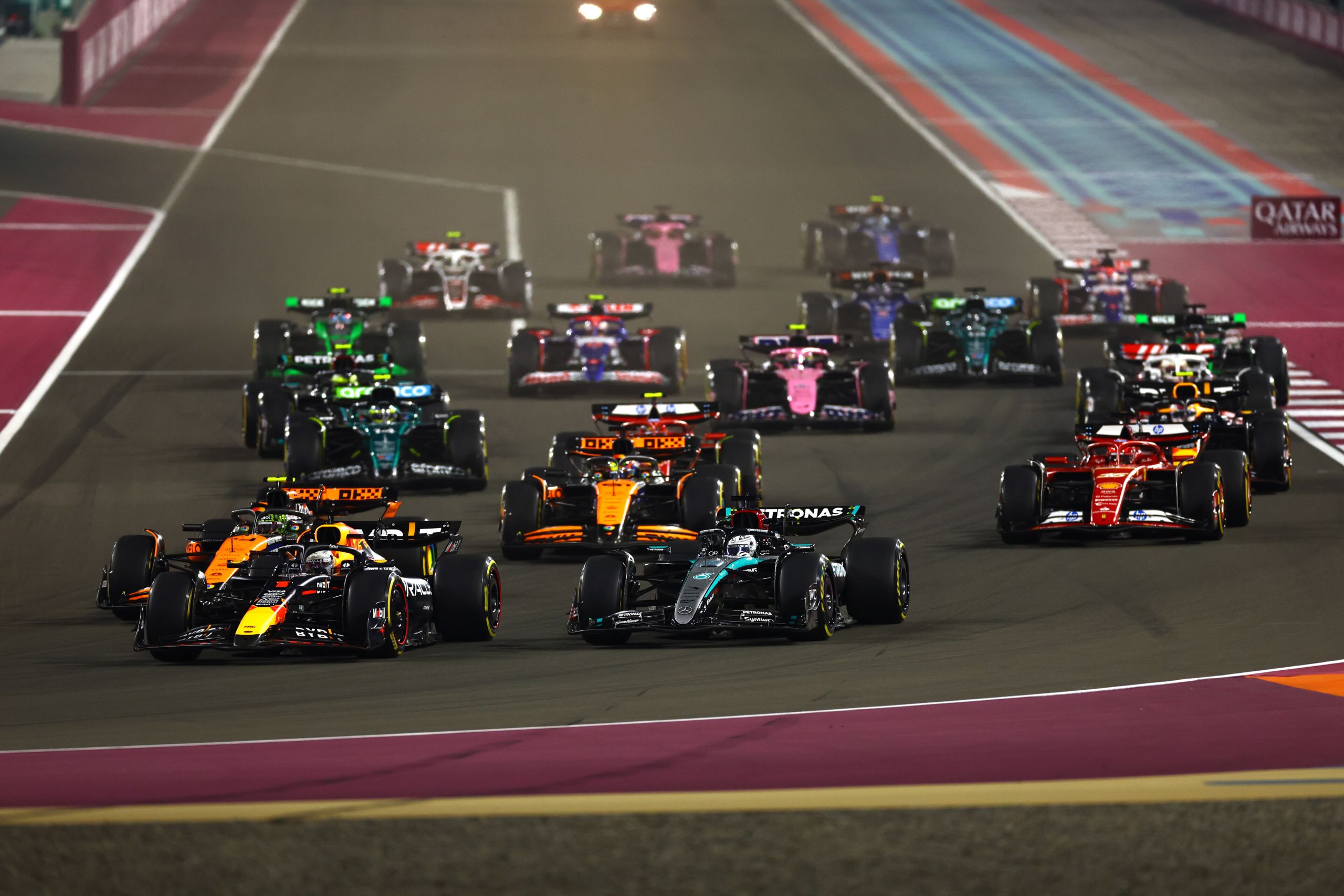
The Franchise Extortion Racket
To understand why cities go broke hosting F1, you first have to understand the ruthless business model of Liberty Media, the American owners of the sport. Most major sports operate on a standard franchise model. When a city hosts the Super Bowl, the NFL covers many of the costs, and the city reaps the rewards of the influx of visitors. Formula 1, however, operates more like a “franchise extortion racket.”
Formula 1 does not pay to race in a city; the city pays Formula 1. This is known as the sanctioning fee, a massive check written just for the privilege of the sport showing up. While historic tracks like Silverstone or Monaco pay significantly less due to their legacy status, new venues are squeezed for every penny. Countries like Azerbaijan, Qatar, and Saudi Arabia are reportedly paying upwards of $55 million to $60 million per year just for the rights to host a Grand Prix. These contracts often come with escalator clauses, increasing the price by 5% to 10% annually. Collectively, these fees generate nearly $900 million a year for Liberty Media—pure profit transferred from government treasuries before a single engine even starts.
The Infrastructure Mandate: A Highway to Debt
The sanctioning fee is merely the cover charge to get into the club. Once the contract is signed, cities unlock the second level of the trap: the infrastructure mandate. Liberty Media no longer wants races in the middle of nowhere; they crave “content.” They want cars racing past iconic landmarks, skyscrapers, and casinos. They want street circuits.
Turning a public road into an FIA Grade 1 circuit is one of the most expensive construction projects a city can undertake. You cannot simply close a road and race. F1 cars produce 5G of force in corners and travel at 200 mph; standard city streets would tear the cars apart. Cities must rip up miles of public infrastructure, lay down specialized high-grip asphalt imported from specific quarries, and weld manhole covers shut to prevent the cars’ suction from ripping them out of the ground.
Take the Vietnam Grand Prix disaster. In 2018, Hanoi signed a 10-year deal, spending hundreds of millions building a semi-street circuit. The track was finished, the grandstands were up, and the asphalt was fresh. Then the pandemic hit, and key political backers were arrested on corruption charges. The race was canceled forever. Hanoi was left with a massive concrete “white elephant” in the middle of the city—hundreds of millions of taxpayer dollars evaporated without a single lap ever being raced.
The Economic Lie: The Multiplier Effect
Politicians justify these astronomical costs with one simple argument: “We will make it back in tourism revenue.” They claim that spending $100 million to host the event will generate $500 million in economic impact. This is the “economic multiplier” argument, and it is perhaps the single greatest lie in the sports hosting industry.
In a normal business partnership, if you pay for the venue and staff, you keep the revenue. In Formula 1, the contracts are designed so that the sport keeps almost everything that makes money, while the city keeps almost everything that loses money. F1 keeps 100% of the TV rights, 100% of the lucrative Paddock Club hospitality, 100% of the trackside advertising, and the teams keep the merchandise revenue. The host city is left with general admission ticket sales—often the cheapest seats—and incidental spending like hot dogs and hotel rooms.
However, independent economists have found that the multiplier effect is often zero or negative due to the “crowding out effect.” When a mega-event comes to town, regular tourists stay away to avoid the chaos and price gouging. The city trades its steady stream of normal visitors for a sudden spike of F1 fans who stay at international hotel chains and eat at the track. The profits are wire-transferred to Liberty Media’s headquarters in Colorado, while the local economy gets the noise, traffic, and trash.

Las Vegas: The Jewel that Crushed the Locals
The 2023 Las Vegas Grand Prix was supposed to be the jewel in Liberty Media’s crown. They hyped it as the greatest sporting event on Earth, and for them, it was—generating over $1.2 billion in revenue. But for local business owners, it was a catastrophe.
To build the track, major roads were shut down for months. Massive temporary bridges blocked access to dozens of local businesses. Wade Bowen, a gas station owner near the strip, reported a 50% revenue drop, losing millions because customers literally couldn’t reach his front door. Restaurants reported empty reservation books as regular tourists avoided the city due to $1,000-a-night hotel rates. When the race finally happened, F1 erected screens and covers to ensure no one could watch for free, blocking the view of the city’s own landmarks. It was wealth concentration disguised as economic growth.
The Future of the Circus
Why do cities keep signing up? For developing nations or second-tier cities, hosting F1 is a shortcut to global legitimacy—a concept known as “sportswashing.” For Saudi Arabia or Qatar, $50 million is a cheap marketing expense to rebrand their image. They are buying 60 seconds of drone footage that makes their country look futuristic and clean.
But for democratic cities with real budgets, the math is becoming impossible to justify. Traditional tracks like Hockenheim in Germany have dropped off the calendar because they refuse to bankrupt themselves. In their place, F1 moves toward totalitarian regimes or massive US cities where corporate interests can bulldoze local opposition.
Eventually, economic bubbles burst. Cities will realize the prestige isn’t worth the debt. Residents will sue the races out of existence. Until then, the F1 circus will continue to travel the world, setting up its tents, extracting the gold, and leaving before the locals realize they’ve been pickpocketed. Next time you see a mayor smiling and shaking hands with an F1 CEO, remember: you’re not watching a business deal. You’re watching a city sign its own mortgage papers.
News

Inside Shane Richie’s love life: Drug – fuelled orgy with six blondes; real reason he split from Coleen Nolan; six-year ‘affair with fan’
Inside Shane Richie’s love life: Orgy with six blondes; real reason he split from Coleen Nolan; six-year ‘affair with fan’ He’s popular with the ladies… Shane Richie…

SH0CKING REVELATI0N:A sh0cking behind-the-scenes secret revealed about Lizzie Rizzini, the woman replacing Carol Kirkwood on the 6pm weather bulletin
BBC viewers still reeling from the departure of Carol Kirkwood got another surprise last night when presenter Lizzie Rizzini appeared to flash her black lace stockings on…

HEARTBREAKING: Peter Andre’s Tearful Message to Son Junior After SHOCKING Revelation About How He Truly Feels Toward Mum Katie Price — Katie Price’s reaction scares fans.
Peter Andre’s emotional message to son Junior after it’s revealed how he really feels about mum Katie Pri… PETER Andre has shared an emotional message to his…

Ben Shephard opens up about the devastating health battle his wife is facing: “She wakes up crying every single morning…”
Inside This Morning Ben Shephard’s Life Including Rarely Seen Wife and Health Battle Ben Shephard is a name synonymous with British television, renowned for his engaging presentation…

🚨 LIVE TV HEARTBREAK: Good Morning Britain Host Announces ‘Devastating’ Dɘath of Guest Minutes Into Show
Viewers of Good Morning Britain were met with heartbreaking news just minutes into Friday’s (January 30) episode, as co-hosts Kate Garraway and Ranvir Singh reported the tragic…

Emmerdale legend Cain Dingle will never be the same again after a shock cancer diagnosis turns his world upside down
FROure Desk. Full Terms and conditions are available on the website http://www.itv.com/presscentre/itvpictures/terms Emmerdale wouldn’t be Emmerdale without the glowering, grunting embodiment of manliness that is Cain Dingle (Jeff Hordley) But…
End of content
No more pages to load






