The Curtain Falls on an Automotive Legend
The automotive world has just witnessed the end of a monumental chapter. The delivery of the very last Bugatti Bolide marks not just the completion of a limited production run, but the definitive conclusion of a 20-year saga that redefined what was possible on four wheels. This isn’t merely a story about a fast car; it is a tale of corporate ambition, impossible engineering challenges, family holidays, and a vision that bordered on madness.
For two decades, the W16 engine has been the beating heart of the hypercar world. But to understand why the Bolide is such a significant farewell, we have to rewind to a seemingly insignificant moment on the Spanish island of Mallorca, involving a toy shop and a disappointed executive.
The Toy Shop Decision that Changed History
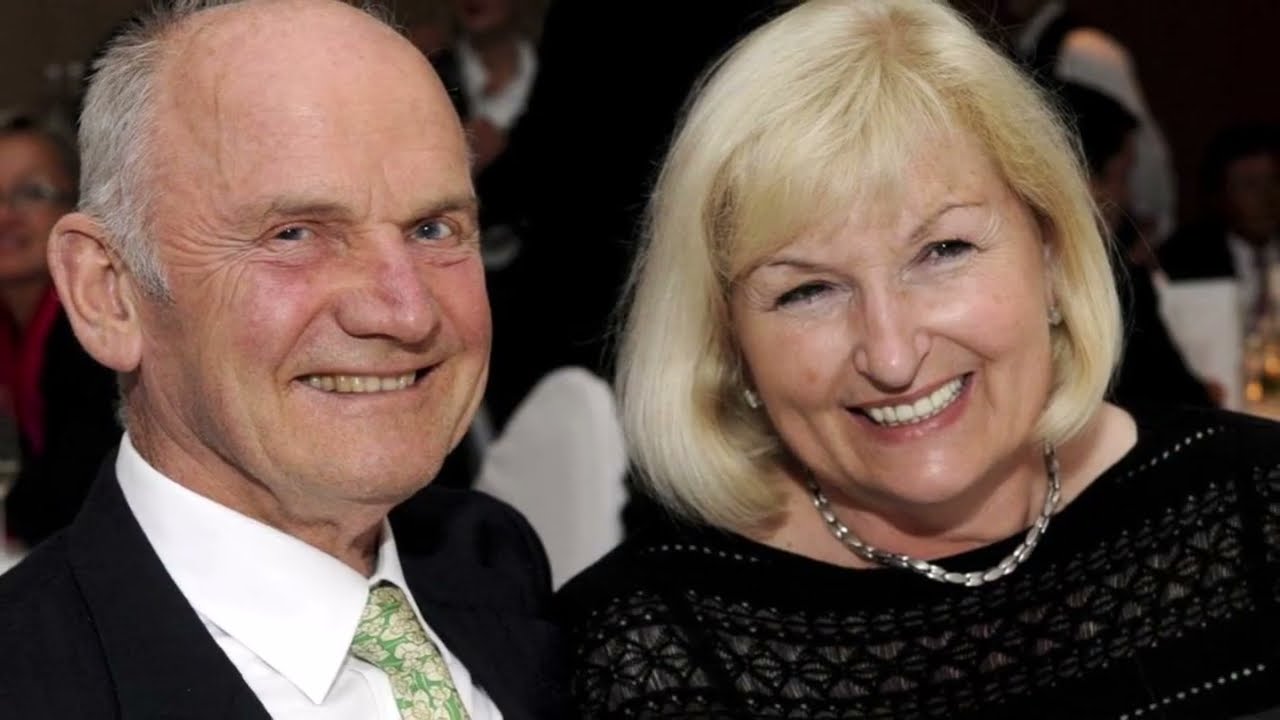
The story of the modern Bugatti didn’t start in a boardroom in Wolfsburg; it started on an Easter holiday. Ferdinand Piëch, the visionary and notoriously demanding CEO of Volkswagen, was looking to expand his empire. He had his sights set on acquiring Rolls-Royce and Bentley, aiming to crown the VW Group with the ultimate in luxury.
During his vacation, Piëch took his youngest son, Gregor, to a local shop. He pointed out a scale model of a Rolls-Royce, perhaps trying to instill enthusiasm for his upcoming business deal. But Gregor wasn’t interested. He pointed to the car next to it—a model of a classic Bugatti Atlantic—and essentially said, “I like that one better.”
That small interaction planted a seed. When the deal for Rolls-Royce became complicated (with BMW eventually securing the rights to the name), Piëch remembered the Bugatti. He decided to buy the dormant French brand as a “Plan B.” It was a decision driven by passion and a refusal to lose, setting the stage for the most ambitious automotive project in history.
The “Impossible” Brief: 1,000 Horsepower, Easy as a Golf
Once the rights were secured, Piëch didn’t want to just build a fast car. He wanted to resurrect the glory of the 1920s and 30s, positioning Bugatti at the absolute zenith of design and performance. His requirements for the engineers were nothing short of terrifying.
He demanded a car with 1,000 horsepower. He demanded a top speed of 400 km/h (248 mph). He demanded it be mid-engined with all-wheel drive. And crucialy, he demanded it be as easy to drive as a Volkswagen Golf.
In the late 1990s, when supercars had 600 horsepower and struggled to hit 330 km/h, this sounded like lunacy. The engineering team was pushed to their breaking point. They initially experimented with an 18-cylinder engine before settling on the now-legendary W16—essentially two VR8 engines mated together, fed by four turbochargers.
The challenges were immense. The gearbox had to handle 1,250 Nm of torque, a figure that shredded standard transmissions. Michelin had to invent entirely new tires capable of withstanding the forces at 400 km/h. Cooling was a nightmare; the final car required 10 radiators and two separate cooling circuits pumping dozens of liters of fluid just to keep the beast from melting.
The Veyron, The Chiron, and The Unfulfilled Potential
Despite delays, rumors of cancellation, and the immense pressure on the team, the Bugatti Veyron eventually launched in 2005. It was a triumph. It created a new category of vehicle: the Hypercar. It was expensive, exclusive, and blazingly fast, yet you could drive it to the opera in comfort.
However, as the years went on, the formula began to feel constrained. The successor, the Chiron, launched in 2016. While it boasted 50% more power, it was also 100 kilograms heavier. It was an evolution, not a revolution. It felt like a “careful” successor, designed to be luxurious and usable rather than raw and unleashed.
Inside the corporate structure of VW, the winds were changing. Following the “Dieselgate” scandal and the departure of Piëch, the new management wanted to clean house. Extravagant projects were on the chopping block. They wanted to sell Bugatti. But before they did, they decided to hand the keys over to the experts at Dallara—the legendary Italian race car constructor—to see what the Chiron platform could actually do if the leash was taken off.
Enter the Bolide: The Beast Unleashed
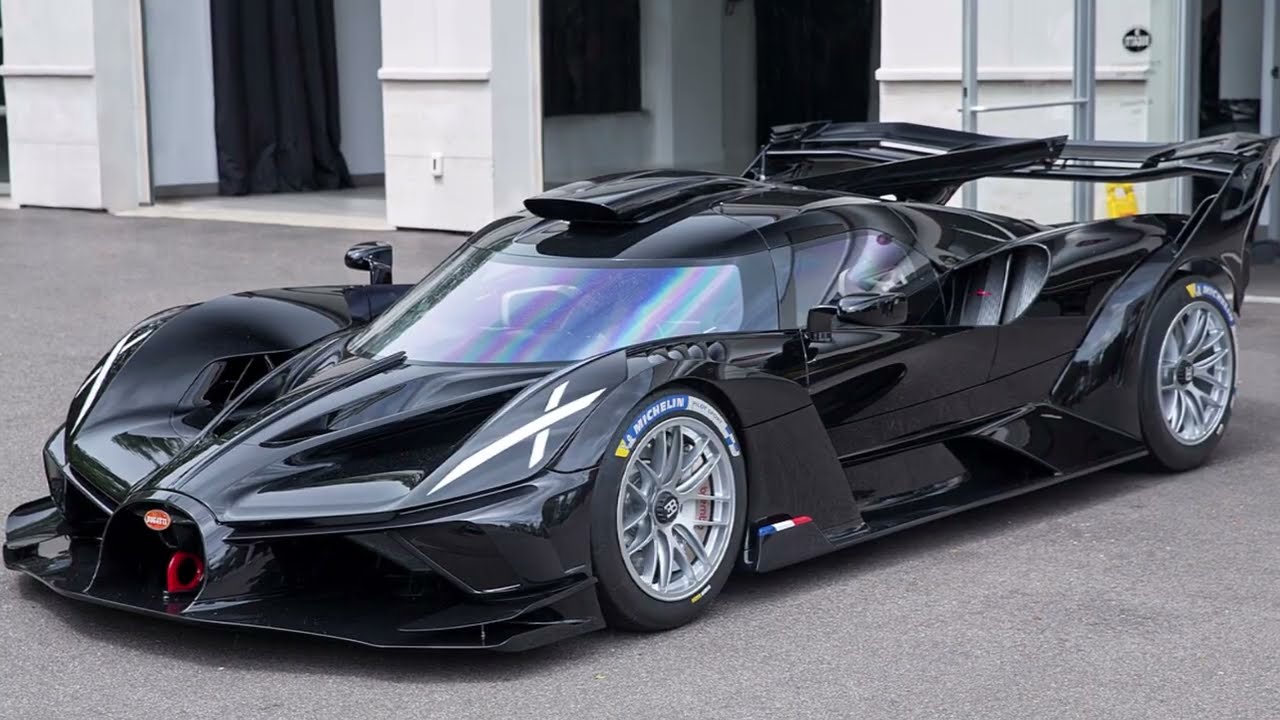
This collaboration birthed the Bolide. Dallara took the Chiron blueprint and stripped away the compromises. They lowered the seating position, completely redesigned the aerodynamics for maximum downforce, and ditched the heavy luxury components.
The result was staggering. They managed to slash 500 kilograms from the weight of the Chiron. They swapped the water-to-air intercoolers for air-to-air systems, optimized for track abuse. The engine was tuned to produce a mind-bending 1,850 horsepower on race fuel (or a “modest” 1,600 horsepower on standard 98 octane pump gas).
The chassis was re-engineered to meet Le Mans Hypercar regulations, featuring built-in cooling pipes that doubled as structural side-impact beams. The Bolide wasn’t just a lighter Chiron; it was a track weapon that finally delivered on the pure, unadulterated potential of the W16 engine. It was the car the engineers likely always wanted to build but couldn’t because of the “luxury” mandate.
A Fitting Farewell and a New Beginning
The delivery of the 40th and final Bolide draws a line under the era of the W16. It is the ultimate expression of the concept—raw, loud, and uncompromising.
Interestingly, this end also signaled a new beginning. Instead of VW shutting down Bugatti or turning it into a generic electric vehicle brand, the company was sold to Mate Rimac, the young Croatian genius behind Rimac Automobili. It was the perfect passing of the torch. Rimac, a true car enthusiast, understood that Bugatti needed to remain mechanical and emotional.
Instead of going fully electric, Rimac developed the Tourbillon, a successor featuring a hybrid V16 engine—a piece of technical art that honors the mechanical legacy of the brand while embracing the future.
The Bugatti Bolide stands as a monument to what can be achieved when engineers are given the freedom to push boundaries. It is a violent, beautiful, and perfect goodbye to one of the most ambitious automotive experiments in history. As the last one rolls into the hands of its owner, we bid farewell to the Piëch era—a time when a CEO’s holiday whim could birth a 400 km/h legend.
News

Inside Shane Richie’s love life: Drug – fuelled orgy with six blondes; real reason he split from Coleen Nolan; six-year ‘affair with fan’
Inside Shane Richie’s love life: Orgy with six blondes; real reason he split from Coleen Nolan; six-year ‘affair with fan’ He’s popular with the ladies… Shane Richie…

SH0CKING REVELATI0N:A sh0cking behind-the-scenes secret revealed about Lizzie Rizzini, the woman replacing Carol Kirkwood on the 6pm weather bulletin
BBC viewers still reeling from the departure of Carol Kirkwood got another surprise last night when presenter Lizzie Rizzini appeared to flash her black lace stockings on…

HEARTBREAKING: Peter Andre’s Tearful Message to Son Junior After SHOCKING Revelation About How He Truly Feels Toward Mum Katie Price — Katie Price’s reaction scares fans.
Peter Andre’s emotional message to son Junior after it’s revealed how he really feels about mum Katie Pri… PETER Andre has shared an emotional message to his…

Ben Shephard opens up about the devastating health battle his wife is facing: “She wakes up crying every single morning…”
Inside This Morning Ben Shephard’s Life Including Rarely Seen Wife and Health Battle Ben Shephard is a name synonymous with British television, renowned for his engaging presentation…

🚨 LIVE TV HEARTBREAK: Good Morning Britain Host Announces ‘Devastating’ Dɘath of Guest Minutes Into Show
Viewers of Good Morning Britain were met with heartbreaking news just minutes into Friday’s (January 30) episode, as co-hosts Kate Garraway and Ranvir Singh reported the tragic…

Emmerdale legend Cain Dingle will never be the same again after a shock cancer diagnosis turns his world upside down
FROure Desk. Full Terms and conditions are available on the website http://www.itv.com/presscentre/itvpictures/terms Emmerdale wouldn’t be Emmerdale without the glowering, grunting embodiment of manliness that is Cain Dingle (Jeff Hordley) But…
End of content
No more pages to load






