The Weight of History
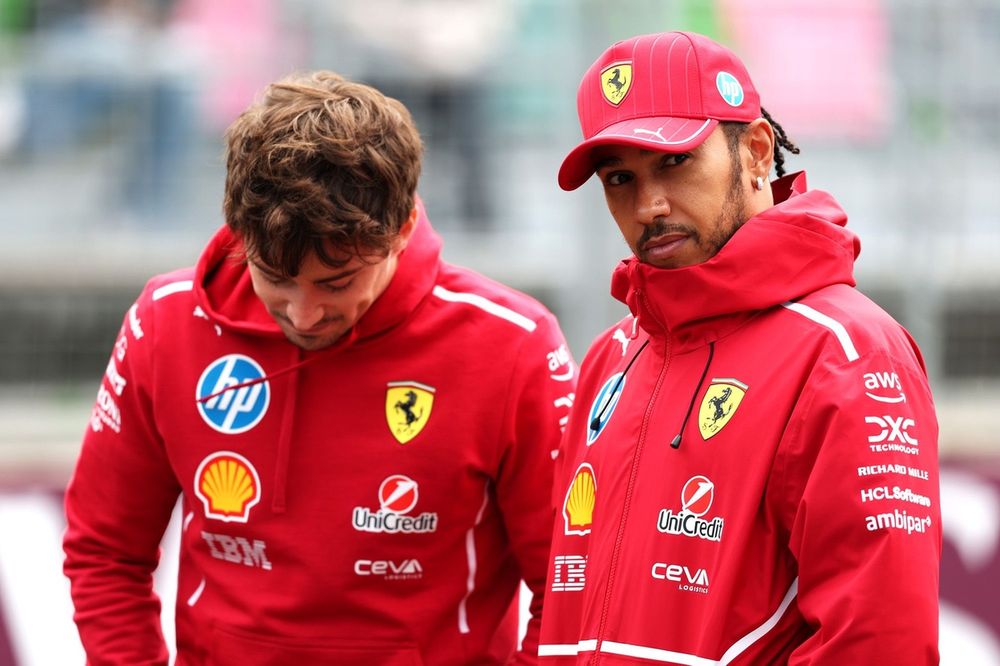
As the Formula 1 world turns its gaze toward the monumental regulation reset of 2026, one name dominates the conversation: Ferrari. It is an obsession that transcends motorsport, a national identity wrapped in Rosso Corsa. Yet, as we stand on the precipice of this new era, a familiar and unsettling feeling is creeping into the hearts of the Tifosi. On paper, the Scuderia has everything required to dominate: an unlimited budget, the prestige to attract the world’s best engineering minds, and a driver lineup that reads like a fantasy draft—seven-time world champion Lewis Hamilton alongside the blistering speed of Charles Leclerc.
However, paper championships are not celebrated on the podium at Monza. The reality facing Ferrari in January 2026 is far more complex and arguably more fragile than the glossy PR launches suggest. We are witnessing a team at a crossroads, caught between the intoxicating promise of a fresh start and the suffocating gravity of its own history. The question is not whether Ferrari can win, but whether they have finally exorcised the demons that have turned the last two decades into a cycle of “almosts” and “what ifs.”
The Cycle of False Dawns
To understand the trepidation surrounding 2026, we must look at the recent past. The transition from 2024 to 2025 serves as a painful case study in the Ferrari phenomenon. By the end of 2024, the team looked poised for greatness. Under the stewardship of Fred Vasseur, operations were stabilizing, strategic howlers were becoming rarer, and the car was genuinely fighting McLaren and Red Bull on merit. The momentum was palpable.
Then came 2025. Instead of a title charge, the season unraveled. Development stalled, rivals surged ahead, and the team was forced to pivot its focus to the 2026 regulations as early as April. This pattern—strong starts followed by a gradual loss of momentum—is not a glitch; it is a feature of modern Ferrari. We saw it in the Sebastian Vettel years of 2017 and 2018, and again at the start of the ground-effect era in 2022. The team builds a competitive machine but lacks the operational ruthlessness to sustain a development war across a punishing 24-race calendar.
Now, with the 2025 season written off as a transitional failure, the narrative has shifted entirely to 2026. But if the fundamental machinery of the team—the ability to upgrade, adapt, and execute—remains unchanged, why should we expect the outcome to be different?
The “Fastest Slow Sport” in the World
Formula 1 is often described as a shark tank, but in terms of organizational agility, it is more like maneuvering a supertanker. As noted by analysts, F1 is the “fastest slow sport in the world.” The cars are missiles, but the teams turn like cruise ships. Changing the direction of a behemoth like Ferrari takes years, not months.
Unfortunately, time is the one luxury Ferrari is never afforded. The pressure cooker of Maranello is unique in sports. The adoration from Italy and the Tifosi is a beautiful, passionate force, but it is also a double-edged sword. When the team wins, they are gods; when they lose, the atmosphere becomes toxic. This external pressure often seeps inside the factory walls, leading to panicked decision-making and a culture of fear.
Historically, Ferrari has only truly dominated when this pressure was artificially dammed. The golden era of Michael Schumacher was not just about driving talent; it was about the “shield” erected by Jean Todt and Ross Brawn. They insulated the race team from the corporate interference of Fiat and the whims of the Italian press. Since that triumvirate disbanded, that buffer has eroded. Today, management and corporate leadership seem all too present, reportedly even telling drivers to “focus on driving” rather than voicing concerns. Until Ferrari can recreate that structural autonomy, their ceiling will always be artificially lower than that of their British and German rivals.
The Technical “Loophole” Nightmare
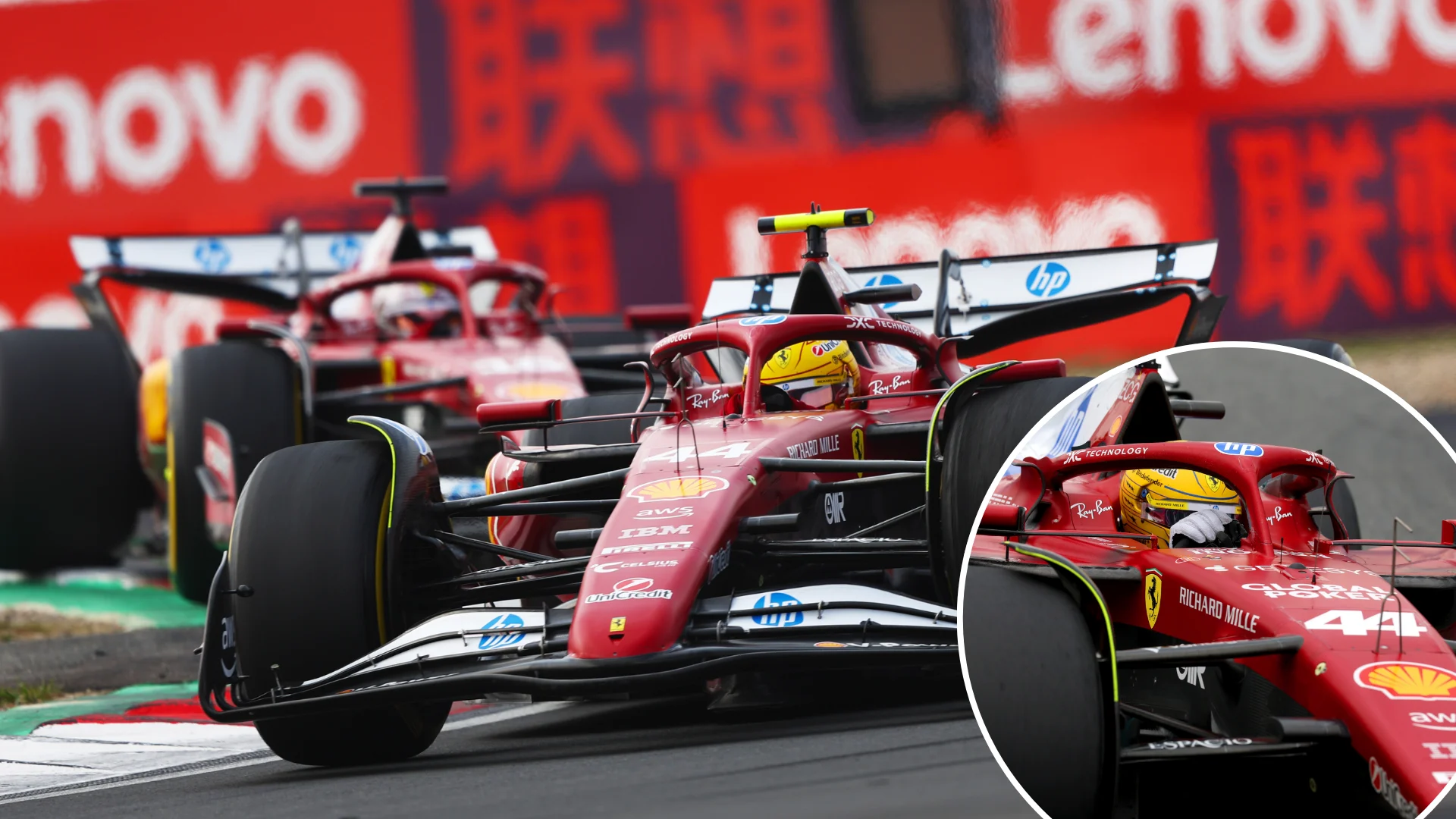
While the cultural issues are chronic, the immediate concern for 2026 is technical. The new regulations were supposed to be the great equalizer, a blank slate where Ferrari’s resources could shine. However, whispers from the paddock suggest the team may have already missed a trick.
Reports indicate that rival manufacturers, specifically Mercedes and Red Bull, may have exploited a loophole regarding compression ratios in the new power unit regulations—an area Ferrari seemingly overlooked. While these rumors are notoriously difficult to verify until the cars hit the track in anger, they feed into a terrifying narrative: that Ferrari is starting the new era on the back foot.
In a formula heavily dependent on engine performance, missing an initial development trick can take years to rectify. If the power unit deficit is real, no amount of aerodynamic wizardry from the chassis department will be able to compensate. It would force the team into a desperate game of catch-up from race one, a scenario that historically leads to overdriving, reliability risks, and strategic gambles that rarely pay off.
The Hamilton and Leclerc Dynamic
Then there is the human element, arguably the most volatile variable in the 2026 equation. The arrival of Lewis Hamilton was heralded as the final piece of the puzzle, the veteran leader who would galvanize the team. But the Lewis Hamilton of January 2026 is in a different position than the one who signed the contract. His 2025 campaign with Mercedes was, by objective standards, underwhelming. Was it the car, or has the relentless march of time finally caught up with the legend?
Ferrari is banking on the former—that a new environment will reignite the spark. But if the car is difficult to drive or lacks pace, the honeymoon period could be brutally short. Hamilton did not move to Maranello to fight for fourth place.
On the other side of the garage is Charles Leclerc. The Monegasque prodigy has the patience of a saint, having endured years of strategic blunders and unfulfilled promises. Yet, even his loyalty has limits. Subtle signs suggest he is beginning to look around, wondering if his prime years are being wasted waiting for a “next year” that never comes. If 2026 starts poorly, the internal friction between a desperate Hamilton and a disillusioned Leclerc could destabilize the entire operation.

Realistic Expectations: The Big Four?
So, stripping away the romance and the hype, what can we realistically expect? Ferrari will not collapse; the team’s floor is simply too high. With their resources and talent, they will almost certainly be part of the “Big Four” (or however the hierarchy shakes out). They will win races. They will secure pole positions. There will be Sundays where the scarlet cars look untouchable.
But a sustained championship challenge requires consistency, a trait Ferrari has seemingly abandoned. It requires a team that can develop a car aggressively without losing its balance, a strategy team that is ice-cold under pressure, and a management structure that protects its people rather than exposing them.
Right now, looking at the landscape of early 2026, I have far more confidence in a team like McLaren—lean, focused, and operationally sharp—to execute a title-winning campaign. Ferrari feels like a team still searching for its identity, caught between the glory of its past and the brutal efficiency required for the future.
The Verdict
Ferrari in 2026 represents the ultimate paradox of Formula 1: a team with endless potential but an invisible glass ceiling. The ingredients are there, but the recipe feels slightly off. Unless Fred Vasseur has managed to secretly rebuild the culture behind the scenes and insulate his team from the inevitable storms of Italian media, 2026 may well be another season of “what could have been.”
For the sake of the sport, we hope to be proven wrong. F1 is better when Ferrari is fighting for the crown. But hope is not a strategy, and right now, hope is the primary fuel in the tank at Maranello.
News

Inside Shane Richie’s love life: Drug – fuelled orgy with six blondes; real reason he split from Coleen Nolan; six-year ‘affair with fan’
Inside Shane Richie’s love life: Orgy with six blondes; real reason he split from Coleen Nolan; six-year ‘affair with fan’ He’s popular with the ladies… Shane Richie…

SH0CKING REVELATI0N:A sh0cking behind-the-scenes secret revealed about Lizzie Rizzini, the woman replacing Carol Kirkwood on the 6pm weather bulletin
BBC viewers still reeling from the departure of Carol Kirkwood got another surprise last night when presenter Lizzie Rizzini appeared to flash her black lace stockings on…

HEARTBREAKING: Peter Andre’s Tearful Message to Son Junior After SHOCKING Revelation About How He Truly Feels Toward Mum Katie Price — Katie Price’s reaction scares fans.
Peter Andre’s emotional message to son Junior after it’s revealed how he really feels about mum Katie Pri… PETER Andre has shared an emotional message to his…

Ben Shephard opens up about the devastating health battle his wife is facing: “She wakes up crying every single morning…”
Inside This Morning Ben Shephard’s Life Including Rarely Seen Wife and Health Battle Ben Shephard is a name synonymous with British television, renowned for his engaging presentation…

🚨 LIVE TV HEARTBREAK: Good Morning Britain Host Announces ‘Devastating’ Dɘath of Guest Minutes Into Show
Viewers of Good Morning Britain were met with heartbreaking news just minutes into Friday’s (January 30) episode, as co-hosts Kate Garraway and Ranvir Singh reported the tragic…

Emmerdale legend Cain Dingle will never be the same again after a shock cancer diagnosis turns his world upside down
FROure Desk. Full Terms and conditions are available on the website http://www.itv.com/presscentre/itvpictures/terms Emmerdale wouldn’t be Emmerdale without the glowering, grunting embodiment of manliness that is Cain Dingle (Jeff Hordley) But…
End of content
No more pages to load






