The Invisible Weapon
For the past few seasons, Formula 1 fans and pundits have been asking the same question: How does he do it? How does Max Verstappen not just win, but obliterate the competition with such terrifying consistency? The easy answers are “the car” or “talent.” But the truth, according to emerging analysis from the paddock, is something far more subtle and dangerous.
Max Verstappen hasn’t just been driving the RB19 or RB20; he has been operating in a state of perfect alignment. His dominance wasn’t built solely on horsepower or aerodynamics. It was built on a unique philosophical harmony between driver and machine. In the current ground-effect era, Red Bull built cars that were “honest.” They responded instantly to steering inputs, rotated cleanly on the throttle, and, crucially, didn’t drift unpredictably.
This allowed Max to drive entirely on instinct. He didn’t have to “manage” the car’s personality; he simply extended his will through it. He could sense grip before it arrived and commit to corners while others were still hesitating. But as we hurtle toward the revolutionary 2026 regulations, whispers from the Red Bull garage suggest this golden era of intuitive dominance is facing an existential threat.
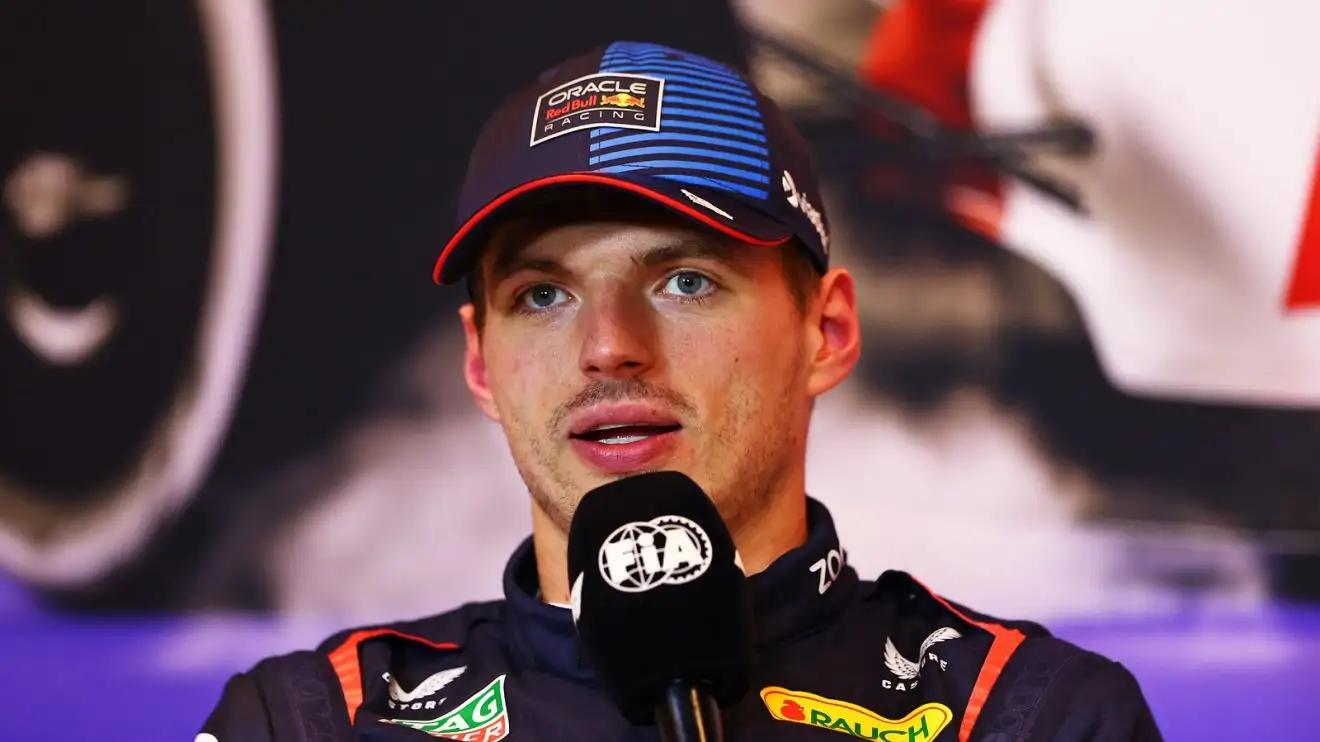
2026: The Rise of the “System”
The 2026 technical reset is not just a facelift; it is a fundamental rewiring of what it means to drive a Formula 1 car. The sport is moving away from “field-based dominance”—where physical grip and aerodynamics rule—to “system-managed performance.”
The new regulations introduce a heavier reliance on electrical power, reduced internal combustion output, and significantly more complex energy harvesting constraints. On top of that, active aerodynamics will now constantly adjust the car’s shape based on conditions rather than just driver input.
Why is this a problem for Max? Because it inserts a layer of digital interference between the driver and the tarmac. The car will no longer be a direct extension of the driver’s hands and feet. Instead, it will be a computer that the driver has to negotiate with. The seamless feedback loop that Verstappen relies on—where he feels a slide and corrects it in milliseconds—will be dulled by systems deciding how to deploy energy or adjust wing angles.
When the Car Stops “Listening”
The terrifying reality for Red Bull is that the 2026 cars are reportedly “harder to read.” They aren’t necessarily slower, but they are numb. In early development testing, the feedback is coming back different. The direct connection is gone.
Verstappen thrives on “honesty” in a race car. He wants to know that if he inputs X, the car will do Y. But in 2026, if he inputs X, the car might do Y, or it might do Z depending on the battery state of charge or the active aero map for that specific straight.
This shifts the skill set from mastery to management. The drivers who will thrive in this new era aren’t necessarily the ones with the rawest speed or the sharpest reflexes. They will be the ones who can best manage the software, the ones who are comfortable with a car that changes its behavior from lap to lap.
This flattens the playing field. It takes away the “narrow, repeatable window” that Max lived in—a window other drivers couldn’t even find—and replaces it with a wider, stickier, more artificial operating window that everyone can access.

Red Bull’s Quiet Panic
You can see the anxiety in Red Bull’s approach. For a team known for aggressive innovation and risk-taking, their early 2026 concepts are reportedly unusually conservative. They aren’t trying to break the mold; they are trying to protect compatibility. They know that if the car becomes too complex, they risk alienating the very driver who makes them invincible.
Max’s own language has shifted. Gone are the decisive, confident proclamations of the past few pre-seasons. In their place, we are hearing a more analytical, almost cautious tone. He speaks of “work to do” and sounds like a man trying to solve a puzzle rather than a man ready to conquer.
Historically, when Max is quiet and analytical, it means he isn’t comfortable. He thrives on certainty. When the breaking points migrate and the balance shifts due to system intervention, that certainty evaporates.
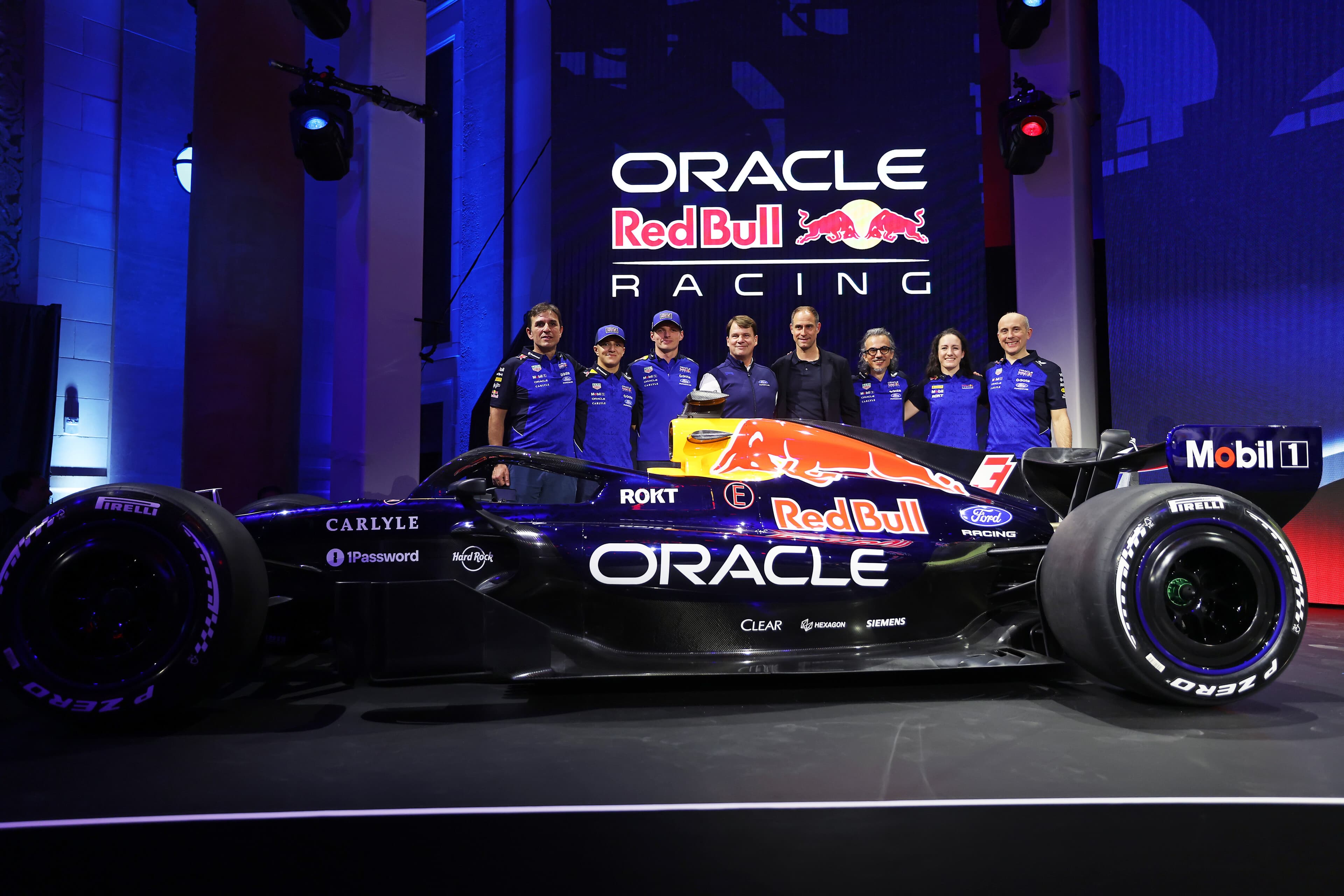
The End of “Effortless”
Does this mean Max Verstappen will stop winning? Unlikely. He is still a generational talent with immense adaptability. But the era of effortless winning—where he disappears 30 seconds down the road and chats casually with his engineer—is likely over.
The 2026 rules are designed to punish singular dominance. They create a world where adaptability is valued over pure perfection. Max creates perfection by committing early and trusting the car. If he can no longer trust the car to be consistent, his advantage doesn’t just shrink; it becomes shared.
We are staring at a future where the gap between the best and the rest is dictated not by who has the most talent, but by who has the smartest software. For the fans, this means better racing. But for Max Verstappen, it means the end of the only advantage that truly mattered: the ability to drive without thinking.
The machine is taking over. And for the first time in years, Max Verstappen will have to fight not just the other 19 drivers, but his own car.
News

Inside Shane Richie’s love life: Drug – fuelled orgy with six blondes; real reason he split from Coleen Nolan; six-year ‘affair with fan’
Inside Shane Richie’s love life: Orgy with six blondes; real reason he split from Coleen Nolan; six-year ‘affair with fan’ He’s popular with the ladies… Shane Richie…

SH0CKING REVELATI0N:A sh0cking behind-the-scenes secret revealed about Lizzie Rizzini, the woman replacing Carol Kirkwood on the 6pm weather bulletin
BBC viewers still reeling from the departure of Carol Kirkwood got another surprise last night when presenter Lizzie Rizzini appeared to flash her black lace stockings on…

HEARTBREAKING: Peter Andre’s Tearful Message to Son Junior After SHOCKING Revelation About How He Truly Feels Toward Mum Katie Price — Katie Price’s reaction scares fans.
Peter Andre’s emotional message to son Junior after it’s revealed how he really feels about mum Katie Pri… PETER Andre has shared an emotional message to his…

Ben Shephard opens up about the devastating health battle his wife is facing: “She wakes up crying every single morning…”
Inside This Morning Ben Shephard’s Life Including Rarely Seen Wife and Health Battle Ben Shephard is a name synonymous with British television, renowned for his engaging presentation…

🚨 LIVE TV HEARTBREAK: Good Morning Britain Host Announces ‘Devastating’ Dɘath of Guest Minutes Into Show
Viewers of Good Morning Britain were met with heartbreaking news just minutes into Friday’s (January 30) episode, as co-hosts Kate Garraway and Ranvir Singh reported the tragic…

Emmerdale legend Cain Dingle will never be the same again after a shock cancer diagnosis turns his world upside down
FROure Desk. Full Terms and conditions are available on the website http://www.itv.com/presscentre/itvpictures/terms Emmerdale wouldn’t be Emmerdale without the glowering, grunting embodiment of manliness that is Cain Dingle (Jeff Hordley) But…
End of content
No more pages to load






