The Pay Driver Paradox
Formula 1 is often regarded as the pinnacle of motorsport, a rarefied arena where the twenty best drivers on the planet compete at speeds defying physics. It is a meritocracy of reflexes, bravery, and engineering genius—or at least, that is the ideal. But beneath the glamour and the champagne showers lies a murkier reality: the phenomenon of the “pay driver.” These are competitors whose seat is secured not strictly by their lap times, but by the size of the check they bring to the team. While many pay drivers have proven their worth over time, one name stands out in recent history as the ultimate cautionary tale of what happens when money tries to brute-force its way into elite sports. That name is Nikita Mazepin.
Born into immense wealth in Moscow in 1999, Nikita’s path to the grid was paved with gold. His father, Dmitry Mazepin, a billionaire oligarch and owner of the chemical giant Uralchem, spared no expense. From the finest karts to private testing sessions and top-tier coaching, Nikita had every advantage that money could buy. Yet, as his tumultuous career would prove, you can buy the car, but you cannot buy the instinct to control it.
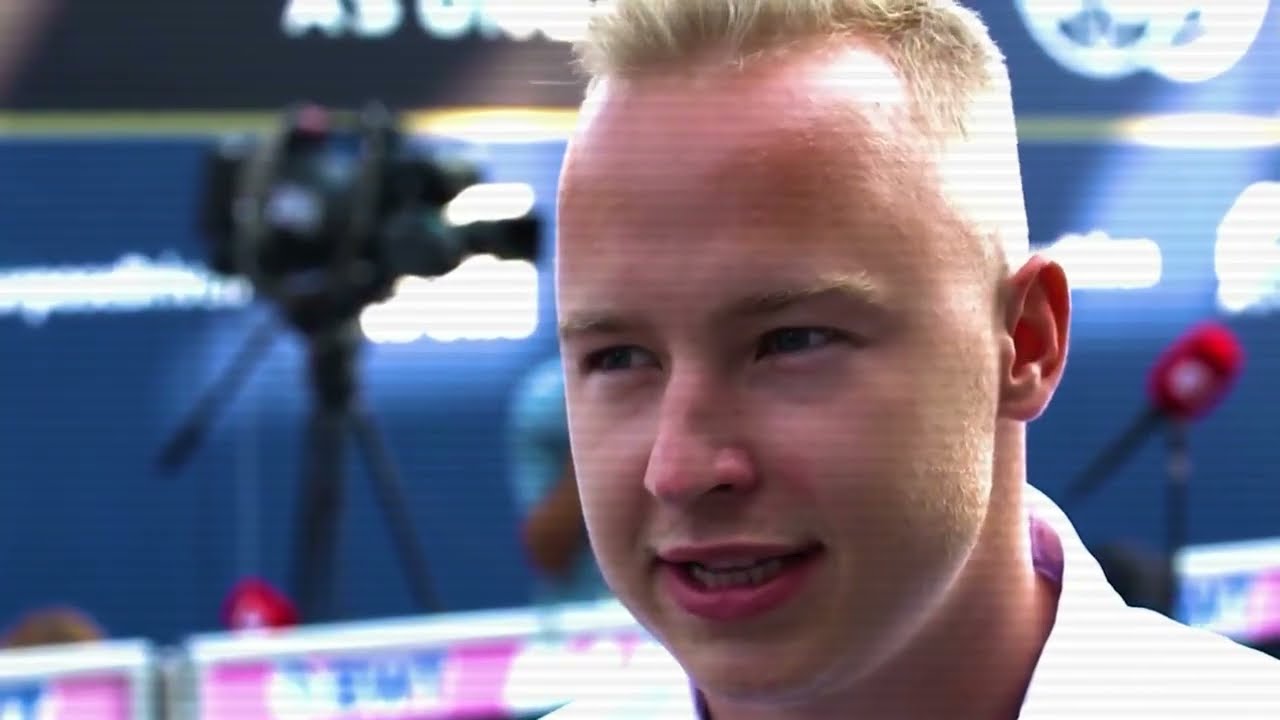
A Junior Career Marked by Aggression
Long before he reached the bright lights of Formula 1, Mazepin was already making a name for himself—but for all the wrong reasons. His tenure in the junior categories was defined less by his speed and more by his volatility. He wasn’t just slow; he was dangerous.
The first major warning sign flashed in 2016 during his time in European Formula 3. In a shocking display of unsportsmanlike conduct, Mazepin got into a physical altercation in the paddock, punching fellow driver Callum Ilott in the face. The incident resulted in a suspension and left a stain on his reputation that he would never quite scrub off. It was an early indicator of a temperament ill-suited for the high-pressure environment of professional racing.
On the track, his style was described as “aggressive, reckless, and weak.” While contemporaries like Lando Norris and Charles Leclerc were dazzling scouts with their precision, Mazepin was busy causing collisions at legendary circuits like Spa-Francorchamps and the Nürburgring. Although he managed a runner-up finish in the 2018 GP3 series, many insiders viewed it as a false dawn—a result of superior machinery rather than raw talent. When he graduated to Formula 2 in 2019 with ART Grand Prix, the mask slipped completely. His season was a disaster, highlighted only by a terrifying crash at Sochi.
Despite a somewhat stabilized 2020 season where he finished fifth in F2, his old habits remained. He racked up penalty points for dangerous maneuvers, coming within a hair’s breadth of a race ban. By all conventional metrics, he was not ready for Formula 1. But in the world of motorsport, cash is king.
The Haas Deal: Selling a Soul for Survival
Enter the Haas F1 Team. By the end of 2020, the American outfit was on the brink of financial collapse. They needed a lifeline, and Dmitry Mazepin was ready to provide it. The deal was simple: Uralchem would become the title sponsor, painting the car in the colors of the Russian flag, and in exchange, Nikita would get a race seat for 2021.
The announcement was met with immediate backlash from fans who knew Mazepin’s history. But the situation exploded before a wheel even turned. In December 2020, Mazepin posted a video to his own Instagram account showing him inappropriately groping a woman in the back of a car. The internet erupted. The hashtag #WeSayNoToMazepin trended globally, with thousands demanding his removal. Haas, however, bound by the ironclad necessity of the Mazepin funding, chose to handle the matter “internally.” Nikita faced no real consequences, cementing his status as the sport’s villain before his rookie season even began.
“Mazespin”: The Debut from Hell
The 2021 season opener in Bahrain was supposed to be Mazepin’s chance to silence the critics. Instead, it vindicated them. The weekend was a comedy of errors that bordered on parody. During practice and qualifying, he spun his car multiple times, struggling to keep the volatile Haas VF-21 on the tarmac.
But the race itself was the nadir. Mazepin’s Formula 1 career began and effectively ended in 20 seconds. Coming out of Turn 3 on the very first lap, he lost control all by himself, slamming into the barriers and retiring instantly. The internet was merciless. The nickname “Mazespin” was born, a moniker that would haunt him for the rest of his short career.
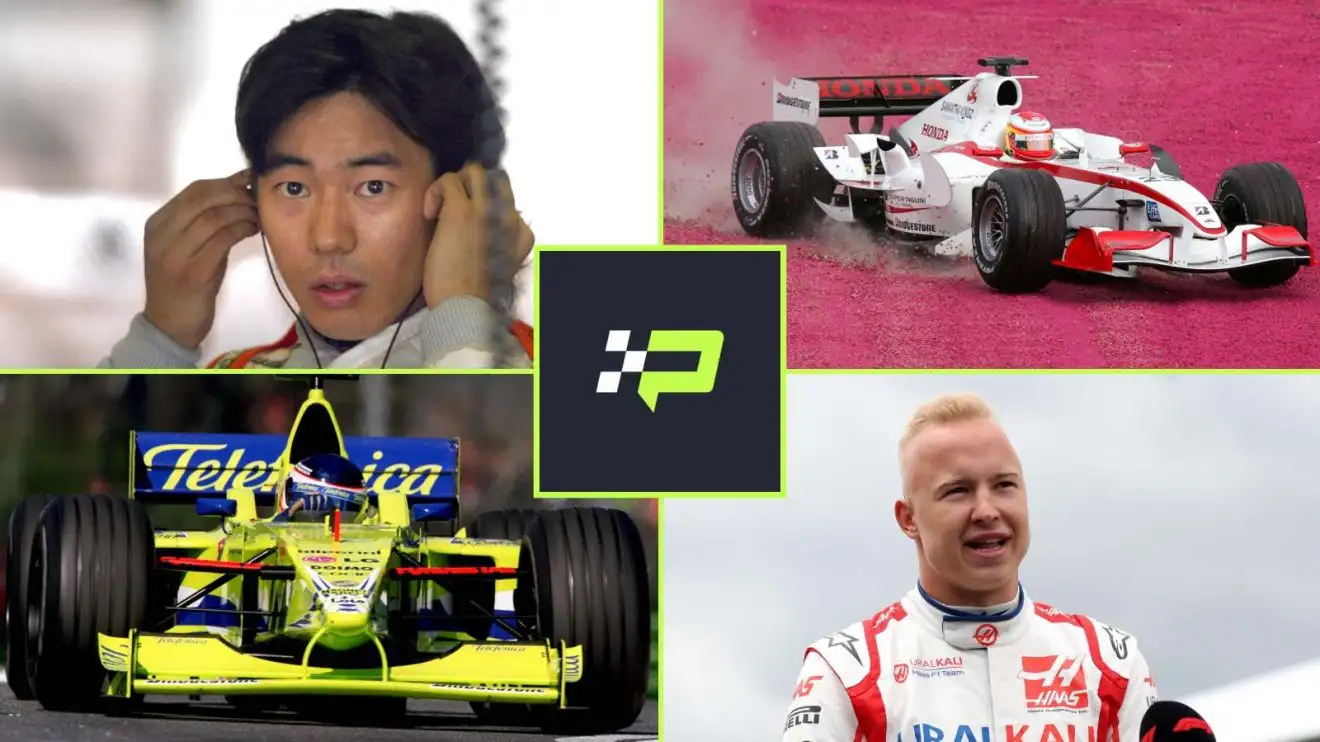
A Season of Danger and Disrespect
As the season progressed, it became clear that Bahrain was not a fluke. It was a preview. Week after week, Mazepin seemed out of his depth, turning elite racing circuits into his personal crash sites.
At Imola, the second race of the season, he spun twice in practice and crashed. In qualifying, he broke the “gentleman’s agreement” by overtaking cars on their warm-up laps, ruining Antonio Giovinazzi’s run. It was a move of selfishness that highlighted his lack of respect for his peers.
In Portugal, he ignored blue flags—mandatory instructions to let faster cars pass—and nearly took out race leader Sergio Perez, earning him a penalty and the ire of the Red Bull team. In Spain, he was penalized again for blocking Lando Norris. The paddock began to view him not just as a nuisance, but as a genuine safety hazard.
Perhaps the most terrifying moment came at the Azerbaijan Grand Prix in Baku. On the main straight, at speeds exceeding 200 mph, Mazepin aggressively swerved to block his own teammate, Mick Schumacher, squeezing him against the concrete wall. It was a move so dangerous that Schumacher screamed over the radio, “Does he want to kill us?” It was a shocking display of recklessness against the one person in the team he was supposed to work with.
The Teammate War
The dynamic between Mazepin and Mick Schumacher was one of the defining narratives of the 2021 Haas season. Schumacher, the son of the legendary Michael Schumacher, was everything Mazepin was not: humble, talented, and universally liked. The contrast was stark.
Mazepin was consistently slower than Schumacher. In qualifying, the gap was often embarrassing—sometimes exceeding half a second, an eternity in F1 terms. By the end of the year, Schumacher had beaten Mazepin in 20 out of 22 qualifying sessions. Mazepin’s response to this deficit was often paranoia; he frequently complained over the radio that he was being given inferior equipment, a claim the team vehemently denied.
Even when Mazepin managed to stay on track, he was often lonely at the back. At the Styrian Grand Prix, he finished nearly 40 seconds behind his teammate. At the Dutch Grand Prix, he tried to aggressively cut off Schumacher at the pit entry, nearly causing another disaster. The toxicity within the garage was palpable.
The “Highlights” Reel
The sheer volume of incidents Mazepin racked up in a single season is staggering to recount.
Silverstone: In the first-ever F1 Sprint race, Mazepin spun on the opening lap, cementing his reputation as a driver who couldn’t handle pressure.
Sochi: At his home Grand Prix in Russia, where he was desperate to impress, he qualified a humiliating three seconds off the pace of the nearest car and finished last. Even at home, he managed to block Yuki Tsunoda and earn a warning from the stewards.
Saudi Arabia: In the penultimate race, he slammed into the back of George Russell during a restart, ending his race in a pile of carbon fiber.
There were fleeting moments of mediocrity that looked like success only by comparison. In Brazil, he drove a clean race and even overtook Schumacher, though he finished 18th. But these moments were anomalies in a sea of failure. He finished the season 21st in a championship of 20 drivers (due to a reserve driver filling in for one race and technically placing higher), with zero points and a legacy of destruction.
The Sudden End
Despite the catastrophic performance, Haas intended to keep Mazepin for 2022. The money was simply too good to turn down. But history had other plans. In February 2022, Russia launched a full-scale invasion of Ukraine. The geopolitical landscape shifted overnight.
The association with a Russian oligarch became toxic. Western sanctions loomed, and public pressure mounted. Haas, realizing that the bad PR now outweighed the cash, severed ties with Uralchem and fired Nikita Mazepin just weeks before the season began.
Mazepin’s reaction was characteristic of his career: a lack of self-awareness. He held a press conference accusing Haas of “cancel culture” and claimed he was discriminated against. He launched a foundation, “We Compete As One,” ostensibly to help politically barred athletes, playing the victim card to the very end. He even sued the team for unpaid wages, a legal battle he eventually lost.
A Legacy of Failure
Nikita Mazepin’s brief foray into Formula 1 serves as a stark reminder that motorsport is a dangerous business that requires respect—respect for the car, respect for the competitors, and respect for the sport itself. Mazepin showed little of any.
His stats read like a tombstone for a career: 0 points, constant spins, and a trail of broken car parts. He was a driver who arrived with a checkbook and left with a lawsuit. While he recently claimed he is “99% sure” he will return to the sport, the F1 community has largely moved on.
In the end, Nikita Mazepin proved that while a billionaire father can open doors, he cannot drive the car for you. He will be remembered not as a racer, but as “Mazespin”—the rich kid who flew too close to the sun and crashed into the barriers.
News

Inside Shane Richie’s love life: Drug – fuelled orgy with six blondes; real reason he split from Coleen Nolan; six-year ‘affair with fan’
Inside Shane Richie’s love life: Orgy with six blondes; real reason he split from Coleen Nolan; six-year ‘affair with fan’ He’s popular with the ladies… Shane Richie…

SH0CKING REVELATI0N:A sh0cking behind-the-scenes secret revealed about Lizzie Rizzini, the woman replacing Carol Kirkwood on the 6pm weather bulletin
BBC viewers still reeling from the departure of Carol Kirkwood got another surprise last night when presenter Lizzie Rizzini appeared to flash her black lace stockings on…

HEARTBREAKING: Peter Andre’s Tearful Message to Son Junior After SHOCKING Revelation About How He Truly Feels Toward Mum Katie Price — Katie Price’s reaction scares fans.
Peter Andre’s emotional message to son Junior after it’s revealed how he really feels about mum Katie Pri… PETER Andre has shared an emotional message to his…

Ben Shephard opens up about the devastating health battle his wife is facing: “She wakes up crying every single morning…”
Inside This Morning Ben Shephard’s Life Including Rarely Seen Wife and Health Battle Ben Shephard is a name synonymous with British television, renowned for his engaging presentation…

🚨 LIVE TV HEARTBREAK: Good Morning Britain Host Announces ‘Devastating’ Dɘath of Guest Minutes Into Show
Viewers of Good Morning Britain were met with heartbreaking news just minutes into Friday’s (January 30) episode, as co-hosts Kate Garraway and Ranvir Singh reported the tragic…

Emmerdale legend Cain Dingle will never be the same again after a shock cancer diagnosis turns his world upside down
FROure Desk. Full Terms and conditions are available on the website http://www.itv.com/presscentre/itvpictures/terms Emmerdale wouldn’t be Emmerdale without the glowering, grunting embodiment of manliness that is Cain Dingle (Jeff Hordley) But…
End of content
No more pages to load






