In the high-octane world of Formula 1, promises are often written in carbon fiber and burnt rubber, but championships are forged in the unseen details of engineering and logistics. The announcement of Adrian Newey joining Aston Martin for the 2026 season was meant to be the final piece of a championship puzzle—a “Superteam” designed to dominate the new era of the sport. On paper, the ingredients are nothing short of legendary: the greatest car designer in history, the financial might of Lawrence Stroll, the driving genius of Fernando Alonso, and the power of Honda, a manufacturer with a proven track record of recent dominance.
However, as the dust settles on the headlines, a far more concerning reality is beginning to emerge. Championships, as every team principal knows, are not won on paper. Deep within the technical corridors of the sport, whispers are turning into alarms. The Aston Martin-Honda project, rather than being a guaranteed juggernaut, is showing signs of structural weaknesses that could derail the dream before the first light goes out in 2026. From catastrophic interpretational errors of the rules to a disjointed logistical empire, the “Dream Team” is facing a rude awakening.
The Loophole That Could Cost a Title
The most immediate and technically damning concern revolves around a fundamental misunderstanding of the 2026 engine regulations—a blunder that has left Honda on the back foot while its rivals sprint ahead. The controversy centers on the compression ratio of the new power units. Under the sweeping rule changes for 2026, the compression ratio for the cylinders has been reduced from 18:1 to 16:1.
To the layperson, this might seem like a minor adjustment. To an engine engineer, it is the difference between winning and losing. The regulation stipulates this ratio limit, but crucially, it does not explicitly define the conditions under which it is measured. Honda, operating with a conservative mindset, interpreted this rule to mean that the ratio could never exceed 16:1, regardless of the engine’s operating state.
Mercedes and Red Bull Powertrains (RBPT), however, read between the lines. They understood that the rule likely applied to static conditions—when the engine is cold and not running. They realized that when an engine is fired up and running at race temperatures, the metal components naturally expand due to thermal dynamics. This expansion alters the volume within the cylinder, effectively allowing the compression ratio to “grow” beyond the static limit during operation. By designing their engines to exploit this thermal expansion, Mercedes and RBPT have unlocked a “small but significant” power increase that is fully legal under the FIA’s current interpretation.
Honda missed this trick entirely. They are now lobbying the FIA to close the loophole, but in the ruthless world of F1 politics, such pleas rarely result in immediate change. The grim reality is that this disadvantage is potentially “baked in” for the entire 2026 season. Redesigning the fundamental architecture of an engine to chase this compression gain is not a quick fix; it requires time that Honda simply does not have. Aston Martin could be starting the new era with a power deficit that no amount of Adrian Newey aerodynamics can fully offset.
The “Zombie” Program: A Restart from Scratch
To understand why Honda might miss such a critical detail, one must look at the chaotic nature of their recent F1 involvement. This is not the same relentless Honda machine that powered Max Verstappen to his first title. This is a program that has been stopped, gutted, and restarted in a clumsy corporate dance that has hemorrhaged talent and momentum.
Honda technically withdrew from Formula 1 at the end of 2021, a decision that is now widely regarded as one of the most poorly justified in recent motorsport history. While they continued to assemble engines for Red Bull, their R&D program was effectively dismantled. Resources were diverted, key personnel were moved to other projects, and the “brains trust” behind their success was scattered.
When the decision was made to return with Aston Martin for 2026, Honda wasn’t picking up where they left off. They were essentially starting from scratch. While rivals like Ferrari, Mercedes, and Audi have been pouring resources into 2026 development without interruption, Honda has had to rebuild its infrastructure and knowledge base. They are playing a frantic game of catch-up.
This “stop-start” approach has consequences. Reports suggest that the new Honda project is far more “sensible” regarding budget, adhering strictly to the engine cost cap. Gone are the days of “success at any cost” that defined their partnership with Red Bull. While fiscal responsibility is admirable, in F1, it often translates to compromise. The Sakura facility, once the envy of the paddock, is now under immense pressure to deliver a miracle with fewer resources and less time than their competitors.
The Battery Bottleneck and the Electric Gamble
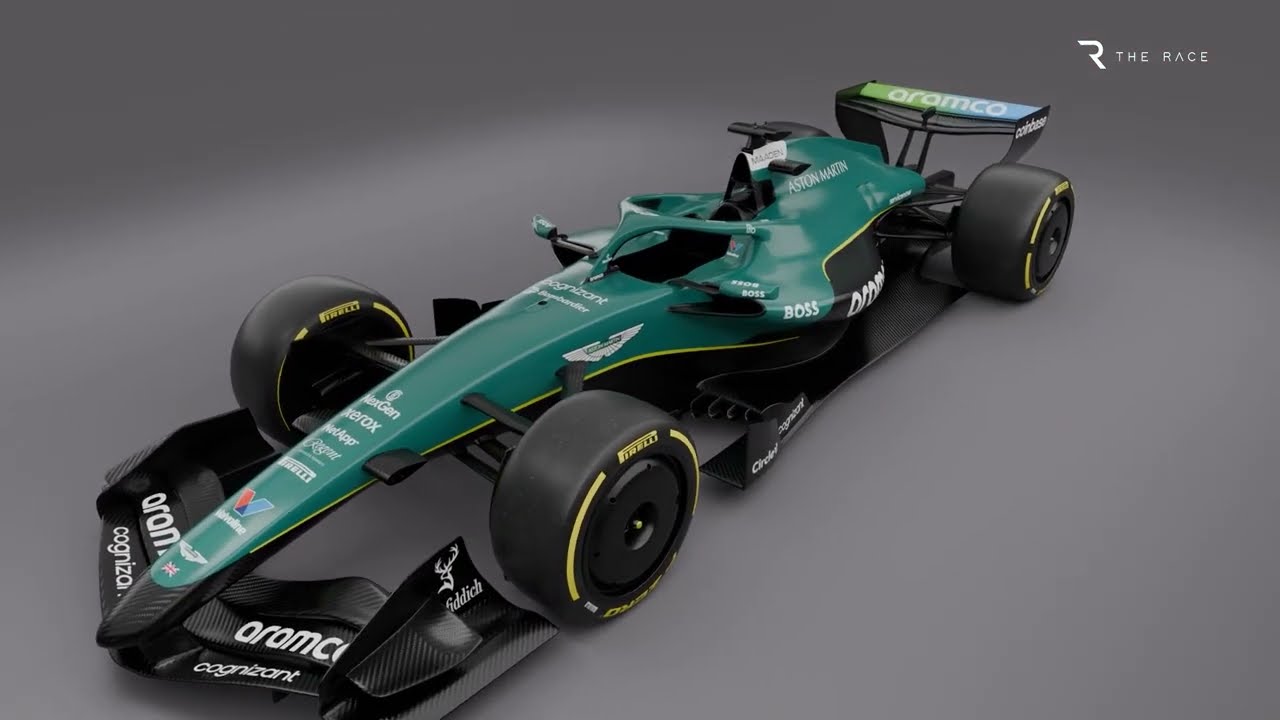
The concerns extend beyond the internal combustion engine. The 2026 regulations dictate a massive shift in power delivery, with a near 50/50 split between the internal combustion engine (ICE) and electrical power. This puts an unprecedented premium on battery technology and energy recovery systems.
Rumors are swirling that Honda is lagging significantly in this area. The new rules eliminate the MGU-H (Motor Generator Unit – Heat), a component Honda had mastered. Without it, the burden falls entirely on the MGU-K and the battery store. If the reports are accurate, Honda’s battery technology is currently struggling to meet the capacity and efficiency demands required to harvest and deploy energy effectively over a race distance.
In the previous era, a slight deficit in electrical power could be masked by a strong engine. In 2026, if you run out of electrical deployment, you are a sitting duck. A deficit here is not just a handicap; it is a competitive death sentence. If Aston Martin’s car is forced to “clip” (stop deploying energy) halfway down the straights because the battery is empty or overheating, Fernando Alonso will find himself being overtaken with embarrassing ease, regardless of how much downforce the car generates.
The Risk of Unproven Suppliers
A Formula 1 car is a chemistry set as much as it is a machine. The fuel and lubricants used are custom-designed molecules created to extract every millisecond of performance from the engine. For decades, teams like Ferrari and Mercedes have relied on symbiotic relationships with giants like Shell and Petronas. These suppliers have vast historical data and armies of chemists dedicated solely to F1.
Aston Martin, by contrast, is venturing into the unknown with Aramco (fuel) and Valvoline (lubricants). While Aramco is a titan of industry, their experience in developing bespoke high-performance F1 fuel is limited compared to the incumbents. Valvoline, similarly, is returning to the sport after a long absence.
This is not merely a branding exercise. The specific chemical composition of the fuel dictates how aggressively the engine can be tuned. If Aramco’s mixture is even slightly less resistant to “knock” (premature detonation) than the fuel from Petronas or ExxonMobil, Honda will have to dial back the engine performance to prevent failure. Aston Martin is essentially acting as a guinea pig for these suppliers, hoping they can immediately match the pedigree of companies that have been refining their F1 formulas for decades. It is a massive variable in an equation that cannot afford unknowns.
A Logistical Nightmare
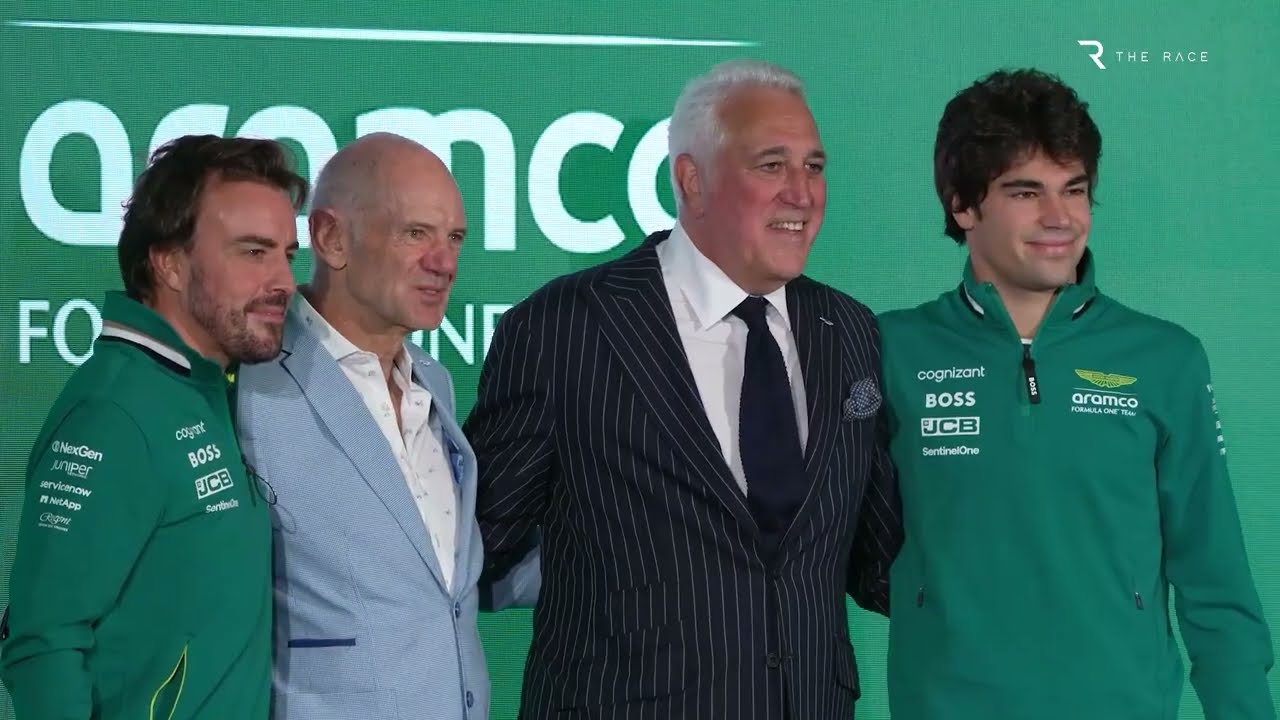
If the technical challenges weren’t enough, the geographical layout of the team is a logistical headache. The most successful teams in F1 history—think Ferrari in Maranello or modern Red Bull in Milton Keynes—operate with tight integration. Engine designers sit next to chassis engineers; problems are solved over coffee in the same canteen.
The Aston Martin-Honda project is the antithesis of this efficiency. The chassis is being designed in Silverstone, UK. The engine is being built in Sakura, Japan. The fuel and oil partners are headquartered in the Middle East and the United States, respectively. Components are being shipped across time zones and continents, adding layers of friction to the development process.
In an era where agile development is key, this disconnection is a severe handicap. When a problem arises on the dyno in Japan, the chassis team in the UK might be asleep. The synergy required to integrate Newey’s tight packaging requirements with Honda’s cooling needs becomes infinitely harder when the parties are separated by 6,000 miles.
The Human Powder Keg
Finally, there is the human element—the volatile mix of personalities that will be forced to endure these growing pains. Lawrence Stroll has poured hundreds of millions into this project and expects immediate returns. His patience is notoriously thin. Fernando Alonso, nearing the twilight of his career, joined Aston Martin for one last shot at a title. He still carries the scars of the “GP2 Engine” era with McLaren-Honda. If he senses even a whiff of that incompetence returning, the fallout will be public and brutal.
And then there is Adrian Newey. The design guru has always been intolerant of engine partners who lack the will or ability to compete. His exit from Red Bull was partly fueled by a desire for a new challenge, but he certainly did not sign up to fight with one hand tied behind his back. If the Honda power unit acts as an anchor on his chassis, the internal friction could tear the team apart before the season is halfway done.
Conclusion: A Gamble of Historic Proportions
The allure of the Aston Martin-Honda alliance is undeniable. It has all the trappings of a Hollywood script. But as 2026 approaches, the reality looks less like a fairy tale and more like a cautionary tale. The missed loopholes, the stop-start engine program, the unproven suppliers, and the logistical chaos all point to a team that is fighting battles on too many fronts.
While Honda has proven in the past that they can recover—eventually—the question is whether Aston Martin has the time or patience to wait. In the unforgiving crucible of Formula 1, you are only as strong as your weakest link. Right now, despite the star power of Newey and Alonso, those links are looking dangerously fragile. The “Superteam” is arriving, but they may already be too late to the party.
News

Inside Shane Richie’s love life: Drug – fuelled orgy with six blondes; real reason he split from Coleen Nolan; six-year ‘affair with fan’
Inside Shane Richie’s love life: Orgy with six blondes; real reason he split from Coleen Nolan; six-year ‘affair with fan’ He’s popular with the ladies… Shane Richie…

SH0CKING REVELATI0N:A sh0cking behind-the-scenes secret revealed about Lizzie Rizzini, the woman replacing Carol Kirkwood on the 6pm weather bulletin
BBC viewers still reeling from the departure of Carol Kirkwood got another surprise last night when presenter Lizzie Rizzini appeared to flash her black lace stockings on…

HEARTBREAKING: Peter Andre’s Tearful Message to Son Junior After SHOCKING Revelation About How He Truly Feels Toward Mum Katie Price — Katie Price’s reaction scares fans.
Peter Andre’s emotional message to son Junior after it’s revealed how he really feels about mum Katie Pri… PETER Andre has shared an emotional message to his…

Ben Shephard opens up about the devastating health battle his wife is facing: “She wakes up crying every single morning…”
Inside This Morning Ben Shephard’s Life Including Rarely Seen Wife and Health Battle Ben Shephard is a name synonymous with British television, renowned for his engaging presentation…

🚨 LIVE TV HEARTBREAK: Good Morning Britain Host Announces ‘Devastating’ Dɘath of Guest Minutes Into Show
Viewers of Good Morning Britain were met with heartbreaking news just minutes into Friday’s (January 30) episode, as co-hosts Kate Garraway and Ranvir Singh reported the tragic…

Emmerdale legend Cain Dingle will never be the same again after a shock cancer diagnosis turns his world upside down
FROure Desk. Full Terms and conditions are available on the website http://www.itv.com/presscentre/itvpictures/terms Emmerdale wouldn’t be Emmerdale without the glowering, grunting embodiment of manliness that is Cain Dingle (Jeff Hordley) But…
End of content
No more pages to load






