The phony war is over. If the Barcelona shakedown was a polite introduction to Formula 1’s radical 2026 era, the upcoming Bahrain pre-season test promises to be a brutal reality check. While the paddock buzzed with tentative excitement in Spain, the cars were running in “safe mode”—basic setups, unknown fuel loads, and engines turned down to a whisper. But as the grid descends on Sakhir, the gloves are coming off.
We are days away from seeing the true face of the 2026 regulations, and early indications suggest we are in for a shock. From terrifying straight-line speeds to a potential reliability crisis and a broadcast controversy that has fans fuming, Bahrain is set to reveal the good, the bad, and the ugly of F1’s new dawn.

The Speed Shock: 355 km/h and Climbing
The most jaw-dropping revelation from the initial data is the raw, unbridled speed of these new machines. When the 2026 regulations were announced, critics feared slower, heavier cars. The reality? They are missiles.
During the Barcelona shakedown, Esteban Ocon, piloting the Haas VF26 equipped with the new Ferrari power unit, reportedly clocked a staggering 355 km/h on the main straight. To put that into perspective, the top speed in qualifying during the 2025 season never exceeded 327 km/h. We are seeing a massive jump in straight-line performance.
However, this speed comes with a terrifying trade-off. The cars are reportedly losing significant grip in the corners, making them “loose” and difficult to control on exit. This creates a thrilling dynamic: monster braking zones and cars that are harder to drive. The drivers who can tame this instability—handling the transition from a slippery corner exit to a rocket-ship straight—will dominate.
The Reliability Time Bomb: Get Ready for “Barbecues”
If Barcelona was a Sunday drive, Bahrain is the torture test. The “shakedown” saw surprisingly few breakdowns, but insiders warn that this was a mirage. Teams were likely running old fuel mixtures or extremely conservative engine modes.
In Bahrain, the use of the new, 100% renewable fuel is mandatory. When you combine this volatile new chemistry with teams finally cranking their engines up to maximum output, the result is likely to be smoke—and lots of it. The paddock is bracing for a series of “barbecues” as cooling systems fail and power units reject the new fuel mappings. Reliability, not just speed, will be the currency of the first few races. A fast car is useless if it melts on day two of testing.
The Mercedes Mystery: Genius or Illegal?
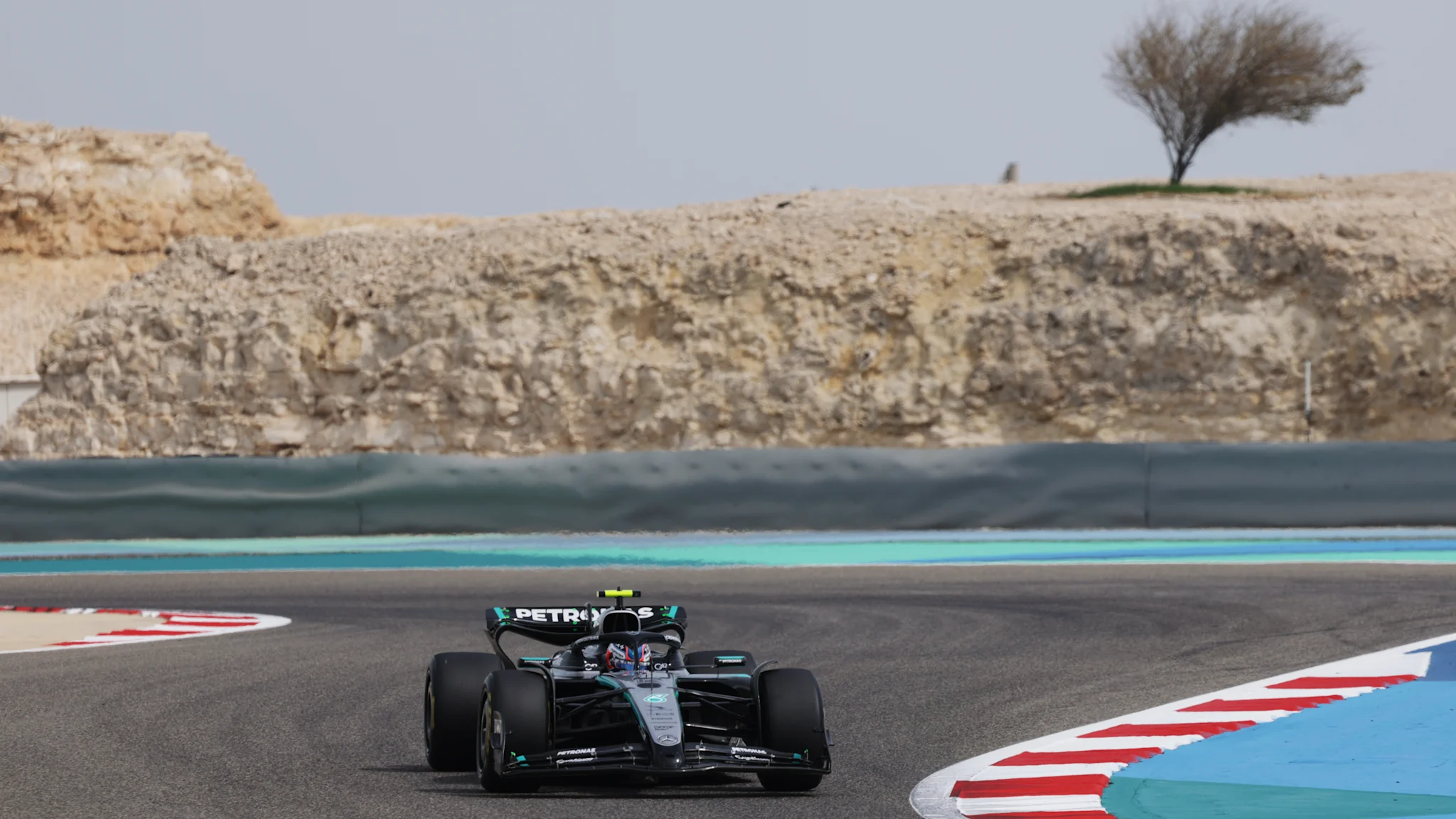
No F1 pre-season is complete without a technical scandal, and all eyes are on Mercedes. Conflicting reports are swirling regarding a specific “compression ratio trick” within the Mercedes power unit.
The rumor mill suggests Mercedes has found a gray area in the regulations that allows their engine to optimize its compression ratio based on temperature—effectively changing its performance profile from cold to hot. Some sources claim they will test this aggressively in Bahrain; others suggest they are locked in a standoff with the FIA, forced to compromise on fuel loads to stay legal. Is this the “silver bullet” that returns Mercedes to the top, or a rule breach that will see them clipped before the first lights go out? Bahrain will provide the first real clues.
The Suspension War: The Grid Splits
As the covers come off the final specs, a clear technical divide has emerged. The grid has split into two camps regarding suspension philosophy, a choice that is now locked in for the season.
Team Push Rod (8 Teams): McLaren, Mercedes, Red Bull, Ferrari, Racing Bulls, Aston Martin, Haas, and Audi.
Team Pull Rod (3 Teams): Williams, Alpine, and Cadillac.
It is a fascinating gamble. The majority have flocked to the push-rod layout, likely for aerodynamic packaging benefits under the new rules. But Williams, Alpine, and the newcomer Cadillac have gone the other way. If the pull-rod design offers a hidden mechanical grip advantage in these low-downforce cars, the minority could spring a massive surprise. Conversely, if they are wrong, they are stuck with a fundamental flaw they cannot change mid-season.
The “Dirty Air” Lie?
Perhaps the most concerning whisper comes from the cockpit. The 2026 rules were designed to eliminate “dirty air”—the turbulent wake that makes following another car impossible. However, Esteban Ocon has already sounded the alarm.
Following the Barcelona runs, Ocon hinted that overtaking was still incredibly difficult and that the “push-to-pass” active aero systems weren’t the instant fix the FIA promised. He suggested that dirty air is still a major factor. If Bahrain confirms that these cars still can’t follow each other through high-speed corners, the sport’s regulatory body will have serious questions to answer.
The Blackout for Fans
Finally, a point of contention that has nothing to do with engineering: the coverage. In a baffling move, it has been confirmed that only the final hour of each testing day in Bahrain will be broadcast live.
For a sport exploding in popularity, restricting access seems counter-intuitive. Fans desperate to see the new liveries and technical upgrades will be left staring at timing screens for most of the day. Worse, if a team decides not to run in that final hour, we effectively see nothing. It is a blackout that has frustrated the global fanbase, making that single hour of coverage the most scrutinized 60 minutes in recent F1 history.
Conclusion
Bahrain is where the poker faces drop. We will see all 11 teams—including the elusive Williams and the debutant Cadillac—finally sharing the tarmac. We will see who has correlation between their wind tunnel and reality (rumors say Ferrari and Aston Martin are safe, while others are panicking). And we will see who built a rocket, and who built a time bomb.
The 2026 era isn’t coming; it’s here. And if 355 km/h is the starting point, we are in for a wild ride.
News

Inside Shane Richie’s love life: Drug – fuelled orgy with six blondes; real reason he split from Coleen Nolan; six-year ‘affair with fan’
Inside Shane Richie’s love life: Orgy with six blondes; real reason he split from Coleen Nolan; six-year ‘affair with fan’ He’s popular with the ladies… Shane Richie…

SH0CKING REVELATI0N:A sh0cking behind-the-scenes secret revealed about Lizzie Rizzini, the woman replacing Carol Kirkwood on the 6pm weather bulletin
BBC viewers still reeling from the departure of Carol Kirkwood got another surprise last night when presenter Lizzie Rizzini appeared to flash her black lace stockings on…

HEARTBREAKING: Peter Andre’s Tearful Message to Son Junior After SHOCKING Revelation About How He Truly Feels Toward Mum Katie Price — Katie Price’s reaction scares fans.
Peter Andre’s emotional message to son Junior after it’s revealed how he really feels about mum Katie Pri… PETER Andre has shared an emotional message to his…

Ben Shephard opens up about the devastating health battle his wife is facing: “She wakes up crying every single morning…”
Inside This Morning Ben Shephard’s Life Including Rarely Seen Wife and Health Battle Ben Shephard is a name synonymous with British television, renowned for his engaging presentation…

🚨 LIVE TV HEARTBREAK: Good Morning Britain Host Announces ‘Devastating’ Dɘath of Guest Minutes Into Show
Viewers of Good Morning Britain were met with heartbreaking news just minutes into Friday’s (January 30) episode, as co-hosts Kate Garraway and Ranvir Singh reported the tragic…

Emmerdale legend Cain Dingle will never be the same again after a shock cancer diagnosis turns his world upside down
FROure Desk. Full Terms and conditions are available on the website http://www.itv.com/presscentre/itvpictures/terms Emmerdale wouldn’t be Emmerdale without the glowering, grunting embodiment of manliness that is Cain Dingle (Jeff Hordley) But…
End of content
No more pages to load






