The neon lights of the Las Vegas Strip have always illuminated stories of high stakes and impossible odds, but in December 2025, the real gamble wasn’t happening in the casinos. It was taking place on the asphalt of the F1 Academy circuit. An eighteen-year-old driver named Rachel Robertson crossed the finish line in fourth place, a result that would be commendable for a mid-field regular. But for Robertson, it was nothing short of a statistical anomaly. Just three years prior, she had never sat in a race car.
In a sport governed by the rigid laws of physics and the equally rigid timeline of career development, Robertson is a glitch in the system. Her journey from a complete novice to a full-time factory seat with Puma for the 2026 season has compressed a decade of learning into a mere thirty-six months. As the motorsport community looks toward the new season, a single, uncomfortable question hangs over the paddock: Is this the dawn of a new era in talent identification, or have we dangerously underestimated the value of experience?
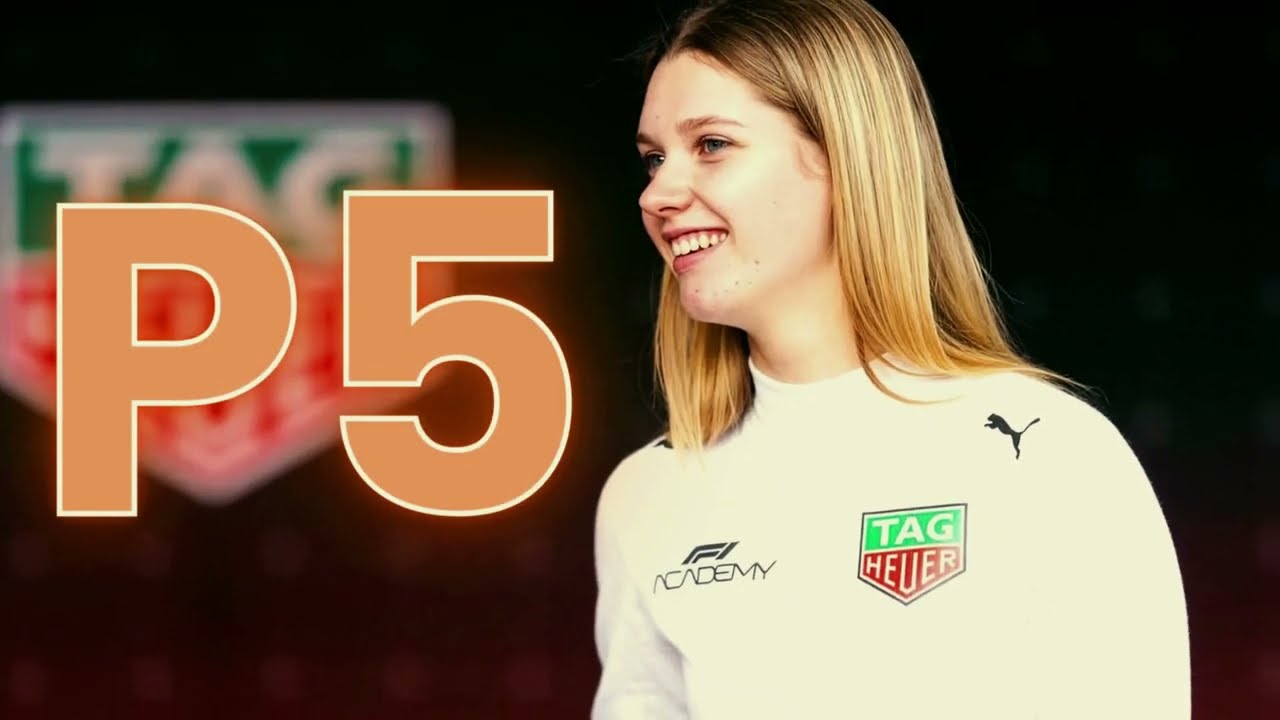
The Destruction of the Ten-Year Blueprint
To understand the magnitude of Robertson’s ascent, one must first understand the traditional architecture of a racing career. The “blueprint,” followed by current Formula 1 stars like Oscar Piastri and George Russell, is a grueling marathon that typically begins at age six or seven. It starts in karting, where children learn the fundamentals of racing lines and car control before they can even read fluently. By age fifteen, they graduate to Formula 4. By seventeen, they are in Formula 3, hardening their skills in the fires of international competition.
This ten-year ladder serves a specific purpose. It builds muscle memory, instills racecraft, and exposes drivers to thousands of laps of wheel-to-wheel combat. It creates a subconscious library of reactions to oversteer, understeer, and tire degradation.
Rachel Robertson didn’t just climb this ladder; she leaped over it entirely. Her journey began at age fifteen, not in a high-performance Rotax machine, but in humble rental karts. In the high-speed, high-cost world of motorsport, starting at fifteen is usually considered a death sentence for professional aspirations. Yet, by 2024, only her second year in any form of competition, she wasn’t just participating; she was the only female driver in the senior Rotax class of the British Kart Championships, consistently securing top-ten finishes against rivals who had been racing since they were toddlers.
From Karts to Prototypes: The Radical Leap
Most drivers transition from karts to entry-level single-seaters to ease the learning curve. Robertson, however, took a sharper turn. In 2025, she entered a competition for a Radical Motorsport factory drive. This was not a pay-to-play opportunity; it was a shootout against more than fifty of Britain’s most promising young talents.
Robertson won.
The victory secured her a seat in the Radical Cup UK, a series featuring high-downforce prototype sports cars that behave vastly differently from karts. The result? She finished third overall in the standings. In the span of twelve months, she had gone from karting paddocks to standing on podiums in prototype racing. The progression was tangible, and the results were documented, but the velocity of her rise was beginning to unnerve the traditionalists. It suggested that perhaps the “necessary” years of development were not as necessary as previously thought.
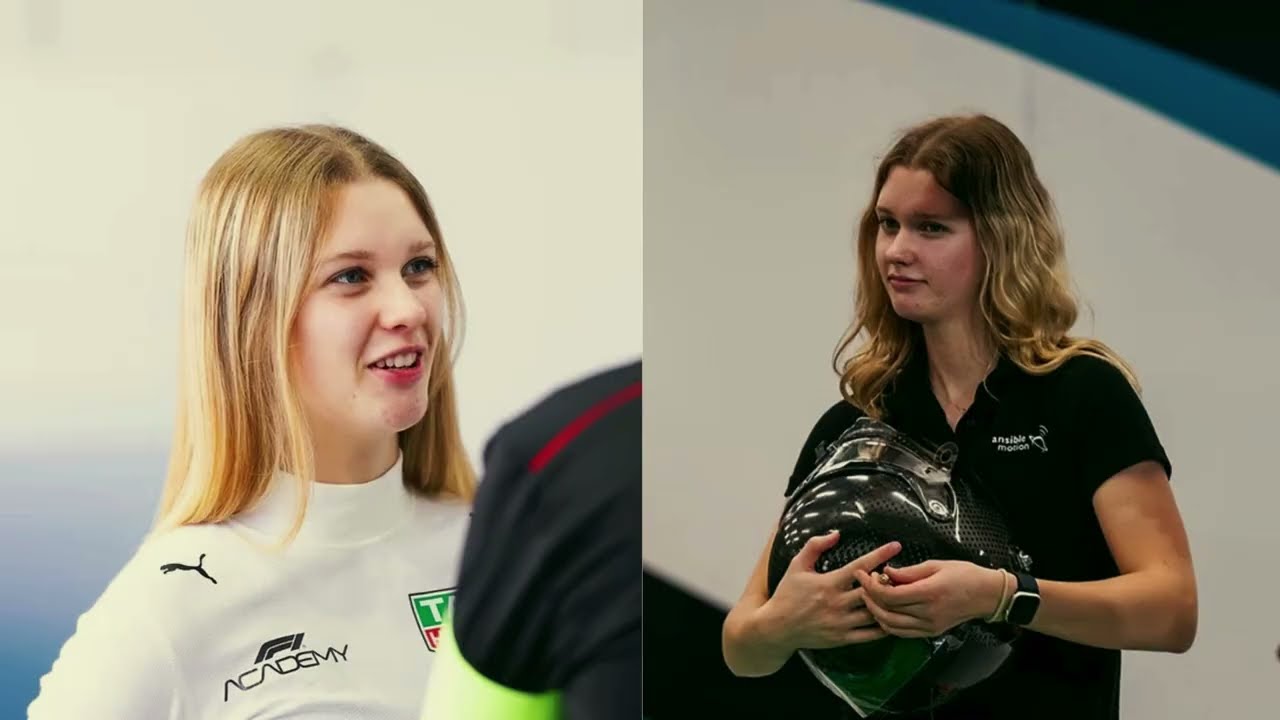
The Litmus Test: F1 Academy Evaluation
The true turning point came in September 2025. The F1 Academy, the premier all-female single-seater championship, held its first-ever rookie test. Eighteen drivers were invited from across the globe to be evaluated. This was not a marketing activation or a publicity stunt; it was a ruthless assessment of raw speed and technical feedback.
In a field of drivers who had spent years honing their craft in Formula 4 and regional open-wheel series, Robertson posted the fifth-fastest time. She didn’t finish eighteenth. She didn’t finish twelfth. She was in the top five, outpacing drivers with significantly more seat time. That single performance shattered the argument that she was merely a “good club racer.” It proved she possessed an innate sensitivity to the car that usually takes years to cultivate.
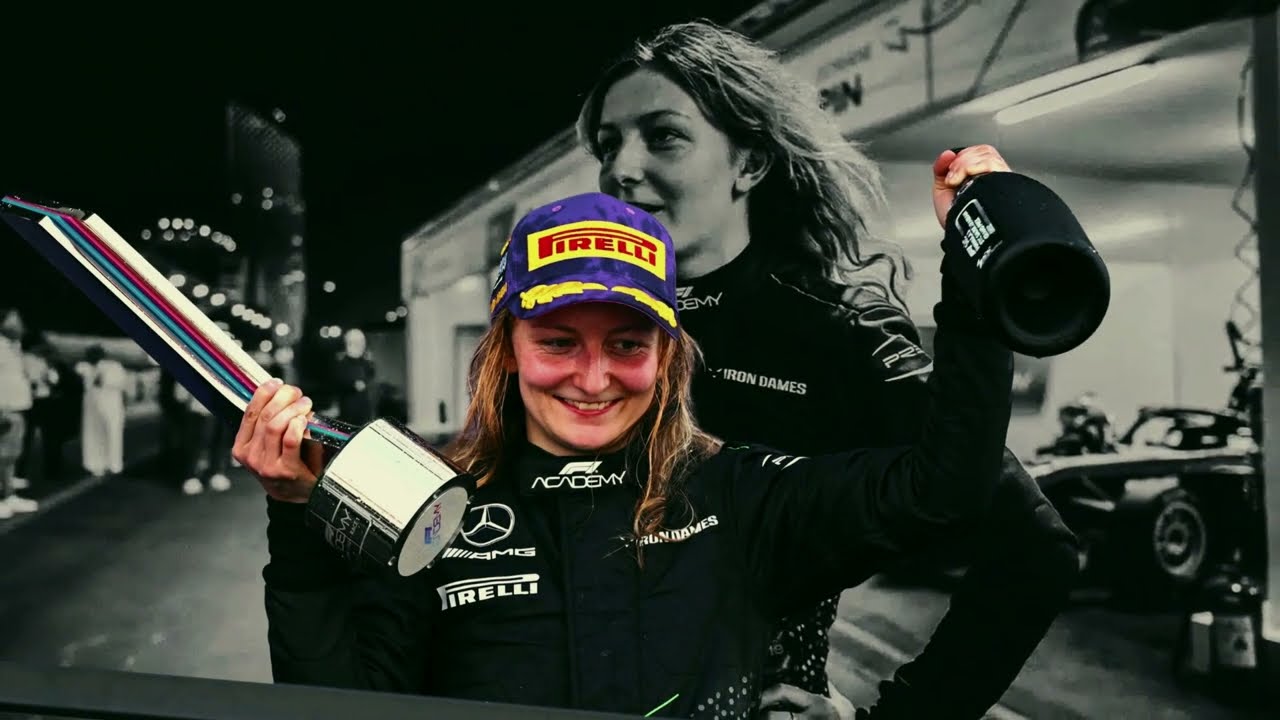
That evaluation earned her the call-up for the Las Vegas season finale. It was a baptism by fire: a street circuit known for its low grip and unforgiving barriers, coupled with the immense pressure of a global audience. With no championship fight to worry about, her instruction was simply to prove she belonged. Finishing fourth in Race One, ahead of drivers who had competed in the series all season, was her answer. It wasn’t luck, and it wasn’t a fluke. It was a demonstration of composure that belied her lack of experience.
The Puma Strategy: Data Over Sentiment
Puma’s announcement that they would back Robertson for a full-time 2026 seat transformed her story from a curiosity into a paradigm shift. Puma has been an official partner of the F1 Academy since its inception. They have access to every telemetry trace, every sector time, and every driver debrief. Their decision to sign Robertson wasn’t born out of charity; it was a strategic calculation.
The rookie test demonstrated her raw pace. The Vegas debut proved her ability to deliver under extreme pressure. But most importantly, her three-year trajectory demonstrated adaptability. In a sport where cars evolve annually, the ability to learn quickly is often more valuable than a static reservoir of experience. Puma is betting that Robertson’s learning curve has not yet flattened, whereas her more experienced rivals may have already reached their ceiling.
The Elephant on the Grid: Experience vs. Ability
Despite the optimism, the 2026 season presents a challenge that raw talent alone may not be able to solve. When the lights go out, Robertson will be lining up against drivers like Doriane Pin, a reigning champion with a depth of knowledge that Robertson simply hasn’t had the time to acquire.
The reality of motorsport—a reality often obscured by the excitement of a debut—is that “experience” is not just a buzzword. It translates to tire management over a thirty-minute race. It involves the intricate dance of qualifying strategy, knowing exactly when to push and when to conserve. It is about racecraft: the ability to attack and defend without losing time, a skill honed through hundreds of wheel-to-wheel battles.
Studies in junior motorsport indicate that a driver typically needs fifteen to twenty races in a Formula car to fully optimize their consistency. Robertson enters the 2026 season with exactly one race start. This is not a criticism of her ability; it is a contextual fact. She will be forced to learn in real-time, making mistakes on live television that her competitors made years ago in private testing or lower formulas.
A New Philosophy or a Cautionary Tale?
Robertson’s season will be played out on some of the world’s most technical circuits, including Silverstone and the Circuit of the Americas. These tracks punish imprecision. There is no place to hide. If she succeeds, it validates a revolutionary idea: that the “ten-year ladder” is not the only way to the top. It would suggest that the door to professional motorsport doesn’t close at age twelve, and that elite athleticism and work ethic can challenge the established timelines.
Comparisons are already being drawn to other fast-tracked drivers. Max Verstappen made his Formula 1 debut at seventeen, sparking similar debates about age and readiness. While Robertson is older, her “racing age” is infinitely younger. We may be watching the system evolve in real-time, moving away from rigid age-grade steps toward a meritocracy based on pure data and potential.
However, if she struggles, the 2026 season could serve as a harsh reinforcement of why the traditional ladder exists. It could prove that while you can fast-track speed, you cannot fast-track the wisdom that comes from years of competition.
The Verdict Awaits
The 2026 F1 Academy season spans seven rounds, and it will answer the questions that the industry is currently whispering. This is not an underdog story in the traditional sense; it is a clash of philosophies. On one side stands the proven route of long-term development. On the other stands Rachel Robertson and the theory of accelerated growth.
One race in Vegas showed us she has the speed. The rookie test showed us she has the potential. But a full championship campaign is where champions are forged and where reality often catches up with potential. Regardless of the outcome, the motorsport world will be watching closely. Rachel Robertson isn’t just racing for a trophy; she is racing to prove that the impossible timeline is, in fact, possible.
Is this the future of driver development, or a cautionary tale about the dangers of skipping steps? In 2026, we find out together.
News

Inside Shane Richie’s love life: Drug – fuelled orgy with six blondes; real reason he split from Coleen Nolan; six-year ‘affair with fan’
Inside Shane Richie’s love life: Orgy with six blondes; real reason he split from Coleen Nolan; six-year ‘affair with fan’ He’s popular with the ladies… Shane Richie…

SH0CKING REVELATI0N:A sh0cking behind-the-scenes secret revealed about Lizzie Rizzini, the woman replacing Carol Kirkwood on the 6pm weather bulletin
BBC viewers still reeling from the departure of Carol Kirkwood got another surprise last night when presenter Lizzie Rizzini appeared to flash her black lace stockings on…

HEARTBREAKING: Peter Andre’s Tearful Message to Son Junior After SHOCKING Revelation About How He Truly Feels Toward Mum Katie Price — Katie Price’s reaction scares fans.
Peter Andre’s emotional message to son Junior after it’s revealed how he really feels about mum Katie Pri… PETER Andre has shared an emotional message to his…

Ben Shephard opens up about the devastating health battle his wife is facing: “She wakes up crying every single morning…”
Inside This Morning Ben Shephard’s Life Including Rarely Seen Wife and Health Battle Ben Shephard is a name synonymous with British television, renowned for his engaging presentation…

🚨 LIVE TV HEARTBREAK: Good Morning Britain Host Announces ‘Devastating’ Dɘath of Guest Minutes Into Show
Viewers of Good Morning Britain were met with heartbreaking news just minutes into Friday’s (January 30) episode, as co-hosts Kate Garraway and Ranvir Singh reported the tragic…

Emmerdale legend Cain Dingle will never be the same again after a shock cancer diagnosis turns his world upside down
FROure Desk. Full Terms and conditions are available on the website http://www.itv.com/presscentre/itvpictures/terms Emmerdale wouldn’t be Emmerdale without the glowering, grunting embodiment of manliness that is Cain Dingle (Jeff Hordley) But…
End of content
No more pages to load






