In the high-stakes world of Formula 1, regulatory changes are usually the great equalizer. They are the moments when the deck is reshuffled, when dominant dynasties crumble, and when the underdog finally gets a shot at glory. As the sport barrels toward the massive overhaul scheduled for 2026, the narrative sold to fans has been one of hope and parity. We are told that the new engine rules, with their increased reliance on electrical power and sustainable fuels, will reset the grid and bring the field closer together.
But buried deep inside the technical appendices of the 2026 regulations lies a truth that almost nobody in the paddock wants to say out loud. While teams obsess over aerodynamics and battery efficiency, a fundamental shift in driving mechanics is about to take place—one that threatens to expose the limitations of the current grid while inadvertently handing a massive, unassailable advantage to one specific driver.
The 2026 era isn’t going to be about who has the fastest car. It’s going to be about who has the most disciplined right foot. And if the early data is correct, the regulations designed to stop Red Bull’s dominance might actually be building a throne for Max Verstappen.
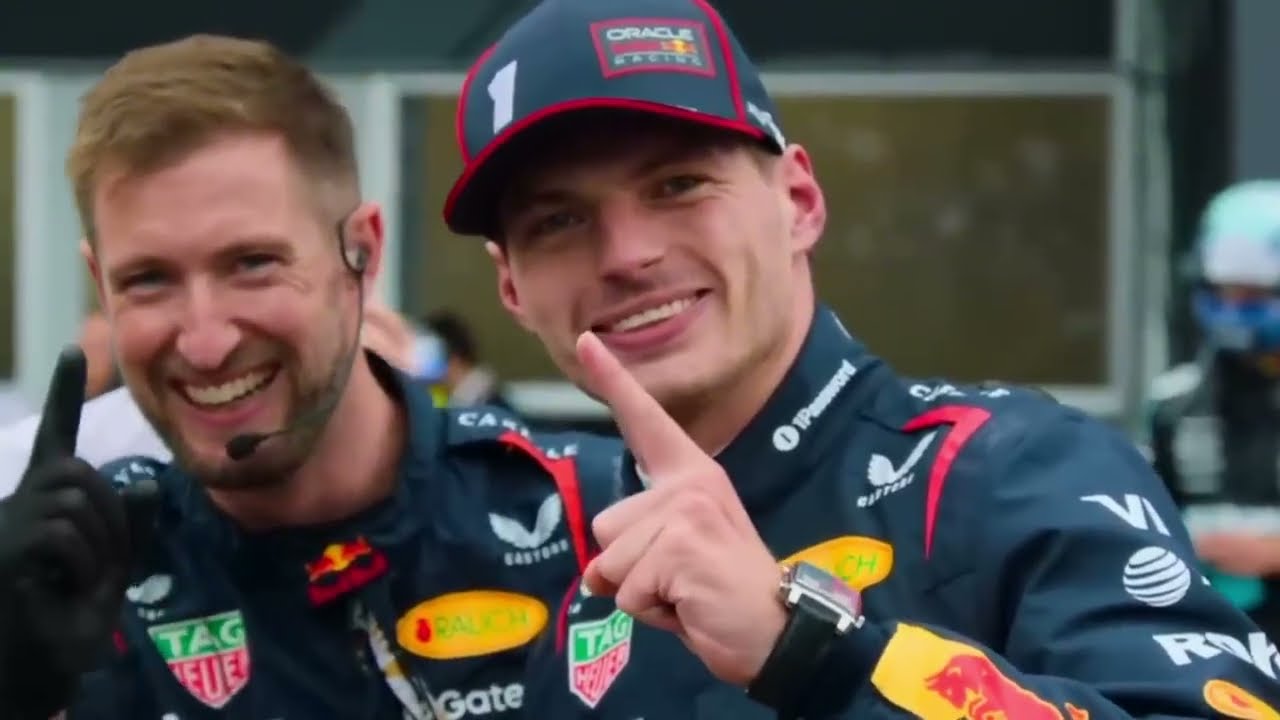
The Death of the “Switch”
To understand the looming crisis, we have to look at how modern Formula 1 cars are driven versus how the 2026 beasts will behave. Currently, despite the immense power of the turbo-hybrid engines, the cars have massive amounts of downforce and relatively forgiving deployment systems. Drivers can often rely on “point-and-shoot” tactics: brake late, rotate the car sharply, and smash the throttle to exit the corner. It’s aggressive, it’s visual, and it relies on the car’s grip to mask imperfections in throttle application.
In 2026, that safety net disappears. The new power units will feature a roughly 50/50 split between the internal combustion engine (ICE) and electrical deployment. This sounds like a simple spec change, but it fundamentally alters the physics of racing. The cars will have less downforce, heavier batteries, and higher ride heights. They will be inherently unstable, prone to sliding, and desperate for traction.
More importantly, the way power is delivered will change. The throttle will no longer be a request for speed; it will be a negotiation with the car’s energy store.
Most drivers on the grid today, even some of the elite, treat the throttle pedal somewhat like a switch. They ramp up to 100% pressure aggressively to chase acceleration. In the current era, the systems manage this well. In 2026, however, the throttle becomes a precision dial. If a driver asks for too much torque too quickly, they won’t just get wheel spin—they will get punished by the energy management system.
The “Micro-Slip” Phenomenon
This is where the nightmare begins for the rest of the field and where the dream scenario starts for Max Verstappen. Data analysts who have studied telemetry across multiple seasons have consistently noted a peculiar anomaly in Verstappen’s driving style. Unlike his rivals who often spike the throttle to find the limit of grip, Verstappen applies power earlier but far more progressively.
He feeds the power in millimeter by millimeter. It is a technique that keeps the rear tires slipping just below the threshold that triggers instability—a concept engineers call “micro-slip.” It’s not flashy, and it doesn’t look fast on a highlight reel, but it is devastatingly efficient.
In 2026, efficiency is the only currency that matters. Because electrical deployment is capped and harvesting is heavily regulated, a driver cannot simply lean on peak power whenever they wish. Deployment windows will be shorter and situational. If a driver gets aggressive and spins up the rear wheels, they are not just overheating their tires; they are wasting precious electrical energy.
Imagine a scenario where a driver pushes too hard out of a hairpin. In 2025, they lose a tenth of a second. In 2026, that wheel spin dumps electrical energy that was meant for the subsequent straight. They lose the exit, they lose the top speed on the straight, and because they were inefficient, they might not have enough battery for the next defensive move. A single throttle mistake compounds into a lap-ruining, or even race-ruining, deficit.
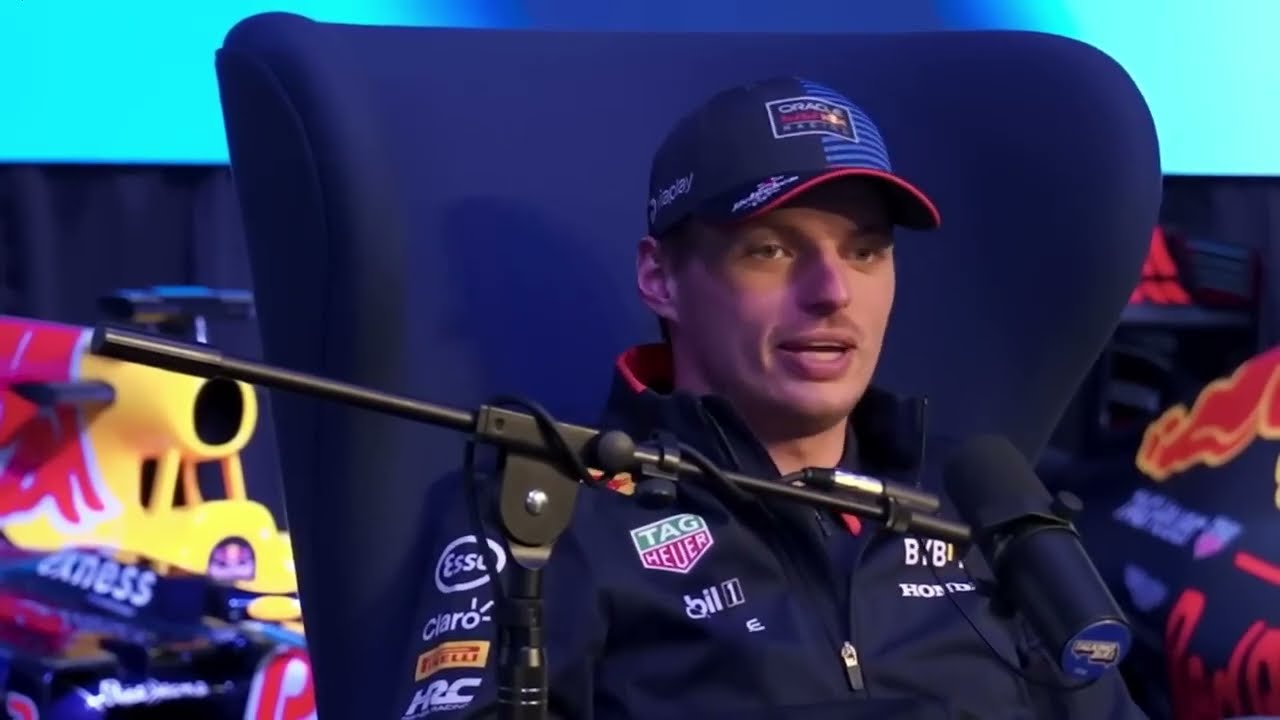
Controlled Chaos: Max’s Natural Habitat
The irony of the situation is palpable. The FIA and F1 organizers have pushed for these rules to make the cars harder to drive, believing that increasing the difficulty would highlight driver skill and lead to more mistakes, thus creating better racing. They were right about the mistakes, but they seemingly forgot who they were dealing with.
Max Verstappen has built his entire career on the edge of instability. While other drivers complain about “nervous” rear ends and demand setups that induce understeer to feel safe, Verstappen thrives in a car that moves underneath him. He grew up karting on cold tires, driving aggressive setups with loose rears, and learning to catch slides before they even happen.
For Verstappen, a car that is sliding is not a crisis; it is a standard operating condition. He doesn’t react to the slide; he predicts it.
The 2026 cars, with their reduced downforce and heavy rear ends, are going to be “loose” by design. They will require constant corrections and a hyper-sensitivity to traction limits. This isn’t a new challenge for the Dutchman; it’s a return to his comfort zone. While veterans of the high-downforce era struggle to rewire their brains to stop trusting the car’s grip, Verstappen will simply be driving the way he always has.
The Psychological Toll of the “Energy Trap”
There is a psychological component to this regulation change that is largely being ignored. Racing drivers are creatures of confidence. When a car behaves predictably, they push. When it snaps at them, they hesitate.
The 2026 regulations introduce a variable feedback loop. Because power availability changes lap-to-lap based on harvesting success, the pedal underneath the driver’s foot will not always yield the same response. This requires a driver to think fast, adjusting their throttle maps and expectations in real-time.
For a driver who relies on rhythm and muscle memory, this variability will be mentally exhausting. They will second-guess their instincts. “Did the rear snap because I pushed too hard, or because the deployment cut out?” That split-second of doubt is where lap time dies.
Verstappen, however, drives based on “feel” rather than theory. His sensitivity to the car’s mechanical grip allows him to adapt instantly. Engineers have often described his ability to drive at the traction limit rather than reacting to it. In an environment where the car stops warning you before it bites, that intuition is priceless.
The Unintended Consequence
We are potentially heading into a season where races are decided not by who has the most courage in the braking zones, but by who wastes the least power on the exits. It flips the traditional hierarchy of Formula 1. The drivers who are celebrated for their “do or die” qualifying laps and aggressive overtakes could suddenly look ordinary, exposed by a set of rules that demand restraint over raw speed.
The terrifying thought for rival teams is that Verstappen is already driving as if these rules exist. He rarely spins because of throttle application. He rarely destroys his rear tires compared to his teammates. He is already practicing the discipline that 2026 will make mandatory.
So, when the new era dawns and the lights go out, do not be surprised if the “level playing field” looks remarkably tilted. The regulations were designed to bring everyone closer to the front. Instead, by emphasizing throttle control, adaptability, and efficiency in an unstable car, Formula 1 may have just built the perfect playground for Max Verstappen.
The 2026 rules were meant to be a reset button. Instead, they might just be a turbocharger for the Verstappen dynasty. And the scariest part? He won’t even have to change his driving style to win; everyone else will have to change theirs just to keep up.
News

Inside Shane Richie’s love life: Drug – fuelled orgy with six blondes; real reason he split from Coleen Nolan; six-year ‘affair with fan’
Inside Shane Richie’s love life: Orgy with six blondes; real reason he split from Coleen Nolan; six-year ‘affair with fan’ He’s popular with the ladies… Shane Richie…

SH0CKING REVELATI0N:A sh0cking behind-the-scenes secret revealed about Lizzie Rizzini, the woman replacing Carol Kirkwood on the 6pm weather bulletin
BBC viewers still reeling from the departure of Carol Kirkwood got another surprise last night when presenter Lizzie Rizzini appeared to flash her black lace stockings on…

HEARTBREAKING: Peter Andre’s Tearful Message to Son Junior After SHOCKING Revelation About How He Truly Feels Toward Mum Katie Price — Katie Price’s reaction scares fans.
Peter Andre’s emotional message to son Junior after it’s revealed how he really feels about mum Katie Pri… PETER Andre has shared an emotional message to his…

Ben Shephard opens up about the devastating health battle his wife is facing: “She wakes up crying every single morning…”
Inside This Morning Ben Shephard’s Life Including Rarely Seen Wife and Health Battle Ben Shephard is a name synonymous with British television, renowned for his engaging presentation…

🚨 LIVE TV HEARTBREAK: Good Morning Britain Host Announces ‘Devastating’ Dɘath of Guest Minutes Into Show
Viewers of Good Morning Britain were met with heartbreaking news just minutes into Friday’s (January 30) episode, as co-hosts Kate Garraway and Ranvir Singh reported the tragic…

Emmerdale legend Cain Dingle will never be the same again after a shock cancer diagnosis turns his world upside down
FROure Desk. Full Terms and conditions are available on the website http://www.itv.com/presscentre/itvpictures/terms Emmerdale wouldn’t be Emmerdale without the glowering, grunting embodiment of manliness that is Cain Dingle (Jeff Hordley) But…
End of content
No more pages to load






