It began with a bank account containing just £240,000 and a dream that many dismissed as the vanity project of a billionaire. Seven years later, Lawrence Stroll’s Aston Martin F1 team has morphed into something far more formidable—and potentially terrifying—for the rest of the Formula 1 grid. As we stand in January 2026, on the cusp of the sport’s most radical regulatory overhaul in over a decade, the paddock is buzzing with a mix of awe and anxiety. Aston Martin isn’t just trying to compete; they are constructing a “monster” designed to devour championships.
The fear permeating the garages of Red Bull, Mercedes, and Ferrari isn’t unfounded. It stems from a convergence of three specific elements that have never existed together in Formula 1 history: the unlimited ambition of a billionaire owner, the exclusive backing of a legendary engine manufacturer, and the genius of the sport’s greatest designer, Adrian Newey. Any one of these factors would make a team a midfield threat. Together, they represent a potential dynasty in the making. But as with all great gambles, the line between total dominance and expensive disaster is razor-thin.
The Architect of Victory
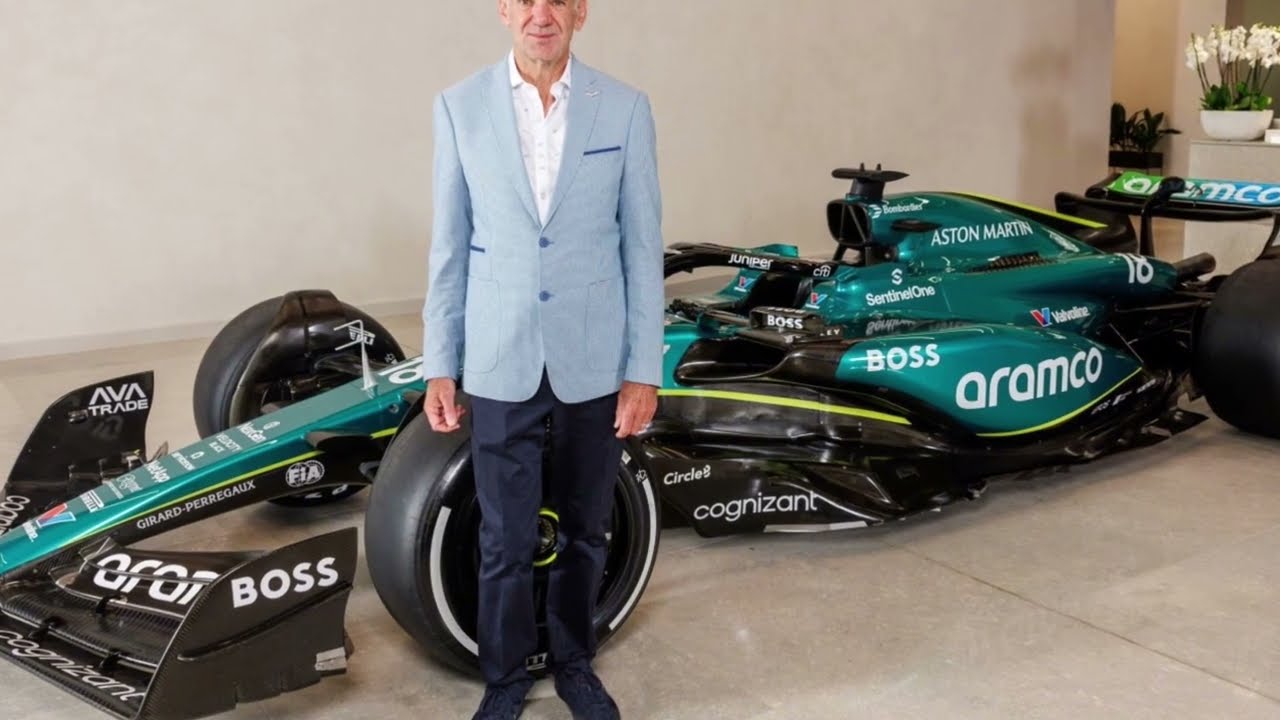
The centerpiece of this ambitious project is, undoubtedly, Adrian Newey. When his move to Aston Martin was announced in September 2024, it sent shockwaves through the sport. But it wasn’t just the salary—a reported package approaching £200 million over five years—that raised eyebrows. It was the structure of the deal. Newey didn’t just join as a designer; he joined as a partner.
Starting officially on March 1, 2025, Newey was granted an equity stake in the team, estimated at around 2.5%. For a man who has designed cars that have won 25 world titles and 223 Grand Prix victories, this was the final frontier. “Having the chance to become a shareholder and partner represented something never offered to me before,” Newey explained. It shifted his role from a hired gun to a co-owner, aligning his personal success directly with the team’s financial and competitive health.
By November 2025, the stakes were raised even higher when it was announced that Newey would take over as Team Principal for the 2026 campaign. This consolidation of technical and managerial power is rare in modern F1, reminiscent of the autocratic but effective leadership styles of the past. It signals that Aston Martin is no longer a democracy; it is a guided missile aimed at the world championship, steered by the singular vision of the sport’s most successful engineer.
The Honda Factor: A Double-Edged Sword?
If Newey provides the brain, Honda provides the heart. The 2026 season marks the beginning of Aston Martin’s era as the exclusive Honda works team. This is a critical distinction. For the past 15 years, the Silverstone-based outfit has been a customer team, largely reliant on Mercedes engines. While reliable, being a customer means you effectively get “hand-me-down” architecture—you must wrap your chassis around an engine designed for someone else’s car.
That changes now. Honda’s partnership with Aston Martin is a bespoke arrangement. The chassis and power unit teams are working in total synchronization, allowing for integration compromises that maximize overall car performance rather than just engine output. It’s the same “works” status that allowed Red Bull to dominate the last era and Mercedes the one before that.
However, this partnership brings with it the article’s most significant tension point. Reports emerging from Japan this month suggest that Honda’s 2026 power unit development is behind schedule. Honda President Koji Watanabe admitted in January 2026 that the project faces “serious challenges” and that the team needs more time to hit internal targets. In the ruthless world of F1, “time” is the one resource you cannot buy.
With the homologation deadline looming at the end of February 2026, the fear is that Aston Martin might launch their revolutionary car with a compromised engine. If reports are accurate that Honda missed a trick regarding compression ratios—something Mercedes and Red Bull Powertrains allegedly exploited—Aston Martin could start the new era with a power deficit. And as history shows, even an aerodynamic masterpiece by Adrian Newey cannot easily overcome a slow engine.
The 2026 Reset: Chaos is a Ladder
Why is everyone so focused on 2026? Because it represents a “Day Zero” for Formula 1. The new regulations are the most comprehensive changes since the turbo-hybrid era began in 2014. The cars will be smaller, lighter, and crucially, the power delivery changes drastically. The split between the internal combustion engine (ICE) and the electric motor shifts to 50/50. The electric output (MGU-K) will nearly triple, jumping from 120kW to a massive 350kW.
This fundamental alteration changes how the cars behave on track, how they harvest energy, and how drivers must attack corners. History proves that these major regulation resets shuffle the deck. Mercedes nailed the 2014 engine regs and won eight consecutive constructor titles. Red Bull mastered the 2022 ground-effect aerodynamics and created the Verstappen era. Aston Martin is betting the house that they can do both.
The team’s secret weapon in this battle is their brand-new, 40-acre technology campus at Silverstone. Gone are the days of staff driving models in vans to rent Mercedes’ wind tunnel. Aston Martin now possesses the newest, most advanced wind tunnel in the sport, which became fully operational in March 2025. This facility allows for a level of aerodynamic refinement and correlation that the team previously could only dream of. Under the sliding scale rules, their lackluster performance in 2024 and 2025 has actually granted them more wind tunnel time than their rivals—time that has been poured exclusively into the 2026 contender.
The Risk of the “Super Team”
Despite the unparalleled investment and talent, success is not guaranteed. Critics point to the cautionary tale of Toyota, who spent billions in the 2000s for zero race wins. Money buys facilities, but it doesn’t buy culture or chemistry. Integrating heavy hitters like Newey, former Ferrari technical director Enrico Cardile, and ex-Mercedes engine guru Andy Cowell into a cohesive unit is a massive managerial challenge.
Furthermore, the team enters 2026 on the back foot. Their 2025 campaign was defined by struggle, with the team finishing in the lower midfield. Lance Stroll himself called the situation a “big question mark,” admitting the team lacked the tools to compete at the top. The simulator was described as “weak,” and wind tunnel recalibrations hinted at deep-rooted correlation issues.

Conclusion: A Binary Outcome
Aston Martin’s 2026 project is an all-or-nothing proposition. There is no middle ground for a team with a £200 million designer, a works engine deal, and the best facilities in the world. Lawrence Stroll has built a machine designed to win, removing every possible excuse.
If the stars align—if Newey’s chassis is a masterpiece and Honda resolves their teething issues—Aston Martin could pull a “Mercedes 2014” and leave the field in their dust. But if the engine falls short or the “super team” culture fractures, it will be the most expensive failure in the history of motorsport.
One thing is certain: when the lights go out for the first race of 2026, every eye will be on the green cars. They have built a monster. The only question left is whether it will eat the competition, or eat its creators.
News

Inside Shane Richie’s love life: Drug – fuelled orgy with six blondes; real reason he split from Coleen Nolan; six-year ‘affair with fan’
Inside Shane Richie’s love life: Orgy with six blondes; real reason he split from Coleen Nolan; six-year ‘affair with fan’ He’s popular with the ladies… Shane Richie…

SH0CKING REVELATI0N:A sh0cking behind-the-scenes secret revealed about Lizzie Rizzini, the woman replacing Carol Kirkwood on the 6pm weather bulletin
BBC viewers still reeling from the departure of Carol Kirkwood got another surprise last night when presenter Lizzie Rizzini appeared to flash her black lace stockings on…

HEARTBREAKING: Peter Andre’s Tearful Message to Son Junior After SHOCKING Revelation About How He Truly Feels Toward Mum Katie Price — Katie Price’s reaction scares fans.
Peter Andre’s emotional message to son Junior after it’s revealed how he really feels about mum Katie Pri… PETER Andre has shared an emotional message to his…

Ben Shephard opens up about the devastating health battle his wife is facing: “She wakes up crying every single morning…”
Inside This Morning Ben Shephard’s Life Including Rarely Seen Wife and Health Battle Ben Shephard is a name synonymous with British television, renowned for his engaging presentation…

🚨 LIVE TV HEARTBREAK: Good Morning Britain Host Announces ‘Devastating’ Dɘath of Guest Minutes Into Show
Viewers of Good Morning Britain were met with heartbreaking news just minutes into Friday’s (January 30) episode, as co-hosts Kate Garraway and Ranvir Singh reported the tragic…

Emmerdale legend Cain Dingle will never be the same again after a shock cancer diagnosis turns his world upside down
FROure Desk. Full Terms and conditions are available on the website http://www.itv.com/presscentre/itvpictures/terms Emmerdale wouldn’t be Emmerdale without the glowering, grunting embodiment of manliness that is Cain Dingle (Jeff Hordley) But…
End of content
No more pages to load






