The Art of the Long Con in Formula 1
In the high-octane world of Formula 1, finishing seventh in the Constructors’ Championship is usually a death knell. It signals a team in decline, a failed concept, or a lack of resources. But when Aston Martin limped across the finish line of the 2025 season with a paltry 89 points—a staggering drop from their 280-point haul just two years prior—the paddock wasn’t witnessing a collapse. They were witnessing a deception.
As we stand on the precipice of the 2026 season, the truth is finally emerging. That “disastrous” 2025 campaign, where the AMR25 looked more like a mid-field relic than a podium contender, was a deliberate sacrifice. While their rivals fought tooth and nail for every scrap of downforce in the dying days of the old regulations, Aston Martin was doing something else entirely. They were building a war machine in the shadows, fueled by over £200 million in investment, the greatest mind in motorsport history, and a burning desire to exploit the most radical rule changes the sport has seen in a decade.

The “Newey Factor”: Unleashing the Genius
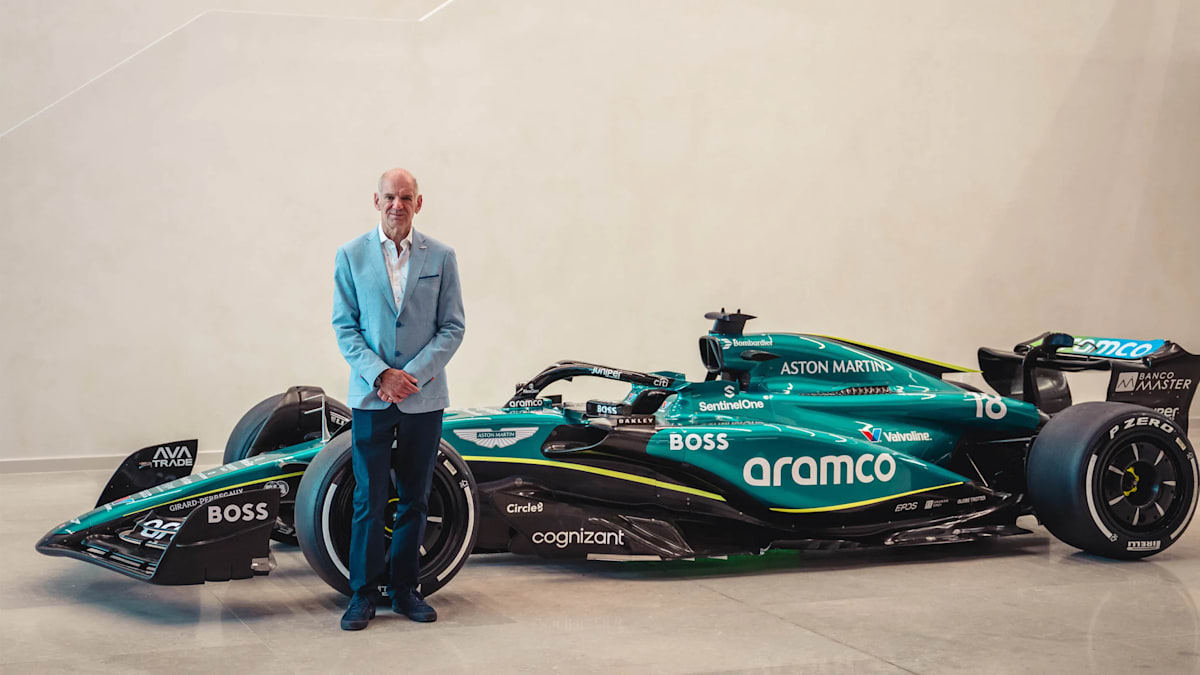
The centerpiece of this audacious gamble is a man who needs no introduction, yet somehow manages to redefine his legend with every career move: Adrian Newey. When Red Bull announced his departure in May 2024, it sent shockwaves through the sport comparable to a driver market earthquake. Every team wanted him. Ferrari courted him. But it was Lawrence Stroll who landed the knockout punch.
Signed for a reported £150 million over five years, including a 2.5% equity stake in the team, Newey didn’t just join Aston Martin to draw pretty lines on a chassis. He joined to lead. As of November 2025, the architect of 26 world championships was named Team Principal for the 2026 season.
Inside the team, the atmosphere has shifted from hope to an intense, focused mania. Andy Cowell, the man behind the dominant Mercedes hybrid engines of the 2010s and now Aston’s Group CEO, describes Newey’s presence as transformative. “Adrian is heavily involved in detail aero work, mechanical work, suspension work,” Cowell noted. “You will see him both at his drawing board and at engineers’ CFD screens.”
Newey himself admits to entering a “design trance,” a state of flow so consuming that his wife reportedly complains about his mental absence even when he’s physically present. This isn’t a figurehead role. This is the greatest designer in history, given a blank sheet of paper for the 2026 regulations, and arguably the best resources he has ever had. Fernando Alonso, a man who has driven for nearly every titan in the sport, summed it up best: “Adrian Newey will always have more impact than any driver.”
The Honda Redemption Arc
If Newey provides the brain, Honda provides the heart—and perhaps a bit of scar tissue. The announcement of a full works partnership between Aston Martin and Honda was a watershed moment. It marked the final step in Aston Martin’s independence from Mercedes, whose wind tunnel and engines they had relied on for years.
Honda’s journey in modern F1 is a Shakespearean drama of failure and redemption. We all remember the “GP2 engine” days with McLaren, the humiliation of failing reliability, and the public shaming. But Honda reinvented themselves with Red Bull, powering Max Verstappen to multiple world titles. Now, they have chosen Aston Martin as their exclusive partner for the new era.
HRC President Koji Watanabe didn’t mince words about why they switched allegiances: passion. He saw in Lawrence Stroll a reflection of Honda’s own racing spirit. But the road hasn’t been smooth. As recently as January 2025, Watanabe admitted the team was “struggling” with the new power unit regulations, citing the difficulty of the lightweight battery and the massive electrical power requirements.
However, doubts about Honda have historically been foolish betting slips. They have been running 2026 prototype engines since December 2025, and their new UK base in Milton Keynes ensures seamless integration with the chassis team—a luxury Aston Martin has never enjoyed before.
The 2026 Regulation Reset: A New Battlefield
To understand why Aston Martin sacrificed 2025, you have to understand the sheer scale of the 2026 technical overhaul. These aren’t minor tweaks; they are a total reset of the sport’s DNA.
The new power units feature a revolutionary 50/50 split between thermal (combustion) and electrical energy. The MGU-H is gone. The electrical output has tripled to 350kW (roughly 470bhp). The cars will run on 100% sustainable fuel, creating a massive engineering challenge to maintain efficiency.
Aerodynamically, the changes are just as drastic. The Drag Reduction System (DRS) is dead, replaced by active aerodynamics where front and rear wings physically change angles—opening on straights to slash drag and closing in corners to pile on downforce. The cars are lighter, smaller, and feature a “Manual Override” mode to boost overtaking.
This is where the genius of Aston’s strategy lies. While McLaren and Ferrari were refining concepts that would soon be obsolete, Aston Martin’s new 37,000-square-meter campus at Silverstone was humming with 2026 development. Their state-of-the-art wind tunnel, finally operational in March 2025, has been churning out data for the AMR26 exclusively. They didn’t just get a head start; they got a running start while everyone else was finishing the previous race.
The Rivals: Chaos at the Top
The landscape around Aston Martin further validates their strategy. The old guard is in flux.
Red Bull, once the untouchable juggernaut, is facing its own “Mount Everest.” They have lost Newey, Jonathan Wheatley, and the steady hand of experience. They are embarking on their own engine program with Ford—a historic gamble that Toto Wolff has described as an immense challenge.
Mercedes appears confident, with rumors of a strong engine program, but they are integrating a rookie driver in Andrea Kimi Antonelli alongside George Russell. Ferrari, despite the star power of Lewis Hamilton, is coming off a winless 2025 season and a strategic pivot that saw them stop development early—perhaps too late to match Aston’s preparation.
McLaren enters as the defending champions, riding high on confidence. But history warns us that maintaining dominance across a regulation change is the hardest feat in sports. Aston Martin isn’t burdened by the need to defend a title; they are hungry to take one.

The Final Roll of the Dice
For two men, this project represents the endgame. Lawrence Stroll has poured over a billion pounds into transforming a midfield team into a superpower. He has built the facilities, poached the talent, and weathered the criticism. 2026 is the year the receipt comes due.
And then there is Fernando Alonso. At 43 (going on 44), the Spaniard has signed a “lifetime project” contract. He has explicitly stated that if the car is a winner, 2026 might be his swan song—a final, glorious charge to a third world title that has eluded him for two decades. If the car fails, he might stay one more year to fix it. But the intent is clear: he believes in this project.
The Convergence
The “shocking reason” Aston Martin might dominate isn’t one single thing. It’s not just Newey. It’s not just Honda. It’s not just the wind tunnel. It is the convergence of all these massive factors hitting their peak at the exact same moment the rules of the sport are rewritten.
In 2025, they looked like losers. They looked like a team that had lost its way. But in reality, they were a coiled spring. They accepted the short-term pain of a seventh-place finish to ensure that when the lights go out in Melbourne for the start of the 2026 season, they aren’t just participating—they are dictating the pace.
The AMR26 launches on February 9th. Pre-season testing begins shortly after. For the first time in forever, the question isn’t whether Aston Martin can catch up to the big three. The question is: has the big three realized just how far behind they might already be?
The gamble is massive. The variables are infinite. But if this “convergence” works, Aston Martin won’t just win; they will rewrite the history books on how a Formula 1 team is built.
News

Inside Shane Richie’s love life: Drug – fuelled orgy with six blondes; real reason he split from Coleen Nolan; six-year ‘affair with fan’
Inside Shane Richie’s love life: Orgy with six blondes; real reason he split from Coleen Nolan; six-year ‘affair with fan’ He’s popular with the ladies… Shane Richie…

SH0CKING REVELATI0N:A sh0cking behind-the-scenes secret revealed about Lizzie Rizzini, the woman replacing Carol Kirkwood on the 6pm weather bulletin
BBC viewers still reeling from the departure of Carol Kirkwood got another surprise last night when presenter Lizzie Rizzini appeared to flash her black lace stockings on…

HEARTBREAKING: Peter Andre’s Tearful Message to Son Junior After SHOCKING Revelation About How He Truly Feels Toward Mum Katie Price — Katie Price’s reaction scares fans.
Peter Andre’s emotional message to son Junior after it’s revealed how he really feels about mum Katie Pri… PETER Andre has shared an emotional message to his…

Ben Shephard opens up about the devastating health battle his wife is facing: “She wakes up crying every single morning…”
Inside This Morning Ben Shephard’s Life Including Rarely Seen Wife and Health Battle Ben Shephard is a name synonymous with British television, renowned for his engaging presentation…

🚨 LIVE TV HEARTBREAK: Good Morning Britain Host Announces ‘Devastating’ Dɘath of Guest Minutes Into Show
Viewers of Good Morning Britain were met with heartbreaking news just minutes into Friday’s (January 30) episode, as co-hosts Kate Garraway and Ranvir Singh reported the tragic…

Emmerdale legend Cain Dingle will never be the same again after a shock cancer diagnosis turns his world upside down
FROure Desk. Full Terms and conditions are available on the website http://www.itv.com/presscentre/itvpictures/terms Emmerdale wouldn’t be Emmerdale without the glowering, grunting embodiment of manliness that is Cain Dingle (Jeff Hordley) But…
End of content
No more pages to load






