The Paddock on the Brink of Mutiny
The calm before the storm in Formula 1 is usually reserved for the winter break, a time of quiet development and corporate pleasantries. But as the 2026 season approaches, that silence has been shattered by the sound of furious typing and legal threats. Four of the sport’s five engine manufacturers—Ferrari, Honda, Audi, and now Red Bull—have reviewed the FIA documents, and what they found has triggered the most significant preseason revolt in recent memory.
At the heart of the chaos is the Mercedes-AMG High Performance Powertrains division. The German manufacturer has reportedly built their entire 2026 challenger around an engineering “trick” so audacious, so technically complex, and so legally gray that it has isolated them completely. They are now standing alone against a united front of rivals who are ready to drag the sport into the courtroom before the first car even lines up on the grid in Melbourne.
The controversy centers on a number: 16.0. That is the maximum compression ratio mandated by the 2026 regulations. But Mercedes, it seems, has found a way to make 16 equal 18—at least when it matters most.

The “Ghost” Horsepower: How the Trick Works
To understand why rival team principals are losing sleep, one must delve into the physics of the internal combustion engine. The 2026 rules lowered the compression ratio limit to 16:1 to ensure safety and control with the new sustainable fuels. But Formula 1 has never been about adhering to the spirit of the rules; it is about exploiting the letter of them.
The loophole lies in the measurement procedure. The FIA checks compression ratios when the engine is “cold” (at ambient temperature) in the garage. Under these conditions, the Mercedes power unit reads a perfectly legal 16:1. However, once the car hits the track and temperatures soar to operating levels, the engine physically transforms.
Reports suggest Mercedes is using high-chromium, high-nickel austenitic stainless steel for their connecting rods—an alloy with an unusually high coefficient of thermal expansion. As the engine heats up, these rods lengthen significantly more than the aluminum engine block. Simultaneously, 3D-printed pistons, engineered with specific expansion profiles, push closer to the cylinder head.
Gary Anderson, the former Jordan technical director, calculated that a mere 0.5mm of expansion—thinner than a credit card—is enough to bridge the gap. When combined with a reported secondary mechanism involving a tiny “air pocket” near the spark plug that seals shut under heat, the result is a compression ratio that climbs back up to 18:1.
This isn’t just a party trick; it’s a competitive slaughter. This “dynamic compression” squeezes the air-fuel mixture harder, extracting an estimated 15 extra horsepower. In an era where fuel flow is limited and efficiency is king, 15bhp is not just an advantage; it is a championship-winning margin.
The Snitch: Red Bull’s Calculated Betrayal
The political intrigue behind this revelation is worthy of a spy novel. Initially, Red Bull Power Trains was not part of the protest. In fact, they were trying to do the exact same thing.
Having poached over 200 engineers from Mercedes’ Brixworth facility, including Technical Director Ben Hodgkinson, Red Bull was well aware of the concept. Early on, Hodgkinson dismissed the rumors as “noise,” stating that any engineer who didn’t understand thermal expansion didn’t deserve to be in the sport. But as winter progressed, reality set in.
Red Bull realized that knowing the concept and executing it were two very different things. They reportedly couldn’t replicate the specific alloy compositions or the intricate 3D-printing tolerances required to make it work reliably. Facing the prospect of starting the season with a deficit they couldn’t close, Red Bull made a brutal strategic pivot.
According to sources, they leaked the details of the Mercedes trick to rival manufacturers. The logic was cold and simple: “If we can’t have it, nobody should.” This move transformed the landscape overnight. The opposition shifted from a fragmented group to a unified block of four manufacturers against one. Mercedes, who perhaps thought they had an ally in the gray area, found themselves completely isolated.

The FIA’s Nightmare: A Trap of Their Own Making
The FIA now finds itself trapped between a rock and a hard place, and they provided the rock. The rulebook, specifically Article C 5.4.3, explicitly states that measurements shall be executed at “ambient temperature.” Mercedes adheres to this religiously. Their engine is legal when tested.
Rivals point to Article C 1.5, which says cars must comply with regulations “in their entirety at all times.” They argue that if the engine runs at 18:1 on track, it breaks the hard ceiling of the rule, regardless of the garage test.
However, the FIA may have inadvertently blessed the Mercedes trick. On October 16, 2025, they issued a regulation amendment reinforcing the ambient temperature measurement. This suggests the governing body knew about the loophole and codified the testing method anyway. Mercedes views this as a green light; rivals view it as incompetence.
FIA single-seater director Nikolas Tombazis is attempting to walk a tightrope, stating, “We don’t want who wins to be somebody who just had a smartass interpretation.” Yet, despite multiple technical workshops, no Technical Directive has been issued to stop it. The FIA knows the ambiguity exists, but with the March 1st homologation deadline looming, they are paralyzed by their own governance structure.
Toto Wolff: “Get Your St Together”**
While the FIA waffles, Mercedes Team Principal Toto Wolff has gone on the offensive. At the launch of the Mercedes W17, he didn’t mince words.
“The power unit is legal. The power unit corresponds to how the regulations are written. The power unit corresponds to how the checks are being done,” Wolff declared. His message to the complaining rivals was blunt: “So just get your s**t together.”
Wolff’s confidence stems from four pillars: the literal wording of the regulations, the transparency Mercedes claims to have shown during development, the backing of FIA President Mohammed Ben Sulayem (who reportedly said the rules stand as written), and the fact that thermal expansion is an industry-standard reality.
Mercedes is banking on the “Brawn GP defense.” In 2009, Ross Brawn exploited a loophole to create the double diffuser. Rivals protested, but the FIA ruled it legal because it adhered to the text of the regulations, even if it violated the intent. Jenson Button won six of the first seven races, and the championship was effectively over before the loophole was closed the following year.
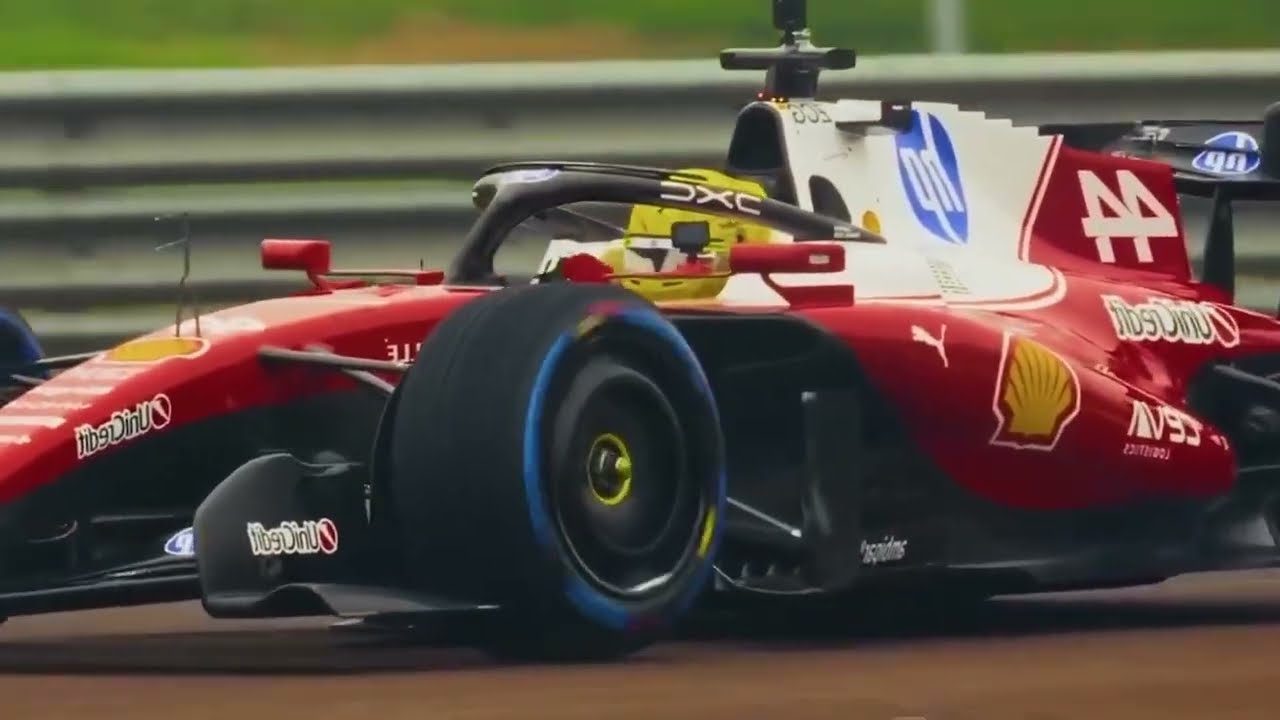
On-Track Evidence and the Road to Melbourne
The theoretical advantage is already showing up on the stopwatch. During the pre-season shakedown in Barcelona, Mercedes looked formidable. George Russell became the first driver to break into the 1:16s with the new machinery, clocking a 1:16.445. While Ferrari’s Lewis Hamilton eventually went faster on the final day, Mercedes’ consistency and mileage were ominous. They completed more laps than anyone else, suggesting their complex, expanding engine is not just fast, but reliable.
In contrast, Audi and Aston Martin struggled with reliability, and Red Bull’s running was curtailed by a crash. The pecking order is forming, and the Silver Arrows look to be the team to beat.
Conclusion: The Courtroom Finish?
As the paddock packs up for the Australian Grand Prix on March 8th, the stage is set for a showdown that has nothing to do with racing lines or tire strategy. If Ferrari or Red Bull lodges a formal protest in Melbourne—which seems almost certain—the result of the race, and potentially the championship, will be decided by stewards and appeal courts.
History suggests Mercedes is safe for now. The FIA rarely bans technology retroactively or mid-season. They usually close the loophole for the following year. But with four powerful manufacturers screaming for justice and the integrity of the new engine era at stake, the pressure on the governing body is unprecedented.
We are witnessing a high-stakes game of poker played with billion-dollar budgets. Mercedes has played a Royal Flush of engineering genius. The rest of the grid is hoping the FIA flips the table.
News

Inside Shane Richie’s love life: Drug – fuelled orgy with six blondes; real reason he split from Coleen Nolan; six-year ‘affair with fan’
Inside Shane Richie’s love life: Orgy with six blondes; real reason he split from Coleen Nolan; six-year ‘affair with fan’ He’s popular with the ladies… Shane Richie…

SH0CKING REVELATI0N:A sh0cking behind-the-scenes secret revealed about Lizzie Rizzini, the woman replacing Carol Kirkwood on the 6pm weather bulletin
BBC viewers still reeling from the departure of Carol Kirkwood got another surprise last night when presenter Lizzie Rizzini appeared to flash her black lace stockings on…

HEARTBREAKING: Peter Andre’s Tearful Message to Son Junior After SHOCKING Revelation About How He Truly Feels Toward Mum Katie Price — Katie Price’s reaction scares fans.
Peter Andre’s emotional message to son Junior after it’s revealed how he really feels about mum Katie Pri… PETER Andre has shared an emotional message to his…

Ben Shephard opens up about the devastating health battle his wife is facing: “She wakes up crying every single morning…”
Inside This Morning Ben Shephard’s Life Including Rarely Seen Wife and Health Battle Ben Shephard is a name synonymous with British television, renowned for his engaging presentation…

🚨 LIVE TV HEARTBREAK: Good Morning Britain Host Announces ‘Devastating’ Dɘath of Guest Minutes Into Show
Viewers of Good Morning Britain were met with heartbreaking news just minutes into Friday’s (January 30) episode, as co-hosts Kate Garraway and Ranvir Singh reported the tragic…

Emmerdale legend Cain Dingle will never be the same again after a shock cancer diagnosis turns his world upside down
FROure Desk. Full Terms and conditions are available on the website http://www.itv.com/presscentre/itvpictures/terms Emmerdale wouldn’t be Emmerdale without the glowering, grunting embodiment of manliness that is Cain Dingle (Jeff Hordley) But…
End of content
No more pages to load






