When fans talk about the 2026 Formula 1 season, the conversation usually revolves around the roaring new engines, the removal of the MGU-H, or the dramatic driver swaps. But deep within the technical regulations, buried under pages of legal jargon, lie two explosive changes that “no one is talking about.”
One involves a crisis meeting over fuel that costs more than fine vintage champagne. The other involves a shocking revelation from Mercedes Technical Director James Allison that suggests the sport’s shiny new aerodynamic toys aren’t doing what we think they are.
Welcome to the invisible war of 2026, where the championship might be decided by chemistry sets and “useless” front wings.
The $300-Per-Liter “Liquid Gold”
The headline figure that has team principals sweating in their designer suits is the price of fuel. In previous years, high-performance race fuel cost roughly $30 per liter—expensive, but manageable.
For 2026, that cost has skyrocketed to an eye-watering $300 per liter.
This 900% price hike is due to the mandatory switch to “Advanced Sustainable Fuel.” These aren’t just refined dinosaur juice; they are e-fuels created in labs using carbon capture, municipal waste, and non-food biomass. They are scientific miracles, “drop-in” ready for road cars, and crucial for F1’s goal of Net Zero by 2030.
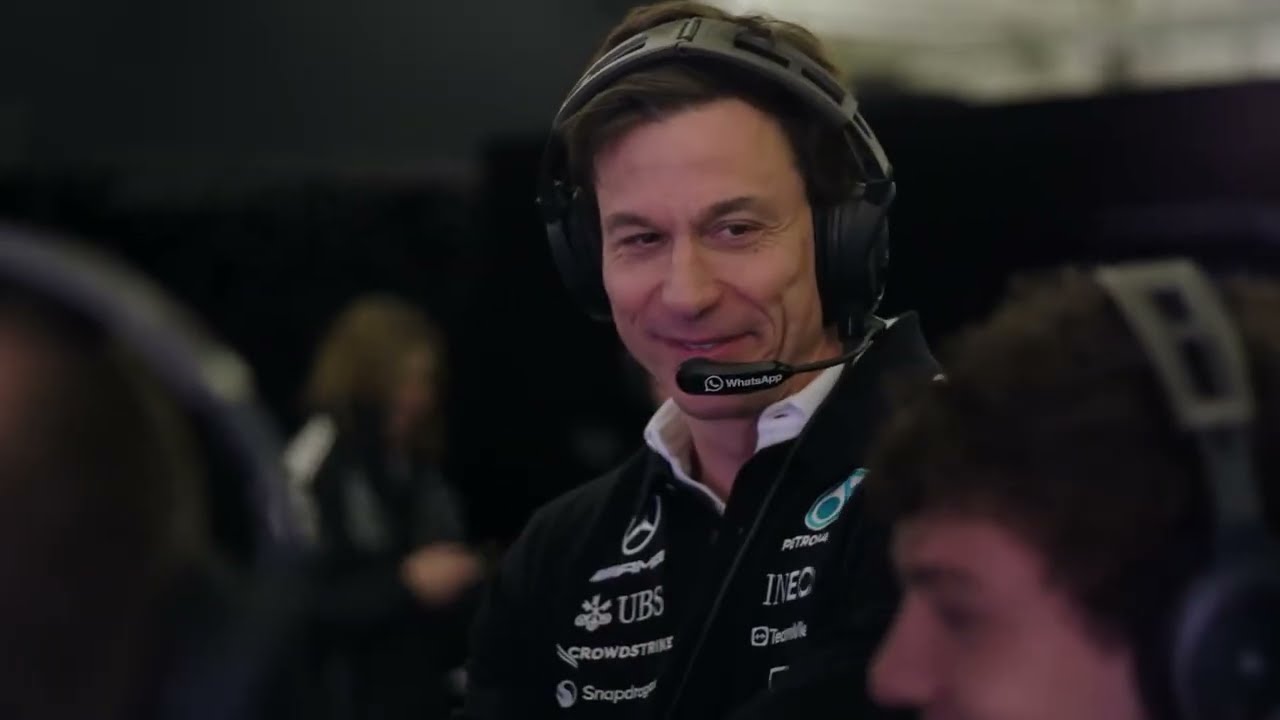
But miracles aren’t cheap. The supply chain is so complex and expensive that teams held a crisis meeting with the FIA to prevent their fuel bills from topping $10 million for the season. As Mercedes boss Toto Wolf admitted, the ingredients are “coming in much more expensive than anyone thought.”
The Chemistry Championship
Why pay such a fortune? Because in 2026, fuel is no longer just about making the engine go bang. It is the single biggest performance differentiator on the car.
In a massive regulatory shift, the FIA has stopped limiting fuel by weight (kg). Instead, they are now limiting fuel by energy density (3000 Megajoules per hour).
This subtle change has triggered a “private battle” between suppliers like Petronas and Shell. The goal is now to pack as much explosive energy as possible into every droplet.
The math is brutal but simple: The more energy-dense your fuel, the less physical liquid you need to carry to finish the race. If a chemist can brew a blend that allows a team to under-fuel their car by just 10kg, that equals a 0.3 to 0.4 second advantage per lap. Over a race distance, that’s nearly 20 seconds—the difference between winning the title (like Max Verstappen) and losing it (like Lando Norris).
“It’s not sexy, it isn’t exciting aero parts,” analysts note. “But the quality of the fuel… could have a massive impact on the competitive order.”

The “Lie” of Active Aero
If the fuel war is hidden, the aerodynamic war is hiding in plain sight. The 2026 cars feature “Active Aero,” replacing the old DRS. Drivers can now press a button to open the rear wing and—crucially—flatten the flaps on the front wing.
Common sense says flattening the front wing reduces drag and makes the car go faster.
Common sense is wrong.
James Allison, the technical mastermind at Mercedes, dropped a bombshell during the team’s season launch. He revealed that opening the front wing flaps does not actually reduce the car’s overall drag.
He used a simple analogy: stick two hands out of a car window, one behind the other. If you flatten the front hand, the air just hits the back hand harder. On an F1 car, the air that misses the front wing simply smashes into the suspension and sidepods behind it.
So, why do it?
“The reason the front wing is opening is actually to do with the balance of the car,” Allison explained.
It’s a safety mechanism. When the massive rear wing opens to boost top speed, the car’s “Center of Pressure” (the aerodynamic balance point) shoots forward. If the front wing stayed down, the car would become dangerously unstable at 200mph. By flattening the front wing, teams “kill” the front downforce, keeping the balance point neutral.
It’s a genius trick: the front wing doesn’t make the car faster; it stops it from crashing so the rear wing can make it faster.

Alpine’s “Backward” Wing
While most teams have interpreted these new rules identically, one team has gone rogue. Alpine arrived in Barcelona with a rear wing that baffled onlookers.
Every other team uses a system that lifts the “leading edge” of the wing flap, creating an O-shaped letterbox opening. Alpine? Their actuator drops the trailing edge, creating a U-shape.
“Why have they done it that way? Not a clue,” experts admit. “But I guarantee you it’s because they think there is an advantage to it.”
In a sport where everyone copies the winner, Alpine’s “weird” solution is the kind of anomaly that either leads to a genius breakthrough or a confusing failure.
The Verdict
As the grid prepares for the first race, the narrative has shifted. It’s not just about who has the most horsepower or the bravest driver.
The 2026 World Champion might be decided by a chemist in a lab coat brewing $300 fuel, or an engineer realizing that a “useless” front wing is the key to unlocking top speed. The rules have changed, and the things “no one is talking about” are the only things that matter.
News

Inside Shane Richie’s love life: Drug – fuelled orgy with six blondes; real reason he split from Coleen Nolan; six-year ‘affair with fan’
Inside Shane Richie’s love life: Orgy with six blondes; real reason he split from Coleen Nolan; six-year ‘affair with fan’ He’s popular with the ladies… Shane Richie…

SH0CKING REVELATI0N:A sh0cking behind-the-scenes secret revealed about Lizzie Rizzini, the woman replacing Carol Kirkwood on the 6pm weather bulletin
BBC viewers still reeling from the departure of Carol Kirkwood got another surprise last night when presenter Lizzie Rizzini appeared to flash her black lace stockings on…

HEARTBREAKING: Peter Andre’s Tearful Message to Son Junior After SHOCKING Revelation About How He Truly Feels Toward Mum Katie Price — Katie Price’s reaction scares fans.
Peter Andre’s emotional message to son Junior after it’s revealed how he really feels about mum Katie Pri… PETER Andre has shared an emotional message to his…

Ben Shephard opens up about the devastating health battle his wife is facing: “She wakes up crying every single morning…”
Inside This Morning Ben Shephard’s Life Including Rarely Seen Wife and Health Battle Ben Shephard is a name synonymous with British television, renowned for his engaging presentation…

🚨 LIVE TV HEARTBREAK: Good Morning Britain Host Announces ‘Devastating’ Dɘath of Guest Minutes Into Show
Viewers of Good Morning Britain were met with heartbreaking news just minutes into Friday’s (January 30) episode, as co-hosts Kate Garraway and Ranvir Singh reported the tragic…

Emmerdale legend Cain Dingle will never be the same again after a shock cancer diagnosis turns his world upside down
FROure Desk. Full Terms and conditions are available on the website http://www.itv.com/presscentre/itvpictures/terms Emmerdale wouldn’t be Emmerdale without the glowering, grunting embodiment of manliness that is Cain Dingle (Jeff Hordley) But…
End of content
No more pages to load






