In the high-octane world of Formula 1, speed is everything—but it comes at a price that would make even the wealthiest moguls blink. As the engines cool on the 2025 season and teams gear up for a revolutionary 2026, a shocking financial reality has come to light. It is not just the cars that cost millions; the sheer privilege of sitting in the cockpit is now a seven-figure expense for the sport’s elite.
At the heart of this financial storm is the FIA Super License—the “golden ticket” required to compete in the pinnacle of motorsport. Far from a standard plastic ID card tucked into a wallet, this document represents the ultimate barrier to entry, ensuring that only the most qualified—and now, the most expensive—drivers make the grid. For the 2026 season, the costs have skyrocketed, creating a fascinating “tax on success” that sees newly crowned champions paying a king’s ransom while struggling rookies get in for a fraction of the price.
The Million-Dollar Paper: Lando Norris’s Record Bill
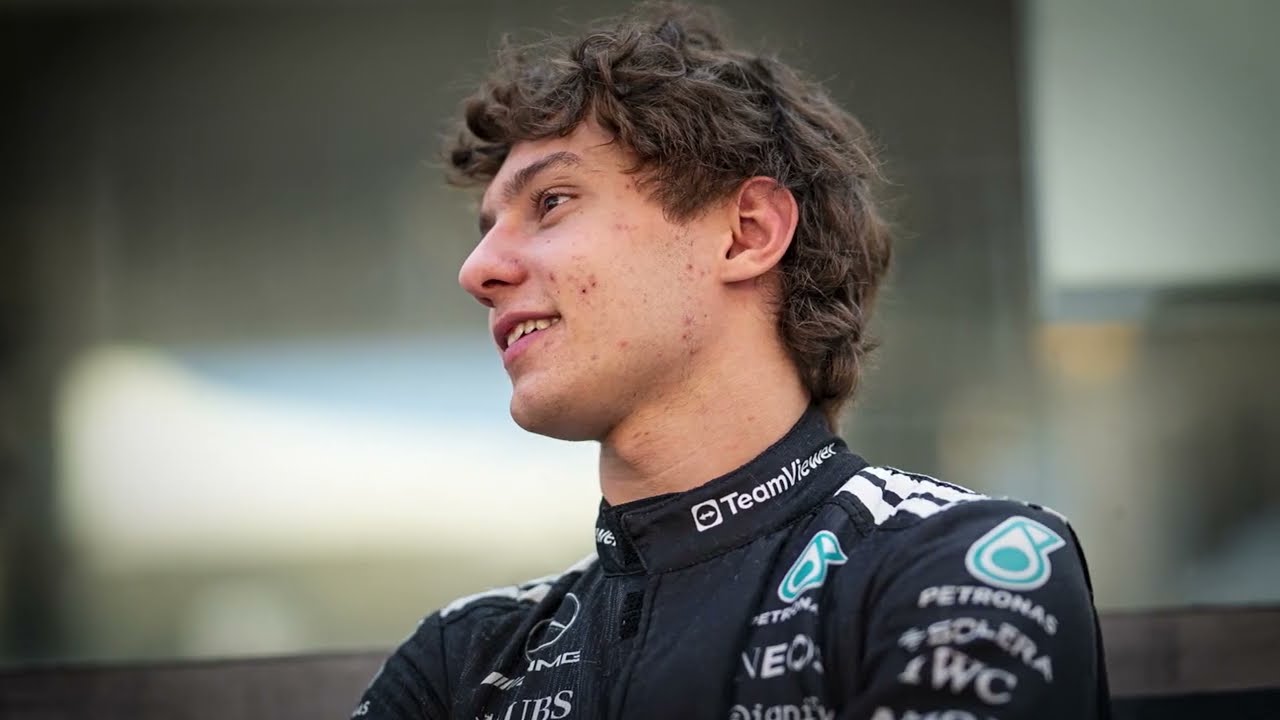
The headline grabber for the 2026 season is undoubtedly McLaren’s Lando Norris. Following a stellar performance in the 2025 championship, Norris has secured the dubious honor of holding the most expensive Super License on the grid. To legally race in 2026, a staggering sum of approximately €1,230,658 (roughly $1.28 million USD) must be paid to the FIA.
This eye-watering figure isn’t arbitrary. The FIA employs a complex calculation to determine the fee, designed effectively as a progressive tax on performance. Every driver pays a base rate—set at roughly €11,842 for 2026—but the real cost comes from the points scored. For every championship point earned in the previous season, the FIA charges an additional premium of €2,392.
With the 2025 season offering a massive bounty of points across 24 Grand Prix races and six Sprint weekends, top-tier drivers like Norris and his rival Max Verstappen amassed huge tallies. Verstappen, falling just slightly behind Norris in this specific financial metric, will see a bill roughly €5,000 cheaper than the Briton’s. While it is standard practice for F1 teams to cover these costs as part of their driver contracts, the sheer scale of the transfer—over $1.2 million for a single administrative requirement—highlights the immense money circulating in the sport.
The “Success Tax” and Team Budgets
The disparity between the top and bottom of the grid is stark. While McLaren prepares to wire over €2 million to the FIA to cover both Norris and his teammate Oscar Piastri (who pays slightly less than a million), other teams are getting off lightly.
At the other end of the spectrum sits the newcomer, Cadillac. Because neither of their drivers scored points in the previous F1 season, their entry fees are negligible by comparison. Drivers like Franco Colapinto, who scored zero points in the relevant period, along with returning veterans Valtteri Bottas and Sergio Perez, will pay only the base rate of €11,842.
This system creates a fascinating dynamic where the most successful teams are penalized financially for their dominance. However, when viewed against the backdrop of the Constructors’ Championship payouts—where winning the title nets a team upwards of €130 million—a €2 million license fee is considered a manageable operating expense. The money collected by the FIA doesn’t disappear into a black hole; it is ostensibly reinvested into safety improvements and sport governance, theoretically benefiting the very drivers who pay the toll.
The Gatekeeper: Earning the Right to Race
Money alone, however, cannot buy a seat at the F1 table. The Super License system is rigorously designed to prevent “pay drivers”—wealthy individuals with no talent—from buying their way onto the grid. The cornerstone of this system is the “40-point rule.” To qualify for a license, a driver must accumulate 40 Super License points over the preceding three seasons through performance in junior categories like Formula 2, Formula 3, and IndyCar.
This requirement has sparked intense career maneuvering. A prime example is American driver Colton Herta. Despite his talent in IndyCar, Herta has struggled to meet the strict FIA criteria. In a bold strategic move, Herta is switching from IndyCar to Formula 2 in 2026. His goal is clear: secure the remaining five points he needs to hit the magic number of 40.
If Herta finishes eighth or higher in the F2 championship, he secures his ticket for a 2027 F1 seat, likely with Cadillac. If he falters, he has a backup plan: participating in Free Practice 1 (FP1) sessions. Drivers earn one Super License point for every clean FP1 session they complete (up to a limit), offering a lifeline for those on the bubble. It is a high-stakes game of career chess where one bad season can derail years of ambition.
The Danger Zone: Oliver Bearman’s Tightrope Walk
Once a driver has the license, keeping it is another battle entirely. The FIA enforces a strict penalty point system to police driving standards. Accrue 12 penalty points in a 12-month period, and you face an automatic one-race ban.
Entering the 2026 season, the driver sweating the most is young British talent Oliver Bearman. Sitting precariously on 10 penalty points, Bearman is just two minor infractions away from a suspension. The pressure is immense. Because his points do not begin to expire until May 2026, he must navigate the first seven races of the season with absolute cleanliness. One clumsy overtake or a moment of frustration could see him forced to the sidelines, with a reserve driver waiting in the wings to take his seat.
This system has teeth. In 2024, Kevin Magnussen fell afoul of the rules and was forced to sit out the Azerbaijan Grand Prix—ironically replaced by Bearman himself. Now, the tables have turned, and Bearman must prove he can balance aggression with discipline.
Rewriting History and New Identities
The evolution of these rules offers a provocative “what if” scenario. If the current strict criteria had been in place decades ago, legends of the sport might never have raced. Analysis shows that icons like Sebastian Vettel, Max Verstappen (who debuted at 17), and even Fernando Alonso would not have qualified for a Super License at the time of their debuts under today’s rules. It serves as a reminder of how much the sport has tightened its grip on safety and professional standards.
Looking ahead to 2026, the grid will also look visually different. In a symbolic changing of the guard, Lando Norris has confirmed he will race with the number #1—the privilege reserved for the reigning World Champion. This forces Max Verstappen to revert to a new number; he has chosen #3, the old number of his former teammate Daniel Ricciardo. Meanwhile, rookie Arvid Lindblad will debut with number #41, while Bottas and Perez will retain their familiar identities from 2024.
The Bottom Line
As the 2026 season approaches, the narrative is about more than just horsepower and aerodynamics. It is about the immense pressure—financial, regulatory, and psychological—that weighs on every driver before the lights even go out. From Lando Norris’s million-dollar fee to Oliver Bearman’s precarious disciplinary record and Colton Herta’s transatlantic gamble, the fight for the Super License is a drama all its own. In Formula 1, getting to the start line is often the hardest race of all.
News

Inside Shane Richie’s love life: Drug – fuelled orgy with six blondes; real reason he split from Coleen Nolan; six-year ‘affair with fan’
Inside Shane Richie’s love life: Orgy with six blondes; real reason he split from Coleen Nolan; six-year ‘affair with fan’ He’s popular with the ladies… Shane Richie…

SH0CKING REVELATI0N:A sh0cking behind-the-scenes secret revealed about Lizzie Rizzini, the woman replacing Carol Kirkwood on the 6pm weather bulletin
BBC viewers still reeling from the departure of Carol Kirkwood got another surprise last night when presenter Lizzie Rizzini appeared to flash her black lace stockings on…

HEARTBREAKING: Peter Andre’s Tearful Message to Son Junior After SHOCKING Revelation About How He Truly Feels Toward Mum Katie Price — Katie Price’s reaction scares fans.
Peter Andre’s emotional message to son Junior after it’s revealed how he really feels about mum Katie Pri… PETER Andre has shared an emotional message to his…

Ben Shephard opens up about the devastating health battle his wife is facing: “She wakes up crying every single morning…”
Inside This Morning Ben Shephard’s Life Including Rarely Seen Wife and Health Battle Ben Shephard is a name synonymous with British television, renowned for his engaging presentation…

🚨 LIVE TV HEARTBREAK: Good Morning Britain Host Announces ‘Devastating’ Dɘath of Guest Minutes Into Show
Viewers of Good Morning Britain were met with heartbreaking news just minutes into Friday’s (January 30) episode, as co-hosts Kate Garraway and Ranvir Singh reported the tragic…

Emmerdale legend Cain Dingle will never be the same again after a shock cancer diagnosis turns his world upside down
FROure Desk. Full Terms and conditions are available on the website http://www.itv.com/presscentre/itvpictures/terms Emmerdale wouldn’t be Emmerdale without the glowering, grunting embodiment of manliness that is Cain Dingle (Jeff Hordley) But…
End of content
No more pages to load






