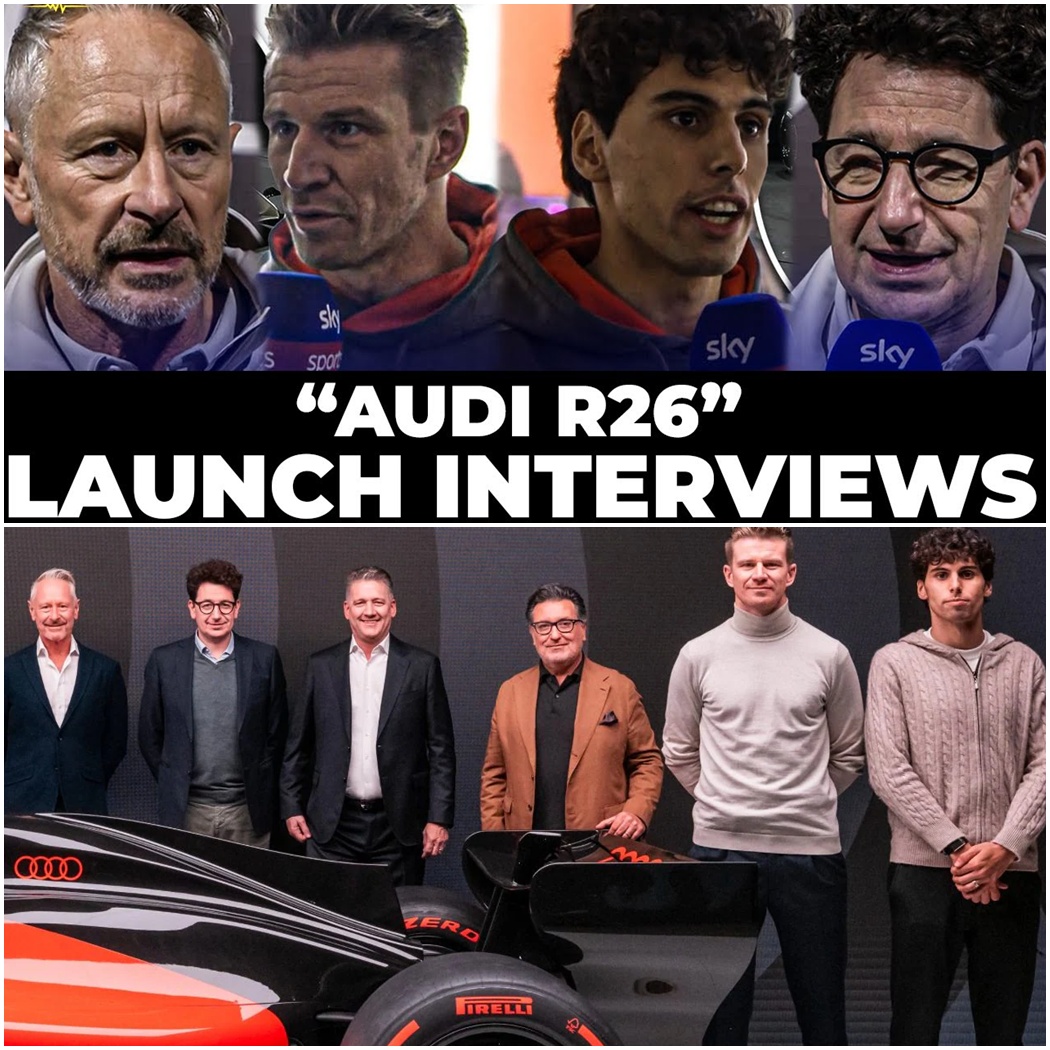
The lights dimmed, the music swelled, and the breath of the motorsport world seemingly hitched in collective anticipation. In a moment that will likely be etched into the annals of Formula 1 history, Audi has officially arrived. The German automotive giant, a titan of endurance racing and rallying, has finally stepped out of the shadows and onto the most prestigious grid in the world, unveiling the machine they believe will eventually carry them to world championship glory: the Audi R26.
The launch event in Berlin was nothing short of a statement of intent. It wasn’t just a car reveal; it was a declaration of war against the established order of Formula 1. Yet, amidst the flashbulbs reflecting off the stunning titanium silver and “Audi Red” livery, there was a refreshing, almost disarming honesty from the team’s leadership. They aren’t promising a fairy tale start. In fact, they are promising a battle.
The Beast in Titanium Silver
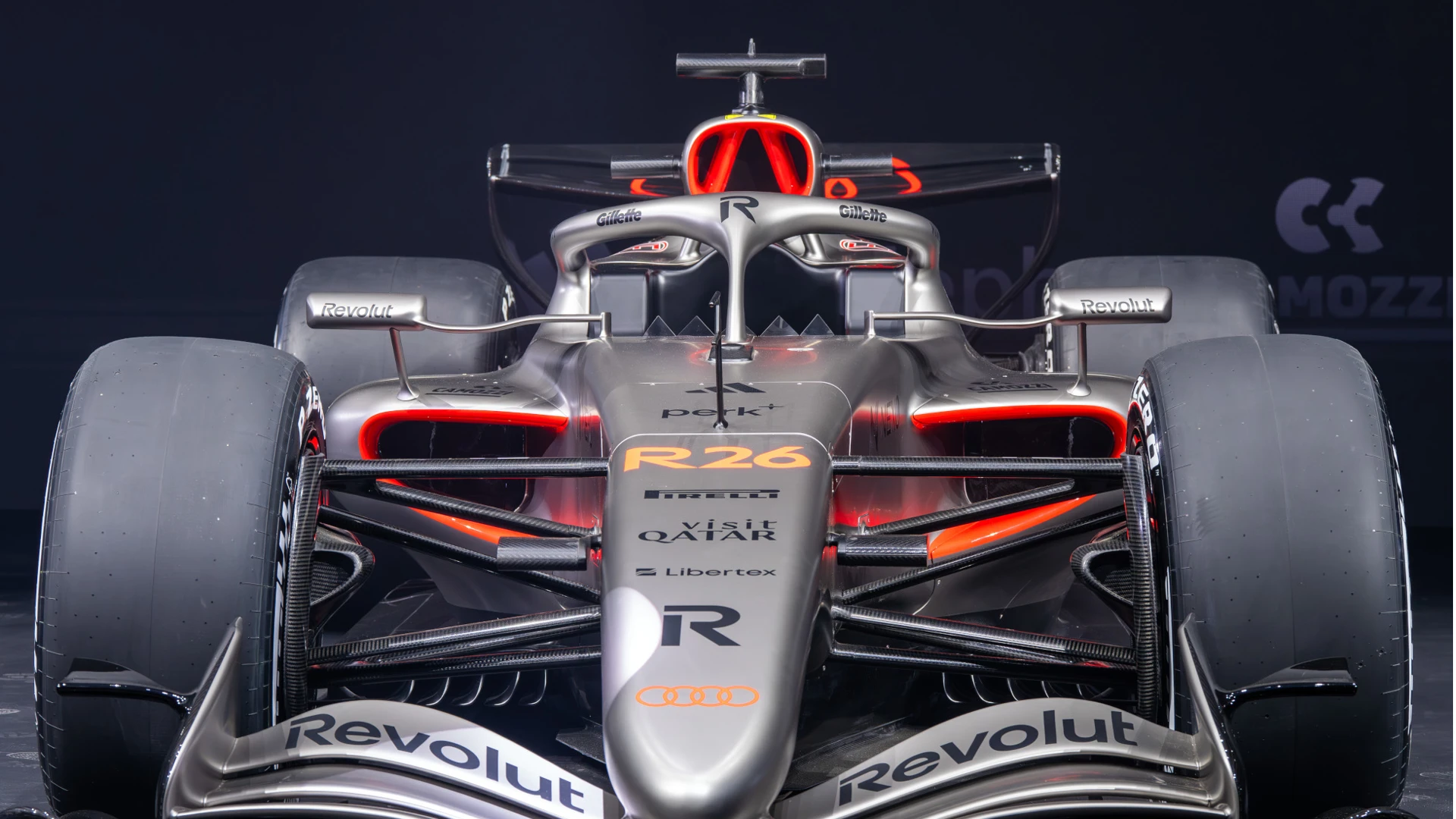
The star of the show was, undeniably, the R26. As the covers were pulled back, the gathered press and fans were treated to a livery that screams corporate aggression mixed with racing heritage. The car features a sophisticated titanium silver base, a nod to Germany’s racing “Silver Arrows” legacy, but aggressively slashed with bright, unmistakable Audi red. The iconic four-ring logo sits proudly on a carbon black engine cover, symbolizing the heart of the beast—the all-new power unit that Audi has built from scratch.
This entry coincides with the sport’s sweeping new technical regulations for 2026, which emphasize sustainable fuels and increased electrical power. It is a reset button for the sport, and Audi has timed their entrance to maximize this disruption. However, the beauty of the car belies the monumental engineering challenge beneath the bodywork.
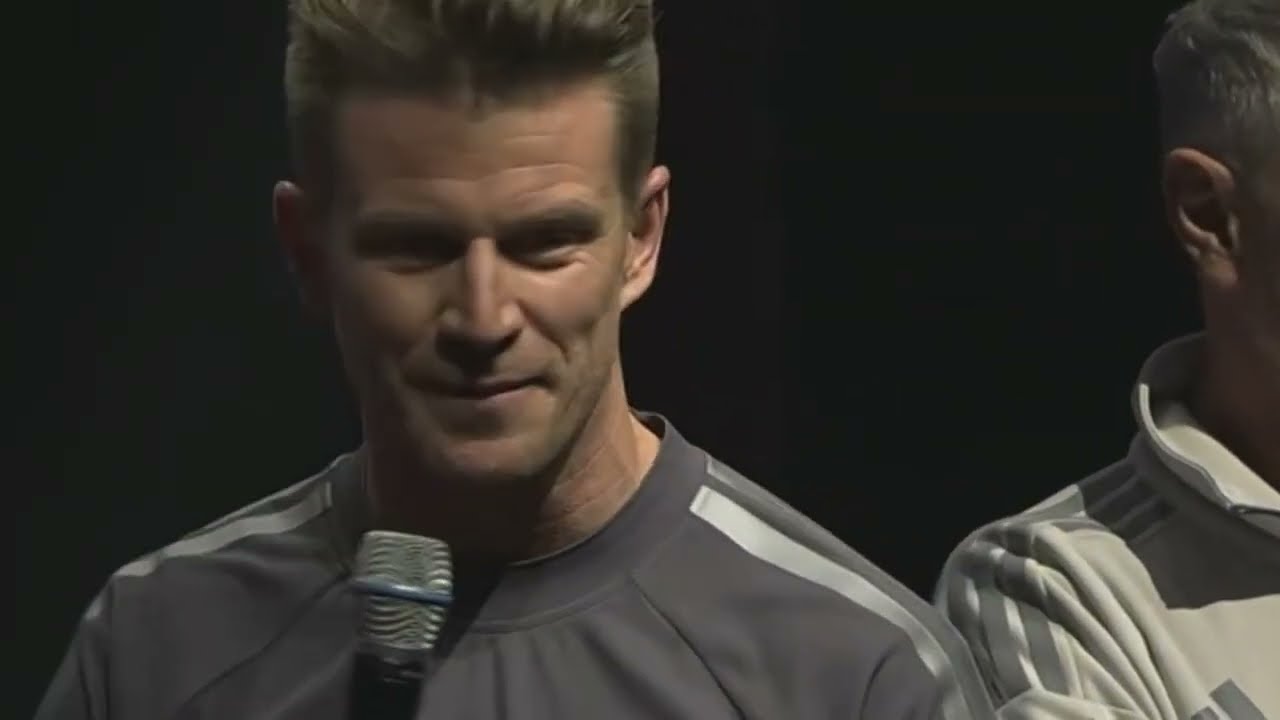
“It is incredible,” said Nico Hulkenberg, his eyes scanning the lines of his new challenger. “I can’t wait to drive it, really.”
The Veteran’s Renaissance
For Nico Hulkenberg, this launch represents the culmination of one of the most resilient careers in modern motorsport. The narrative around the German veteran has shifted dramatically over the last twelve months. Gone is the talk of “unfulfilled potential.” In its place is the swagger of a man who has finally tasted champagne.
The 2026 launch video confirmed a massive milestone from the previous season: Hulkenberg secured his first-ever Formula 1 podium at the British Grand Prix, breaking a curse that had haunted him for 239 race starts. That podium was more than just a trophy; it was proof of concept. It validated his decision to commit to the Audi project back in May 2024.
“It’s just excitement and happiness to be honest,” Hulkenberg reflected during the launch. “I committed to this project in May 2024, so the anticipation to this day… just very happy it’s all happening now.”
When asked about the driving characteristics of the new generation of cars, Hulkenberg dispelled the rumors that they were unrecognizable from their predecessors. “The laps I did, you know, they felt—it’s still a racing car,” he noted with a grin. “Obviously, it’s a different way of driving, a different way of managing things probably in the race with energy management… but you still need to drive fast and go for it.”
The Rookie’s Dream
Partnering with the seasoned Hulkenberg is Gabriel Bortoleto, a young talent whose hunger is palpable. For him, the Audi seat isn’t just a job; it’s the opportunity of a lifetime. The dynamic between the battle-hardened Hulkenberg and the wide-eyed but fierce Bortoleto promises to be one of the most intriguing storylines of the 2026 season.
“For me, it’s a dream coming true,” Bortoleto beamed, looking sharp in his new team kit. “It’s the type of project that you have once in a lifetime and it’s an opportunity to create also a legacy that will stay forever in history.”
Bortoleto’s focus on “legacy” speaks volumes about the mindset within the camp. They aren’t here to make up the numbers. They are building something permanent.
The “Bumpy” Reality Check
Perhaps the most striking aspect of the Berlin launch was the temperance shown by the team’s leadership, specifically Mattia Binotto. The former Ferrari boss, now steering the Audi ship, refused to sell a false dream of instant victories. He knows the mountain they have to climb.
Building a power unit from scratch is widely considered the hardest task in motorsport. While competitors like Mercedes, Ferrari, and Red Bull (Ford) have decades of recent data to draw upon, Audi is starting from a blank sheet of paper in many respects.
“We do it for the first time,” the technical leadership admitted candidly. “New power unit, new engine, new gearbox… there’s a lot of new components. Everybody who understands a bit of automotive and engineering knows how challenging that is.”
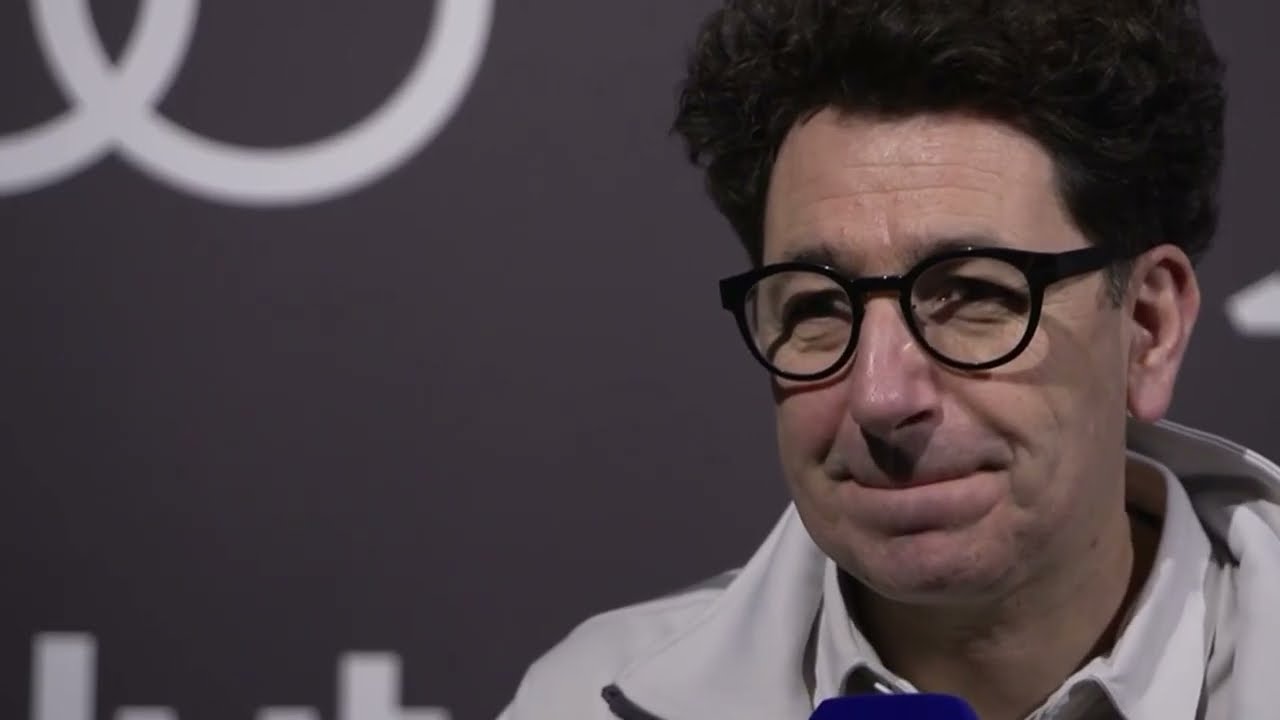
Binotto went a step further, issuing a stark warning to the fans and the board. “We know that we are competing against strong competitors, settled-down organizations,” he said, his tone serious. “No doubt that who were stronger before will stay stronger as well in 2026. So our season ’26 can be very bumpy.”
This “bumpy” admission is a masterclass in expectation management. By setting the bar at “survival” and “learning,” Audi is buying themselves time to fail, learn, and grow without the immediate pressure of title fights. It’s a strategy that requires patience—a commodity often in short supply in F1.
The 2030 Ultimatum
However, that patience has a strict expiration date. The team revealed their internal roadmap, and it is ambitious. The goal isn’t just to be competitive; it is to be champions.
“The target’s clear,” stated Jonathan Wheatley. “To be challengers, then competitors, and then champions.”
The timeline? 2030.
“For many people, 2030 might seem a long way away, but actually it’s just around the corner in Formula 1 terms,” Wheatley added. “We have to become a finely honed works Formula 1 team in time for when the car is at the right level for us to deliver that championship.”
This five-year plan gives the team a runway, but it also places a ticking clock over every decision made at their headquarters in Hinwil, Switzerland, and their engine facility in Neuburg, Germany. They need to ramp up infrastructure, methodology, and skills while simultaneously fighting on track every other weekend.
A New Global Force
The logistical footprint of the team highlights the scale of the operation. With chassis operations in Switzerland, engine development in Germany, and a technology center in Bicester, England, Audi is leveraging a pan-European approach to conquer the world stage.
Title sponsor Revolute’s branding on the car further cements the commercial viability of the project. Audi isn’t just spending money; they are attracting major partners who believe in the vision.
As the team prepares to head to the track for pre-season testing, the mood is a complex cocktail of nerves, pride, and adrenaline. They have the drivers—a mix of proven speed and youthful potential. They have the brand—one of the most successful in racing history. And now, they have the car.
The R26 is no longer just a concept or a press release. It is a physical reality, ready to roar into life. The road ahead may be bumpy, as Binotto warns, but if Audi’s history is anything to go by, they won’t stop until they reach the summit.
“We are starting now,” the team declared. “And everyone is very excited to put the car on track.”
The world is watching. The Silver Arrows of Mercedes have a new rival, and this one wears the four rings of Ingolstadt. Let the racing begin.
News

Inside Shane Richie’s love life: Drug – fuelled orgy with six blondes; real reason he split from Coleen Nolan; six-year ‘affair with fan’
Inside Shane Richie’s love life: Orgy with six blondes; real reason he split from Coleen Nolan; six-year ‘affair with fan’ He’s popular with the ladies… Shane Richie…

SH0CKING REVELATI0N:A sh0cking behind-the-scenes secret revealed about Lizzie Rizzini, the woman replacing Carol Kirkwood on the 6pm weather bulletin
BBC viewers still reeling from the departure of Carol Kirkwood got another surprise last night when presenter Lizzie Rizzini appeared to flash her black lace stockings on…

HEARTBREAKING: Peter Andre’s Tearful Message to Son Junior After SHOCKING Revelation About How He Truly Feels Toward Mum Katie Price — Katie Price’s reaction scares fans.
Peter Andre’s emotional message to son Junior after it’s revealed how he really feels about mum Katie Pri… PETER Andre has shared an emotional message to his…

Ben Shephard opens up about the devastating health battle his wife is facing: “She wakes up crying every single morning…”
Inside This Morning Ben Shephard’s Life Including Rarely Seen Wife and Health Battle Ben Shephard is a name synonymous with British television, renowned for his engaging presentation…

🚨 LIVE TV HEARTBREAK: Good Morning Britain Host Announces ‘Devastating’ Dɘath of Guest Minutes Into Show
Viewers of Good Morning Britain were met with heartbreaking news just minutes into Friday’s (January 30) episode, as co-hosts Kate Garraway and Ranvir Singh reported the tragic…

Emmerdale legend Cain Dingle will never be the same again after a shock cancer diagnosis turns his world upside down
FROure Desk. Full Terms and conditions are available on the website http://www.itv.com/presscentre/itvpictures/terms Emmerdale wouldn’t be Emmerdale without the glowering, grunting embodiment of manliness that is Cain Dingle (Jeff Hordley) But…
End of content
No more pages to load






