In the high-octane world of Formula 1, where the difference between victory and defeat is measured in milliseconds, even the slightest deviation can spark a wildfire of speculation. But rarely has a rumor burned as hot or as fast as the current storm engulfing McLaren. The paddock is buzzing, social media is in a frenzy, and at the center of it all is a question that cuts to the very integrity of the sport: Is McLaren actively favoring Lando Norris over his Australian teammate, Oscar Piastri?
The controversy, which has been bubbling under the surface for months, recently exploded into the open following the chaotic Las Vegas Grand Prix. It wasn’t just the race results that raised eyebrows—it was a pointed observation from one of the sport’s most notoriously outspoken figures, Jos Verstappen. The father of the reigning world champion didn’t mince words when describing the visual disparity he witnessed on track.
“You can clearly see a difference between the two McLarens on track,” Verstappen noted, his comments slicing through the usual diplomatic PR speak of the paddock. “How they go through the corners—one slides, the other doesn’t. And that raises questions.”
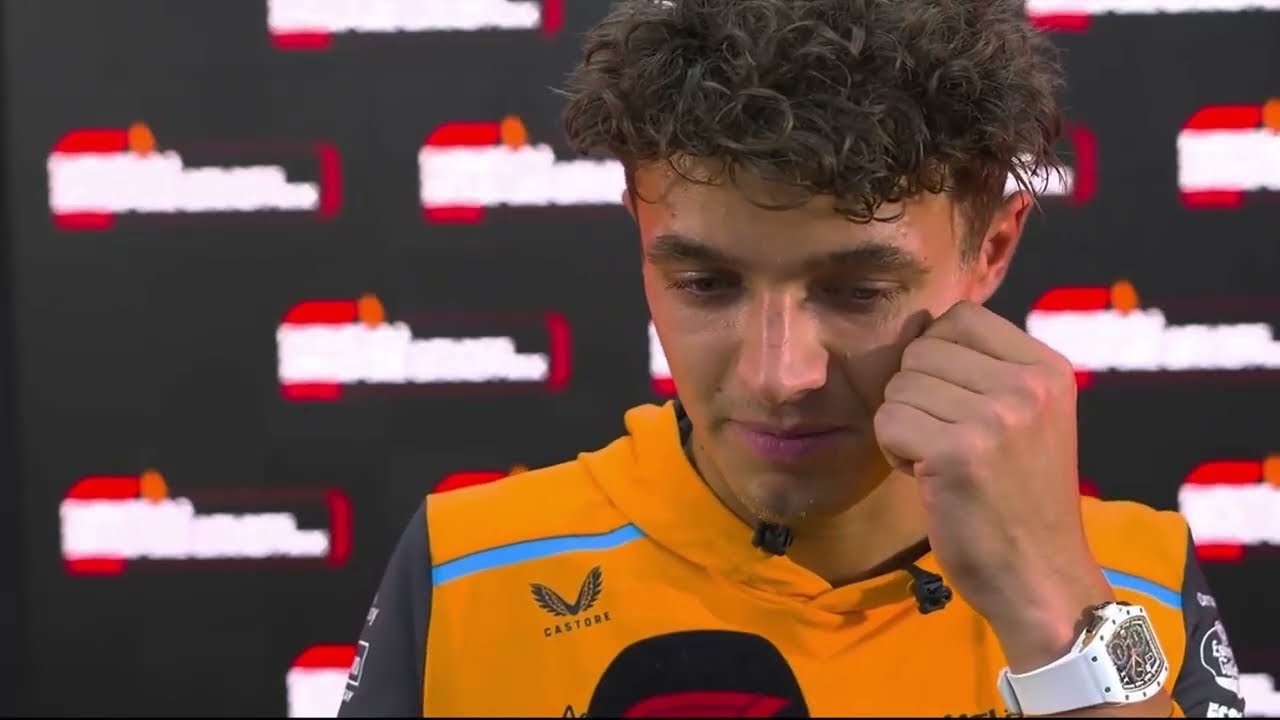
The Visual Evidence: A Tale of Two Cars
Verstappen’s observation is damning in its simplicity. In a sport where teammates drive “identical” machinery, such a stark difference in handling characteristics—one car gripping the asphalt like it’s on rails, the other fighting for traction at every apex—is the kind of detail that feeds conspiracy theories. It suggests that while the chassis may look the same, the beast underneath is behaving very differently for the two drivers.
This commentary came against the backdrop of a disastrous weekend for McLaren in Vegas, where both drivers were disqualified for excessive plank wear—a “huge blunder” that erased strong results and threw the championship wide open. But for the online detectives and die-hard Piastri fans, the plank wear was just the tip of the iceberg. They point to a season-long narrative of misfortune that seems to disproportionately target the young Australian.
The Timeline of Suspicion
To understand the magnitude of these accusations, one must look back at the trail of “crumbs” that conspiracy theorists have been following since the Italian Grand Prix at Monza. It was there that Piastri was asked to move over for Norris following a pit stop issue—a strategic call that many viewed as the first clear sign of a pecking order.
Since then, the incidents have compounded. In Baku, a circuit known for rewarding precision, Piastri crashed out of both qualifying and the race—an uncharacteristic double error for a driver celebrated for his cool head and consistency. In Singapore, Norris made a forceful move on his teammate at the start, compromising Piastri’s race. Then came Austin, where the two McLarens actually collided during the sprint race, a cardinal sin in team management.
By the time the circus reached the double-header in Austin and Mexico, the contrast was undeniable. Piastri struggled to find pace, failing to reach the podium, while Norris, in the supposedly identical car, secured a strong second place and a dominant victory. For those looking for a conspiracy, this wasn’t bad luck; it was a pattern.

The “Leaked” Confession?
Fueling the fire was a bizarre and explosive incident on social media during the Las Vegas weekend. For a brief, shining moment, Oscar Piastri’s Instagram account shared a post featuring a controversial quote from former F1 supremo Bernie Ecclestone. The quote bluntly claimed that McLaren was favoring Norris simply because he is British.
The post was quickly deleted, and Piastri later explained it away as a groggy morning mistake—an accidental repost or the clumsy work of a social media manager. “I woke up and saw it,” he claimed, dismissing any malicious intent. But in the hyper-analyzed, hyper-sensitive ecosystem of F1, the damage was instantaneous. To many, this was a “Freudian slip,” a subconscious admission of the frustration bubbling behind Piastri’s calm exterior. It was interpreted not as a mistake, but as a silent cry for help, a “leak” of his true feelings regarding the team’s internal dynamics.
The Defense: “Absolute Crap”
However, for every fan screaming sabotage, there is a seasoned expert rolling their eyes. Oscar Piastri himself has remained the consummate professional, publicly dismissing the theories. “No, it’s not the case,” he stated unequivocally before the Vegas drama. He attributes his struggles to the natural ebb and flow of a competitive season, technical adaptability, and his own errors.
He is backed by another Australian racing legend, 1980 World Champion Alan Jones. Jones has been scathing in his rebuttal of the conspiracy theories, labelling them “the greatest load of nonsense of all time.”
“Every single season we come across this bullshit,” Jones remarked, referencing historic rivalries like Mark Webber and Sebastian Vettel. “It’s always ‘oh, he’s got a better car than me’ or ‘he’s getting preferential treatment.’ It’s absolute crap.”
Jones’s argument is rooted in the cold, hard logic of a multi-billion dollar business. Why would a team like McLaren, led by the commercially savvy Zak Brown, spend a fortune to develop two cars only to intentionally cripple one of them? It makes no financial or competitive sense to stifle a talent like Piastri when the Constructors’ Championship is on the line.
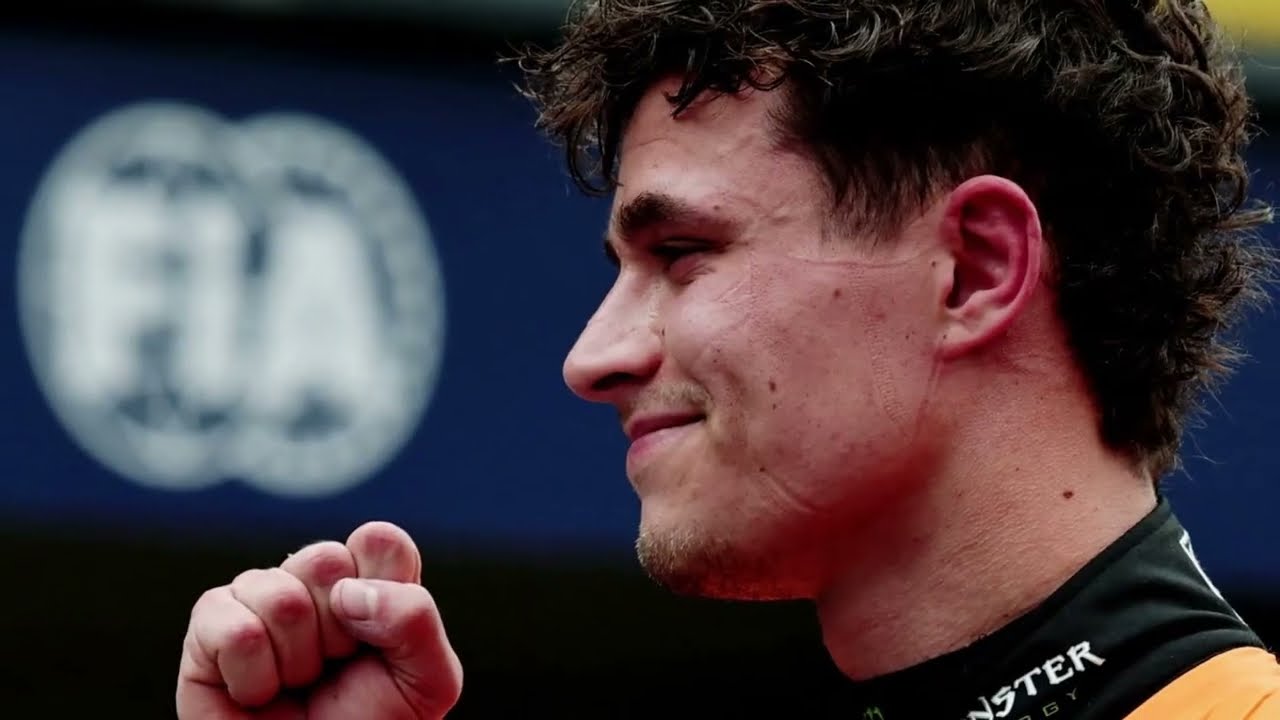
The Technical Truth: Tire Dynamics and Evolution
If it’s not sabotage, what explains the sliding car that Jos Verstappen saw? Mark Hughes, a respected journalist for Motorsport Magazine, offers a nuanced technical explanation that bridges the gap between the conspiracy and the denial. The culprit, he argues, is likely not malice, but tire dynamics.
Formula 1 cars are not static entities; they are constantly evolving prototypes. As McLaren has aggressively developed the car throughout the season to catch Red Bull, the handling characteristics have shifted. These updates, while making the car faster on paper, may have inadvertently moved the car’s “operating window” towards a style that suits Norris better.
Norris, known for a sharp, aggressive entry style, might benefit from an update that improves turn-in instability. Piastri, who relies on a smoother, more progressive approach, might find that same car nervous and unpredictable—hence the “sliding.” It’s a subtle but critical difference. The car isn’t broken; it just no longer “speaks” the same language as Piastri’s hands and feet.
The Subconscious Bias
This leads to a more uncomfortable truth than simple sabotage: subconscious bias. Teams naturally gravitate towards the driver delivering the most consistent results. In the second half of the season, that has been Lando Norris. It is entirely possible that the development direction has been subtly, perhaps even unconsciously, influenced by Norris’s feedback, creating a feedback loop that reinforces his dominance while alienating Piastri.
It’s a fine line. In a sport where hundredths of a second determine the grid, a car that gives one driver 100% confidence and the other only 95% creates a chasm in performance that looks like sabotage to the untrained eye.
The Final Lap
As the season heads into its final two races, the pressure on McLaren is immense. They are walking a tightrope. They must not only provide both drivers with equal equipment but must also be seen to be doing so. The “plank wear” disqualification in Vegas has only heightened the scrutiny. Every pit stop, every radio message, and every twitch of the steering wheel will be dissected by millions.
For Lando Norris, the championship is his to lose. For Oscar Piastri, it is a chance to silence the doubters and prove that he can master a difficult car. And for the fans? We are left to wonder whether we are watching a sporting tragedy of unfair treatment, or simply the brutal, unforgiving reality of life at the pinnacle of motorsport.
One thing is certain: the “slide” that Jos Verstappen saw has revealed cracks in the McLaren armor that won’t be easily patched. Whether those cracks are mechanical or political remains the ultimate question.






