In the high-octane world of Formula 1, the line between achieving a lifelong dream and seeing it shatter in the rearview mirror is razor-thin. As the paddock prepares for the revolutionary 2026 regulations, the stakes have never been higher. This week, the sport was reminded of its unforgiving nature with a double dose of drama: Red Bull’s notorious junior program wielded its axe once again, severing ties with two promising talents, while McLaren superstar Oscar Piastri offered a rare, candid glimpse into the high-stakes contract warfare that launched his career.
From the brutal decisions made behind closed doors in Milton Keynes to the public vindication of a young Australian who bet on himself, the current landscape of Formula 1 is a testament to one undeniable truth: perform immediately, or perish.
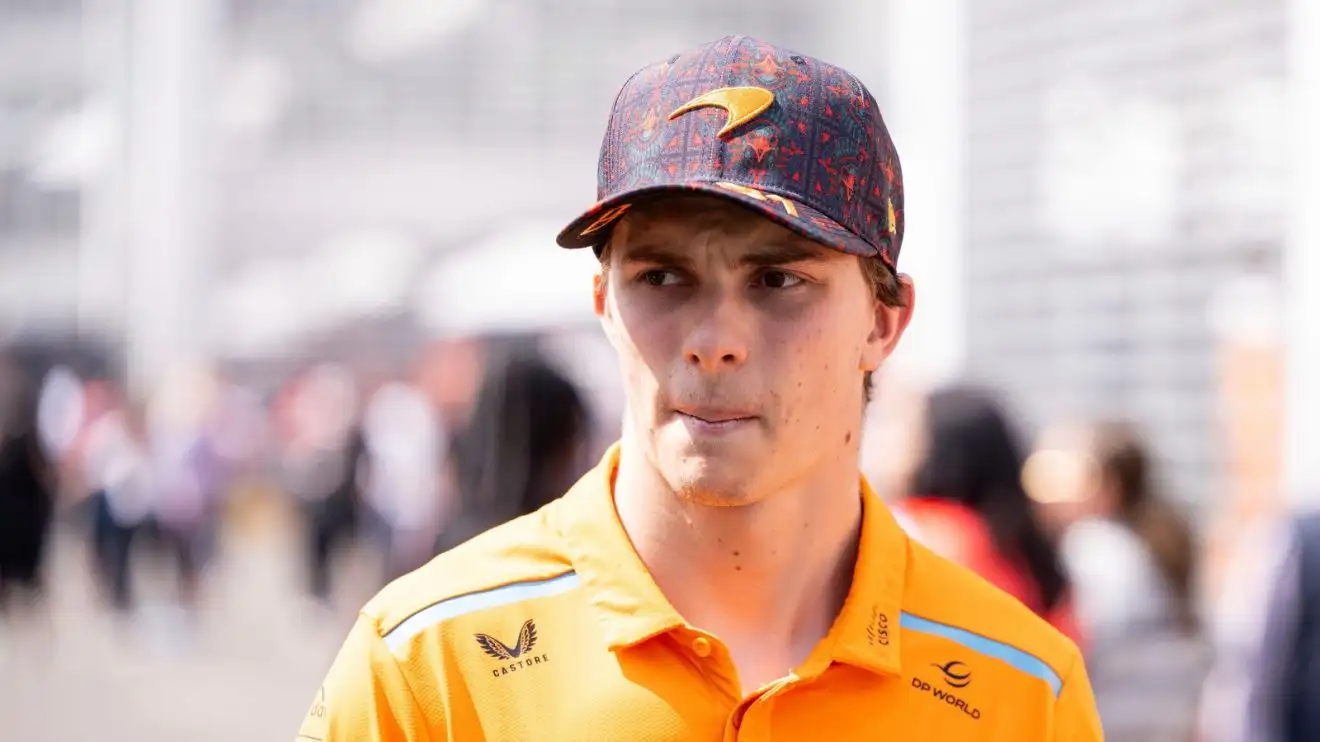
The Red Bull Guillotine Falls: A New Era Begins
For over two decades, the Red Bull Junior Team has been the gold standard for driver development, a ruthless yet effective machine that churned out world champions like Sebastian Vettel and Max Verstappen. But the program, historically overseen by the uncompromising Dr. Helmut Marko, is famous for its “up or out” philosophy. As we head into the 2026 season, that philosophy has claimed its latest victims.
It has been confirmed that German talents Oliver Goethe and Tim Tramnitz have been dropped from the Red Bull scheme effectively immediately. The news comes as a harsh blow to both drivers, who have spent the last few years fighting through the junior ranks with the iconic Red Bull branding on their helmets.
Oliver Goethe, who graduated to a full season of Formula 2 in 2025, faced the immense pressure of performing in the immediate feeder series to F1. Driving for MP Motorsport alongside former Red Bull junior Richard Verschoor, Goethe’s campaign was one of struggle and learning. Ultimately, a 15th-place finish in the final standings was deemed insufficient for a program that demands nothing less than brilliance. In a sport where millions of dollars are invested in potential future champions, consistent mediocrity is often treated more harshly than spectacular failure.
Despite losing the financial and political backing of the energy drinks giant, Goethe’s racing journey is not over. He is set to remain in Formula 2 for the 2026 season, continuing with MP Motorsport. Now racing for his own career survival without the safety net of an F1 team affiliation, Goethe faces a make-or-break year. History has shown that drivers dropped by Red Bull can carve out successful careers elsewhere—Alex Albon is a prime example—but the road back to F1 relevance is steep and treacherous.
The situation is perhaps even more precarious for Tim Tramnitz. The 21-year-old showed flashes of genuine pace in Formula 3, finishing fourth in the championship standings last year—a respectable result in one of the most competitive grids in motorsport. However, Red Bull’s ultimatum was clear: secure a competitive seat in a higher category for 2026, or face the exit. Reports indicate that Tramnitz was unable to lock down a drive that met the program’s criteria, largely due to funding issues that plague so many young careers. His departure highlights the brutal economic reality of motorsport, where talent alone is often not enough to secure the next step on the ladder.
The Chosen Ones: Lindblad and Lawson Step Up
While dreams ended for Goethe and Tramnitz, they have been realized for others. The restructuring of the Red Bull family for the 2026 season signals a massive changing of the guard, ushering in a new generation of talent tasked with leading the team into the new engine regulation era.
The Racing Bulls (VCARB) lineup for 2026 has been confirmed, and it is a blend of raw speed and hard-earned resilience. New Zealander Liam Lawson, who impressed mightily during his substitute appearances and has been waiting in the wings, finally solidifies his place on the grid. Lawson’s journey—from being overlooked to becoming the undeniable heir apparent—is a testament to patience and mental fortitude.
Partnering him will be the meteoric talent of Arvid Lindblad. The young Briton has been nothing short of a revelation, rocketing through the karting and junior formula ranks at a pace that has drawn comparisons to Max Verstappen himself. By placing Lindblad directly into the Racing Bulls seat for 2026, Red Bull is making a statement: they believe he is a generational talent ready to be thrown into the deep end of Formula 1.
This shake-up also has major implications for the senior team. With Isack Hadjar earning the coveted promotion to Red Bull Racing to partner Max Verstappen, the entire Red Bull ecosystem has been refreshed. The departure of stalwarts and the promotion of rookies creates a fascinating dynamic for 2026, as the team looks to maintain its dominance without the stability of its previous veteran lineups.
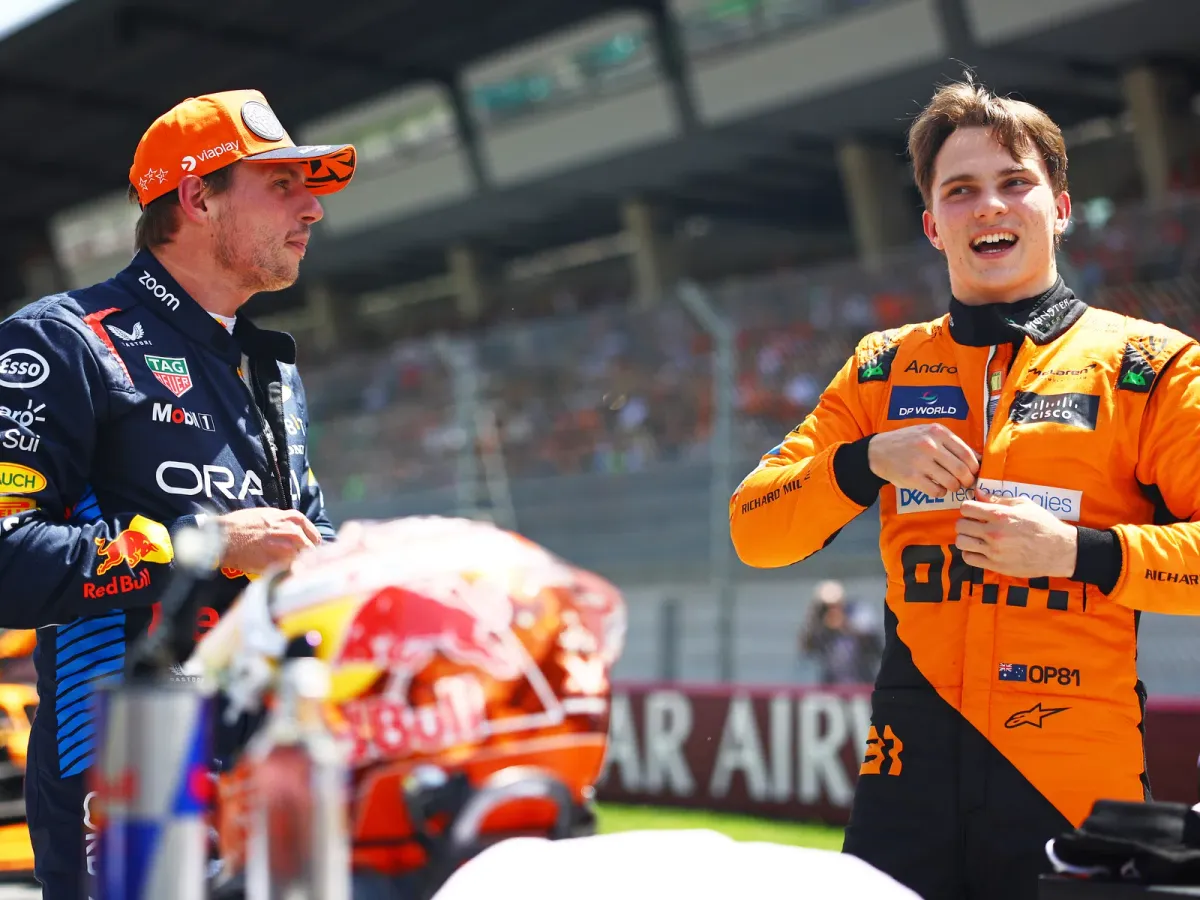
Piastri Reflects: The Gamble That Changed Everything
While the Red Bull juniors fight for their futures, one driver who successfully navigated the treacherous waters of F1 politics is Oscar Piastri. Now established as a race winner and one of the sport’s brightest stars at McLaren, Piastri recently sat down for F1’s “Off the Grid” series to reflect on the chaotic summer of 2022 that defined his entry into the sport.
Rewind to 2022: Piastri was the reigning Formula 2 champion, forced to sit on the sidelines as Alpine’s reserve driver. It was a year of frustration, watching others race while he conducted simulator work and made coffee in the hospitality unit. When Fernando Alonso shocked the paddock by defecting to Aston Martin, Alpine scrambled to announce Piastri as his replacement.
What followed was one of the most viral moments in F1 history. Piastri famously took to social media (then Twitter) to issue a blunt denial: “I understand that, without my agreement, Alpine F1 have put out a press release late this afternoon that I am driving for them next year. This is wrong and I have not signed a contract with Alpine for 2023. I will not be driving for Alpine next year.”
Speaking about it now, with the benefit of hindsight and a trophy cabinet starting to fill up, Piastri admits the situation was far more stressful than his cool demeanor suggested.
“I kind of knew that it was going to be a pretty big story,” Piastri confessed in the interview filmed in Monaco. “There were reasons for doing that. It wasn’t just me going out of my way to announce to the world that I’m not racing.”
The tweet wasn’t just a clapback; it was a legal necessity. Piastri had already secretly signed with McLaren, believing Alpine had dragged their feet for too long. The dispute went to the FIA’s Contract Recognition Board (CRB), a behind-the-scenes legal battle that could have ended his career before it began if the ruling had gone against him.
“I mean, I certainly look back on it now with some laughs,” Piastri said, a smile finally breaking through. “Definitely at the time, it wasn’t so funny. It obviously went to the CRB. Things were in my favor, but that was another pretty tense moment.”
The contrast between Piastri’s trajectory and the chaos at Alpine since his departure is stark. While Piastri has flourished at McLaren, helping turn the team into championship contenders, Alpine has cycled through team principals and struggled for consistency. The decision to leave the manufacturer that funded his junior career was controversial, labeled by some at the time as disloyal. However, history is written by the victors, and Piastri’s performance on track has vindicated his bold maneuver.
“That year, not racing was tough, definitely,” Piastri reflected on his 2022 hiatus. “It did allow me to view some things from the outside a little bit easier… but it was a tough time.”
The Cruel Mathematics of F1
The juxtaposition of Red Bull’s latest cuts and Piastri’s reflection offers a sobering lesson on the reality of Formula 1.
For Oliver Goethe and Tim Tramnitz, the dream has hit a massive roadblock. They did what thousands of drivers fail to do: they reached the immediate feeder series. But in the Red Bull system, “good” is the enemy of “great.” Helmut Marko’s legacy is one of finding diamonds by crushing coal with immense pressure. Those who crack, like Goethe and Tramnitz, are discarded. Those who survive, like Verstappen and now potentially Lindblad and Hadjar, become legends.
Oscar Piastri represents the other side of the coin—the driver who took control of his own destiny. He refused to be a pawn in Alpine’s hesitation, made a calculated risk to jump ship to McLaren, and backed it up with elite performance.
As we look toward the 2026 season, the narrative is clear. New regulations will reset the cars, but the human element remains the same. Whether you are a rookie like Arvid Lindblad being thrust into the spotlight, or a dropped junior like Goethe fighting for redemption in F2, the clock is always ticking.
In Formula 1, your last race is the only thing that matters. And for the class of 2026, the race has already begun.
News

Inside Shane Richie’s love life: Drug – fuelled orgy with six blondes; real reason he split from Coleen Nolan; six-year ‘affair with fan’
Inside Shane Richie’s love life: Orgy with six blondes; real reason he split from Coleen Nolan; six-year ‘affair with fan’ He’s popular with the ladies… Shane Richie…

SH0CKING REVELATI0N:A sh0cking behind-the-scenes secret revealed about Lizzie Rizzini, the woman replacing Carol Kirkwood on the 6pm weather bulletin
BBC viewers still reeling from the departure of Carol Kirkwood got another surprise last night when presenter Lizzie Rizzini appeared to flash her black lace stockings on…

HEARTBREAKING: Peter Andre’s Tearful Message to Son Junior After SHOCKING Revelation About How He Truly Feels Toward Mum Katie Price — Katie Price’s reaction scares fans.
Peter Andre’s emotional message to son Junior after it’s revealed how he really feels about mum Katie Pri… PETER Andre has shared an emotional message to his…

Ben Shephard opens up about the devastating health battle his wife is facing: “She wakes up crying every single morning…”
Inside This Morning Ben Shephard’s Life Including Rarely Seen Wife and Health Battle Ben Shephard is a name synonymous with British television, renowned for his engaging presentation…

🚨 LIVE TV HEARTBREAK: Good Morning Britain Host Announces ‘Devastating’ Dɘath of Guest Minutes Into Show
Viewers of Good Morning Britain were met with heartbreaking news just minutes into Friday’s (January 30) episode, as co-hosts Kate Garraway and Ranvir Singh reported the tragic…

Emmerdale legend Cain Dingle will never be the same again after a shock cancer diagnosis turns his world upside down
FROure Desk. Full Terms and conditions are available on the website http://www.itv.com/presscentre/itvpictures/terms Emmerdale wouldn’t be Emmerdale without the glowering, grunting embodiment of manliness that is Cain Dingle (Jeff Hordley) But…
End of content
No more pages to load






