The Silence Before the Storm
The atmosphere inside the Red Bull factory in Milton Keynes is reportedly deafening. It isn’t the noise of victory celebrations or the roar of engines on the dyno that dominates the air—it is the heavy, pregnant silence of a team facing its absolute limit. This is the quiet before the storm, the calm before the single biggest technical revolution Formula 1 has witnessed in over a decade.
For years, Red Bull Racing has been the undisputed king of the grid, a juggernaut that crushed the competition with aerodynamic brilliance and strategic perfection. But now, the team is staring down the barrel of its ultimate test: building its own engine from scratch. This isn’t just a new car project; it is a “bet the farm” moment for the entire Red Bull empire. They are no longer just a chassis team; they are daring to challenge the industrial giants of Mercedes and Ferrari on their own turf, and the stakes have never been higher.
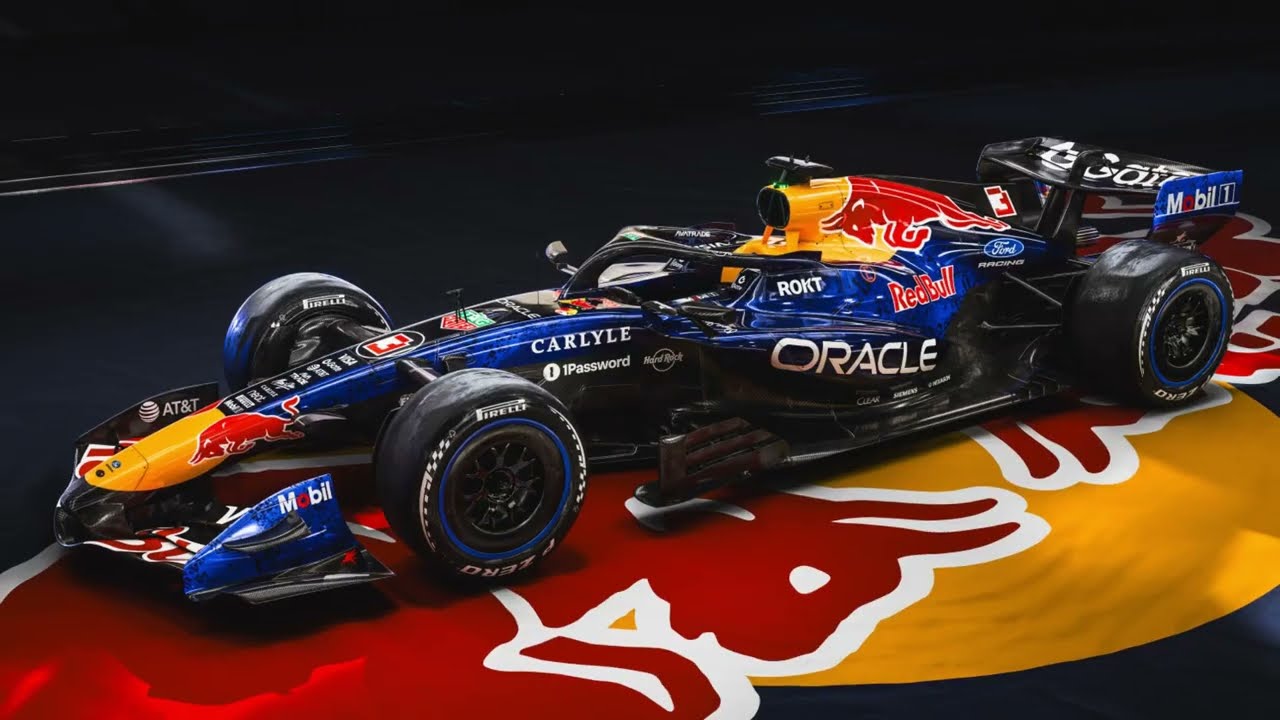
Visual Aggression: The Glossy Return
The first sign that 2026 will be a radical departure from the norm comes from the car itself—the RB22. According to leaked details, the team is shedding its skin. The familiar, stealth-like matte finish that has defined the Verstappen era is gone. In its place, the RB22 sports a deep, glossy blue livery that screams aggression and heritage.
This is more than just a paint job; it is a psychological statement. The return to a glossy finish is a nod to the team’s roots, a subtle reminder of the bold, punk-rock risk-taking attitude that first disrupted the sport in the mid-2000s. With fresh white accents and the prominent Ford badge marking a new alliance, the car looks ready for war. But while the livery is designed to look back at their heritage, the hardware underneath is a terrifying leap into the unknown.
The 50/50 Power Revolution
The real story, the one that will define the next decade of the sport, is hidden beneath that glossy bodywork. The 2026 regulations demand a fundamental shift in how Formula 1 cars generate speed. The old 80/20 split between the internal combustion engine (ICE) and electric power is dead. The new rules mandate a 50/50 split.
This might sound like a simple numbers game, but technically, it is a nightmare. The electric side of the power unit is now the key to the championship. The MGU-K (Motor Generator Unit-Kinetic), which recovers energy under braking, is now almost three times more powerful than before. We are talking about a massive 470 horsepower coming from the battery alone. To put that in perspective, that is roughly the power of a high-performance road car, delivered instantly, on top of the combustion engine’s output.
This surge in electrical reliance changes everything for the drivers. It is no longer about just “pushing a button” to pass. It will be a complex, high-speed chess match of energy deployment and recovery on every single lap. If a driver runs out of battery at the wrong moment, they are effectively a sitting duck, losing nearly half their horsepower instantly.
The Ford Lifeline
This brings us to the most critical component of Red Bull’s survival strategy: Ford. When the partnership was announced, cynics dismissed it as a marketing exercise—a way to slap a blue oval on the engine cover. The reality is far more desperate and functional.
Red Bull is an expert in aerodynamics, but they are novices in battery chemistry. The 2026 power unit requires a massive battery pack to handle the 470hp load without overheating or exploding. This is where Ford brings decades of experience in Electric Vehicle (EV) technology. Ford engineers are reportedly embedded deep within the Red Bull Powertrains facility, not just observing, but actively designing the battery management systems.
Without Ford’s “deep bench” of engineering talent, this project would likely be impossible. The battery is the heaviest, most temperamental part of the new car. Ford’s job is to make it smaller, lighter, and more efficient than Mercedes or Ferrari. It is a true technical partnership, a lifeline that Red Bull is clinging to as they navigate these uncharted waters.
The Weight War
Speaking of batteries, the “silent war” being fought at Milton Keynes right now is against gravity. The new regulations demand a lighter car, yet the physics of a massive 470hp battery pack naturally add immense weight. Every team is struggling to hit the strict 768 kg minimum weight target, but for a new engine manufacturer like Red Bull, the challenge is double.
Engineers are reportedly using every trick in the book to shave off grams. In Formula 1, weight is lap time. A car that is even 5kg overweight will chew through its tires and be sluggish in the corners, no matter how much horsepower it has. This “weight battle” is a technical headache that will likely keep the engineering team awake right up until the lights go out at the first race of 2026.
A Design Gamble: The Suspension Switch
The leaks regarding the RB22’s chassis suggest that the team is not playing it safe with the aerodynamics either. Studio images reveal a major switch to a “push-rod” front suspension, a significant departure from the “pull-rod” system that was a signature of their championship-winning cars under the current regulations.
The push-rod system changes how air flows over the car’s nose and into the vital underfloor tunnels. It is generally seen as better for mechanical grip and easier to package, but it often comes at the cost of “clean” airflow. By making this switch, Red Bull is signaling that they are willing to tear up the rulebook and prioritize mechanical stability over pure aerodynamic finesse. It is a calculated risk, betting that the new ground-effect rules will favor this setup. But it is also a sign that the team is moving away from the philosophies established by their former guru.
The Void Left by Newey
The elephant in the room—or rather, the genius absent from the room—is Adrian Newey. The RB22 is the first Red Bull car in nearly two decades to be designed without his direct, overarching input. His departure, along with that of Helmut Marko’s reduced influence, has left a massive void.
The team has shifted from a “genius-led” hierarchy to a collaborative, committee-based approach. Technical Director Pierre Waché and Paul Monaghan are now the ones shouldering the immense pressure. While Max Verstappen’s trusted race engineer, Gianpiero Lambiase, remains a stabilizing force, the loss of Newey is a psychological blow.
Can a committee replace a singular visionary? The team is betting on the strength of its overall structure, a necessary evolution for long-term survival. However, history is littered with F1 teams that collapsed after their star designer left. This new structure is the great unknown factor of 2026.
Managing Expectations
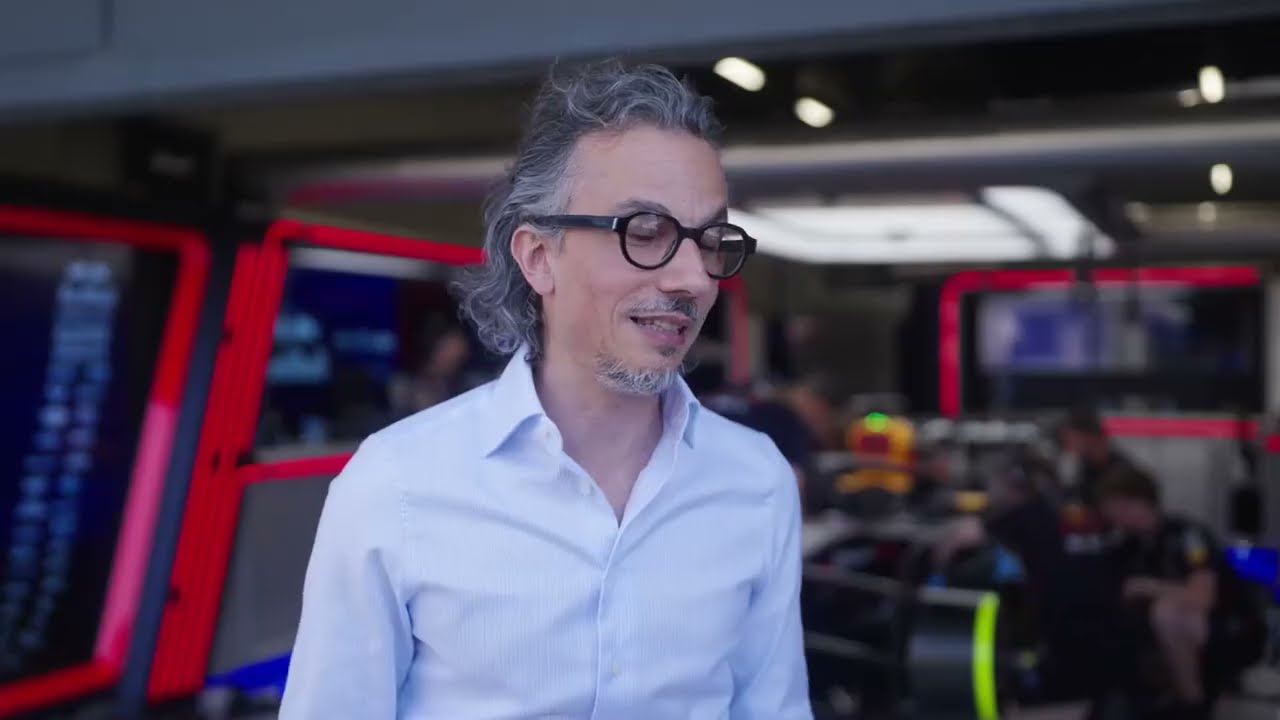
Perhaps the most telling sign of the anxiety within Milton Keynes is the messaging from leadership. Team figures have been carefully managing expectations, with some—like Laurent Mekies of the sister team—describing the engine project as a “colossal undertaking” and admitting they may start the season playing catch-up.
This honesty is a calculated move. It prepares the fans (and the shareholders) for a difficult birth. If the RB22 comes out of the gates slow, they can say they warned us. If it wins, they look like miracle workers.
Conclusion: Legend or Disaster?
The 2026 season represents a binary outcome for Red Bull Racing. If the Ford partnership works, the weight is managed, and the committee-designed chassis performs, it will be the greatest achievement in the team’s history—proving they are a true constructor, independent of any single supplier or designer.
But if they get it wrong—if the battery overheats, the car is overweight, or the chassis lacks Newey’s magic—the fall from grace could be brutal. The entire world of Formula 1 is watching. The glossy blue paint is ready; the question is, does the machine underneath have the heart to win?
What do you think? Is Red Bull’s gamble going to pay off, or is this the beginning of the end for their dynasty?
News

Inside Shane Richie’s love life: Drug – fuelled orgy with six blondes; real reason he split from Coleen Nolan; six-year ‘affair with fan’
Inside Shane Richie’s love life: Orgy with six blondes; real reason he split from Coleen Nolan; six-year ‘affair with fan’ He’s popular with the ladies… Shane Richie…

SH0CKING REVELATI0N:A sh0cking behind-the-scenes secret revealed about Lizzie Rizzini, the woman replacing Carol Kirkwood on the 6pm weather bulletin
BBC viewers still reeling from the departure of Carol Kirkwood got another surprise last night when presenter Lizzie Rizzini appeared to flash her black lace stockings on…

HEARTBREAKING: Peter Andre’s Tearful Message to Son Junior After SHOCKING Revelation About How He Truly Feels Toward Mum Katie Price — Katie Price’s reaction scares fans.
Peter Andre’s emotional message to son Junior after it’s revealed how he really feels about mum Katie Pri… PETER Andre has shared an emotional message to his…

Ben Shephard opens up about the devastating health battle his wife is facing: “She wakes up crying every single morning…”
Inside This Morning Ben Shephard’s Life Including Rarely Seen Wife and Health Battle Ben Shephard is a name synonymous with British television, renowned for his engaging presentation…

🚨 LIVE TV HEARTBREAK: Good Morning Britain Host Announces ‘Devastating’ Dɘath of Guest Minutes Into Show
Viewers of Good Morning Britain were met with heartbreaking news just minutes into Friday’s (January 30) episode, as co-hosts Kate Garraway and Ranvir Singh reported the tragic…

Emmerdale legend Cain Dingle will never be the same again after a shock cancer diagnosis turns his world upside down
FROure Desk. Full Terms and conditions are available on the website http://www.itv.com/presscentre/itvpictures/terms Emmerdale wouldn’t be Emmerdale without the glowering, grunting embodiment of manliness that is Cain Dingle (Jeff Hordley) But…
End of content
No more pages to load






