The golden era of Red Bull Racing, a dynasty that redefined dominance in Formula 1, has ended not with a champagne-soaked celebration, but with a bitter, public civil war that has left the paddock reeling. In a stunning turn of events that has reshaped the sport’s landscape, both the legendary advisor Helmut Marko and the long-serving Team Principal Christian Horner have exited the organization within a volatile six-month window. The fallout from these departures has peeled back the curtain on a team fractured by internal strife, “dirty tricks,” and a power struggle so severe that it may have cost Max Verstappen a historic fifth consecutive World Championship.
The Agony of Defeat: A Title Lost by Two Points
The catalyst for this latest explosion of revelations is the heartbreaking conclusion to the recent Formula 1 season. Max Verstappen, the Dutch phenomenon who has been the face of Red Bull’s modern supremacy, missed out on securing his fifth straight drivers’ title by a razor-thin margin of just two points. For a team accustomed to crushing the opposition, this narrow defeat was a bitter pill to swallow.
However, according to Helmut Marko, this failure was not purely down to on-track performance or engineering deficits. In a scorched-earth interview given shortly after his retirement at age 82—following the season finale in Abu Dhabi—Marko laid the blame squarely at the feet of the internal chaos that plagued the team. The Austrian veteran, who spent over two decades building the team from the ground up, claimed that if Christian Horner had been removed from his post earlier in the season—specifically before the British Grand Prix—Verstappen would be standing as world champion today.
“We had to do something because our on-track performance was lagging,” Marko stated, his frustration palpable. “Had we done that sooner, by the way, we would have gotten things back on track faster this year, and Max would have become world champion. I’m absolutely convinced of that.”
Accusations of “Dirty Games” and Manipulation
Marko’s departure has seemingly unshackled him from corporate diplomacies. He painted a picture of a toxic environment behind the scenes at Milton Keynes during Horner’s final years at the helm. Far from the well-oiled machine seen on television, Marko described a workplace rife with subterfuge.
“Those last years with Horner weren’t pleasant,” Marko revealed. “Dirty tricks were played.” He accused his former colleague of playing “dirty games in the media” to undermine his authority, suggesting a power struggle that distracted from the core mission of winning races. This narrative of a house divided offers a grim explanation for the team’s slight dip in form, which ultimately proved catastrophic in the title fight.
The CEO Strikes Back: Mintzlaff Defends the Decision
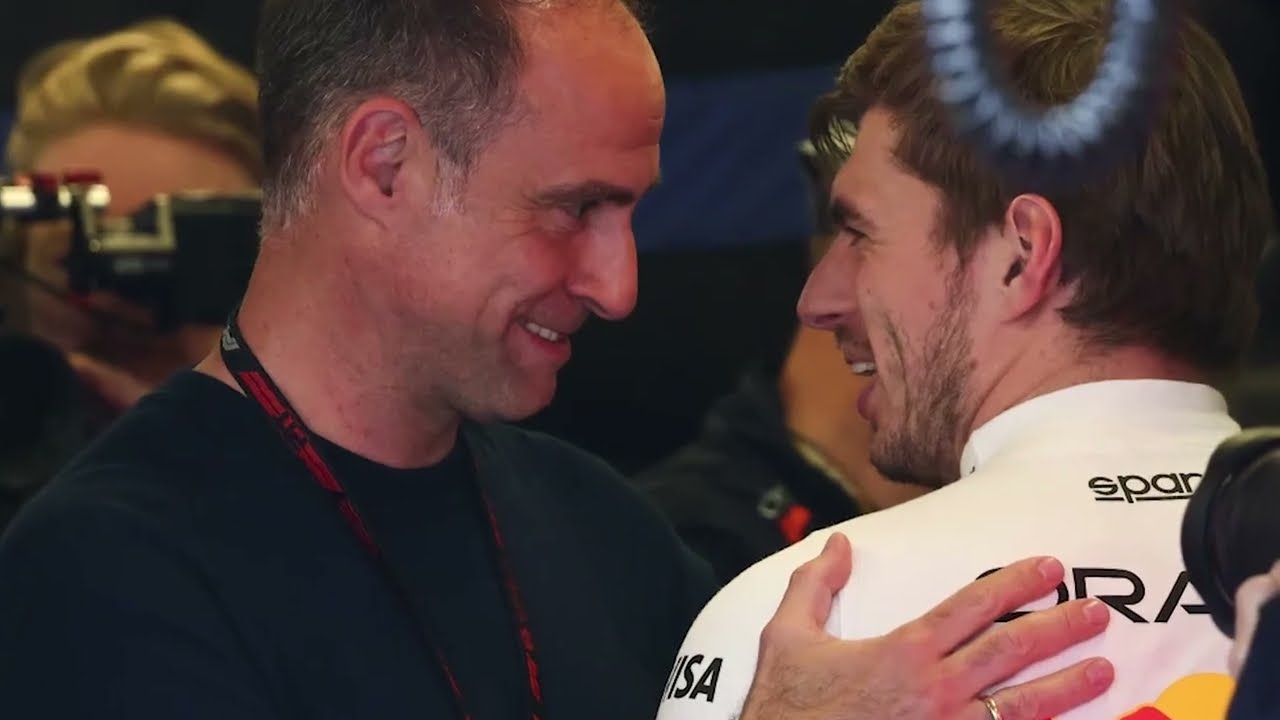
The severity of Marko’s comments forced Red Bull CEO Oliver Mintzlaff to step into the fray. In a separate interview, Mintzlaff attempted to steady the ship, distancing the corporate leadership from Marko’s personal attacks while standing firm on the decision to replace Horner.
“Those words about Christian are Helmut’s own,” Mintzlaff clarified, refusing to be drawn into a mudslinging contest. “I can’t say anything negative about Christian simply because he meant a lot to Red Bull.”
However, Mintzlaff did shed light on the cold reality of high-stakes corporate management that led to Horner’s exit. “There always comes a time when things aren’t going well, and then as a company, you have to make a decision: are you going to give someone more time, or is it time for a new leader? We felt it was time for a change.”
While acknowledging the incredible twenty-year partnership between Horner and Marko—a tenure almost unheard of in modern sports—Mintzlaff suggested that stagnation had set in. “Sometimes you just need a change to shake things up,” he noted, implying that the team needed fresh energy to tackle the challenges of the future.
The $100 Million Divide: Envy and Severance Packages
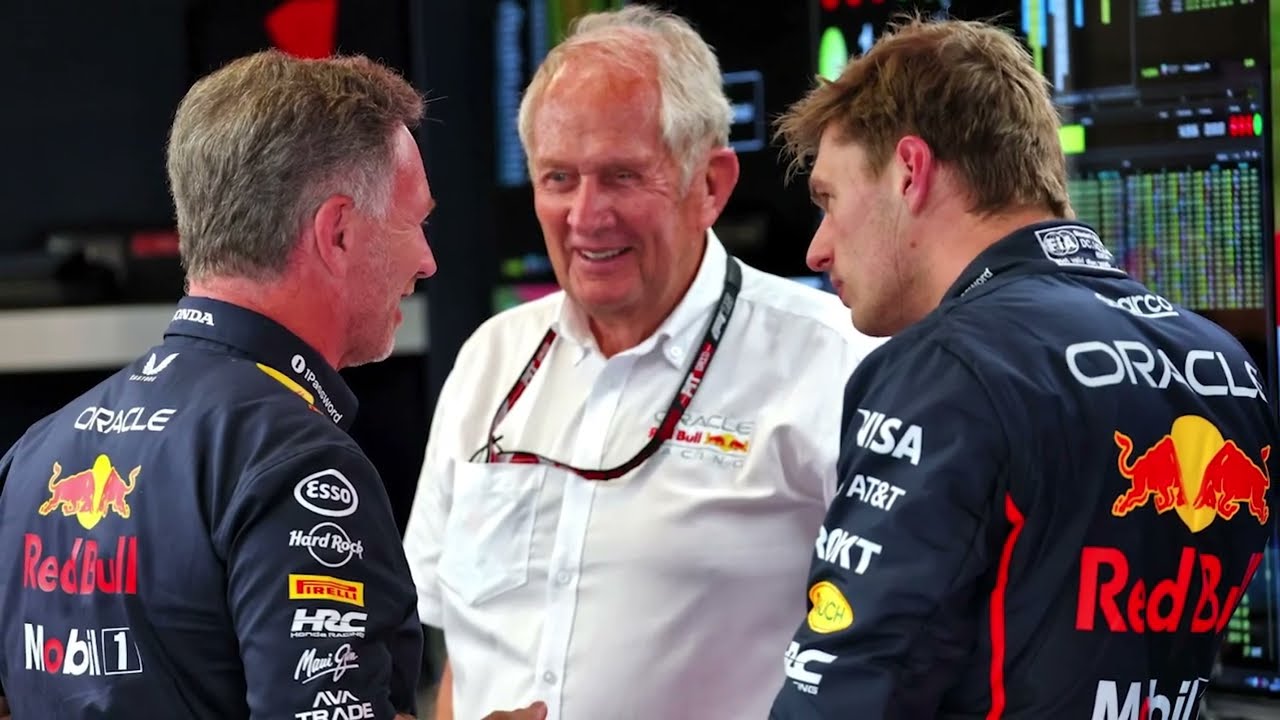
Adding fuel to the fire is the financial disparity between the two exits, a detail that former F1 driver Juan Pablo Montoya believes is a central source of the animosity. Reports indicate that Helmut Marko received a payoff of approximately £8.7 million upon his retirement. In stark contrast, Christian Horner’s severance package was reportedly ten times larger, a staggering sum that dwarfs Marko’s compensation.
Montoya, discussing the situation on a YouTube channel, described the feud as “sad” and driven by envy. “There were certainly dramas, fights, and manipulation by Christian, 100%,” Montoya observed. “But Helmut isn’t a saint. Neither of them are saints.”
For Montoya, the tragedy lies in how this bitter ending has overshadowed the duo’s monumental achievements. Together, they orchestrated 14 world championships across the Sebastian Vettel and Max Verstappen eras. “Why close the Red Bull chapter [like this]?” Montoya lamented. “All the good they did… nobody is talking about what the great Helmut Marko did. He focused on the fight with Christian and didn’t focus on that.”
Verstappen’s Loyalty and the “Rogue” Contract
Max Verstappen, the driver caught in the crossfire, has seen his own relationship with his mentors evolve. While he initially threatened to walk away from the team in early 2024 when Marko’s position was first under threat, his stance has noticeably softened.
Recent reports suggest that Verstappen grew frustrated with Marko’s independent streak, particularly regarding the signing of driver Alex Dunne to the Red Bull program. Marko reportedly executed this move without the full consensus of the wider management team, forcing Red Bull to pay a six-figure sum just to unwind the contract. This incident, along with Marko prematurely telling Isaac Hadjar he was joining the team before official decisions were made, paints a picture of a “loose cannon” operating outside the command structure—a behavior that likely accelerated the management’s desire for a reset.
Despite the friction, Verstappen publicly thanked the 82-year-old upon his retirement. However, when asked if Marko would continue as a close advisor, Marko himself dismissed the idea, stating, “Max Verstappen is a four-time world champion… he doesn’t need me anymore.”
A Risky Future: The 2026 Engine Project
As the dust settles on this tumultuous chapter, Red Bull faces its most daunting challenge yet: the 2026 technical regulations. For the first time in its history, the team is building its own power unit, a massive undertaking that carries immense risk.
Marko, ever the racer, cited the late Dietrich Mateschitz’s motto: “No risk, no fun.” Yet, he admitted, “This fun is also very expensive.” While Mintzlaff remains confident, citing the strong technical team Horner left behind, the loss of the two figureheads who steered the ship for two decades leaves a void that will be difficult to fill.
The Red Bull civil war may be over, but the scars remain. The team that once seemed invincible is now navigating uncharted waters, hoping that the “dirty games” of the past won’t haunt their pursuit of future glory.
News

Inside Shane Richie’s love life: Drug – fuelled orgy with six blondes; real reason he split from Coleen Nolan; six-year ‘affair with fan’
Inside Shane Richie’s love life: Orgy with six blondes; real reason he split from Coleen Nolan; six-year ‘affair with fan’ He’s popular with the ladies… Shane Richie…

SH0CKING REVELATI0N:A sh0cking behind-the-scenes secret revealed about Lizzie Rizzini, the woman replacing Carol Kirkwood on the 6pm weather bulletin
BBC viewers still reeling from the departure of Carol Kirkwood got another surprise last night when presenter Lizzie Rizzini appeared to flash her black lace stockings on…

HEARTBREAKING: Peter Andre’s Tearful Message to Son Junior After SHOCKING Revelation About How He Truly Feels Toward Mum Katie Price — Katie Price’s reaction scares fans.
Peter Andre’s emotional message to son Junior after it’s revealed how he really feels about mum Katie Pri… PETER Andre has shared an emotional message to his…

Ben Shephard opens up about the devastating health battle his wife is facing: “She wakes up crying every single morning…”
Inside This Morning Ben Shephard’s Life Including Rarely Seen Wife and Health Battle Ben Shephard is a name synonymous with British television, renowned for his engaging presentation…

🚨 LIVE TV HEARTBREAK: Good Morning Britain Host Announces ‘Devastating’ Dɘath of Guest Minutes Into Show
Viewers of Good Morning Britain were met with heartbreaking news just minutes into Friday’s (January 30) episode, as co-hosts Kate Garraway and Ranvir Singh reported the tragic…

Emmerdale legend Cain Dingle will never be the same again after a shock cancer diagnosis turns his world upside down
FROure Desk. Full Terms and conditions are available on the website http://www.itv.com/presscentre/itvpictures/terms Emmerdale wouldn’t be Emmerdale without the glowering, grunting embodiment of manliness that is Cain Dingle (Jeff Hordley) But…
End of content
No more pages to load






