The Formula 1 paddock has never been a stranger to high-stakes drama, but the whispers circulating following the conclusion of the 2025 season feel different. They feel seismic. In a year that saw the coronation of a new world champion in Lando Norris and the startling decline of the sport’s most decorated driver, a new narrative has emerged that could fundamentally reshape the future of the sport. The rumor? Christian Horner, the mastermind behind Red Bull Racing’s historic dominance, is being heavily linked with a sensational move to Ferrari—a move insiders believe might be the only way to salvage Lewis Hamilton’s crumbling dream of an eighth world title.

A Champion in Crisis
To understand the magnitude of this potential shake-up, one must first look at the desolate reality of Lewis Hamilton’s current situation. The seven-time world champion has just concluded what he himself has labeled the “worst season” of his illustrious 20-year career. The statistics are nothing short of shocking for a man whose name is synonymous with winning.
Finishing the season-ending Abu Dhabi Grand Prix in a dismal eighth place, Hamilton capped off a campaign entirely devoid of podium finishes. For the first time in two decades, the British legend failed to spray champagne even once during a main race. It is a staggering fall from grace for a driver who, until recently, seemed untouchable.
Johnny Herbert, the three-time Grand Prix winner and former FIA steward, offered a brutal assessment of Hamilton’s demeanor in an exclusive interview with TalkSport. Having observed the paddock dynamics closely, Herbert noted a distinct change in the champion’s aura.
“I’ve never seen him as grumpy,” Herbert revealed, cutting straight to the heart of the issue. “There is that frustration that he’s having at Ferrari at the moment.”
This grumpiness is not merely the petulance of a losing star; it is the visible distress of a “champion in crisis.” The fairy tale move to Ferrari, intended to emulate Michael Schumacher’s legendary resurgence, has seemingly turned into a nightmare. Hamilton is not just struggling with the car; he is struggling with the internal reality of being outperformed.
Throughout the 2025 season, Hamilton watched from the other side of the garage as his teammate, Charles Leclerc, consistently extracted performance from the same machinery. While Hamilton fought to break into the top five, Leclerc was digging out podiums and proving that the Ferrari was not completely undrivable.
“He’s frustrated with his own performances, but then he’s also looking across the garage and seeing Charles Leclerc actually being able to dig out some podium finishes and generally be faster than Lewis throughout the season,” Herbert explained. For a driver whose identity is built on being the fastest man on the track, the psychological blow of being comprehensively beaten by a teammate is devastating.
The “Schumacher Solution”
So, where does Christian Horner fit into this equation? The connection lies in the history of Ferrari itself. The team’s last golden era—the Schumacher dominance of the early 2000s—was not achieved by a driver alone. It was built by a ruthless, efficient organization led by Jean Todt and Ross Brawn.
The current Ferrari regime, led by Fred Vasseur, has failed to replicate that structure. Despite Vasseur signing a contract extension back in July, the paddock is rife with speculation that the decision was premature. The team’s inability to provide a championship-contending car has become a recurring theme, a cycle of false hope and crushing disappointment.
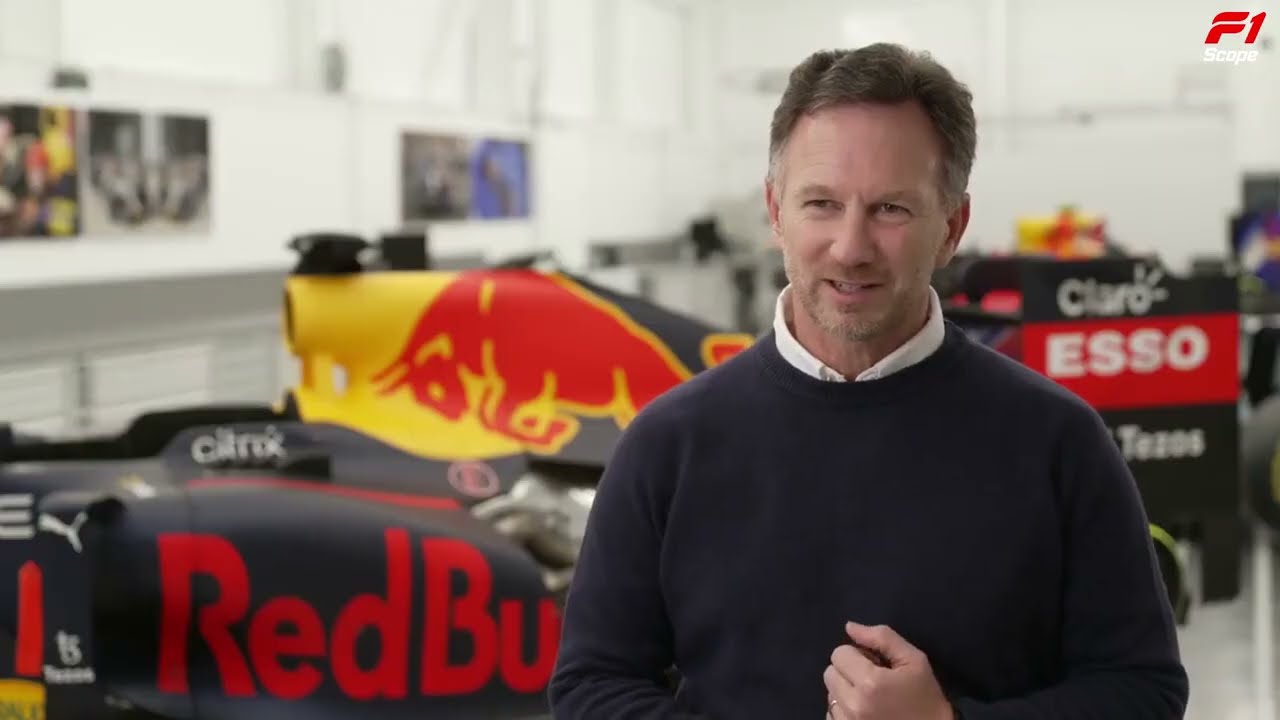
Enter Christian Horner. Having parted ways with Red Bull last summer, Horner is currently a free agent, and his résumé speaks for itself: eight Drivers’ Titles and six Constructors’ Championships. He knows how to build a winning machine from the ground up.
McLaren CEO Zak Brown recently fueled the fire, stating he believes the “unbelievable team boss” will inevitably return to the sport. Herbert takes this a step further, suggesting that if Ferrari’s fortunes do not turn around immediately in 2026, Horner could be the man drafted in to restore the Prancing Horse to glory.
“Ferrari wants someone to be able to bring it back to those wonderful winning ways that we saw with Michael Schumacher,” Herbert told TalkSport. “Would Christian be that person who could attract the right personnel… to be able to achieve a championship-winning constructor, but more importantly, the drivers’ [championship]?”
The logic is compelling. Horner’s strength at Red Bull was never just about strategy; it was about culture. He created an environment where winning was the only metric that mattered. He attracted top aerodynamicists, built a politically savvy operation, and shielded his team from external noise. These are precisely the qualities Ferrari has lacked for nearly two decades.

The 2026 Imperative
The timing of these rumors is critical. The 2026 season brings with it a sweeping set of new regulations, leveling the playing field and offering every team a chance to reset the hierarchy. For Hamilton, now 40 years old, this represents the final roll of the dice. He has confirmed he will race in 2026, putting retirement rumors to bed, but his patience is undoubtedly wearing thin.
Hamilton is facing a generational shift unlike anything he has encountered before. The “new guard” has firmly arrived. Lando Norris is now a World Champion. Max Verstappen remains a force of nature. Behind them, young talents like Kimi Antonelli, Arvid Lindblad, and Isack Hadjar are rising through the ranks, hungry to topple the sport’s “elder statesmen.”
In this landscape, Hamilton cannot afford another transition year. He needs a car—and a team—that works immediately.
“It’s another hope that Ferrari want to turn things around with the new challenges of next year… and maybe they’ll be able to supply him the car that he needs,” Herbert noted. But hope is not a strategy. If Ferrari stumbles out of the gate in 2026, the pressure to replace Vasseur with a proven winner like Horner could become insurmountable.
The Ultimate Irony
Perhaps the most fascinating aspect of this rumor is the potential dynamic between Hamilton and Horner. For over a decade, they were on opposite sides of F1’s fiercest war. The Red Bull vs. Mercedes rivalry defined an era, filled with bitter press conferences, on-track collisions, and tense championship battles.
Ideally, they are adversaries. But pragmatically? They might be exactly what the other needs. Hamilton needs a team principal who knows how to dethrone the competition. Horner needs a project worthy of his talents—a legacy-defining challenge like bringing the championship back to Maranello.
“The irony is almost too perfect,” analysts suggest. Hamilton might need his old enemy to achieve his ultimate dream. Ferrari might need to swallow its pride and admit that the current “friendly” approach isn’t working.
The stakes couldn’t be higher. Hamilton left the safety of Mercedes to chase a ghost at Ferrari. So far, he has found only frustration. But the arrival of a figure like Christian Horner could signal a shift from romantic idealism to ruthless pragmatism.
As the F1 world heads into the winter break, all eyes are on Maranello. The 2025 season may have been a disaster for Lewis Hamilton, but if these shockwaves turn into reality, 2026 could host the most explosive comeback—and the most unexpected partnership—in the history of the sport.
News

Inside Shane Richie’s love life: Drug – fuelled orgy with six blondes; real reason he split from Coleen Nolan; six-year ‘affair with fan’
Inside Shane Richie’s love life: Orgy with six blondes; real reason he split from Coleen Nolan; six-year ‘affair with fan’ He’s popular with the ladies… Shane Richie…

SH0CKING REVELATI0N:A sh0cking behind-the-scenes secret revealed about Lizzie Rizzini, the woman replacing Carol Kirkwood on the 6pm weather bulletin
BBC viewers still reeling from the departure of Carol Kirkwood got another surprise last night when presenter Lizzie Rizzini appeared to flash her black lace stockings on…

HEARTBREAKING: Peter Andre’s Tearful Message to Son Junior After SHOCKING Revelation About How He Truly Feels Toward Mum Katie Price — Katie Price’s reaction scares fans.
Peter Andre’s emotional message to son Junior after it’s revealed how he really feels about mum Katie Pri… PETER Andre has shared an emotional message to his…

Ben Shephard opens up about the devastating health battle his wife is facing: “She wakes up crying every single morning…”
Inside This Morning Ben Shephard’s Life Including Rarely Seen Wife and Health Battle Ben Shephard is a name synonymous with British television, renowned for his engaging presentation…

🚨 LIVE TV HEARTBREAK: Good Morning Britain Host Announces ‘Devastating’ Dɘath of Guest Minutes Into Show
Viewers of Good Morning Britain were met with heartbreaking news just minutes into Friday’s (January 30) episode, as co-hosts Kate Garraway and Ranvir Singh reported the tragic…

Emmerdale legend Cain Dingle will never be the same again after a shock cancer diagnosis turns his world upside down
FROure Desk. Full Terms and conditions are available on the website http://www.itv.com/presscentre/itvpictures/terms Emmerdale wouldn’t be Emmerdale without the glowering, grunting embodiment of manliness that is Cain Dingle (Jeff Hordley) But…
End of content
No more pages to load






